Kirjojen hintavertailu. Mukana 11 244 527 kirjaa ja 12 kauppaa.

Kirjahaku

Etsi kirjoja tekijän nimen, kirjan nimen tai ISBN:n perusteella.

6 kirjaa tekijältä David Dawson

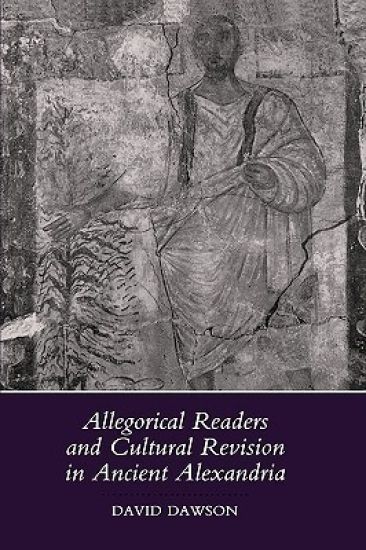
Allegorical Readers and Cultural Revision in Ancient Alexandria

Allegorical Readers and Cultural Revision in Ancient Alexandria

David Dawson

University of California Press
1991
sidottu
Allegorical readings of literary or religious texts always begin as counterreadings, starting with denial or negation, challenging the literal sense: 'You have read the text this way, but I will read it differently.' David Dawson insists that ancient allegory is best understood not simply as a way of reading texts, but as a way of using non-literal readings to reinterpret culture and society. Here he describes how some ancient pagan, Jewish, and Christian interpreters used allegory to endorse, revise, and subvert competing Christian and pagan world views. This reassessment of allegorical reading emphasizes socio-cultural contexts rather than purely formal literary features, opening with an analysis of the pagan use of etymology and allegory in the Hellenistic world and pagan opposition to both techniques. The remainder of the book presents three Hellenistic religious writers who each typify distinctive models of allegorical interpretation: the Jewish exegete Philo, the Christian Gnostic Valentinus, and the Christian Platonist Clement. The study engages issues in the fields of classics, history of Christianity and Hellenistic Judaism, literary criticism and theory, and more broadly, critical theory and cultural criticism.
Christian Figural Reading and the Fashioning of Identity

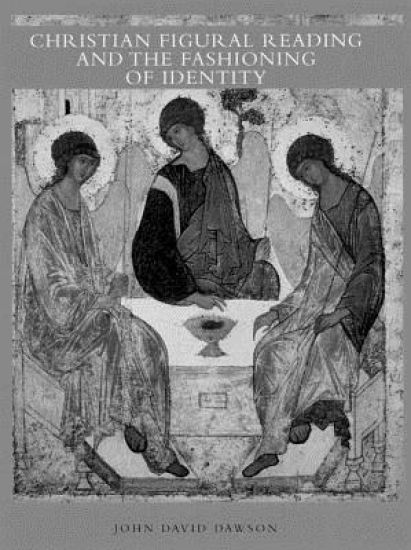
Christian Figural Reading and the Fashioning of Identity

David Dawson

University of California Press
2001
sidottu
This book makes an illuminating contribution to one of Christianity's central problems: the understanding and interpretation of scripture, and more specifically, the relationship between the Old Testament and the New. John David Dawson analyzes the practice and theory of 'figural' reading in the Christian tradition of Biblical interpretation by looking at writings of Jewish and Christian thinkers, both ancient and modern, who have reflected on that form of traditional Christian Biblical interpretation. Dawson argues Christian interpretation of Hebrew scripture originally was, and should be, aimed at not reducing the Jewish meaning or replacing it but rather at building on it or carrying on from it. Dawson closely examines the work of three prominent twentieth-century thinkers who have offered influential variants of figural reading: Biblical scholar Daniel Boyarin, philologist and literary historian Erich Auerbach, and Christian theologian Hans Frei. Contrasting the interpretive programs of these modern thinkers to that of Origen of Alexandria, Dawson proposes that Origen exemplifies a kind of Christian reading that can respect Christianity's link to Judaism while also respecting the independent religious identity of Jews. Through a fresh study of Origen's allegorical interpretation, this book challenges the common charge that Christian non-literal reading of scripture necessarily undermines the literal meaning of the text. This highly interdisciplinary work will advance debates about different methods of interpretation and about different types of textual meaning that are relevant for many disciplines, including ancient Christianity, Jewish and Christian thought, literary theory, religious studies, and classical studies.
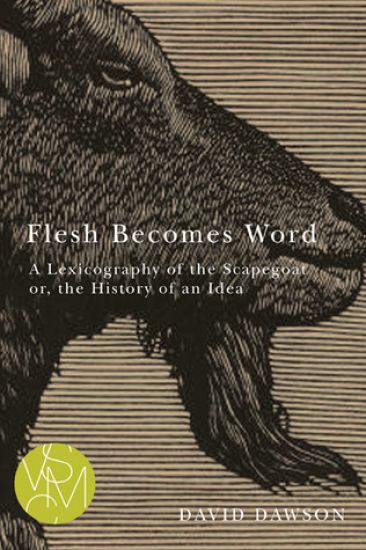
Flesh Becomes Word

Flesh Becomes Word

David Dawson

Michigan State University Press
2013
pokkari
Though its coinage can be traced back to a sixteenth-century translation of Leviticus, the term "scapegoat" has enjoyed a long and varied history of both scholarly and everyday uses. While WilliamTyndale employed it to describe one of two goats chosen by lot to escape the Day of Atonement sacrifices with its life, the expression was soon far more widely used to name victims of false accusation and unwarranted punishment. As such, the scapegoat figures prominently in contemporary theories of violence, from its elevation by Frazer to a ritual category in his ethnological opus "The Golden Bough "to its pivotal roles in projects as seemingly at odds as Jacques Derrida's deconstruction of Western metaphysics and Rene Girard's theory of cultural origins. A copiously researched and groundbreaking investigation of the expression in such wide use today, "Flesh Becomes Word "follows the scapegoat from its origins in Mesopotamian ritual across centuries of typological reflection on the meaning of Jesus' death, to its first informal uses in the pornographic and plague literature of the 1600s, and finally into the modern era, where the word takes recognizable shape in the context of the New English Quaker persecution and proto-feminist diatribe at the close of the seventeenth century. The historical circumstances of its lexical formation prove rich in implications for current theories of the scapegoat and the making of the modern world alike.