Kirjojen hintavertailu. Mukana 11 614 642 kirjaa ja 12 kauppaa.

Kirjahaku

Etsi kirjoja tekijän nimen, kirjan nimen tai ISBN:n perusteella.

6 kirjaa tekijältä David Delaney

Race, Place, and the Law, 1836-1948

Race, Place, and the Law, 1836-1948

David Delaney

University of Texas Press
1998
pokkari
Black and white Americans have occupied separate spaces since the days of "the big house" and "the quarters." But the segregation and racialization of American society was not a natural phenomenon that "just happened." The decisions, enacted into laws, that kept the races apart and restricted blacks to less desirable places sprang from legal reasoning which argued that segregated spaces were right, reasonable, and preferable to other arrangements. In this book, David Delaney explores the historical intersections of race, place, and the law. Drawing on court cases spanning more than a century, he examines the moves and countermoves of attorneys and judges who participated in the geopolitics of slavery and emancipation; in the development of Jim Crow segregation, which effectively created apartheid laws in many cities; and in debates over the "doctrine of changed conditions," which challenged the legality of restrictive covenants and private contracts designed to exclude people of color from white neighborhoods. This historical investigation yields new insights into the patterns of segregation that persist in American society today.
The Spatial, the Legal and the Pragmatics of World-Making
Critical legal geography is practised by an increasing number of scholars in various disciplines, but it has not had the benefit of an overarching theoretical framework that might overcome its currently rather ad hoc character. The Spatial, the Legal and the Pragmatics of World-Making remedies this situation. Presenting a balanced convergence of contemporary socio-legal and critical geographic scholarship, David Delaney offers a ground-breaking contribution to the fast growing field of legal geography. Drawing on strands of critical social studies that inform both of these areas, this book has three primary components. First, it introduces a framework of interpretation and analysis centred on the productive neologisms ‘nomosphere’ and ‘nomoscapes’. Nomosphere refers to the cultural-material environs that are constituted by the reciprocal materialization of ‘the legal’ and the legal signification of the ‘socio-spatial'. Nomoscapes are the spatio-legal expression and the socio-material realization of ideologies, values, pervasive power orders and social projects. They are extensive ensembles of legal spaces within and through which lives are lived and, here, these neologisms are related to the more familiar notions of governmentality and performativity. Second, these neologisms are explored and applied through a series of illustrations and extensive case studies. Demonstrating their utility for scholars and students in relevant disciplines, these ‘empirical’ studies concern: the public and the private; property and land tenure; governance; the domestic and the international; and legal-spatial confinements and containments. Third, these studies contribute to an ongoing theorization of the experiential, situated pragmatics of ‘world-making'. The role of nomospheric projects and counter-projects, techniques and operations is therefore emphasized. Much of what is experientially significant about how the world is as it is and what it’s like to be in the world directly implicates the dynamic interplay of space, law, meaning and power. The Spatial, the Legal and the Pragmatics of World-Making provides the interpretive resources necessary for discerning and understanding the practices and projects involved in this interplay.
The Spatial, the Legal and the Pragmatics of World-Making
Critical legal geography is practised by an increasing number of scholars in various disciplines, but it has not had the benefit of an overarching theoretical framework that might overcome its currently rather ad hoc character. The Spatial, the Legal and the Pragmatics of World-Making remedies this situation. Presenting a balanced convergence of contemporary socio-legal and critical geographic scholarship, David Delaney offers a ground-breaking contribution to the fast growing field of legal geography. Drawing on strands of critical social studies that inform both of these areas, this book has three primary components. First, it introduces a framework of interpretation and analysis centred on the productive neologisms ‘nomosphere’ and ‘nomoscapes’. Nomosphere refers to the cultural-material environs that are constituted by the reciprocal materialization of ‘the legal’ and the legal signification of the ‘socio-spatial'. Nomoscapes are the spatio-legal expression and the socio-material realization of ideologies, values, pervasive power orders and social projects. They are extensive ensembles of legal spaces within and through which lives are lived and, here, these neologisms are related to the more familiar notions of governmentality and performativity. Second, these neologisms are explored and applied through a series of illustrations and extensive case studies. Demonstrating their utility for scholars and students in relevant disciplines, these ‘empirical’ studies concern: the public and the private; property and land tenure; governance; the domestic and the international; and legal-spatial confinements and containments. Third, these studies contribute to an ongoing theorization of the experiential, situated pragmatics of ‘world-making'. The role of nomospheric projects and counter-projects, techniques and operations is therefore emphasized. Much of what is experientially significant about how the world is as it is and what it’s like to be in the world directly implicates the dynamic interplay of space, law, meaning and power. The Spatial, the Legal and the Pragmatics of World-Making provides the interpretive resources necessary for discerning and understanding the practices and projects involved in this interplay.
Law and Nature

Law and Nature

David Delaney

Cambridge University Press
2003
sidottu
This interdisciplinary study explores the relationship between conceptions of nature and (largely American) legal thought and practice. It focuses on the politics and pragmatics of nature talk as expressed in both extra-legal disputes and their transformation and translation into forms of legal discourse (tort, property, contract, administrative law, criminal law and constitutional law). Delaney begins by considering the pragmatics of nature in connection with the very idea of law and the practice of American legal theorization. He then traces a set of specific political-legal disputes and arguments. The set consists of a series of contexts and cases organized around a conventional distinction between 'external' and 'internal nature': forces of nature, endangered species, animal experiments, bestiality, reproductive technologies, genetic screening, biological defenses in criminal cases, and involuntary medication of inmates. He demonstrates throughout that nearly any construal of 'nature' entails an interpretation of what it is to be (distinctively) human.
Territory

Territory

David Delaney

Wiley-Blackwell (an imprint of John Wiley Sons Ltd)
2005
nidottu
This short introduction conveys the complexities associated with the term "territory" in a clear and accessible manner. It surveys the field and brings theory to ground in the case of Palestine. A clear and accessible introduction to the complexities associated with the term "territory".Provides an interdisciplinary survey of the many strands of research in the field.Addresses specific areas including interpretations of territorial structures; the relationship between territoriality and scale; the validity and fluidity of territory; and the practical, social processes associated with territorial re-configurations.Stresses that our understanding of territory is inseparable from our understanding of power.Uses Israel/Palestine as an extended illustrative case study.The author’s strong legal and geographical background gives the work an authoritative perspective.
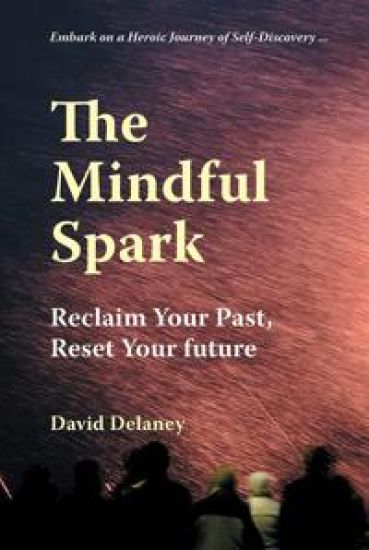
Mindful Spark

Mindful Spark

David Delaney

The Liffey Press
2021
nidottu
I n these particularly stressful times, many people are struggling with their mental health. Some are caught up in their painful past, others are fretful about an uncertain future, and even more are anxious about their current circumstances. While the worries and concerns are real, practical steps can be taken to make them more manageable. In this insightful book, David Delaney draws on his own experiences to provide a welcome handbook on resilience and mindfulness. Becoming almost completely blind at eight years old, David struggled to fit in, and was hampered by his insecurities, doubts and low self-worth until he learned the skills to embark on a path to lasting confidence, health and happiness. For over twenty years David has researched resilience, meditation, Tai Chi, mindfulness, Yoga, Qi Gung movements and other techniques. He then studied modern scientific research on their efficacy and started applying their helpful practices and stories to his own life and in the meditation classes he taught. He now wants to share what he has learned. This step-by-step guide can set you free by breaking the chains of your past and helping you to embrace a bright new future. By making simple changes in your everyday world, you can make a huge difference to your life. So, here’s the question: what’s stopping you from taking the next step? It’s your life – why not get the most from it? Come join David on your own heroic journey of self-discovery.