Kirjojen hintavertailu. Mukana 11 699 587 kirjaa ja 12 kauppaa.

Kirjahaku

Etsi kirjoja tekijän nimen, kirjan nimen tai ISBN:n perusteella.

13 kirjaa tekijältä David Duff

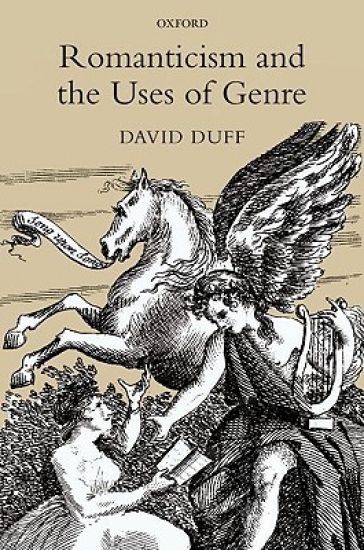
Romanticism and the Uses of Genre

Romanticism and the Uses of Genre

David Duff

Oxford University Press
2009
sidottu
This wide-ranging and original book reappraises the role of genre, and genre theory, in British Romanticism. Analyzing numerous examples from 1760 to 1830, David Duff examines the generic innovations and experiments which propel the Romantic 'revolution in literature', but also the fascination with archaic forms such as the ballad, sonnet, epic, and romance, whose revival and transformation make Romanticism a 'retro' movement as well as a revolutionary one. The tension between the drives to 'make it old' and to 'make it new' generates one of the most dynamic phases in the history of literature, whose complications are played out in the critical writing of the period as well as its creative literature. Incorporating extensive research on classification systems and reception history as well as on literary forms themselves, Romanticism and the Uses of Genre demonstrates how new ideas about the role and status of genre influenced not only authors but also publishers, editors, reviewers, and readers. The focus is on poetry, but a wider spectrum of genres is considered, a central theme being the relationship - hierarchical, competitive, combinatory - between genres. Among the topics addressed are generic primitivism and forgery; Enlightenment theory and the 'cognitive turn'; the impact of German transcendental aesthetics; organic and anti-organic form; the role of genre in the French Revolution debate; the poetics of the fragment and sketch; and the theory and practice of genre-mixing. Unprecedented in its scope and detail, this important book establishes a new way of reading Romantic literature which brings into focus for the first time its tangled relationship with genre.
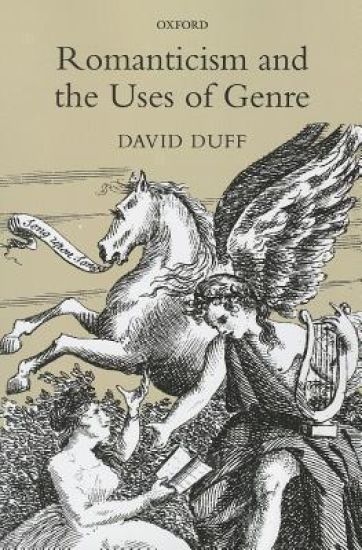
Romanticism and the Uses of Genre

Romanticism and the Uses of Genre

David Duff

Oxford University Press
2013
nidottu
This wide-ranging and original book reappraises the role of genre, and genre theory, in British Romanticism. Analyzing numerous examples from 1760 to 1830, David Duff examines the generic innovations and experiments which propel the Romantic 'revolution in literature', but also the fascination with archaic forms such as the ballad, sonnet, and romance, whose revival and transformation make Romanticism a 'retro' movement as well as a revolutionary one. The tension between the drives to 'make it old' and to 'make it new' generates one of the most dynamic phases in the history of literature, whose complications are played out in the critical writing of the period as well as its creative literature. Incorporating extensive research on classification systems and reception history as well as on literary forms themselves, Romanticism and the Uses of Genre demonstrates how new ideas about the role and status of genre influenced not only authors but also publishers, editors, reviewers, and readers. The focus is on poetry, but a wider spectrum of genres is considered, a central theme being the relationship - hierarchical, competitive, combinatory - between genres. Among the topics addressed are generic primitivism and forgery; Enlightenment theory and the 'cognitive turn'; the impact of German transcendental aesthetics; organic and anti-organic form; the role of genre in the French Revolution debate; the poetics of the fragment; and the theory and practice of genre-mixing. Unprecedented in its scope and detail, this important book establishes a new way of reading Romantic literature which brings into focus for the first time its tangled relationship with genre.
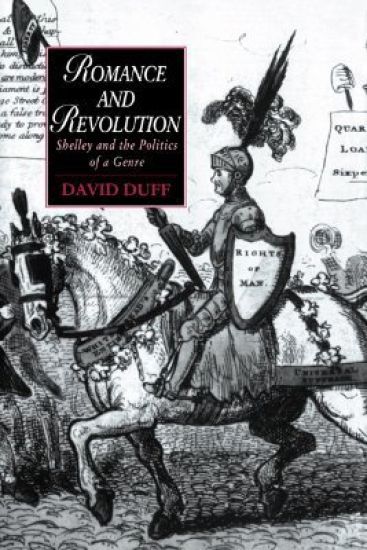
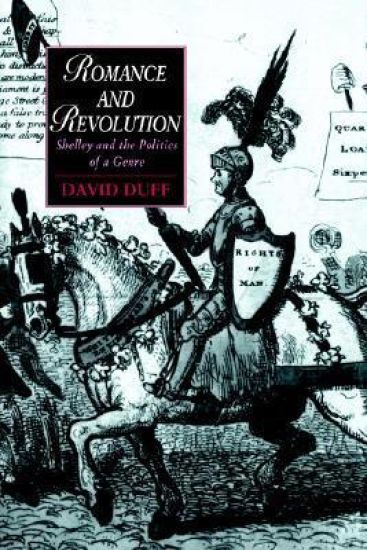
Romance and Revolution

Romance and Revolution

David Duff

Cambridge University Press
2005
pokkari
The revival of romance as a literary form and the imaginative impact of the French Revolution are acknowledged influences on English Romanticism, but their relationship has rarely been addressed. In this innovative study of the transformations of a genre, David Duff examines the paradox whereby the unstable visionary world of romance came to provide an apt language for the representation of revolution, and how the literary form was itself politicised in the period. Drawing on an extensive range of textual and visual sources, he traces the ambivalent ideological overtones of the chivalric revival, the polemical appropriation of the language of romance in the 'pamphlet war' of the 1790s, and the emergence of a radical cult of chivalry among the Hunt-Shelley circle in 1815–17. Central to the book is a detailed analysis of Shelley's neglected revolutionary romances Queen Mab and Laon and Cythna, flawed but fascinating poems in which the politics of romance is most fully displayed.
Romance and Revolution

Romance and Revolution

David Duff

Cambridge University Press
1994
sidottu
The revival of romance as a literary form and the imaginative impact of the French Revolution are acknowledged influences on English Romanticism, but their relationship has rarely been addressed. In this innovative study of the transformations of a genre, David Duff examines the paradox whereby the unstable visionary world of romance came to provide an apt language for the representation of revolution, and how the literary form was itself politicised in the period. Drawing on an extensive range of textual and visual sources, he traces the ambivalent ideological overtones of the chivalric revival, the polemical appropriation of the language of romance in the ‘pamphlet war’ of the 1790s, and the emergence of a radical cult of chivalry among the Hunt-Shelley circle in 1815–17. Central to the book is a detailed analysis of Shelley’s neglected revolutionary romances Queen Mab and Laon and Cythna, flawed but fascinating poems in which the politics of romance is most fully displayed.
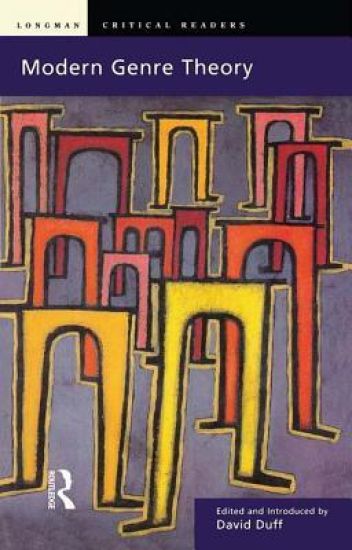
Modern Genre Theory

Modern Genre Theory

David Duff

Longman
1999
nidottu
Since Aristotle, genre has been one of the fundamental concepts of literary theory, and much of the world's literature and criticism has been shaped by ideas about the nature, function and value of literary genres. Modern developments in critical theory, however, prompted in part by the iconoclastic practices of modern writers and the emergence of new media such as film and television, have put in question traditional categories, and challenged the assumptions on which earlier genre theory was based. This has led not just to a reinterpretation of individual genres and the development of new classifications, but also to a radically new understanding of such key topics as the mixing and evolution of genres, generic hierarchies and genre-systems, the politics and sociology of genres, and the relations between genre and gender. This anthology, the first of its kind in English, charts these fascinating developments. Through judicious selections from major twentieth-century genre theorists including Yury Tynyanov, Vladimir Propp, Mikhail Bakhtin, Hans Robert Jauss, Rosalie Colie, Fredric Jameson, Tzvetan Todorov, Gérard Genette and Jacques Derrida, it demonstrates the central role that notions of genre have played in Russian Formalism, structuralism and post-structuralism, reception theory, and various modes of historical criticism. Each essay is accompanied by a detailed headnote, and the volume opens with a lucid introduction emphasising the international and interdisciplinary character of modern debates about genre. Also included are an annotated bibliography and a glossary of key terms, making this an indispensable resource for students and anyone interested in genre studies or literary theory.
Modern Genre Theory

Modern Genre Theory

David Duff

Routledge
2016
sidottu
Since Aristotle, genre has been one of the fundamental concepts of literary theory, and much of the world's literature and criticism has been shaped by ideas about the nature, function and value of literary genres. Modern developments in critical theory, however, prompted in part by the iconoclastic practices of modern writers and the emergence of new media such as film and television, have put in question traditional categories, and challenged the assumptions on which earlier genre theory was based. This has led not just to a reinterpretation of individual genres and the development of new classifications, but also to a radically new understanding of such key topics as the mixing and evolution of genres, generic hierarchies and genre-systems, the politics and sociology of genres, and the relations between genre and gender.This anthology, the first of its kind in English, charts these fascinating developments. Through judicious selections from major twentieth-century genre theorists including Yury Tynyanov, Vladimir Propp, Mikhail Bakhtin, Hans Robert Jauss, Rosalie Colie, Fredric Jameson, Tzvetan Todorov, Gérard Genette and Jacques Derrida, it demonstrates the central role that notions of genre have played in Russian Formalism, structuralism and post-structuralism, reception theory, and various modes of historical criticism. Each essay is accompanied by a detailed headnote, and the volume opens with a lucid introduction emphasising the international and interdisciplinary character of modern debates about genre. Also included are an annotated bibliography and a glossary of key terms, making this an indispensable resource for students and anyone interested in genre studies or literary theory.