Kirjojen hintavertailu. Mukana 11 244 527 kirjaa ja 12 kauppaa.

Kirjahaku

Etsi kirjoja tekijän nimen, kirjan nimen tai ISBN:n perusteella.

4 kirjaa tekijältä David E. Chinitz

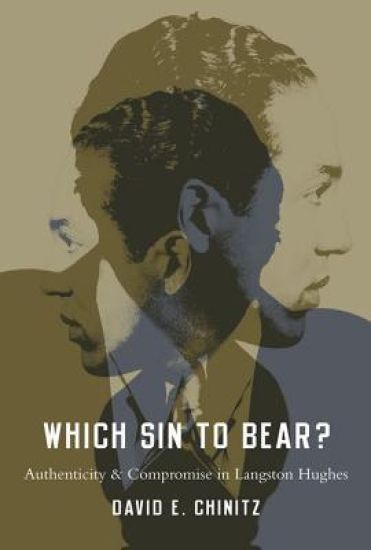
Which Sin to Bear?

Which Sin to Bear?

David E. Chinitz

Oxford University Press Inc
2016
nidottu
Which Sin To Bear? mines Langston Hughes's creative work, newspaper columns, letters, and unpublished papers to reveal a writer who faced a daunting array of dicey questions and intimidating obstacles, and whose triumphs and occasional missteps are a fascinating and telling part of his legacy. David E. Chinitz explores Hughes's efforts to negotiate the problems of identity and ethics he faced as an African American professional writer and intellectual, tracing his early efforts to fashion himself as an "authentic" black poet of the Harlem Renaissance and his later imagining of a new and more inclusive understanding of authentic blackness. He also examines Hughes's lasting yet self-critical commitment to progressive politics in the mid-century years and shows how, in spite of ambivalence-and, at times, anguish-Hughes was forced to engage in ethical compromises to achieve his personal and social goals.
Which Sin to Bear?

Which Sin to Bear?

David E. Chinitz

Oxford University Press Inc
2013
sidottu
This book explores Langston Hughes's efforts to mediate problems of identity and ethics he faced as an African-American professional writer and intellectual. Determined on a literary career at a time when no African American had yet been able to live off his or her writing; constrained by poverty, racism, and lack of opportunity; and pressed by the hopes, expectations, and demands of readers and critics of all stripes, Hughes had to rely on his dexterity as a mediator among competing positions in order to preserve his art, his integrity, and his unique status as the literary voice of ordinary African Americans. Issues treated include Hughes's interventions in the shifting definition of "authentic blackness," his work toward a socially effectual discourse of racial protest, his involvement with liberal politics, his ambivalence toward moral compromise even as he engaged in it, and the imprint of all these matters in texts ranging from his poetry and fiction to his essays and newspaper columns. The conflicting facts, varied experiences, divided impulses, and thorny compromises of his own life led Hughes to develop artistically an inclusive vision of the black community that anticipates by several decades what many cultural critics have come to advocate. The book is also the first to analyze Hughes's executive-session testimony before Joseph McCarthy's Senate Permanent Subcommittee on Investigations, which was treated as classified information for fifty years before finally being released to the public in 2003.
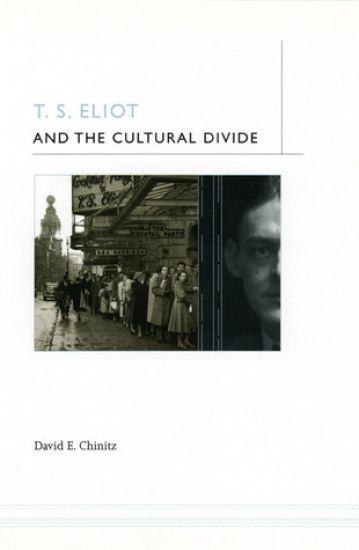
T. S. Eliot and the Cultural Divide

T. S. Eliot and the Cultural Divide

David E. Chinitz

University of Chicago Press
2005
nidottu
For decades T. S. Eliot has been applauded and denounced as a staunch champion of high art and an implacable opponent of popular culture. But Eliot's elitism was never what it seemed. "T. S. Eliot and the Cultural Divide" represents this great writer as the complex figure he was, an artist attentive not only to literature but also to detective fiction, Vaudeville Theater, jazz, and the songs of Tin Pan Alley. David Chinitz argues that Eliot was productively engaged with popular culture in some form at every stage of his career, and that his response to it, as expressed in his poetry, plays, and essays, was dynamic rather than hostile. He shows that American jazz, for example, was a major influence on Eliot's poetry during its maturation. He discusses Eliot's surprisingly persistent interest in popular culture, both in such famous works as "The Waste Land" and in such lesser-known pieces as "Sweeney Agonistes". And he traces Eliot's long, quixotic struggle to close the widening gap between high art and popular culture through a new type of public art: contemporary popular verse drama. What results is a work that will persuade adherents and detractors alike to return to Eliot and find in him a writer who liked a good show, a good thriller, and a good tune, as well as a "great" poem.
T. S. Eliot and the Cultural Divide

T. S. Eliot and the Cultural Divide

David E. Chinitz

University of Chicago Press
2003
sidottu
For decades T. S. Eliot has been applauded and denounced as a staunch champion of high art and an implacable opponent of popular culture. But Eliot's elitism was never what it seemed. "T. S. Eliot and the Cultural Divide" represents this great writer as the complex figure he was, an artist attentive not only to literature but also to detective fiction, Vaudeville Theater, jazz, and the songs of Tin Pan Alley. David Chinitz argues that Eliot was productively engaged with popular culture in some form at every stage of his career, and that his response to it, as expressed in his poetry, plays, and essays, was dynamic rather than hostile. He shows that American jazz, for example, was a major influence on Eliot's poetry during its maturation. He discusses Eliot's surprisingly persistent interest in popular culture, both in such famous works as "The Waste Land" and in such lesser-known pieces as "Sweeney Agonistes". And he traces Eliot's long, quixotic struggle to close the widening gap between high art and popular culture through a new type of public art: contemporary popular verse drama. What results is a work that will persuade adherents and detractors alike to return to Eliot and find in him a writer who liked a good show, a good thriller, and a good tune, as well as a "great" poem.