Kirjojen hintavertailu. Mukana 12 091 379 kirjaa ja 12 kauppaa.

Kirjahaku

Etsi kirjoja tekijän nimen, kirjan nimen tai ISBN:n perusteella.

20 kirjaa tekijältä David E. Cooper

The Measure of Things

The Measure of Things

David E. Cooper

Clarendon Press
2002
sidottu
Philosophers, both western and eastern, have long been divided between 'humanists', for whom 'man is the measure of things', and their opponents, who claim that there is a way, in principle knowable and describable, that the world anyway is, independent of human perspectives and interests. The early chapters of The Measure of Things chart the development of humanism from medieval times, through the Renaissance, Enlightenment and Romantic periods, to its most sophisticated, twentieth-century form, 'existential humanism'. Cooper does not identify this final position with that of any particular philosopher, though it is closely related to those of Heidegger, Merleau-Ponty and the later Wittgenstein. Among the earlier figures discussed are William of Ockham, Kant, Herder, Nietzsche and William James. Having rejected attempts by contemporary advocates of modest or non-metaphysical realism to dissolve the opposition between humanism and its 'absolutist' rival, Cooper moves on to an adjudication of that rivality. Prompted by the pervasive rhetoric of hubris that the rivals direct against one another, he argues, in an original manner, that the rival positions are indeed guilty of lack of humility. Absolutists - whether defenders of 'The Given' or scientific realists - exaggerate our capacity to ascend out of our 'engaged' perspectives to an objective account of the world. Humanists, conversely, exaggerate our capacity to live without a sense of our subjection to a measure independent of our own perspectives. The only escape, Cooper maintains, from the impasse reached when humanism and absolutism are both rejected, lies in a doctrine of mystery. There is a reality independent of 'the human contribution', but it is necessarily ineffable. Drawing in a novel way upon the Buddhist conception of 'emptiness' and Heidegger's later writings, the final chapters defend the notion of mystery, distinguish the doctrine advanced from that of transcendental idealism, and propose that it is only through appreciation of mystery that measure and warrant may be provided for our beliefs and conduct.
The Measure of Things

The Measure of Things

David E. Cooper

Oxford University Press
2007
nidottu
Philosophers, both western and eastern, have long been divided between 'humanists', for whom 'man is the measure of things', and their opponents, who claim that there is a way, in principle knowable and describable, that the world anyway is, independent of human perspectives and interests. The early chapters of The Measure of Things chart the development of humanism from medieval times, through the Renaissance, Enlightenment and Romantic periods, to its most sophisticated, twentieth-century form, 'existential humanism'. Cooper does not identify this final position with that of any particular philosopher, though it is closely related to those of Heidegger, Merleau-Ponty and the later Wittgenstein. Among the earlier figures discussed are William of Ockham, Kant, Herder, Nietzsche and William James. Having rejected attempts by contemporary advocates of modest or non-metaphysical realism to dissolve the opposition between humanism and its 'absolutist' rival, Cooper moves on to an adjudication of that rivality. Prompted by the pervasive rhetoric of hubris that the rivals direct against one another, he argues, in an original manner, that the rival positions are indeed guilty of lack of humility. Absolutists - whether defenders of 'The Given' or scientific realists - exaggerate our capacity to ascend out of our 'engaged' perspectives to an objective account of the world. Humanists, conversely, exaggerate our capacity to live without a sense of our subjection to a measure independent of our own perspectives. The only escape, Cooper maintains, from the impasse reached when humanism and absolutism are both rejected, lies in a doctrine of mystery. There is a reality independent of 'the human contribution', but it is necessarily ineffable. Drawing in a novel way upon the Buddhist conception of 'emptiness' and Heidegger's later writings, the final chapters defend the notion of mystery, distinguish the doctrine advanced from that of transcendental idealism, and propose that it is only through appreciation of mystery that measure and warrant may be provided for our beliefs and conduct.
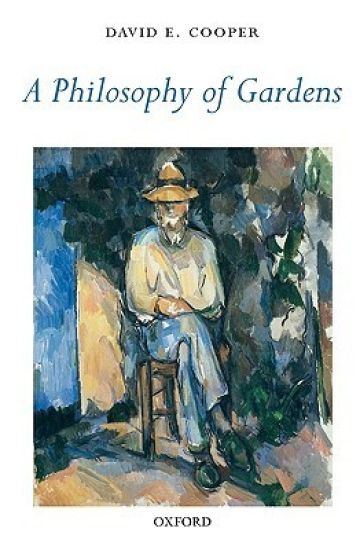
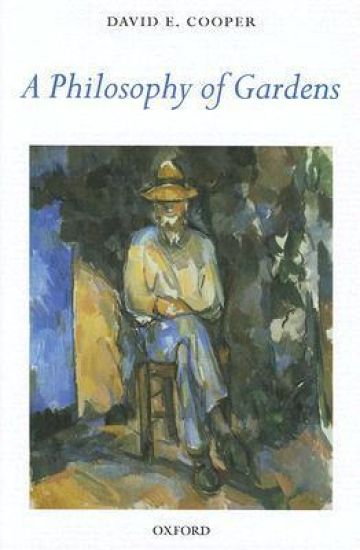
A Philosophy of Gardens

A Philosophy of Gardens

David E. Cooper

Oxford University Press
2008
nidottu
Why do gardens matter so much and mean so much to people? That is the intriguing question to which David Cooper seeks an answer in this book. Given the enthusiasm for gardens in human civilization ancient and modern, Eastern and Western, it is surprising that the question has been so long neglected by modern philosophy. Now at last there is a philosophy of gardens. Not only is this a fascinating subject in its own right, it also provides a reminder that the subject-matter of aesthetics is broader than the fine arts; that ethics is not just about moral issues but about 'the good life'; and that environmental philosophy should not focus only on 'wilderness' to the exclusion of the humanly shaped environment. David Cooper identifies garden appreciation as a special human phenomenon distinct from both from the appreciation of art and the appreciation of nature. He explores the importance of various 'garden-practices' and shows how not only gardening itself, but activities to which the garden especially lends itself, including social and meditative activities, contribute to the good life. And he distinguishes the many kinds of meanings that gardens may have, from representation of nature to emotional expression, from historical significance to symbolization of a spiritual relationship to the world. Building on the familiar observation that, among human beings' creations, the garden is peculiarly dependent on the co-operation of nature, Cooper argues that the garden matters as an epiphany of an intimate co-dependence between human creative activity in the world and the 'mystery' that allows there to be a world for them at all. A Philosophy of Gardens will open up this subject to students and scholars of aesthetics, ethics, and cultural and environmental studies, and to anyone with a reflective interest in things horticultural.
A Philosophy of Gardens

A Philosophy of Gardens

David E. Cooper

Clarendon Press
2006
sidottu
Why do gardens matter so much and mean so much to people? That is the intriguing question to which David Cooper seeks an answer in this book. Given the enthusiasm for gardens in human civilization ancient and modern, Eastern and Western, it is surprising that the question has been so long neglected by modern philosophy. Now at last there is a philosophy of gardens. Not only is this a fascinating subject in its own right, it also provides a reminder that the subject-matter of aesthetics is broader than the fine arts; that ethics is not just about moral issues but about 'the good life'; and that environmental philosophy should not focus only on 'wilderness' to the exclusion of the humanly shaped environment. David Cooper identifies garden appreciation as a special human phenomenon distinct from both from the appreciation of art and the appreciation of nature. He explores the importance of various 'garden-practices' and shows how not only gardening itself, but activities to which the garden especially lends itself, including social and meditative activities, contribute to the good life. And he distinguishes the many kinds of meanings that gardens may have, from representation of nature to emotional expression, from historical significance to symbolization of a spiritual relationship to the world. Building on the familiar observation that, among human beings' creations, the garden is peculiarly dependent on the co-operation of nature, Cooper argues that the garden matters as an epiphany of an intimate co-dependence between human creative activity in the world and the 'mystery' that allows there to be a world for them at all. A Philosophy of Gardens will open up this subject to students and scholars of aesthetics, ethics, and cultural and environmental studies, and to anyone with a reflective interest in things horticultural.
Existentialism

Existentialism

David E. Cooper

Blackwell Publishers
1999
sidottu
First published in 1990, Existentialism is widely regarded as a classic introductory survey of the topic, and has helped to renew interest in existentialist philosophy. The author places existentialism within the great traditions of philosophy, and argues that it deserves as much attention from analytic philosophers as it has always received on the continent.
Existentialism

Existentialism

David E. Cooper

JOHN WILEY AND SONS LTD
1999
nidottu
First published in 1990, Existentialism is widely regarded as a classic introductory survey of the topic, and has helped to renew interest in existentialist philosophy. The author places existentialism within the great traditions of philosophy, and argues that it deserves as much attention from analytic philosophers as it has always received on the continent.
World Philosophies

World Philosophies

David E. Cooper

Blackwell Publishers
2002
sidottu
This popular text has now been revised to ensure that it continues to meet the needs of the growing number of people interested in all the main philosophical traditions of the world. Introduces all the main philosophical systems of the world, from ancient times to the present day. Now includes new sections on Indian and Persian thought and on feminist and environmental philosophy. The preface and bibliography have also been updated. Written by a highly successful textbook author.
World Philosophies

World Philosophies

David E. Cooper

JOHN WILEY AND SONS LTD
2002
nidottu
This popular text has now been revised to ensure that it continues to meet the needs of the growing number of people interested in all the main philosophical traditions of the world. Introduces all the main philosophical systems of the world, from ancient times to the present day. Now includes new sections on Indian and Persian thought and on feminist and environmental philosophy. The preface and bibliography have also been updated. Written by a highly successful textbook author.
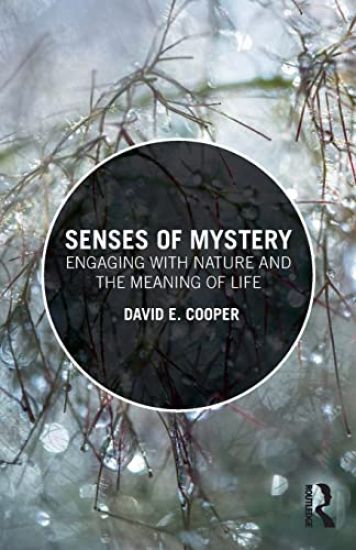
Senses of Mystery

Senses of Mystery

David E. Cooper

Routledge
2017
sidottu
In this beautifully written book, David E. Cooper uses a gentle walk through a tropical garden – the view of the fields and hills beyond it, the sound of birds, voices and flutes, the reflection of light in water, the play of shadows among the trees and the presence of strange animals – as an opportunity to reflect on experiences of nature and the mystery of existence.Covering an extensive range of topics, from Daoism to dogs, from gardening to walking, from Zen to Debussy, Cooper succeeds in conveying some deep and difficult philosophical ideas about the meaning of life in an engaging manner, showing how those ideas bear upon the practical question of how we should relate to our world and live our lives.A thought-provoking and compelling book, Senses of Mystery is a triumph of both storytelling and philosophy.
Senses of Mystery

Senses of Mystery

David E. Cooper

Routledge
2017
nidottu
In this beautifully written book, David E. Cooper uses a gentle walk through a tropical garden – the view of the fields and hills beyond it, the sound of birds, voices and flutes, the reflection of light in water, the play of shadows among the trees and the presence of strange animals – as an opportunity to reflect on experiences of nature and the mystery of existence.Covering an extensive range of topics, from Daoism to dogs, from gardening to walking, from Zen to Debussy, Cooper succeeds in conveying some deep and difficult philosophical ideas about the meaning of life in an engaging manner, showing how those ideas bear upon the practical question of how we should relate to our world and live our lives.A thought-provoking and compelling book, Senses of Mystery is a triumph of both storytelling and philosophy.
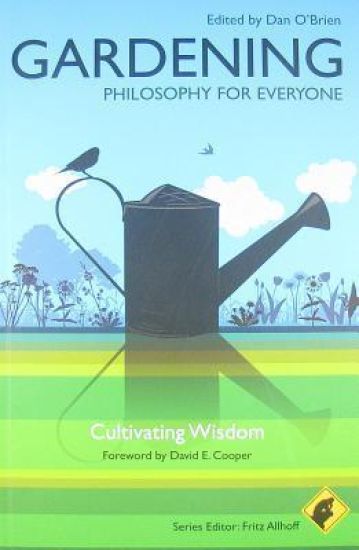
Gardening - Philosophy for Everyone

Gardening - Philosophy for Everyone

David E. Cooper

Wiley-Blackwell (an imprint of John Wiley Sons Ltd)
2010
nidottu
Philosophy and gardens have been closely connected from the dawn of philosophy, with many drawing on their beauty and peace for philosophical inspiration. Gardens in turn give rise to a broad spectrum of philosophical questions. For the green-fingered thinker, this book reflects on a whole host of fascinating philosophical themes. Gardens and philosophy present a fascinating combination of subjects, historically important, and yet scarcely covered within the realms of philosophyContributions come from a wide range of authors, ranging from garden writers and gardeners, to those working in architecture, archaeology, archival studies, art history, anthropology, classics and philosophyEssays cover a broad spectrum of topics, ranging from Epicurus and Confucius to the aesthetics and philosophy of Central ParkOffers new perspectives on the experience and evaluation of gardens
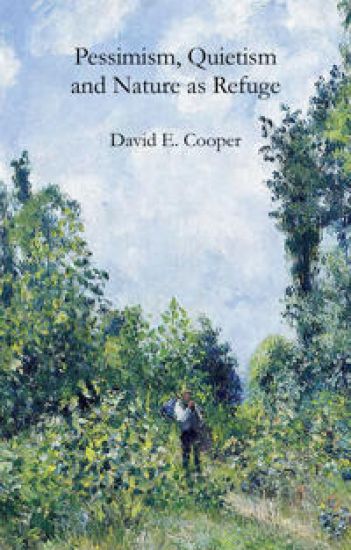
Pessimism, Quietism and Nature as Refuge

Pessimism, Quietism and Nature as Refuge

David E. Cooper

AGENDA PUBLISHING
2024
sidottu
How do we, as individuals, accommodate a pessimistic and misanthropic view of the world? If the human condition is impossible to ameliorate, then how should we live? How do we bring about the wellbeing and happiness we seek in the face of such overwhelming evidence that our condition is and will remain very bad indeed and owes significantly to our own entrenched failings? In this thoughtful and insightful book the philosopher David E. Cooper explores this fundamental dilemma. He rejects an activist commitment to radical improvement of the human condition, and instead advocates quietism as a way to live as well and as happily as we can. This quietist position, which draws on Buddhist and Daoist ideas as well as those from western philosophy, is supplemented by finding refuge from the everyday human world in a "place" both "other" and "better" than that world. Such places of refuge, Cooper argues, are best found in natural environments. Refuge in nature, whether a garden or a wilderness, cultivates an attunement to, or a sense of, the way of things, and thereby invites assurance of being "in the truth" and the enjoyment that such assurance fosters. The quietist who finds refuge in nature lives as well as and as happily as anyone can do who accepts the negative verdict on the human condition.
Pessimism, Quietism and Nature as Refuge

Pessimism, Quietism and Nature as Refuge

David E. Cooper

AGENDA PUBLISHING
2024
nidottu
How do we, as individuals, accommodate a pessimistic and misanthropic view of the world? If the human condition is impossible to ameliorate, then how should we live? How do we bring about the wellbeing and happiness we seek in the face of such overwhelming evidence that our condition is and will remain very bad indeed and owes significantly to our own entrenched failings? In this thoughtful and insightful book the philosopher David E. Cooper explores this fundamental dilemma. He rejects an activist commitment to radical improvement of the human condition, and instead advocates quietism as a way to live as well and as happily as we can. This quietist position, which draws on Buddhist and Daoist ideas as well as those from western philosophy, is supplemented by finding refuge from the everyday human world in a "place" both "other" and "better" than that world. Such places of refuge, Cooper argues, are best found in natural environments. Refuge in nature, whether a garden or a wilderness, cultivates an attunement to, or a sense of, the way of things, and thereby invites assurance of being "in the truth" and the enjoyment that such assurance fosters. The quietist who finds refuge in nature lives as well as and as happily as anyone can do who accepts the negative verdict on the human condition.
Meaning

Meaning

David E. Cooper

Acumen Publishing Ltd
2003
sidottu
Meaning is one of our most central and most ubiquitous concepts. Anything at all may, in suitable contexts, have meaning ascribed to it. In this wide-ranging book, David Cooper departs from the usual focus on linguistic meaning to discuss how works of art, ceremony, social action, bodily gesture, and the purpose of life can all be meaningful. He argues that the notion of meaning is best approached by considering what we accept as explanations of meaning in everyday practice and shows that in these situations we are explaining the appropriate fit of an item - whether a word or an artwork - with something larger than or outside of itself. This fuller account of meaning explores questions of the meaning of meaning and tackles issues such as whether meaning is just a misleading 'folk' term for something more basic, whether there really is meaning at all, and whether we should strive for meaning or let our lives 'just be' rather than mean. By taking the problem of meaning out of the technical philosophy of language and providing a more general account, Cooper is able to offer new insights into the import, function, and status of meaning that will be of interest not only to philosophers of language but to students and philosophers working in areas such as epistemology and metaphysics.
Meaning

Meaning

David E. Cooper

Acumen Publishing Ltd
2003
nidottu
Meaning is one of our most central and most ubiquitous concepts. Anything at all may, in suitable contexts, have meaning ascribed to it. In this wide-ranging book, David Cooper departs from the usual focus on linguistic meaning to discuss how works of art, ceremony, social action, bodily gesture, and the purpose of life can all be meaningful. He argues that the notion of meaning is best approached by considering what we accept as explanations of meaning in everyday practice and shows that in these situations we are explaining the appropriate fit of an item - whether a word or an artwork - with something larger than or outside of itself. This fuller account of meaning explores questions of the meaning of meaning and tackles issues such as whether meaning is just a misleading 'folk' term for something more basic, whether there really is meaning at all, and whether we should strive for meaning or let our lives 'just be' rather than mean. By taking the problem of meaning out of the technical philosophy of language and providing a more general account, Cooper is able to offer new insights into the import, function, and status of meaning that will be of interest not only to philosophers of language but to students and philosophers working in areas such as epistemology and metaphysics.
Buddhism, Virtue and Environment

Buddhism, Virtue and Environment

David E. Cooper; Simon P. James

Ashgate Publishing Limited
2005
nidottu
Buddhism, one increasingly hears, is an 'eco-friendly' religion. It is often said that this is because it promotes an 'ecological' view of things, one stressing the essential unity of human beings and the natural world. Buddhism, Virtue and Environment presents a different view. While agreeing that Buddhism is, in many important respects, in tune with environmental concerns, Cooper and James argue that what makes it 'green' is its view of human life. The true connection between the religion and environmental thought is to be found in Buddhist accounts of the virtues - those traits, such as compassion, equanimity and humility, that characterise the life of a spiritually enlightened individual. Central chapters of this book examine these virtues and their implications for environmental attitudes and practice. Buddhism, Virtue and Environment will be of interest not only to students and teachers of Buddhism and environmental ethics, but to those more generally engaged with moral philosophy. Written in a clear and accessible style, this book presents an original conception of Buddhist environmental thought. The authors also contribute to the wider debate on the place of ethics in Buddhist teachings and practices, and to debates within 'virtue ethics' on the relations between human well-being and environmental concern.