Kirjojen hintavertailu. Mukana 12 390 323 kirjaa ja 12 kauppaa.

Kirjahaku

Etsi kirjoja tekijän nimen, kirjan nimen tai ISBN:n perusteella.

8 kirjaa tekijältä David E. Wilhite

Ancient African Christianity

Ancient African Christianity

David E. Wilhite

Routledge
2017
sidottu
Christianity spread across North Africa early, and it remained there as a powerful force much longer than anticipated. While this African form of Christianity largely shared the Latin language and Roman culture of the wider empire, it also represented a unique tradition that was shaped by its context. Ancient African Christianity attempts to tell the story of Christianity in Africa from its inception to its eventual disappearance. Well-known writers such as Tertullian, Cyprian, and Augustine are studied in light of their African identity, and this tradition is explored in all its various expressions. This book is ideal for all students of African Christianity and also a key introduction for anyone wanting to know more about the history, religion, and philosophy of these early influential Christians whose impact has extended far beyond the African landscape.
Ancient African Christianity

Ancient African Christianity

David E. Wilhite

Routledge
2017
nidottu
Christianity spread across North Africa early, and it remained there as a powerful force much longer than anticipated. While this African form of Christianity largely shared the Latin language and Roman culture of the wider empire, it also represented a unique tradition that was shaped by its context. Ancient African Christianity attempts to tell the story of Christianity in Africa from its inception to its eventual disappearance. Well-known writers such as Tertullian, Cyprian, and Augustine are studied in light of their African identity, and this tradition is explored in all its various expressions. This book is ideal for all students of African Christianity and also a key introduction for anyone wanting to know more about the history, religion, and philosophy of these early influential Christians whose impact has extended far beyond the African landscape.
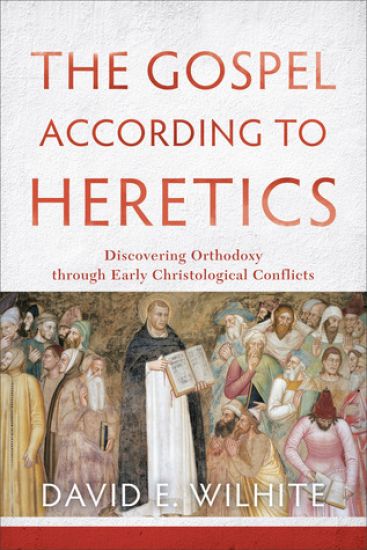
The Gospel according to Heretics – Discovering Orthodoxy through Early Christological Conflicts
Since what Christian doctrine denies can be as important as what it affirms, it is important to understand teachings about Jesus that the early church rejected. Historians now acknowledge that proponents of alternative teachings were not so much malicious malcontents as they were misguided or even misunderstood. Here a recognized expert in early Christian theology teaches orthodox Christology by explaining the false starts (heresies), making the history of theology relevant for today's church. This engaging introduction to the christological heresies is suitable for beginning students. In addition, pastors and laypeople will find it useful for apologetic purposes.
Tertullian the African

Tertullian the African

David E. Wilhite

De Gruyter
2007
sidottu
Who was Tertullian, and what can we know about him? This work explores his social identities, focusing on his North African milieu. Theories from the discipline of social/cultural anthropology, including kinship, class and ethnicity, are accommodated and applied to selections of Tertullian’s writings. In light of postcolonial concerns, this study utilizes the categories of Roman colonizers, indigenous Africans and new elites. The third category, new elites, is actually intended to destabilize the other two, denying any “essential” Roman or African identity. Thereafter, samples from Tertullian’s writings serve to illustrate comparisons of his own identities and the identities of his rhetorical opponents. The overall study finds Tertullian’s identities to be manifold, complex and discursive. Additionally, his writings are understood to reflect antagonism toward Romans, including Christian Romans (which is significant for his so-called Montanism), and Romanized Africans. While Tertullian accommodates much from Graeco-Roman literature, laws and customs, he nevertheless retains a strongly stated non-Roman-ness and an African-ity, which is highlighted in the present monograph.
Israel’s Lord

Israel’s Lord

David E. Wilhite; Adam Winn

BLOOMSBURY PUBLISHING PLC
2024
sidottu
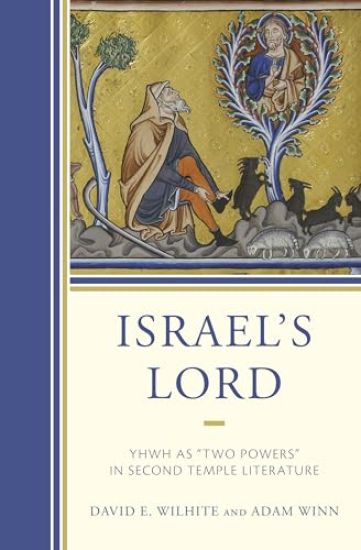
Israel’s Lord addresses the nature of Jewish monotheism in the Second Temple period, especially in relation to a concept known as "two powers" in heaven. Wilhite and Winn review the various figures that were depicted as the second power in heaven, such as God's Word, God’s Wisdom, the Angel of the Lord, the Son of Man, and others. By establishing a set of criteria by which to evaluate whether ancient Jews from this period would consider a certain figure divine, the authors re-assess the various candidates, finding some, but not all, to be rightly described as the second power in heaven – that is, the figure who appeared in Israel’s scriptures and was also called YHWH. This two powers paradigm provides a way forward for studying this period in general and the rise of Christianity in particular. The debate about Jesus' divinity depends in large part on what options were available for the earliest Christians when considering his titles and status. Since a second power figure is found in a wide array of sources, the authors contend that this should inform any reading of New Testament texts and their varying depictions of Jesus as the "Lord" of Israel.
Israel's Lord: Yhwh as "Two Powers" in Second Temple Literature

Israel's Lord: Yhwh as "Two Powers" in Second Temple Literature

David E. Wilhite; Adam Winn

Fortress Academic
2026
nidottu
Israel's Lord: YHWH as "Two Powers" in Second Temple Literature addresses the nature of Jewish monotheism in Second Temple literature, advancing an argument that much of the literature reflects the existence of two powers in heaven that are both rightly understood as YHWH. To this end, Wilhite and Winn review various figures such God's Word, God's Wisdom, the Angel of the Lord, the Son of Man, and others that bear features closely associate with the God of Israel. Using criteria related to these features they argue that most, though not all, of these figures are rightly identified as the figure who appeared in Israel's scriptures and was called YHWH. Such a "two powers" paradigm is relevant for understanding early Christian commitments regarding Jesus. The debate about Jesus' divinity depends in large part on what options were available for the earliest Christians when considering his titles and status. The authors contend that with such a "two powers" paradigm available to the earliest Christians, it should inform any reading of New Testament texts and their varying depictions of Jesus as "Lord."
The Church: A Guide for the Perplexed

The Church: A Guide for the Perplexed

Matt Jenson; David E. Wilhite

T. T.Clark Ltd
2010
sidottu
This book offers an upper-level introduction to the Christian doctrine of the Church. This book is a rigorous comprehensive introduction to the doctrine of the Church by taking the tack of walking readers through the internal logic of ecclesiology. Rather than simply offering a compendium of perspectives on each issue that arises, the authors seek to teach and model thinking theologically, with the grain of scripture and ecclesial reflection, about the Church. The chapters are peppered with two to three excurses per chapter which consider a particularly pertinent issue that arises from the doctrine's development (e.g. the move from Jesus to the Church, schism and the rise of denominations, sacramental mediation) or contemporary concerns (e.g. the question of other religions, contemporary ecumenical questions, the emerging church). While the overall tone and content of the book articulate and invite discussion on the problematics of ecclesiology, these excurses will provide ample opportunity to examine and (where appropriate) untangle ecclesiological knots. Continuum's Guides for the Perplexed are clear, concise and accessible introductions to thinkers, writers and subjects that students and readers can find especially challenging - or indeed downright bewildering. Concentrating specifically on what it is that makes the subject difficult to grasp, these books explain and explore key themes and ideas, guiding the reader towards a thorough understanding of demanding material.
The Church: A Guide for the Perplexed

The Church: A Guide for the Perplexed

Matt Jenson; David E. Wilhite

T. T.Clark Ltd
2010
nidottu
An upper-level introduction to the Christian doctrine of the Church. This book is a rigorous comprehensive introduction to the doctrine of the Church by taking the tack of walking readers through the internal logic of ecclesiology. Rather than simply offering a compendium of perspectives on each issue that arises, the authors seek to teach and model thinking theologically, with the grain of scripture and ecclesial reflection, about the Church. The chapters are peppered with two to three excurses per chapter which consider a particularly pertinent issue that arises from the doctrine's development (e.g. the move from Jesus to the Church, schism and the rise of denominations, sacramental mediation) or contemporary concerns (e.g. the question of other religions, contemporary ecumenical questions, the emerging church). While the overall tone and content of the book articulate and invite discussion on the problematics of ecclesiology, these excurses will provide ample opportunity to examine and (where appropriate) untangle ecclesiological knots. Continuum's Guides for the Perplexed are clear, concise and accessible introductions to thinkers, writers, and subjects that students and readers can find especially challenging - or indeed downright bewildering. Concentrating specifically on what it is that makes the subject difficult to grasp, these books explain and explore key themes and ideas, guiding the reader towards a thorough understanding of demanding material.