Kirjojen hintavertailu. Mukana 11 342 296 kirjaa ja 12 kauppaa.

Kirjahaku

Etsi kirjoja tekijän nimen, kirjan nimen tai ISBN:n perusteella.

31 kirjaa tekijältä David Edwards

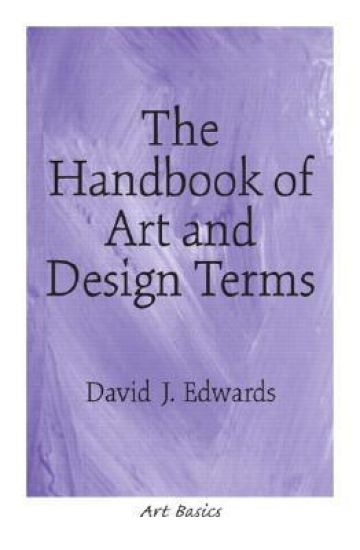
Handbook of Art and Design Terms, The
For courses in Fine Arts, Basic Art and Design, and Architecture. Developed in response to the needs of students engaged in the study of art, design, and architecture, this primer is succinct, lightweight, and thorough in its lexical entries. Its simplicity, size, and scope make it a reference that has use and appeal across a number of visual arts disciplines. Part of theArtBasics series, designed to provide students with high quality books at an affordable cost.
"Words For The One You Love"

"Words For The One You Love"

David Edwards

Lulu.com
2018
pokkari
Words For The One You Love book is fill with all kinds of love. The kind that could warm your heart and bring tears to your eyes at the same time. A good part of this book was sitting in a box for a long time. Then something happen love came back to it and the love knew it was meant to be together. The kind of love that will last forever until the end of time.
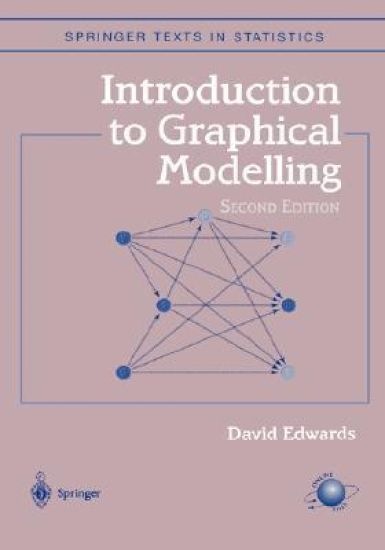
Introduction to Graphical Modelling

Introduction to Graphical Modelling

David Edwards

Springer-Verlag New York Inc.
2000
sidottu
This textbook provides an introduction to graphical modelling with emphasis on applications and practicalities rather than on a formal development. It is based on the software package for graphical modelling, MIM, a freeware version of which can be downloaded from the Internet.
Whiff

Whiff

David Edwards

Harvard University Press
2009
nidottu
Whiff is the new novel by David Edwards (Séguier). It is illustrated by the Japanese Manga artist Junko Murata and continues the story of Edwards’ first novel, Niche, co-authored with Jay Cantor (Plessis). Whiff derives from an actual experiment performed in Paris at the art and science innovation center, Le Laboratoire. In this latest experiment, the double-Michelin-starred chef Thierry Marx collaborated with the colloidal scientist Jérôme Bibette to introduce a new way of encapsulating flavors. Wishing to present these delectable capsules in an unusual way, a group of art and science college students developed with Edwards a new way of eating by aerosol, called whiffing. Whiff, whose publication coincides with the commercialization by Le Laboratoire of aerosolized chocolate, explores how we dream, and realize our dreams, through surprising combinations of aesthetic and analytical methods. Whiff is also accompanied by the first “whiffing” recipes.
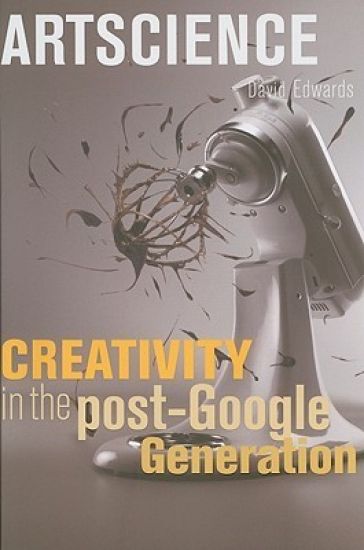
Artscience

Artscience

David Edwards

Harvard University Press
2009
nidottu
Scientists are famous for believing in the proven and peer-accepted, the very ground that pioneering artists often subvert; they recognize correct and incorrect where artists see only true and false. And yet in some individuals, crossover learning provides a remarkable kind of catalyst to innovation that sparks the passion, curiosity, and freedom to pursue--and to realize--challenging ideas in culture, industry, society, and research. This book is an attempt to show how innovation in the "post-Google generation" is often catalyzed by those who cross a conventional line so firmly drawn between the arts and the sciences.David Edwards describes how contemporary creators achieve breakthroughs in the arts and sciences by developing their ideas in an intermediate zone of human creativity where neither art nor science is easily defined. These creators may innovate in culture, as in the development of new forms of music composition (through use of chaos theory), or, perhaps, through pioneering scientific investigation in the basement of the Louvre. They may innovate in research institutions, society, or industry, too. Sometimes they experiment in multiple environments, carrying a single idea to social, industrial, and cultural fruition by learning to view traditional art-science barriers as a zone of creativity that Edwards calls artscience. Through analysis of original stories of artscience innovation in France, Germany, and the United States, he argues for the development of a new cultural and educational environment, particularly relevant to today's need to innovate in increasingly complex ways, in which artists and scientists team up with cultural, industrial, social, and educational partners.
The Lab

The Lab

David Edwards

Harvard University Press
2010
sidottu
Never has the spirit of innovation been more highly valued than today. Around the world, people see the hard-to-teach skills of creativity as the lifeblood of cultural change and the engine of economic development. In The Lab, David Edwards presents a blueprint for revitalizing labs with "artscience"? creative thought that erases conventional boundaries between art and science?to produce innovations that otherwise might never see the light of day. At the heart of The Lab is "cultural incubation," whereby ideas translate with free-wheeling public exchange through a kind of innovation funnel—from educational settings (as in The Lab at Harvard University), to cultural settings (as at Le Laboratoire in Paris and elsewhere), to realizations as innovative products or humanitarian initiatives (within LaboGroup and other translation labs around the globe). With examples ranging from breathable chocolate (Le Whif) to contemporary art installations that explore the neuroscience of fear, Edwards shows how a measured-risk, seed-investment, mentorship-focused network of labs can allow exotic, unexpected ideas to flourish without being killed off at the first hint of impracticality. Unique to the innovation funnel is how creator risk is encouraged but also managed by mentors and others in each lab, so that the most daring ideas—lighting African villages with microbiotic lamps, or cleaning the air with plant-based filters—can emerge within passionate and sometimes inexperienced creative bands. Lively and engaging, replete with anecdotes that bring Edwards's unique personal experience in developing artscience labs to life, The Lab approaches innovation from exciting new angles, finding invigorating ways to repurpose our most creative assets—in scientific exploration, artistic imagination, and business model-building. David Edwards teaches at Harvard University in the School of Engineering and Applied Sciences. His creative work is described at www.davidideas.com.
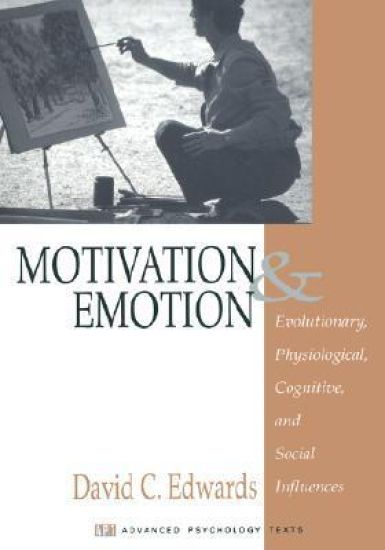
Motivation and Emotion

Motivation and Emotion

David Edwards

SAGE Publications Inc
1998
sidottu
"I think David C. Edwards does a very good job of covering the material. The writing style is consistently clear, direct and interesting. Research findings are clearly presented and clearly explained." --Ronald R. Ulm, Salisbury State University How do culture and other people affect our eating habits? Is love "natural" to humans? Is anger always at the root of aggressive behaviors? Aimed at unraveling the mysteries of human motivation and emotion, author David C. Edwards explores the evolutionary, physiological, social, and cognitive factors that shape each motivational behavior from anger to sex to work and play. Topically organized, Edwards provides readers with the best of contemporary findings in each motivational behavior and summarizes how past research in the field contributed to current thought. To facilitate the reader's comprehension of the material, each chapter begins with a concise overview statement and ends with a personal summary. Within the chapter, the author highlights material of special importance and concludes major sections with a summary. Each chapter ends with a set of questions that will help a student reader prepare for an exam.
After Death?

After Death?

David Edwards

Continuum International Publishing Group Ltd.
2001
nidottu
Will anything of us survive after death? This is a central question when we ask what life means. All through history, societies and their cultures, in particular their religions and philosophies, have guided and sustained people as they have approached death and as they have mourned. A more secular society has made these comforts less accessible. Many beliefs formerly advanced with some authority and believed with some assurance have become incredible to many.After Death? offers a thought-provoking analysis of past and present beliefs for those who want to think for themselves about the greatest uncertainty of life.
What Anglicans Believe in the Twenty-first Century

What Anglicans Believe in the Twenty-first Century

David Edwards

Continuum International Publishing Group Ltd.
2004
nidottu
This new edition of the 1974 classic What Anglicans Believe is for the very different world of the twenty-first century and its powerful new preface examines the whole question of belief.David Edwards' purpose is to present a straightforward account of what many Anglicans believe. He writes honest answers to the questions that many are asking of their faith and the Church. He aims to help Anglicans all over the world to understand their own tradition and what it can offer them. A list of questions for discussion makes this an ideal book for study groups as well as for individual contemplation.
The Link Between Company Environmental and Financial Performance (Routledge Revivals)
The Link between Company Environmental & Financial Performance, first published in 1998, is a detailed investigation into the effects of environmental performance – resource efficiency, regulatory compliance, new product and service opportunities – on corporate financial performance. This report makes essential reading for company management, investors and other stakeholders. It demonstrates the quantitative links between environmental and financial performance for the UK’s best and worst environmental performers across a range of business sectors. It shows that there is no financial penalty for being environmentally proactive, and confirms US findings that good environmental performance improves a company’s financial performance.
The Link Between Company Environmental and Financial Performance (Routledge Revivals)
The Link between Company Environmental & Financial Performance, first published in 1998, is a detailed investigation into the effects of environmental performance – resource efficiency, regulatory compliance, new product and service opportunities – on corporate financial performance. This report makes essential reading for company management, investors and other stakeholders. It demonstrates the quantitative links between environmental and financial performance for the UK’s best and worst environmental performers across a range of business sectors. It shows that there is no financial penalty for being environmentally proactive, and confirms US findings that good environmental performance improves a company’s financial performance.
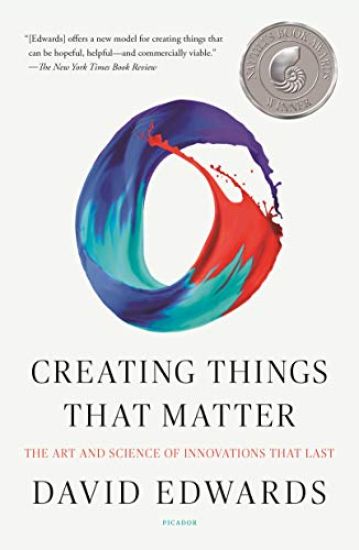
Creating Things That Matter: The Art and Science of Innovations That Last
Most things we create will not matter. This book is about creating things that do, from a master innovator who brings science and art together in his cutting edge labs. Art and science are famous opposites. Contemporary innovation mostly keeps them far apart. But in this book, David Edwards--world-renowned inventor; Harvard professor of the practice of idea translation; creator of breathable insulin, edible food packaging, and digital scents--reveals that the secret to creating very new things of lasting benefit, including innovations we will need to sustain human life on the planet, lies in perceiving art and science as one. Here Edwards shares how he discovered a way of creating that transcends disciplines and incorporates the principles of aesthetics. He introduces us to cutting-edge artists, musicians, architects, physicists, mathematicians, engineers, chefs, choreographers, and novelists (among others) and uncovers a three-step cycle they all share in creating things that durably matter. This creator cycle looks unlike what we associate with game-changing innovation today, and aligns the most expressive art and the most revolutionary science in a radical reimagining of how we live. David Edwards and the innovators he profiles belong to an emerging grassroots renaissance flourishing in special environments that we all can make in our schools, companies and homes. Creating Things That Matter is a book for anyone wondering what tomorrow might be, and at last half believing that what they do can make a difference.
Sermons for the use of Condemned Malefactors

Sermons for the use of Condemned Malefactors

David Edwards

Gale Ecco, Print Editions
2018
sidottu
The 18th century was a wealth of knowledge, exploration and rapidly growing technology and expanding record-keeping made possible by advances in the printing press. In its determination to preserve the century of revolution, Gale initiated a revolution of its own: digitization of epic proportions to preserve these invaluable works in the largest archive of its kind. Now for the first time these high-quality digital copies of original 18th century manuscripts are available in print, making them highly accessible to libraries, undergraduate students, and independent scholars.The Age of Enlightenment profoundly enriched religious and philosophical understanding and continues to influence present-day thinking. Works collected here include masterpieces by David Hume, Immanuel Kant, and Jean-Jacques Rousseau, as well as religious sermons and moral debates on the issues of the day, such as the slave trade. The Age of Reason saw conflict between Protestantism and Catholicism transformed into one between faith and logic -- a debate that continues in the twenty-first century.++++The below data was compiled from various identification fields in the bibliographic record of this title. This data is provided as an additional tool in helping to insure edition identification: ++++British LibraryT104782With an errata slip pasted on the verso of p.55.London: printed by R. Hawes, 1774. And sold by J. Buckland, G. Keith, and W. Watts. --- Sold also by J. Shave and C. Punchard, at Ipswich, E. Rogers at Bury, and M. Booth, at Norwich, 1774. 3], iii-vi, 1], ix-x,255, 1]p.; 12
The Strategic Workforce Planning Handbook

The Strategic Workforce Planning Handbook

David Edwards

KOGAN PAGE LTD
2026
pokkari
Does your organization have the number of employees it needs to succeed both now and in the future? Do your processes support business objectives and do you have a robust talent pipeline? Business leaders and senior people professionals must be able to answer 'yes' to all these questions and the only way to achieve this is through successful strategic workforce planning. This practical guide outlines why strategic workforce planning (SWP) is so important and explains how to ensure you get it right. It covers how to assess your current resources and organization design, explains how to identify what you need to meet your business goals and provides everything you need to design and implement a successful workforce plan. Covering everything from getting stakeholder buy-in and setting a vision through to communicating change to the workforce and working with the finance team, The Strategic Workforce Planning Handbook includes everything you need to build a business plan that will support future company growth and drive results. There is discussion of how to measure and demonstrate the value of SWP, the internal politics and ethical considerations that you need to be aware of and the significance of diversity and inclusion in workforce planning. This book also contains crucial coverage of skills, technology and SWP metrics.
The Strategic Workforce Planning Handbook

The Strategic Workforce Planning Handbook

David Edwards

KOGAN PAGE LTD
2026
sidottu
Does your organization have the number of employees it needs to succeed both now and in the future? Do your processes support business objectives and do you have a robust talent pipeline? Business leaders and senior people professionals must be able to answer 'yes' to all these questions and the only way to achieve this is through successful strategic workforce planning. This practical guide outlines why strategic workforce planning (SWP) is so important and explains how to ensure you get it right. It covers how to assess your current resources and organization design, explains how to identify what you need to meet your business goals and provides everything you need to design and implement a successful workforce plan. Covering everything from getting stakeholder buy-in and setting a vision through to communicating change to the workforce and working with the finance team, The Strategic Workforce Planning Handbook includes everything you need to build a business plan that will support future company growth and drive results. There is discussion of how to measure and demonstrate the value of SWP, the internal politics and ethical considerations that you need to be aware of and the significance of diversity and inclusion in workforce planning. This book also contains crucial coverage of skills, technology and SWP metrics.
Art Therapy

Art Therapy

David Edwards

SAGE Publications Ltd
2013
sidottu
This bestselling introduction to art therapy brings theory to life through case material and examples of real artwork produced during therapy sessions. Practising art therapist Dave Edwards explains key theoretical ideas - such as symbolism, play, transference and interpretation - and shows how these relate to practice. As well as providing useful information on training, employment and the role of the HPC, the book offers extra practical guidance on: - assessing clients - establishing and maintaining boundaries - ending therapy - private practice. Now even more practical and accessible, this fully updated Second Edition includes a glossary, chapter summaries and other learning features. Case studies from a variety of settings shillustrate the application of art therapy in real-life scenarios. This book offers an excellent foundation on which to build future knowledge and skills and should be on the shelf of every art therapy trainee and new practitioner. David Edwards is an experienced HCPC registered art therapist who lives and works in Sheffield, UK.
Art Therapy

Art Therapy

David Edwards

SAGE Publications Ltd
2013
nidottu
This bestselling introduction to art therapy brings theory to life through case material and examples of real artwork produced during therapy sessions. Practising art therapist Dave Edwards explains key theoretical ideas - such as symbolism, play, transference and interpretation - and shows how these relate to practice. As well as providing useful information on training, employment and the role of the HPC, the book offers extra practical guidance on: - assessing clients - establishing and maintaining boundaries - ending therapy - private practice. Now even more practical and accessible, this fully updated Second Edition includes a glossary, chapter summaries and other learning features. Case studies from a variety of settings shillustrate the application of art therapy in real-life scenarios. This book offers an excellent foundation on which to build future knowledge and skills and should be on the shelf of every art therapy trainee and new practitioner. David Edwards is an experienced HCPC registered art therapist who lives and works in Sheffield, UK.
Expedition Planning Guide

Expedition Planning Guide

David Edwards

Lulu.com
2011
nidottu
A concise expedition planning guide that introduces a novice expeditioner to the considerations they should be aware of when planning an expedition or overseas fieldwork. As the University Expeditions Advisor for the Royal Geographical Society, David advised countless teams undertaking expeditions and fieldwork overseas. David regularly spoke on expedition planning for the Royal Geographical Society at their annual expedition planning seminar 'Explore' held every November. David also wrote the Royal Scottish Geographical Society's "Exploring New Frontiers - A guide to planning expeditions and team research projects in the field".
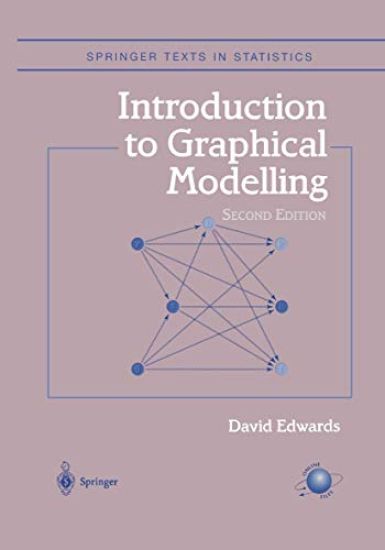
Introduction to Graphical Modelling

Introduction to Graphical Modelling

David Edwards

Springer-Verlag New York Inc.
2012
nidottu
Graphic modelling is a form of multivariate analysis that uses graphs to represent models. These graphs display the structure of dependencies, both associational and causal, between the variables in the model. This textbook provides an introduction to graphical modelling with emphasis on applications and practicalities rather than on a formal development. It is based on the popular software package for graphical modelling, MIM, a freeware version of which can be downloaded from the Internet. Following an introductory chapter which sets the scene and describes some of the basic ideas of graphical modelling, subsequent chapters describe particular families of models, including log-linear models, Gaussian models, and models for mixed discrete and continuous variables. Further chapters cover hypothesis testing and model selection. Chapters 7 and 8 are new to the second edition. Chapter 7 describes the use of directed graphs, chain graphs, and other graphs. Chapter 8 summarizes some recent work on causal inference, relevant when graphical models are given a causal interpretation. This book will provide a useful introduction to this topic for students and researchers.