Kirjojen hintavertailu. Mukana 11 343 062 kirjaa ja 12 kauppaa.

Kirjahaku

Etsi kirjoja tekijän nimen, kirjan nimen tai ISBN:n perusteella.

10 kirjaa tekijältä David F. Schmitz

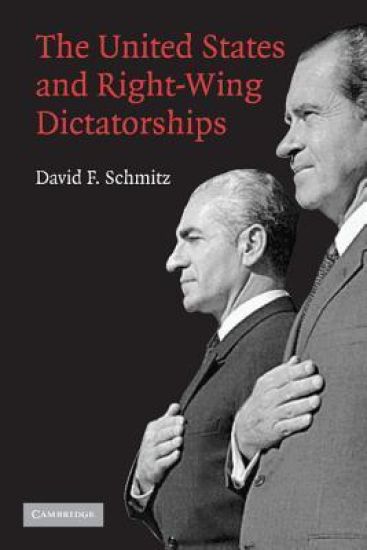
The United States and Right-Wing Dictatorships, 1965-1989

The United States and Right-Wing Dictatorships, 1965-1989

David F. Schmitz

Cambridge University Press
2006
pokkari
Building on Schmitz's earlier work, Thank God They're on our Side, this is an examination of American policy toward right-wing dictatorships from the 1960s to the end of the Cold War. During the 1920s American leaders developed a policy of supporting authoritarian regimes because they were seen as stable, anti-communist, and capitalist. After 1965, however, American support for these regimes became a contested issue. The Vietnam War served to undercut the logic and rationale of supporting right-wing dictators. By systematically examining US support for right-wing dictatorships in Africa, Latin America, Europe, and Asia, and bringing together these disparate episodes, this book examines the persistence of older attitudes, the new debates brought about by the Vietnam War, and the efforts to bring about changes and an end to automatic US support for authoritarian regimes.
The United States and Right-Wing Dictatorships, 1965-1989

The United States and Right-Wing Dictatorships, 1965-1989

David F. Schmitz

Cambridge University Press
2006
sidottu
Building on Schmitz's earlier work, Thank God They're on our Side, this is an examination of American policy toward right-wing dictatorships from the 1960s to the end of the Cold War. During the 1920s American leaders developed a policy of supporting authoritarian regimes because they were seen as stable, anti-communist, and capitalist. After 1965, however, American support for these regimes became a contested issue. The Vietnam War served to undercut the logic and rationale of supporting right-wing dictators. By systematically examining US support for right-wing dictatorships in Africa, Latin America, Europe, and Asia, and bringing together these disparate episodes, this book examines the persistence of older attitudes, the new debates brought about by the Vietnam War, and the efforts to bring about changes and an end to automatic US support for authoritarian regimes.
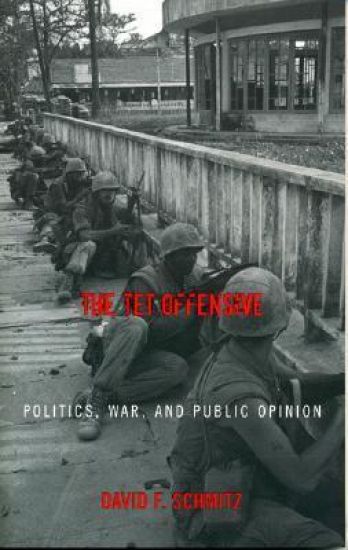
The Tet Offensive

The Tet Offensive

David F. Schmitz

Rowman Littlefield Publishers
2005
nidottu
On January 30, 1968 approximately 84,000 North Vietnamese Army and National Liberation Front forces launched nearly simultaneous attacks against over 100 cities and military installations in South Vietnam. The well-coordinated urban attacks came during the most sacred of Vietnamese holidays and caught American commanders by surprise. The results of the Tet Offensive were monumental, tens of thousands were killed and many more wounded. But its importance goes far beyond its military outcome to the powerful political, psychological, and economic impact in the United States. In this new work, historian David F. Schmitz analyzes what is arguably the most important event in the history of the Vietnam conflict. Schmitz situates the Tet Offensive in the context of American foreign policy and the state of the war up to 1968 while carefully considering the impact of the media on American public opinion. Through his up-to-date analysis of recently available sources, Schmitz works to dispel myths and clarify the central debates surrounding this pivotal event that brought an end to American escalation of the war and led to LBJ's decision to withdraw from the presidential race.
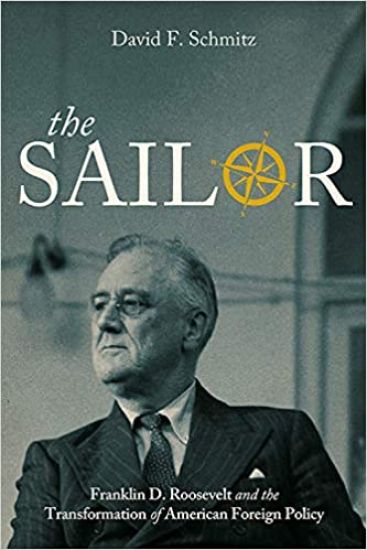
The Sailor

The Sailor

David F. Schmitz

The University Press of Kentucky
2021
sidottu
"As with sailing, so with politics: make your cloth too taut and your ship will dip and heel, but slacken off and trim your sails, and things head up again." - Euripides, OrestesThe Great Depression of the 1930s and the global crisis of World War II created ripe conditions for change in both US and international politics, setting off many questions regarding America's role in the world. The power and influence held by the United States at this time informed Franklin Roosevelt's belief that the country was optimally positioned to become a world leader. As such, his decisions and actions preceding the war were a critical juncture in twentieth-century US foreign policy and responsible for the nation's eventual entrance into the war. Scholarship often presents the 32nd President as an isolationist with little continuity or initiative in his approach to world politics. Based on a new, interpretive framework, however, FDR's actions take on a more purposeful tack.The Sailor: Franklin D. Roosevelt and the Transformation of American Foreign Policy, 1933-1945 examines Roosevelt's worldview and political ideology throughout his career to understand how they shaped the policies he developed in response to the crises that arose during his presidency. Author David Schmitz explains why Roosevelt found the traditional foreign policy of neutrality inadequate and shows how the president spurred a new, internationalist approach in the United States' dealings with other actors on the global stage. Arguing against existing scholarship that suggests FDR rarely made informed foreign policy decisions, Schmitz claims that the president was consistent and calculating in his outlook and actions involving international affairs and the direction of American foreign policy. Guided by a vision of peace and American security, Schmitz argues that Roosevelt pursued a "Third Way" between imperialism and revolution: a pro-Western nationalism built upon organized, international collaboration with a focus toward promoting and protecting American values and institutions.Schmitz shows how Roosevelt intentionally carried out this vision in the hopes of bringing about "an end to the beginnings of all wars."The Sailor is an important interpretive analysis of the Roosevelt administration's foreign policy. By challenging previously held assumptions, Schmitz constructs a new narrative about FDR's overall attitude to the US and its role in a postwar world. He shows how FDR successfully transformed US neutrality into US internationalism, forever changing the direction of American foreign policy. This work will appeal to scholars and general readers alike, specifically, those interested in Franklin Roosevelt, World War II, and American foreign relations.
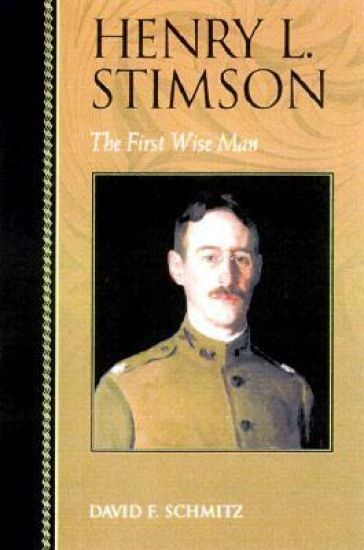
Henry L. Stimson

Henry L. Stimson

David F. Schmitz

Rowman Littlefield
2000
sidottu
The twentieth century witnessed the rise of the United States as the preeminent player on the world stage. While many individuals were responsible for the American ascension, few have left a larger legacy in the arena of foreign policy than Henry L. Stimson. Serving nearly every American president from Theodore Roosevelt to Harry S. Truman, Stimson shaped America's worldview and influenced America's foreign affairs decisions for over 40 years. A Republican, Stimson served as Secretary of War under William H. Taft (1911-13), Secretary of State under Herbert Hoover (1929-33), and Secretary of War for Franklin D. Roosevelt and Harry S. Truman (1940-45); in addition, he fought in World War I, initiated the Good Neighbor Policy in Central America, and served as Governor General of the Philippines (1927-29). In this new book, David Schmitz reveals how the life of Stimson provides a unique framework for analyzing America's foreign policy development from the imperialism of the 1890s to the origins of the Cold War and the emergence of the United States as the world's leading power after World War II. The author also explains the continuities in foreign policy over this period and the emergence of the internationalist perspective over isolation-ism, showing how Stimson was able to pass along his perspec-tives to the next generation of American policymakers who after World War II established the internationalist mindset of the Cold War years. Stimson's crucial role in the development and use of the atomic bomb is also examined. Henry L. Stimson: The First Wise Man is useful for courses in United States foreign policy, World War II, American history from 1900-1945, and survey courses in U.S. history.
Henry L. Stimson

Henry L. Stimson

David F. Schmitz

Rowman Littlefield
2000
nidottu
The twentieth century witnessed the rise of the United States as the preeminent player on the world stage. While many individuals were responsible for the American ascension, few have left a larger legacy in the arena of foreign policy than Henry L. Stimson. Serving nearly every American president from Theodore Roosevelt to Harry S. Truman, Stimson shaped America's worldview and influenced America's foreign affairs decisions for over 40 years. A Republican, Stimson served as Secretary of War under William H. Taft (1911-13), Secretary of State under Herbert Hoover (1929-33), and Secretary of War for Franklin D. Roosevelt and Harry S. Truman (1940-45); in addition, he fought in World War I, initiated the Good Neighbor Policy in Central America, and served as Governor General of the Philippines (1927-29). In this new book, David Schmitz reveals how the life of Stimson provides a unique framework for analyzing America's foreign policy development from the imperialism of the 1890s to the origins of the Cold War and the emergence of the United States as the world's leading power after World War II. The author also explains the continuities in foreign policy over this period and the emergence of the internationalist perspective over isolation-ism, showing how Stimson was able to pass along his perspec-tives to the next generation of American policymakers who after World War II established the internationalist mindset of the Cold War years. Stimson's crucial role in the development and use of the atomic bomb is also examined. Henry L. Stimson: The First Wise Man is useful for courses in United States foreign policy, World War II, American history from 1900-1945, and survey courses in U.S. history.
Richard Nixon and the Vietnam War

Richard Nixon and the Vietnam War

David F. Schmitz

Rowman Littlefield
2014
sidottu
In Richard Nixon and the Vietnam War, accomplished foreign relations historian David F. Shmitz provides students of US history and the Vietnam era with an up-to-date analysis of Nixon’s Vietnam policy in a brief and accessible book that addresses the main controversies of the Nixon years. President Richard Nixon’s first presidential term oversaw the definitive crucible of the Vietnam War. Nixon came into office seeking the kind of decisive victory that had eluded President Johnson, and went about expanding the war, overtly and covertly, in order to uphold a policy of “containment,” protect America’s credibility, and defy the left’s antiwar movement at home. Tactically, politically, Nixon’s moves made sense. However, by 1971 the president was forced to significantly de-escalate the American presence and seek a negotiated end to the war, which is now accepted as an American defeat, and a resounding failure of American foreign relations. Schmitz addresses the main controversies of Nixon’s Vietnam strategy, and in so doing manages to trace back the ways in which this most calculating and perceptive politician wound up resigning from office a fraud and failure. Finally, the book seeks to place the impact of Nixon’s policies and decisions in the larger context of post-World War II American society, and analyzes the full costs of the Vietnam War that the nation feels to this day.
Richard Nixon and the Vietnam War

Richard Nixon and the Vietnam War

David F. Schmitz

Rowman Littlefield
2016
nidottu
In Richard Nixon and the Vietnam War, accomplished foreign relations historian David F. Shmitz provides students of US history and the Vietnam era with an up-to-date analysis of Nixon’s Vietnam policy in a brief and accessible book that addresses the main controversies of the Nixon years. President Richard Nixon’s first presidential term oversaw the definitive crucible of the Vietnam War. Nixon came into office seeking the kind of decisive victory that had eluded President Johnson, and went about expanding the war, overtly and covertly, in order to uphold a policy of “containment,” protect America’s credibility, and defy the left’s antiwar movement at home. Tactically, politically, Nixon’s moves made sense. However, by 1971 the president was forced to significantly de-escalate the American presence and seek a negotiated end to the war, which is now accepted as an American defeat, and a resounding failure of American foreign relations. Schmitz addresses the main controversies of Nixon’s Vietnam strategy, and in so doing manages to trace back the ways in which this most calculating and perceptive politician wound up resigning from office a fraud and failure. Finally, the book seeks to place the impact of Nixon’s policies and decisions in the larger context of post-World War II American society, and analyzes the full costs of the Vietnam War that the nation feels to this day.
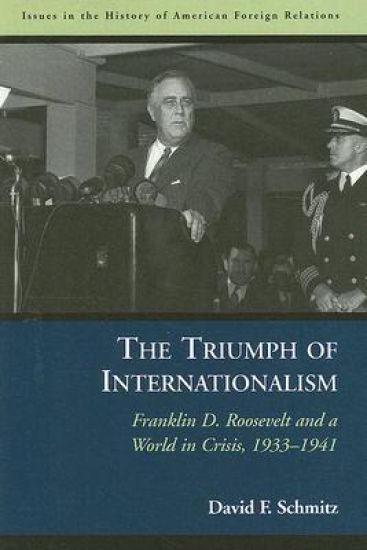
The Triumph of Internationalism

The Triumph of Internationalism

David F. Schmitz

Potomac Books Inc
2007
nidottu
When Franklin D. Roosevelt became president in March 1933, he initially devoted most of his attention to finding a solution to the Great Depression. But the pull of war and the results of FDR’s foreign policy ultimately had a deeper and more transformative impact on U.S. history. The Triumph of Internationalism offers a fresh, concise analysis and narrative of FDR’s foreign policy from 1933 to America’s entry into World War II in 1941. David Schmitz covers the attempts to solve the international economic crisis of the Great Depression, the Good Neighbor Policy in Latin America, the U.S. response to war in Europe and the Pacific, and other topics of this turbulent era. Schmitz describes Roosevelt as an internationalist who set out to promote U.S. interests abroad short of direct intervention. He tried to make amends for past transgressions with the nation’s southern neighbors, eventually attempted to open and promote international trade to foster economic growth, and pursued containment policies intended to halt both the Japanese threat in the Pacific through deterrence and German aggression in Europe through economic appeasement. When his policies regarding the Axis powers failed, he began educating the American public about the dangers of Axis hegemony and rearming the nation for war. This effort required a profound shift in the American mind-set, given the prevailing isolationism, the disillusionment with America’s involvement in World War I, and the preoccupation with domestic problems. A less powerful president would likely have failed, or perhaps not even attempted, to alter the prevailing public opinion. FDR revived American internationalism and reshaped the public’s understanding of the national interest and defense. Roosevelt’s policies and the outcome of World War II made the United States a superpower without equal.