Kirjojen hintavertailu. Mukana 11 717 486 kirjaa ja 12 kauppaa.

Kirjahaku

Etsi kirjoja tekijän nimen, kirjan nimen tai ISBN:n perusteella.

12 kirjaa tekijältä David Faflik

Melville and the Question of Meaning
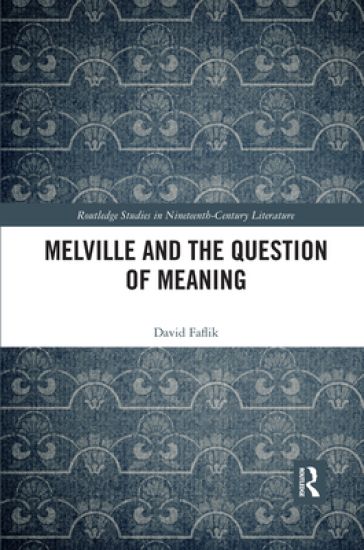
This rich volume of essays restores meaning itself as the focal point of one of our most thoughtful modern writers, Herman Melville. Melville and the Question of Meaning thinks about thinking in Melville. For if Melville’s concerns with interpretation (the contributors to one recent collection variously read the author for "the ‘meaning’ of the characters," the "meaning" of the "body," "recesses of meaning," "deepest levels of meaning," "double meaning," and the "meaning" of "being" and "everything else") overlap with our own concerns, at a cultural moment when meaning feels especially strained, we have lost sight of the central place of meaning making in Melville’s work. My own readings in Melville are a pedestrian’s guide through the self-conscious complications of meaning we meet with in Melville across a range of different disciplines and endeavors. Combining aesthetics and sociolinguistics, history and theory, rhetoric and politics, philosophy and film studies, Melville and the Question of Meaning demonstrates that the project of making meaning in Melville remains as vital as ever.
Boarding Out

Boarding Out

David Faflik

Northwestern University Press
2012
nidottu
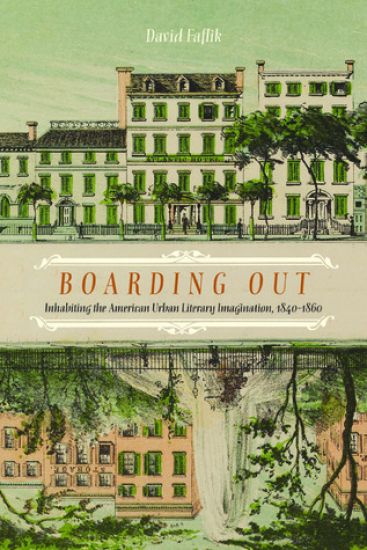
Driven by intensive industrialisation and urbanisation, the nineteenth century saw radical transformations in every facet of life in the United States. Immigrants and rural Americans poured into the nation’s cities, often ahead of or without their families. As city dwellers adapted to the new metropolis, boarding out became, for a few short decades, the most popular form of urban domesticity in the United States. While boarding’s historical importance is indisputable, its role in the period’s literary production has been overlooked. In ,em>Boarding Out, David Faflik argues that the urban American boardinghouse exerted a decisive shaping power on the period’s writers and writings. Addressing the works of canonical authors such as Henry David Thoreau, Nathaniel Hawthorne, and Oliver Wendell Holmes, as well as neglected popular writers of the era such as Fanny Fern and George Lippard, Faflik demonstrates that boarding was at once psychically, artistically, and materially central in the making of our shared American culture.
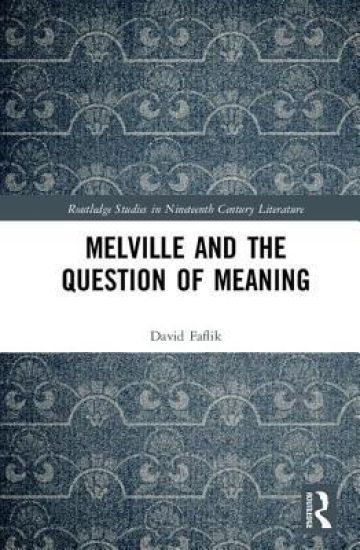
Melville and the Question of Meaning

Melville and the Question of Meaning

David Faflik

CRC Press Inc
2018
sidottu
This rich volume of essays restores meaning itself as the focal point of one of our most thoughtful modern writers, Herman Melville. Melville and the Question of Meaning thinks about thinking in Melville. For if Melville’s concerns with interpretation (the contributors to one recent collection variously read the author for "the ‘meaning’ of the characters," the "meaning" of the "body," "recesses of meaning," "deepest levels of meaning," "double meaning," and the "meaning" of "being" and "everything else") overlap with our own concerns, at a cultural moment when meaning feels especially strained, we have lost sight of the central place of meaning making in Melville’s work. My own readings in Melville are a pedestrian’s guide through the self-conscious complications of meaning we meet with in Melville across a range of different disciplines and endeavors. Combining aesthetics and sociolinguistics, history and theory, rhetoric and politics, philosophy and film studies, Melville and the Question of Meaning demonstrates that the project of making meaning in Melville remains as vital as ever.
Urban Formalism

Urban Formalism

David Faflik

Fordham University Press
2020
pokkari
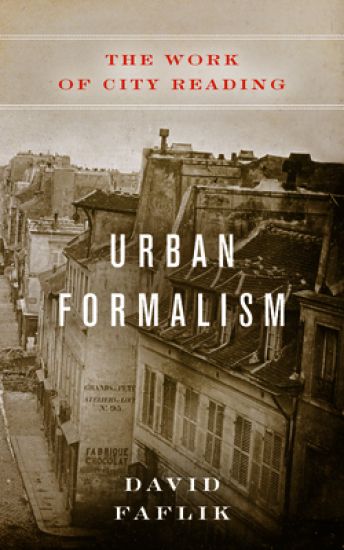
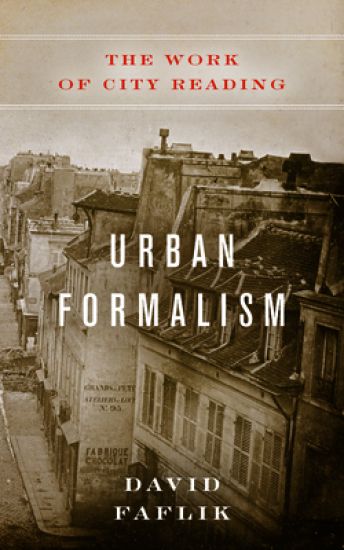
Urban Formalism radically reimagines what it meant to "read" a brave new urban world during the transformative middle decades of the nineteenth century. At a time when contemporaries in the twin capitals of modernity in the West, New York and Paris, were learning to make sense of unfamiliar surroundings, city peoples increasingly looked to the experiential patterns, or forms, from their everyday lives in an attempt to translate urban experience into something they could more easily comprehend. Urban Formalism interrogates both the risks and rewards of an interpretive practice that depended on the mutual relation between urbanism and formalism, at a moment when the subjective experience of the city had reached unprecedented levels of complexity. This book not only provides an original cultural history of forms. It posits a new form of urban history, comprising the representative rituals of interpretation that have helped give meaningful shape to metropolitan life.
Urban Formalism

Urban Formalism

David Faflik

FORDHAM UNIVERSITY PRESS
2020
sidottu
Urban Formalism radically reimagines what it meant to "read" a brave new urban world during the transformative middle decades of the nineteenth century. At a time when contemporaries in the twin capitals of modernity in the West, New York and Paris, were learning to make sense of unfamiliar surroundings, city peoples increasingly looked to the experiential patterns, or forms, from their everyday lives in an attempt to translate urban experience into something they could more easily comprehend. Urban Formalism interrogates both the risks and rewards of an interpretive practice that depended on the mutual relation between urbanism and formalism, at a moment when the subjective experience of the city had reached unprecedented levels of complexity. This book not only provides an original cultural history of forms. It posits a new form of urban history, comprising the representative rituals of interpretation that have helped give meaningful shape to metropolitan life.
That Futebol Feeling

That Futebol Feeling

David Faflik

TEMPLE UNIVERSITY PRESS,U.S.
2025
sidottu
Futebol, or soccer for Americans, is the planet’s spectator sport of choice. In the Brazilian state of Minas Gerais, nestled in the country’s southeastern heartland, futebol generates powerful, lifelong emotions.That Futebol Feeling captures the region’s enthrallment with “the beautiful game,” and shows us how and why play is central to the human condition. David Faflik profiles members of the most celebrated local team, Clube Atlético Mineiro (CAM), as well as its passionate, never-say-die fans, to show how futebol and fandom shape their everyday lives and perspectives. He discovers bonds of work and play, as well as pride, identity, and community. Additionally, Faflik’s analysis of Brazil’s futebol culture reflects sports fandom worldwide. CAM stands as a symbol for a way of life in Minas Gerais, the birthplace of Pelé. Faflik interrogates what playing the game means to those who dedicate their lives to the sport. He writes, “The feelings that football inspires are the best of me.” That Futebol Feeling shares that special feeling with the rest of us.
That Futebol Feeling

That Futebol Feeling

David Faflik

TEMPLE UNIVERSITY PRESS,U.S.
2025
nidottu
Futebol, or soccer for Americans, is the planet’s spectator sport of choice. In the Brazilian state of Minas Gerais, nestled in the country’s southeastern heartland, futebol generates powerful, lifelong emotions.That Futebol Feeling captures the region’s enthrallment with “the beautiful game,” and shows us how and why play is central to the human condition. David Faflik profiles members of the most celebrated local team, Clube Atlético Mineiro (CAM), as well as its passionate, never-say-die fans, to show how futebol and fandom shape their everyday lives and perspectives. He discovers bonds of work and play, as well as pride, identity, and community. Additionally, Faflik’s analysis of Brazil’s futebol culture reflects sports fandom worldwide. CAM stands as a symbol for a way of life in Minas Gerais, the birthplace of Pelé. Faflik interrogates what playing the game means to those who dedicate their lives to the sport. He writes, “The feelings that football inspires are the best of me.” That Futebol Feeling shares that special feeling with the rest of us.
The Literary Gift in Early America

The Literary Gift in Early America

David Faflik

STANFORD UNIVERSITY PRESS
2025
sidottu
Some of the most meaningful moments in early American literature relied on historical patterns of gift exchange, David Faflik argues in this compelling book. Gift exchange kept a surprising variety of literary objects in circulation across the diverse societies, economies, and cultures of the Americas, from the seventeenth through the nineteenth centuries. From the gifting of a Narragansett grammar as a foundational event in the project of colonization in New England, to the use of Benjamin Franklin's Poor Richard's Almanack in the classrooms of an independent Brazil, to Catharine Maria Sedgwick's fictions framing literature as the object of middle-class gifting, chapters offer an interdisciplinary perspective on book history and literary history in the United States and beyond. Faflik contends that it is because of the wild ways in which books circulated as gifts that works by Franklin, New England colonist Roger Williams, Sedgwick, Walt Whitman, and Emily Dickinson resisted the generic conventions of their day. Offering a revisionist account of how literary meaning is made, The Literary Gift in Early America calls for closer attention to the historical patterns of literary give and take in the Americas.
Transcendental Heresies

Transcendental Heresies

David Faflik

University of Massachusetts Press
2020
sidottu
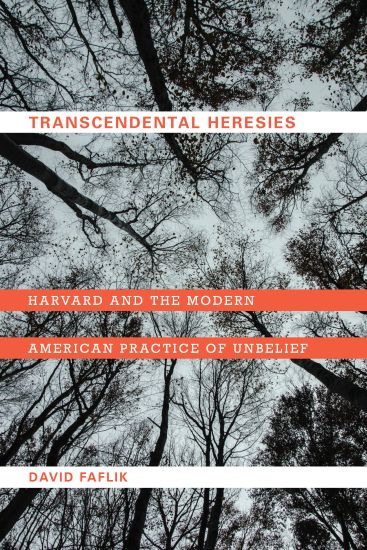
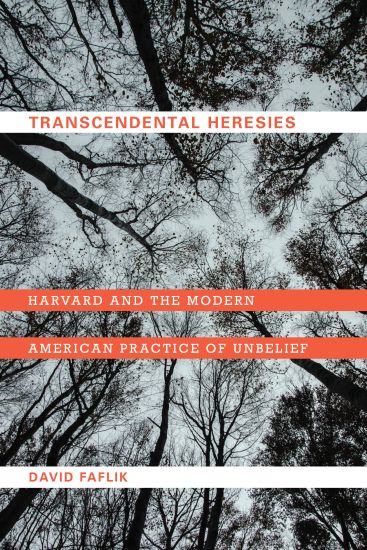
At a moment when the requirements of belief and unbelief were being negotiated in unexpected ways, transcendentalism allowed for a more creative approach to spiritual questions. Interrogating the movement's alleged atheistic underpinnings, David Faflik contends that transcendentalism reconstituted the religious sensibilities of 1830s and 1840s New England, producing a dynamic and complex array of beliefs and behaviors that cannot be categorized as either religious or nonreligious. Rather than ""the latest form of infidelity,"" as one contemporary described it, adherents viewed their unconventional and distinct spiritual practices as a modern religion.Transcendental Heresies draws on an expansive antebellum archive of period commentary and writings by transcendentalism's practitioners, including Ralph Waldo Emerson, Henry David Thoreau, Theodore Parker, Margaret Fuller, and the women of transcendentalism's second and third waves. From Boston to Concord to the heady environs of Harvard, the species of unbelief they practiced multiplied the religious possibilities of the era, expressing misgivings about traditional notions of divinity, flouting religion's customary forms, and ultimately encouraging spiritual questioning.
Transcendental Heresies

Transcendental Heresies

David Faflik

University of Massachusetts Press
2020
nidottu
At a moment when the requirements of belief and unbelief were being negotiated in unexpected ways, transcendentalism allowed for a more creative approach to spiritual questions. Interrogating the movement's alleged atheistic underpinnings, David Faflik contends that transcendentalism reconstituted the religious sensibilities of 1830s and 1840s New England, producing a dynamic and complex array of beliefs and behaviors that cannot be categorized as either religious or nonreligious. Rather than ""the latest form of infidelity,"" as one contemporary described it, adherents viewed their unconventional and distinct spiritual practices as a modern religion.Transcendental Heresies draws on an expansive antebellum archive of period commentary and writings by transcendentalism's practitioners, including Ralph Waldo Emerson, Henry David Thoreau, Theodore Parker, Margaret Fuller, and the women of transcendentalism's second and third waves. From Boston to Concord to the heady environs of Harvard, the species of unbelief they practiced multiplied the religious possibilities of the era, expressing misgivings about traditional notions of divinity, flouting religion's customary forms, and ultimately encouraging spiritual questioning.
Segregation Games

Segregation Games

David Faflik

UNIVERSITY OF MASSACHUSETTS PRESS
2026
nidottu
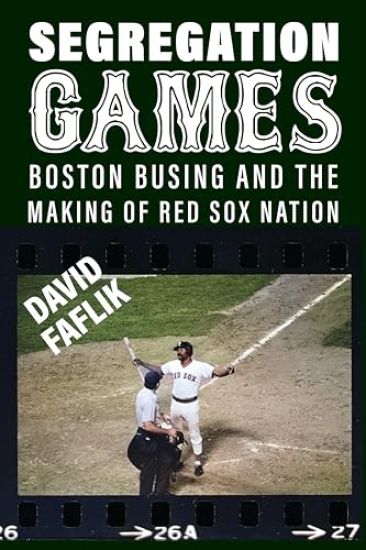
A cultural history of race, resistance, and representation in a city divided by politics and play When outfielder Bernie Carbo joined the Red Sox in 1974, he brought with him a toy gorilla named Mighty Joe Young that became the team’s unofficial mascot for several players and many in the local press. This seemingly innocent stuffed animal was introduced within a baseball team notorious for its stubborn discrimination, and during a particularly fraught era of racial discord in Boston. That June, after years of activism from the city’s Black community, Judge W. Arthur Garrity Jr. ruled that Boston must address the segregation of its schools through redistricting and busing. The ensuing racial animus to these policies led some of the city’s white residents to throw bananas and chant monkey sounds at African American students as they integrated the predominantly white South Boston High School. In this agitated atmosphere, cultural symbols like the Red Sox’s Mighty Joe Young mirrored and amplified the heightened racial tensions of Boston’s busing crisis. Situated at the intersection of US cultural and social history, Segregation Games examines the surprising ties in 1970s Boston between the racial segregation of the city’s schools and the racial controversies expressed on and off the field of “Red Sox Nation.” “I found out in the black community why they don’t come out [to Fenway Park],” explained Black player Reggie Smith of his experiences with the Red Sox and the city during this period. “The team was the last to get Black players, and some of the things I hear out in the stands make me sick.” To understand these connections, Faflik erases the lines between politics and sport, which routinely blurred in a city suffused with an anti-Black racism that was both deceptively subtle and fiercely overt. Drawing upon deep archival research from sources that have largely been ignored, such as the Black press of the time, Faflik offers a carefully nuanced portrait of Boston’s cultural life at a pivotal moment in the city’s history.
Segregation Games

Segregation Games

David Faflik

UNIVERSITY OF MASSACHUSETTS PRESS
2026
sidottu
A cultural history of race, resistance, and representation in a city divided by politics and play When outfielder Bernie Carbo joined the Red Sox in 1974, he brought with him a toy gorilla named Mighty Joe Young that became the team’s unofficial mascot for several players and many in the local press. This seemingly innocent stuffed animal was introduced within a baseball team notorious for its stubborn discrimination, and during a particularly fraught era of racial discord in Boston. That June, after years of activism from the city’s Black community, Judge W. Arthur Garrity Jr. ruled that Boston must address the segregation of its schools through redistricting and busing. The ensuing racial animus to these policies led some of the city’s white residents to throw bananas and chant monkey sounds at African American students as they integrated the predominantly white South Boston High School. In this agitated atmosphere, cultural symbols like the Red Sox’s Mighty Joe Young mirrored and amplified the heightened racial tensions of Boston’s busing crisis. Situated at the intersection of US cultural and social history, Segregation Games examines the surprising ties in 1970s Boston between the racial segregation of the city’s schools and the racial controversies expressed on and off the field of “Red Sox Nation.” “I found out in the black community why they don’t come out [to Fenway Park],” explained Black player Reggie Smith of his experiences with the Red Sox and the city during this period. “The team was the last to get Black players, and some of the things I hear out in the stands make me sick.” To understand these connections, Faflik erases the lines between politics and sport, which routinely blurred in a city suffused with an anti-Black racism that was both deceptively subtle and fiercely overt. Drawing upon deep archival research from sources that have largely been ignored, such as the Black press of the time, Faflik offers a carefully nuanced portrait of Boston’s cultural life at a pivotal moment in the city’s history.