Kirjojen hintavertailu. Mukana 12 016 292 kirjaa ja 12 kauppaa.

Kirjahaku

Etsi kirjoja tekijän nimen, kirjan nimen tai ISBN:n perusteella.

9 kirjaa tekijältä David Fanning

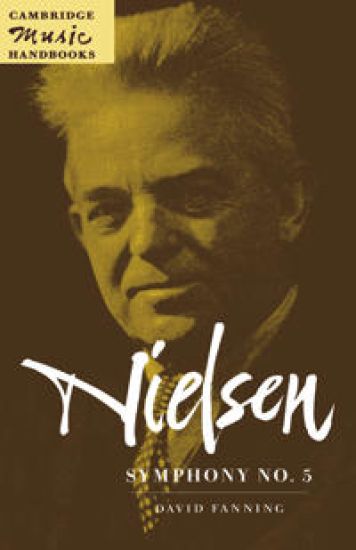
Nielsen: Symphony No. 5

Nielsen: Symphony No. 5

David Fanning

Cambridge University Press
1997
sidottu
After the death of Mahler in 1911 the great Austro-German symphonic line was carried on mainly in England, America, Scandinavia and Russia. The Fifth Symphony of Carl Nielsen, Denmark's greatest composer, was composed in 1921–2. David Fanning discusses its place within the symphonic tradition since Beethoven, revealing the personal background to the work and taking full account of the extensive Danish commentaries, including the composer's own, which are given in English for the first time. In an absorbing analysis of the music he lays bare the origins of its images of inertia, anxiety and collapse in Nielsen's tone poems and incidental music for the theatre. Insights are offered into the symphony's 'progressive tonality' and its relationship to traditional structural models.
Nielsen: Symphony No. 5

Nielsen: Symphony No. 5

David Fanning

Cambridge University Press
1997
pokkari
After the death of Mahler in 1911 the great Austro-German symphonic line was carried on mainly in England, America, Scandinavia and Russia. The Fifth Symphony of Carl Nielsen, Denmark’s greatest composer, was composed in 1921–2. David Fanning discusses its place within the symphonic tradition since Beethoven, revealing the personal background to the work and taking full account of the extensive Danish commentaries, including the composer’s own, which are given in English for the first time. In an absorbing analysis of the music he lays bare the origins of its images of inertia, anxiety and collapse in Nielsen’s tone poems and incidental music for the theatre. New insights are offered into the symphony’s ‘progressive tonality’ and its relationship to traditional structural models.
Shostakovich: String Quartet No. 8

Shostakovich: String Quartet No. 8

David Fanning

Ashgate Publishing Limited
2004
sidottu
When it was first performed in October 1960, Shostakovich's Eighth String Quartet was greeted with a standing ovation and given a full encore. Its popularity has continued to the present day with over a hundred commercial recordings appearing during the last 40 years. The appeal of the work is not hard to identify; immediately communicative, the quartet also contains rich seams of deeper meaning. This book is the first to examine its musical design in detail and seeks to overthrow the charges of superficiality that have arisen as a result of the work's popular success. The core of this study is the close analysis of the work, but this is placed in context with a discussion of Shostakovich's reputation and historical position, the circumstances of the quartet's composition and the subsequent controversies that have surrounded it. The work was composed during the so-called 'Thaw' years of the Soviet Union, and the cultural and political backgrounds of this period are considered, together with Shostakovich's life and work during this time. David Fanning argues persuasively that the Eighth String Quartet is a landmark in twentieth-century music in its transcendence of the extra-musical meanings that it invokes; that it is 'music that liberates itself from the shackles of its context'. The book features an accompanying CD of the work.
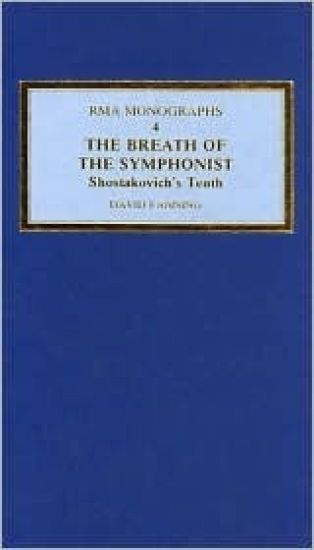
The Breath of the Symphonist

The Breath of the Symphonist

David Fanning

Ashgate Publishing Limited
1989
sidottu
In 1946 Schoenberg wrote of Sibelius and Shostakovich, 'I feel they have the breath of symphonists.' This book poses the question of what exactly that 'breath' means in the context of Shostakovich's 10th Symphony (1953). Written shortly after Stalin's death, the work marks a turning point in the composer's output and in the history of Russian music, heralding the possibility of a new creative direction for Soviet artists. David Fanning's close analysis of the 10th sheds light on issues associated with the genre of the twentieth-century epic symphony, issues of structure and expression, unity and contrast. The book reveals how the work displays some of Shostakovich's most effective strategies for confronting these issues.