Kirjojen hintavertailu. Mukana 11 244 527 kirjaa ja 12 kauppaa.

Kirjahaku

Etsi kirjoja tekijän nimen, kirjan nimen tai ISBN:n perusteella.

25 kirjaa tekijältä David Farr

Oxford AQA History for A Level: Stuart Britain and the Crisis of Monarchy 1603-1702
Approved by AQA and tailored to the latest specification, Stuart Britain and the Crisis of Monarchy 1603-1702 helps students understand issues of change, continuity, and cause and consequence in this period of British history. It explores: - how the monarchy changed during Stuart Britain - why there were disputes over religion - how effective the opposition was - how important ideologies and individuals were Make connections between the six key thematic questions in the specification Focus on skills building and exam practice Key features are: - Source-Based Learning. Includes a wide range of sources and extracts to develop vital skills in historical interpretation and source analysis - Exam Practice. Features exam-style questions and study tips to help students prepare and perform Perfect for any student studying AQA AS or A Level History, this book helps students achieve success in Stuart Britain and the Crisis of Monarchy 1603-1702.
Major-General Hezekiah Haynes and the Failure of Oliver Cromwell’s Godly Revolution, 1594–1704
Hezekiah Haynes was shaped by the Puritanism of his father’s network and experienced emigration to New England as part of a community removing themselves from Charles I’s Laudianism. Returning to fight in the British Civil Wars, Haynes rose to become Cromwell’s ruler of the east of England, tasked with bringing about a godly revolution, and in rising to prominence he became the centre of his own developing political and religious network, which included a kin link to Cromwell himself. As one of Cromwell’s Major-Generals Haynes was tasked with security and a reformation of manners, but he was hampered by the limits of the early modern state and Cromwell’s own contradictory political and religious ideas. The Restoration saw Haynes imprisoned in the Tower before emerging to return to the community in which he had been raised, and continuing the links with some of those he had worked with for Cromwell and the kin he had left behind in New England in dealing with the norms of early modern life. This book will appeal to specialists in the area and students taking courses on early modern English and American history, as well as those with a more general interest in the period.
Major-General Hezekiah Haynes and the Failure of Oliver Cromwell’s Godly Revolution, 1594–1704
Hezekiah Haynes was shaped by the Puritanism of his father’s network and experienced emigration to New England as part of a community removing themselves from Charles I’s Laudianism. Returning to fight in the British Civil Wars, Haynes rose to become Cromwell’s ruler of the east of England, tasked with bringing about a godly revolution, and in rising to prominence he became the centre of his own developing political and religious network, which included a kin link to Cromwell himself. As one of Cromwell’s Major-Generals Haynes was tasked with security and a reformation of manners, but he was hampered by the limits of the early modern state and Cromwell’s own contradictory political and religious ideas. The Restoration saw Haynes imprisoned in the Tower before emerging to return to the community in which he had been raised, and continuing the links with some of those he had worked with for Cromwell and the kin he had left behind in New England in dealing with the norms of early modern life. This book will appeal to specialists in the area and students taking courses on early modern English and American history, as well as those with a more general interest in the period.
A Dead Body in Taos

A Dead Body in Taos

David Farr

FABER FABER
2022
nidottu
When they called saying your body had been found, I had one immediate thought. I remember thinking that maybe now I'd be free.Sam hasn't spoken to her mother Kath for three years when she learns that she's been found dead in the New Mexico desert.Travelling to the small town of Taos to identify the body, she discovers Kath had become embroiled in a shadowy enterprise, offering Sam an unimaginable chance to rebuild their broken relationship. But to do so, she must decide whether she can finish what her mother started.David Farr's compelling new play is both an unsettling science fiction and an intimate study of loss and bereavement, examining how artificial intelligence could alter our understanding of death, consciousness and the soul.A Dead Body in Taos opened at the Bristol Old Vic in September 2022.
The Queen Must Die

The Queen Must Die

David Farr

Samuel French Ltd
2007
nidottu
On the eve of Queen Elizabeth II's Golden Jubilee celebrations, a papier-mache statue of Her Royal Highness stands in Margaret Chivers' living-room in preparation for the Jubilee parade. Two factions converge on the house with the aim of vandalizing the statue - three girls who can see no other way of escaping the embarrassment of having to dance in the parade, and three lads who want to make an anti-monarchist statement. Politics, friendship, body image, Oliver Cromwell and Britney Spears feature in this ingenious slapstick comedy.
Brokerage and Networks in London’s Global World
The Londoner John Blackwell (1624-1701), shaped by his parents’ Puritanism and merchant interests of his iconoclast father, became one of Oliver Cromwell’s New Model Army captains. Working with his father in Parliament’s financial administration both supported the regicide and benefitted financially from the subsequent sales of land from those defeated in the civil wars. Surviving the Restoration, Blackwell pursued interests in Ireland and banking schemes in London and Massachusetts, before being governor of Pennsylvania. Blackwell worked with his son, Lambert Blackwell, who established himself as a merchant, financier and representative of the state in Italy during the wars of William III before being embroiled in the South Sea Bubble.The linked histories of the three Blackwells reinforce the importance of kinship and the development of the early modern state centred in an increasingly global London and illustrate the ownership of the memory of the civil wars, facilitated by their kin links to Cromwell and John Lambert, architect of Cromwell’s Protectorate, by those who fought against Charles I.Suitable for specialists in the area and students taking courses on early modern English, European and American history as well as those with a more general interest in the period.
Brokerage and Networks in London’s Global World
The Londoner John Blackwell (1624-1701), shaped by his parents’ Puritanism and merchant interests of his iconoclast father, became one of Oliver Cromwell’s New Model Army captains. Working with his father in Parliament’s financial administration both supported the regicide and benefitted financially from the subsequent sales of land from those defeated in the civil wars. Surviving the Restoration, Blackwell pursued interests in Ireland and banking schemes in London and Massachusetts, before being governor of Pennsylvania. Blackwell worked with his son, Lambert Blackwell, who established himself as a merchant, financier and representative of the state in Italy during the wars of William III before being embroiled in the South Sea Bubble.The linked histories of the three Blackwells reinforce the importance of kinship and the development of the early modern state centred in an increasingly global London and illustrate the ownership of the memory of the civil wars, facilitated by their kin links to Cromwell and John Lambert, architect of Cromwell’s Protectorate, by those who fought against Charles I.Suitable for specialists in the area and students taking courses on early modern English, European and American history as well as those with a more general interest in the period.
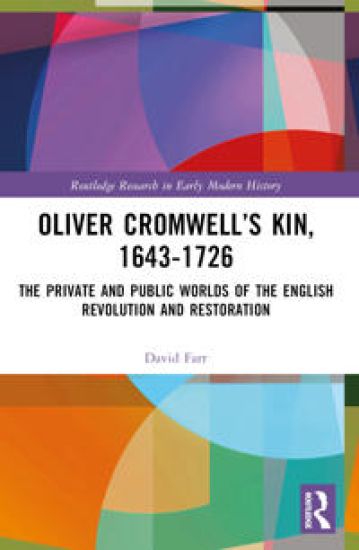
Oliver Cromwell’s Kin, 1643-1726

Oliver Cromwell’s Kin, 1643-1726

David Farr

TAYLOR FRANCIS LTD
2023
sidottu
This study centres around three leading military statesmen who served under Oliver Comwell but were also his kin and shared the experiences of the civil wars, John Disbrowe (1608–80), Henry Ireton (1611–51), and Charles Fleetwood (1618–92). It seeks to develop our picture of their positions from the context of their kin link to Cromwell and how their private worlds shaped their public roles, how kinship was part of the functioning of the Cromwellian state, how they were seen and presented, and how this impacted on their own lives, and their kin, before and after the Restoration.Cromwell's career can be explored further by considering figures in his kinship network to show how the public and private overlapped and influenced each other through their interaction before and after 1660. This study aims to consider the trajectory of elements of Cromwell's network and how its functioning and the interaction of its constituent parts over time shaped the politics of the years 1643 to 1660 but also how the survival of some networks after 1660 were continuing communities of those willing to own their memories of the civil wars, regicide, and Cromwell. A study of aspects of Cromwell's kin also provides examples of the continuities between those who resisted the Stuarts in the 1640s and 1650s and did so again in the 1680s.Suitable for specialists in the area and students taking courses on early modern British, European and American history as well as those with a more general interest in the period.
Oliver Cromwell’s Kin, 1643-1726

Oliver Cromwell’s Kin, 1643-1726

David Farr

TAYLOR FRANCIS LTD
2025
nidottu
This study centres around three leading military statesmen who served under Oliver Comwell but were also his kin and shared the experiences of the civil wars, John Disbrowe (1608–80), Henry Ireton (1611–51), and Charles Fleetwood (1618–92). It seeks to develop our picture of their positions from the context of their kin link to Cromwell and how their private worlds shaped their public roles, how kinship was part of the functioning of the Cromwellian state, how they were seen and presented, and how this impacted on their own lives, and their kin, before and after the Restoration.Cromwell's career can be explored further by considering figures in his kinship network to show how the public and private overlapped and influenced each other through their interaction before and after 1660. This study aims to consider the trajectory of elements of Cromwell's network and how its functioning and the interaction of its constituent parts over time shaped the politics of the years 1643 to 1660 but also how the survival of some networks after 1660 were continuing communities of those willing to own their memories of the civil wars, regicide, and Cromwell. A study of aspects of Cromwell's kin also provides examples of the continuities between those who resisted the Stuarts in the 1640s and 1650s and did so again in the 1680s.Suitable for specialists in the area and students taking courses on early modern British, European and American history as well as those with a more general interest in the period.
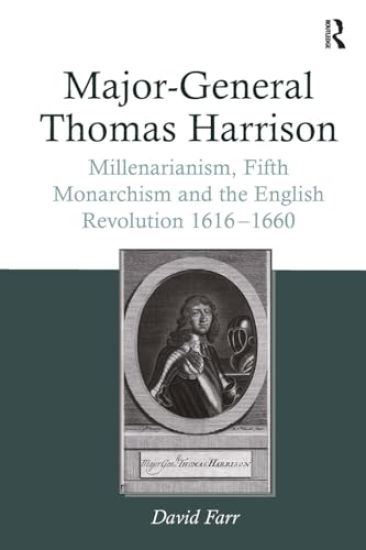
Major-General Thomas Harrison

Major-General Thomas Harrison

David Farr

TAYLOR FRANCIS LTD
2024
nidottu
Thomas Harrison is today perhaps best remembered for the manner of his death. As a leading member of the republican regime and signatory to Charles I’s death warrant, he was hanged, drawn and quartered by the Restoration government in 1660; a spectacle witnessed by Samuel Pepys who recorded him ’looking as cheerful as any man could do in that condition’. Beginning with this grisly event, this book employs a thematic, rather than chronological approach, to illustrate the role of millenarianism and providence in the English Revolution, religion within the new model army, literature, image and reputation, and Harrison’s relationship with key individuals like Ireton and Cromwell as well as groups, most notably the Fifth Monarchists. Divided in three parts, the study starts with an analysis of Harrison’s last year of life, the nature of his response to the political collapse of the Interregnum regimes, and his apparent acceptance of the Restoration without overt resistance. Part two considers Harrison’s years of ’power’, analysing his political activities and influence in the New Model, especially with regard to the regicide. The final part ties Harrison’s political retreat to his initial emergence from obscurity; arguing that Harrison’s relative political quietism during the later 1650s was a reflection of the development of his millenarianism. Unlike the only two previous full length studies of Harrison the present work makes use of a full range of manuscript, primary and secondary sources, including the huge range of new material that has fundamentally changed how the early modern period is now understood. Fully footnoted and referenced, this study provides the first modern academic study of Harrison, and through him illuminates the key themes of this contested period.
Colonel Philip Jones, Oliver Cromwell and the British Revolutions in South Wales
This volume centres on Colonel Philip Jones but touches on others – most notably, Griffith Lloyd and Rowland Dawkins – who were part of his political network. These three men, all from Glamorgan and linked as kin, emerged from lives on the fringes of Welsh gentry status to imprint themselves on the wider world and historical record as part of the military struggle against Charles I and then as agents in Cromwell’s British state. Their roles in the civil wars and the regimes that followed add to our picture of Cromwell, deepening our understanding of the conception and construction of his Welsh identity and the functioning of his Protectorate state and household in which Jones was a central figure. In the New Model and Cromwell’s state, these three Welshmen became part of the Anglo-Puritan London regime’s management of South Wales. This study illustrates how their Welsh identity and diverse geographical interests required them to cultivate multiple, overlapping personas—personal, factional, regional, and national—as they adapted to their evolving roles in revolutionary politics. Their careers provide essential insights into the complexities and limits of the British Revolutions in South Wales, offering a unique perspective on what it meant to be Welsh in Cromwell's revolutionary British state. Drawing from new archival research, this accessible study will appeal to specialists, students and general readers of early modern British history, Cromwell and the English Civil War.
Major-General Thomas Harrison

Major-General Thomas Harrison

David Farr

Ashgate Publishing Limited
2014
sidottu
Thomas Harrison is today perhaps best remembered for the manner of his death. As a leading member of the republican regime and signatory to Charles I’s death warrant, he was hanged, drawn and quartered by the Restoration government in 1660; a spectacle witnessed by Samuel Pepys who recorded him ’looking as cheerful as any man could do in that condition’. Beginning with this grisly event, this book employs a thematic, rather than chronological approach, to illustrate the role of millenarianism and providence in the English Revolution, religion within the new model army, literature, image and reputation, and Harrison’s relationship with key individuals like Ireton and Cromwell as well as groups, most notably the Fifth Monarchists. Divided in three parts, the study starts with an analysis of Harrison’s last year of life, the nature of his response to the political collapse of the Interregnum regimes, and his apparent acceptance of the Restoration without overt resistance. Part two considers Harrison’s years of ’power’, analysing his political activities and influence in the New Model, especially with regard to the regicide. The final part ties Harrison’s political retreat to his initial emergence from obscurity; arguing that Harrison’s relative political quietism during the later 1650s was a reflection of the development of his millenarianism. Unlike the only two previous full length studies of Harrison the present work makes use of a full range of manuscript, primary and secondary sources, including the huge range of new material that has fundamentally changed how the early modern period is now understood. Fully footnoted and referenced, this study provides the first modern academic study of Harrison, and through him illuminates the key themes of this contested period.
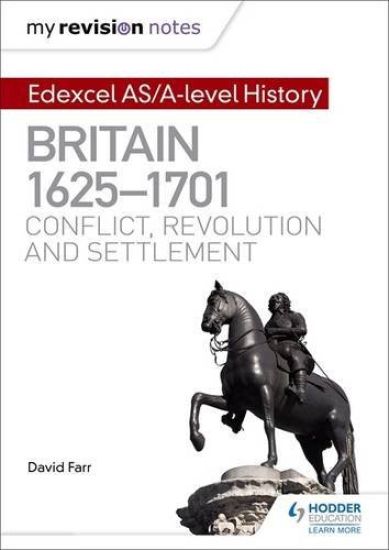
My Revision Notes: Edexcel AS/A-level History: Britain, 1625-1701: Conflict, revolution and settlement
Exam Board: EdexcelLevel: AS/A-levelSubject: HistoryFirst Teaching: September 2015First Exam: June 2016Target success in Edexcel AS/A-level History with this proven formula for effective, structured revision; key content coverage is combined with exam preparation activities and exam-style questions to create a revision guide that students can rely on to review, strengthen and test their knowledge.- Enables students to plan and manage a successful revision programme using the topic-by-topic planner- Consolidates knowledge with clear and focused content coverage, organised into easy-to-revise chunks- Encourages active revision by closely combining historical content with related activities- Helps students build, practise and enhance their exam skills as they progress through activities set at three different levels- Improves exam technique through exam-style questions with sample answers and commentary from expert authors and teachers- Boosts historical knowledge with a useful glossary and timeline
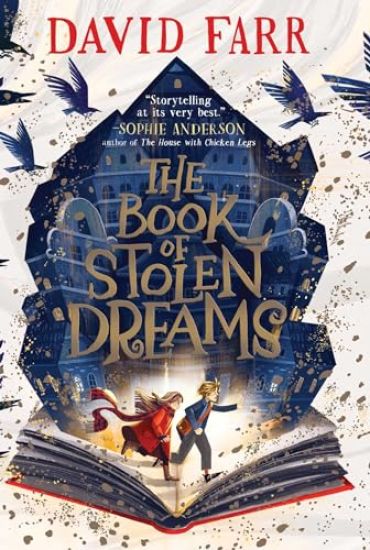
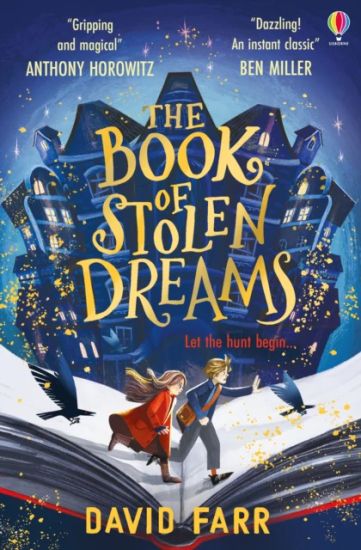
The Book of Stolen Dreams

The Book of Stolen Dreams

David Farr

Simon Schuster Books for Young Readers
2024
nidottu
An exhilarating, wondrous middle grade debut about a brother and sister on a quest that "swoops from thrilling to terrifying to heartwarming and back again" (BookPage) to defeat a tyrannical ruler and protect a magical book. " W]ill appeal to readers of Kelly Barnhill and Lemony Snicket" (Publishers Weekly). Rachel and Robert live a gray, dreary life under the rule of cruel and calculating Charles Malstain. That is, until one night, when their librarian father enlists their help to steal a forbidden book. Before their father is captured, Rachel and Robert are given one mission: find the missing final page. But to uncover the secrets of The Book of Stolen Dreams, the siblings must face darkness and combat many evils to be rewarded with the astonishing, magical truth about the book. Nevertheless, they resolve to do everything in their power to stop it from falling into Charles Malstain's hands. For if it does, he could rule their world forever.
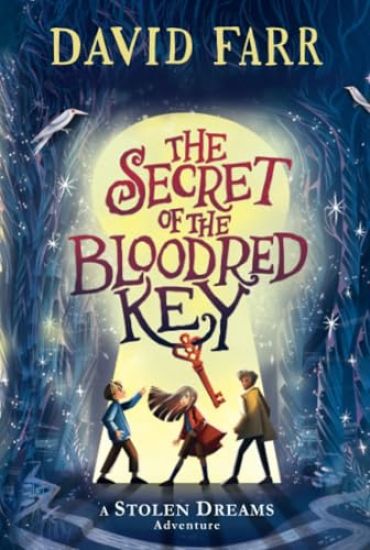
The Secret of the Bloodred Key

The Secret of the Bloodred Key

David Farr

Simon Schuster Books for Young Readers
2024
sidottu
This "swashbuckling and emotionally stirring" (Kirkus Reviews) sequel to the phenomenal The Book of Stolen Dreams that Publishers Weekly compared to the work of Kelly Barnhill and Lemony Snicket sees Rachel shouldering her new responsibility as key keeper when a girl goes missing. After defeating the tyrant Malstain, Rachel and Robert are the heroes of Krasnia...but all is not how it should be. Robert is swept away with his new friends, leaving Rachel alone to take care of their ailing father, who's lost without their beloved mother. Rachel has also become the keeper of the hidden bloodred key that opens the way into the Hinterland and is sworn to answer when it calls. So when a young girl, Elsa Spiegel, is illegally smuggled into the Hinterland, Rachel has no choice but to use her key to save her. But Elsa's fate is linked to Krasnia's, and Rachel's rescue mission turns into a battle to save her home as she knows it.
The Secret of the Bloodred Key

The Secret of the Bloodred Key

David Farr

Simon Schuster Books for Young Readers
2025
nidottu
This "swashbuckling and emotionally stirring" (Kirkus Reviews) sequel to the phenomenal The Book of Stolen Dreams that Publishers Weekly compared to the work of Kelly Barnhill and Lemony Snicket sees Rachel shouldering her new responsibility as key keeper when a girl goes missing. After defeating the tyrant Malstain, Rachel and Robert are the heroes of Krasnia...but all is not how it should be. Robert is swept away with his new friends, leaving Rachel alone to take care of their ailing father, who's lost without their beloved mother. Rachel has also become the keeper of the hidden bloodred key that opens the way into the Hinterland and is sworn to answer when it calls. So when a young girl, Elsa Spiegel, is illegally smuggled into the Hinterland, Rachel has no choice but to use her key to save her. But Elsa's fate is linked to Krasnia's, and Rachel's rescue mission turns into a battle to save her home as she knows it.
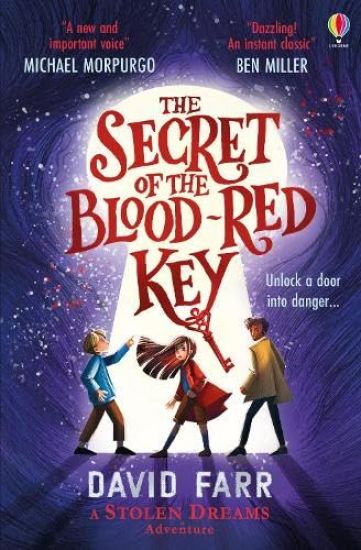
The Secret of the Blood-Red Key

The Secret of the Blood-Red Key

David Farr

USBORNE PUBLISHING LTD
2024
nidottu
The dazzling follow-up to the phenomenal The Book of Stolen Dreams from master storyteller David Farr, perfect for fans of Katherine Rundell and Philip Pullman.When Rachel and her brother Robert defeated the tyrannical President Malstain and saved all of Krasnia, they became heroes. But the battle between good and evil has only just begun. Rachel has a blood-red key and, as a Keeper of the Key, she cannot refuse its demands. So, when a young girl, Elsa Spiegel, is kidnapped and taken to the Hinterland, Rachel must answer the key's call. With time running out, Rachel realises that it's not just Elsa she must save, but the world as she knows it...Praise for The Book of Stolen Dreams: "A new and important voice for young people." Michael Morpurgo "Dazzling! An instant classic. An eye-wateringly funny and jaw-droppingly fantastical adventure, chock-a-block with rare books, airships, and penguin-shaped hats." Ben Miller "A wonderful story. Gripping and magical." Anthony Horowitz