Kirjojen hintavertailu. Mukana 11 342 296 kirjaa ja 12 kauppaa.

Kirjahaku

Etsi kirjoja tekijän nimen, kirjan nimen tai ISBN:n perusteella.

9 kirjaa tekijältä David Fennario

On the Job

On the Job

David Fennario

Talonbooks
1976
pokkari
It is Christmas Eve, 1970. In the shipping room of a Montreal dress factory, the workers get drunk and decide to go on strike. "So many of the guys I knew on the street are gone dead or crazy, man. There's no escape. This whole country is just one big factory, one big jail, Billy ...Either you're a good nigger or ya die. Know what I mean? ...Black, yellow, white. We're all niggers down on Rockefeller's Plantation, man." "Punks, Billy. All we get now is punks ...I used to have this shipping room running like a new machine, remember, Billy? ...No trouble, no fuss, 'cause everybody did their job and knew their place, but now ...In the last five years, the kids been getting more and more like that Gary Boyce. Shit disturbers. They all got that look in their eye. Know what I mean? Like they don't give a damn." On the Job is David Fennario's post-mortem on the '60s and a look at the Canadian class structure. The play was first performed at Centaur Theatre, Montreal. Subsequently, it has been performed at the National Arts Centre, Ottawa; been revived by Centaur Theatre; and been staged at the Arts Club Theatre, Vancouver.
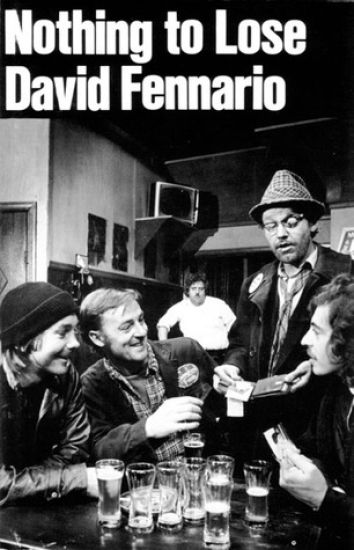
Nothing to Lose

Nothing to Lose

David Fennario

Talonbooks
1977
pokkari
It is 1976. In a tavern in the Point Saint Charles working class district of Montreal, three friends gather on their lunch hour and reminisce about the past. They are survivors of a decade. One is Jerry Nines, a writer who has had some success, having written a novel and a hit play. The others are Jackie Robinson and Frank Saladini, old friends of Jerry's from the Point. They work in a warehouse across the street. During the course of their reunion, Jackie leaves his truck parked at the loading dock of the warehouse and fights the foreman, actions which precipitate a worker's sit-down strike which David Fennario uses as a demand for workers' control of industry. Cast of nine men.
Balconville

Balconville

David Fennario

Talonbooks
1980
pokkari
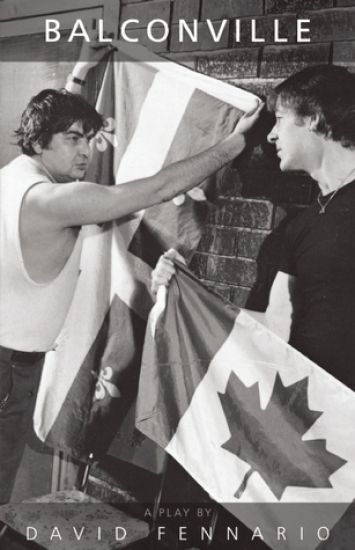
Balconville is Canada's first bilingual play. Three families and Thibault, the neighbourhood delivery boy, sit on their balconies in the heat of a Montreal summer. It is election time and Gaetan Bolduc is running for re-election for the Liberals. His broadcast truck roams the streets making election promises in English and in French, and playing the music of Elvis Presley. The English and the French-Canadian working class take on the Establishment in this award-winning play. Cast of 3 women and 6 men.
Doctor Thomas Neill Cream

Doctor Thomas Neill Cream

David Fennario

Talonbooks
1994
pokkari
In 1876, Jack the Ripper, otherwise known as Canadian Doctor Thomas Neill Cream, graduated with merit from McGill's faculty of medicine. Cream was a backstreet abortionist and managed an exclusive brothel called The Elite Club. His notorious reputation eventually forced him to flee Canada for London. He was hanged in 1892 for the murder of four prostitutes. Doctor Thomas Neill Cream mixes fact and speculation with its cast of unlikely characters: khaki-covered union organizers--the good guys; five white-faced "zombies" representing such illustrious "Founding Fathers of Confederation" and distinguished members of the McGill fraternity as Sir Hugh Allan, Sir William Dawson, Sir William Osier and Lord Strathcona--the victors; and their young prostitutes--the victims. Intended as a cultural exorcism, playwright David Fennario charges with murder the capitalists who are now paraded through our history books as nation-builders. Past evil is paralleled in the present.
Banana Boots

Banana Boots

David Fennario

Talonbooks
1998
pokkari
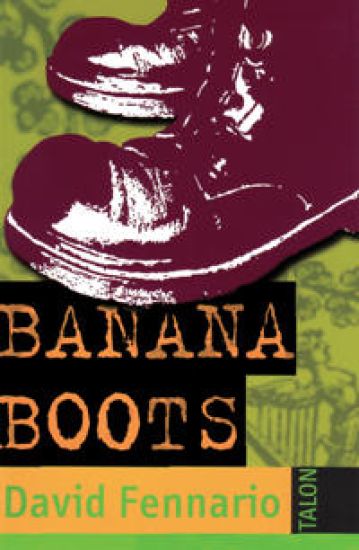
Banana Boots is a one-man-show / memoir in which Fennario recounts, with astonishing insight and wit, the phenomenon of taking his famous bilingual play Balconville to Belfast on a British / Canadian cultural mission. Given the subject of Balconville, that the real problem in Quebec is not one of language or culture, but one of British imperialism and the class structure it imposes on its "colonials," the ironies of such an event are, of course, both delicious and irresistible. Though first mystified by the dismissive and disinterested response to his play, Fennario gradually realizes that it is his handlers and agents, presenting him as an icon of the British Empire, who are causing the problem. Once out among the working class and the bristling tension-filled atmosphere of their pub-based communities, Fennario experiences a mutual epiphany of solidarity with "the troubles" in Ireland and "the troubles" in Quebec, brought to a head by his soul mate "Banana Boots," the stand-up Irish comedian who regales his audience with scathing caricatures of both Ian Paisley and the leaders of Sien Fein.Himself an Anglophone descendant of Irish immigrants who came to "the point" in Montreal to escape the potato famine in 1847, Fennario remains an unabashed Marxist and Quebec separatist. Banana Boots is Fennario's clearest expression of his revolutionary social conscience since his highly acclaimed student journal Without a Parachute; it is also published in celebration of the historic 1998 referendum in Ireland.
The Death of Rene Levesque

The Death of Rene Levesque

David Fennario

Talonbooks
2003
pokkari
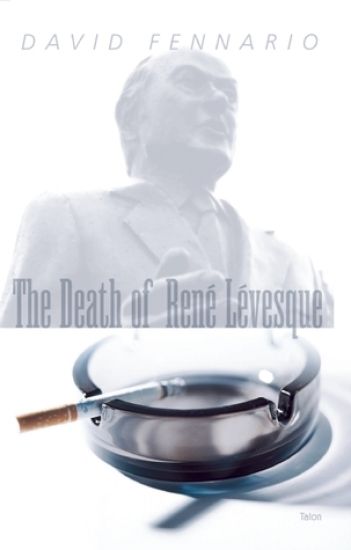
In taking on "The Matter of Quebec," David Fennario provides audiences and readers with an abiding critique of the notion that history is created around "great causes" by "great men." Given the recent reversal of fortune delivered to the tempestuous sound and fury of the Quebec separatist movement, The Death of Rene Levesque is, in retrospect, more than an astonishingly profound and prophetic political document. Showcasing the surprising theatrical range and virtuosity of the author of Canada's first bilingual--though definitely not bicultural--working-class hit, Balconville, The Death of Rene Levesque dramatizes the rise and fall of Canada's most tragic public figure of the 20th century. Fennario's deft and subtle characterization of the father of the Parti Quebecois, his re-telling of the compromising political realities which formed both the movement and the party as Levesque created it, and the gradual revelation of the fatal flaw which began to undermine both the man and his dream of a new republic, proceed here with a stately, devastating inevitability which recall the masterful tragedies of Euripides and Shakespeare.The Death of Rene Levesque presents its audience with the powerful and cathartic stillbirth of a nation, stripped of both pity and fear, as only an Anglophone Quebec separatist could possibly imagine it. Cast of two women and four men.
Motherhouse

Motherhouse

David Fennario

Talonbooks
2014
pokkari
There's no way we shoulda been arrested for sabotaging the war effort ...trying to organize a strike ...But if you really wanted to arrest somebody, you could go down to the British Munitions Factory and charge them with murder ...cuz that's what it was. Making us work all these long, crazy hours was bound to kill somebody. From the renowned author of Balconville, this powerful drama gives a voice to the disillusioned working-class women employed at the British Munitions Factory in Verdun, Quebec, during the First World War. Following in the trudging footsteps of Fennario's anti-war protest play Bolsheviki (Talonbooks, 2012), Motherhouse similarly debunks the sentimental notions of duty, heroism, and nationhood that figured so prominently in Canadian war effort campaigns and that persist in Canadian history textbooks today. In 1915, with tensions running high across the country over conscription and linguistic and religious issues, dedicated mothers, wives, sisters, and sweethearts assemble artillery shells to support the war effort and inadvertently find themselves called together to bring about change both in their working conditions and in their personal lives.Meanwhile, their beloved soldiers die on battlefields overseas while their children starve at home as prices rise because of war profiteering. Verdun's munitions manufacturer employed more than four thousand women during the war, including Fennario's mother. Tragically, the city of Verdun sacrificed more soldiers to both World Wars than any other place in Canada. Cast of 1 woman.