Kirjojen hintavertailu. Mukana 11 342 296 kirjaa ja 12 kauppaa.

Kirjahaku

Etsi kirjoja tekijän nimen, kirjan nimen tai ISBN:n perusteella.

9 kirjaa tekijältä David Fitzpatrick

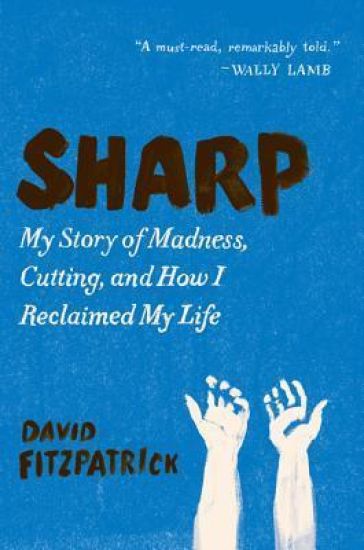
Sharp

Sharp

David Fitzpatrick

William Morrow Paperbacks
2013
nidottu
Sharp is the story of a young man who began his life with a loving family and great promise for the future. But in his early twenties, David Fitzpatrick became so consumed by mental illness it sent him into a frenzy of cutting himself with razor blades. In this shocking and often moving book, he vividly describes the rush this act gave him, the fleeting euphoric high that seemed to fill the spaces in the rest of his life. It started a difficult battle from which he would later emerge triumphant and spiritually renewed. Fitzpatrick's youth seemed ideal. He was athletic, handsome, and intelligent. However, he lived in fear of an older brother who taunted and belittled him; and in college, his roommates teased and humiliated him, further damaging what sense of self-esteem he still carried with him. As he shares these experiences, Fitzpatrick also recounts the lessons learned from the broken people he encountered during his journey-knowledge that led to his own emotional resurrection. Sharp also demonstrates the awakening of a writer's instinctive voice. With prose that is tough and gritty, profound and insightful, Fitzpatrick takes us inside his head while he manically cuts himself, but these episodes are presented with a dignity and insight that has never been seen before. His writing also possesses a lightness of touch that brings humor to a subject that doesn't naturally provide it. Above all else, Sharp is a tale of hope, a soul-baring quest of a lost man who returns to himself, overcomes his demons, and reclaims his life. It is destined to become a classic memoir.
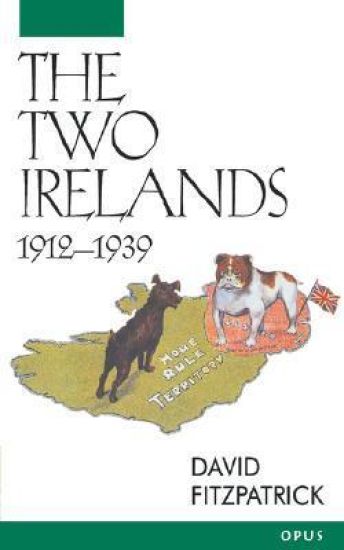
The Two Irelands, 1912-1939

The Two Irelands, 1912-1939

David Fitzpatrick

Oxford University Press
1998
nidottu
The partition of Ireland created two states embodying rival ideologies and representing two hostile peoples. This book concerns the revolution which prompted partition, and the legacies of that revolution for the Irish Free State and Northern Ireland. Though less bloody than the nationalist uprising after 1916, Unionist defiance against Home Rule proved equally effective in wresting concessions from a hostile British government. Despite their mutual antagonism, the two revolutionary movements were strikingly similar in their reliance on fraternal solidarity and intolerance of dissent. Both new states were immediately engulfed by civil war, resulting in the ruthless suppression of dissident southern repulicans and northern Catholics. The power of each revolutionary elite was consolidated at the expense of alienating substantial minorities, although republican opponents of the Free State (unlike northern Catholics) eventually joined the democratic process. This is the first sustained attempt to integrate the political history of the two Irelands in the era of revolution and partition. It provides an unexpected and provocative slant on each individual history.
Descendancy

Descendancy

David Fitzpatrick

Cambridge University Press
2014
sidottu
This book examines Protestant loss of power and self-confidence in Ireland since 1795. David Fitzpatrick charts the declining power and influence of the Protestant community in Ireland and the strategies adopted in the face of this decline, presenting rich personal testimony that illustrates how individuals experienced and perceived 'descendancy'. Focusing on the attitudes and strategies adopted by the eventual losers rather than victors, he addresses contentious issues in Irish history through an analysis of the appeal of the Orange Order, the Ulster Covenant of 1912, and 'ethnic cleansing' in the Irish Revolution. Avoiding both apologetics and sentimentality when probing the psychology of those undergoing 'descendancy', the book examines the social and political ramifications of religious affiliation and belief as practised in fraternities, church congregations and isolated sub-communities.
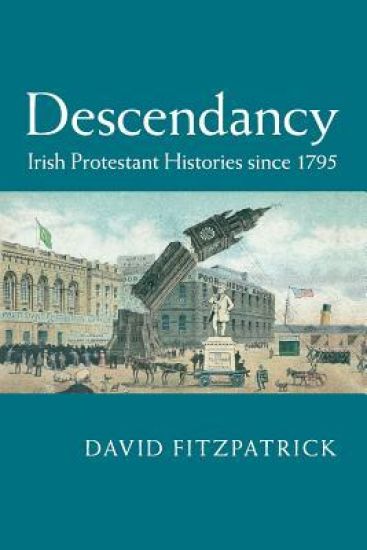
Descendancy

Descendancy

David Fitzpatrick

Cambridge University Press
2016
pokkari
This book examines Protestant loss of power and self-confidence in Ireland since 1795. David Fitzpatrick charts the declining power and influence of the Protestant community in Ireland and the strategies adopted in the face of this decline, presenting rich personal testimony that illustrates how individuals experienced and perceived 'descendancy'. Focusing on the attitudes and strategies adopted by the eventual losers rather than victors, he addresses contentious issues in Irish history through an analysis of the appeal of the Orange Order, the Ulster Covenant of 1912, and 'ethnic cleansing' in the Irish Revolution. Avoiding both apologetics and sentimentality when probing the psychology of those undergoing 'descendancy', the book examines the social and political ramifications of religious affiliation and belief as practised in fraternities, church congregations and isolated sub-communities.
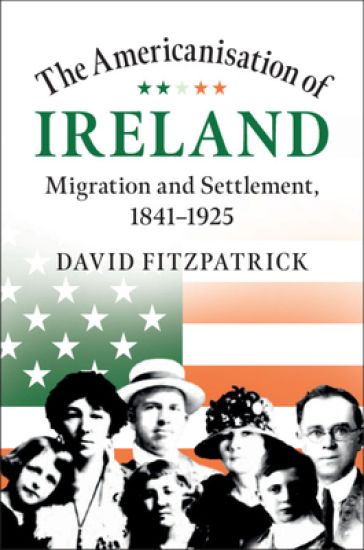
The Americanisation of Ireland

The Americanisation of Ireland

David Fitzpatrick

Cambridge University Press
2019
sidottu
Irish emigration to America is one of the clichés of modern Irish history; much less familiar is the reverse process. Who were the people who chose to return to Ireland? What motivated them? How did this affect Irish society? While many European countries were somewhat Americanised in this period, the Irish case was unique as so many Irish families had members in America. The most powerful agency for Americanisation, therefore, was not popular culture but circumstantial knowledge and personal contact. David Fitzpatrick demonstrates the often unexpected ways in which the reverse effects of emigration remoulded Irish society, balancing original demographic research with fascinating individual profiles to assemble a vivid picture of a changing Ireland. He explores the transformative impact of reverse migration from America to post-Famine Ireland, and offers penetrating insights into its growing population of American-born residents.
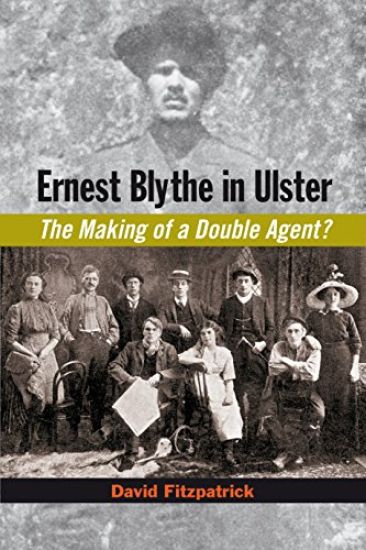
Ernest Blythe in Ulster

Ernest Blythe in Ulster

David Fitzpatrick

Cork University Press
2018
sidottu
Ernest Blythe (1889-1975) was a central figure in the Irish revolution and the first decade of the Irish Free State. He was a leading republican organiser before 1916, a Dail minister from 1919, and a controversial member of Cosgrave's executive council, becoming vice-president after the murder of O'Higgins. He was widely regarded with interest and sometimes suspicion because of his Protestant and unionist background, a rarity in modern Irish republicanism. His judgements and opinions were typically intelligent and well-informed as well as unconventional. This project originated in David Fitzpatrick's discovery that Blythe, already a leading member of the IRB, joined the Orange Order while reporting for a unionist newspaper in County Down (1909-13). Had that fact become known, Blythe's political ambitions would have been dashed. Nowhere in his writings does he allude to this episode, though he indicated clearly his need to lead `a double life' in the sense of appearing all things to all men. Blythe's account of his `double life' is utterly inadequate. This book unveils the reality of his double life in Ulster, explains how it may have originated, and relates this episode to his subsequent views on partition, Ulster, and Fascism. Blythe may be regarded as a double agent, who sought to enlighten republicans about unionism, and unionists about Irish nationality. More broadly, the book uncovers important affinities between militant republicanism and unionism, especially during the pre-war crisis over Home Rule, when Ulster loyalists seemed the group best prepared and most likely to initiate an armed revolution in Ireland.
Wolf-Boy

Wolf-Boy

David Fitzpatrick

Running Wild, LLC
2024
pokkari
A coming of age story set in Provincetown, Truro, and Dennis Cape Cod during the summer of 1979. Sixteen-year-old Danny Halligan is seeking to define his sexual identity, struggling to navigate his feeling toward 18-year old childhood friend Liam Preston. Their lives spiral out of control when they meet 21-year-old Gracie Rose, a charismatic photographer and Yale dropout with a vision of a flesh festival on film. Danny finds his mind unravelling as he is caught up in a torrent of drugs, sex and photography. Entire days are lost in drug fuelled grappling and flesh wars in a massive tree fort known as the Palace of the Palpable Pines. Gracie’s vision includes masking her subjects to maintain their anonymity. Liam becomes Lone Ranger while Danny’s fur covered mask transforms him into Wolf-Boy. Danny is left mentally and physically ravaged as Gracie gains ever more fame for her ground-breaking photographs, known as Transfiguration Photos.
End Zone

End Zone

David Fitzpatrick

Running Wild, LLC
2025
nidottu
A hedonistic summer sets off a group of emotionally constricted teens into a hellish spiral of games and death dares; can easing those battered hearts somehow prevent their ruin?
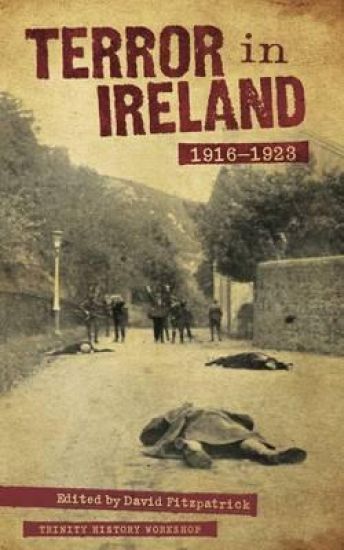
Terror In Ireland

Terror In Ireland

David Fitzpatrick

The Lilliput Press Ltd
2012
nidottu
The practice of terror in revolutionary Ireland remains a highly controversial topic, which seldom receives either balanced or dispassionate treatment. This collection of essays is designed to illuminate the varied origins, forms and consequences of terror, whether practised by republicans or forces of the Crown. It is the fifth production of the Trinity History Workshop, an informal group of academic historians, research students, and undergraduates associated with Trinity College, Dublin. The Workshop’s reputation was established in 1986 by its first collection, Ireland and the First World War, subsequently reissued by The Lilliput Press. The current volume is dedicated to the memory of a distinguished former member, the late Peter Hart, whose studies of both revolutionary and counter-revolutionary terror continue to arouse lively and sometimes intemperate debate. Several chapters emerged from papers delivered at a one-day conference in Trinity College in November 2010, while others have been specially commissioned for this book. The contributors, including gifted postgraduate and undergraduate students as well as prominent historians, tackle many facets of terror, such as ‘Bloody Sunday’, the Kilmichael Ambush and the Sack of Balbriggan. Scholars, students, political activists and all those interested in the Irish Revolution will find both provocation and enlightenment in this book. Its purpose is not to assign blame to one party or another, but to offer varied perspectives on one of the most contentious periods of Irish history. The book is enhanced by illustrations, maps and charts.