Kirjojen hintavertailu. Mukana 12 390 323 kirjaa ja 12 kauppaa.

Kirjahaku

Etsi kirjoja tekijän nimen, kirjan nimen tai ISBN:n perusteella.

18 kirjaa tekijältä David Fleming, Richard Benjamin

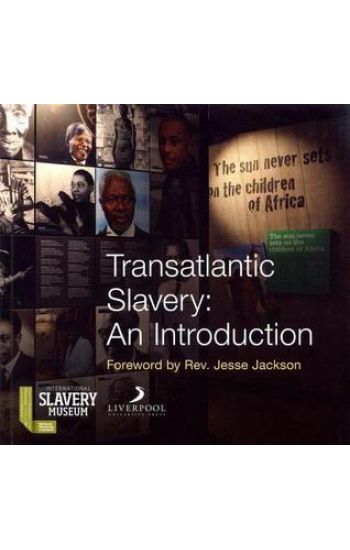
Transatlantic Slavery

Transatlantic Slavery

David Fleming; Richard Benjamin

Liverpool University Press
2010
nidottu
Between 1500 and 1870, millions of Africans were transported across the Atlantic by European traders to work as slaves in the Americas. They were shipped in conditions of great cruelty to lead lives of hard, unremitting labour, subject to degradation and violence. The products of their labour – primarily sugar, coffee and tobacco – were sent back to Europe and the profits derived from slavery helped fuel European economic development in the 18th and 19th centuries. The cost in lives and human suffering was enormous. First published to accompany a permanent gallery in the Merseyside Maritime Museum, this reissue of Transatlantic Slavery with new material documents this era through essays on women in slavery, the impact on West and Central Africa, and the African view of the slave trade. Richly illustrated, it reveals how the slave trade shaped the history of three continents—Africa, the Americas, and Europe—and how all of us continue to live with its consequences.
Who's Your Founding Father?: One Man's Epic Quest to Uncover the First, True Declaration of Independence
A centuries-old secret document unravels the origin story of America and reveals the intellectual crime of the millennia in this "hugely entertaining" dive into our country's history to discover the first, true Declaration of Independence (Andrew Roberts, author of Napoleon and Churchill. In 1819, John Adams came across a stunning story in his hometown Essex Register that he described to his political frenemy Thomas Jefferson as "one of the greatest curiosities and one of the deepest mysteries that ever occurred to me...entitled the Mecklenburg Declaration of Independence. The genuine sense of America at that moment was never so well expressed before, nor since." The story claimed that a full 14 months before Jefferson crafted his own Declaration of Independence, a misfit band of zealous Scots-Irish patriots, whiskey-loving Princeton scholars and a fanatical frontier preacher in a remote corner of North Carolina had become the first Americans to formally declare themselves "free and independent" from England. Composed during a clandestine all-night session inside the Charlotte courthouse, the Mecklenburg Declaration, aka the MecDec, was signed on May 20, 1775--a date that's still featured on the state flag of North Carolina. About a year later, in 1776, Jefferson is believed to have plagiarized the MecDec while composing his own, slightly more famous Declaration, and then covered the whole thing up. Which is why Adams always insisted the MecDec needed to be "thoroughly investigated" and "more universally made known to the present and future generation." With Who's Your Founding Father?, David Fleming picks up where Adams left off, leaving no archive, no cemetery, no bizarre clue or wild character (and definitely no Dunkin' Donuts) unexplored while traveling the globe to bring to life one of the most fantastic, important--and controversial--stories in American history.
Who's Your Founding Father?: Discovering the Mecdec in the True Cradle of American Independence
A centuries-old secret document unravels the origin story of America and reveals the intellectual crime of the millennia in this "hugely entertaining" dive into our country's history to discover the first, true Declaration of Independence (Andrew Roberts, author of Napoleon and Churchill. In 1819, John Adams came across a stunning story in his hometown Essex Register that he described to his political frenemy Thomas Jefferson as "one of the greatest curiosities and one of the deepest mysteries that ever occurred to me...entitled the Mecklenburg Declaration of Independence. The genuine sense of America at that moment was never so well expressed before, nor since." The story claimed that a full 14 months before Jefferson crafted his own Declaration of Independence, a misfit band of zealous Scots-Irish patriots, whiskey-loving Princeton scholars and a fanatical frontier preacher in a remote corner of North Carolina had become the first Americans to formally declare themselves "free and independent" from England. Composed during a clandestine all-night session inside the Charlotte courthouse, the Mecklenburg Declaration, aka the MecDec, was signed on May 20, 1775--a date that's still featured on the state flag of North Carolina. About a year later, in 1776, Jefferson is believed to have plagiarized the MecDec while composing his own, slightly more famous Declaration, and then covered the whole thing up. Which is why Adams always insisted the MecDec needed to be "thoroughly investigated" and "more universally made known to the present and future generation." With Who's Your Founding Father?, David Fleming picks up where Adams left off, leaving no archive, no cemetery, no bizarre clue or wild character (and definitely no Dunkin' Donuts) unexplored while traveling the globe to bring to life one of the most fantastic, important--and controversial--stories in American history.
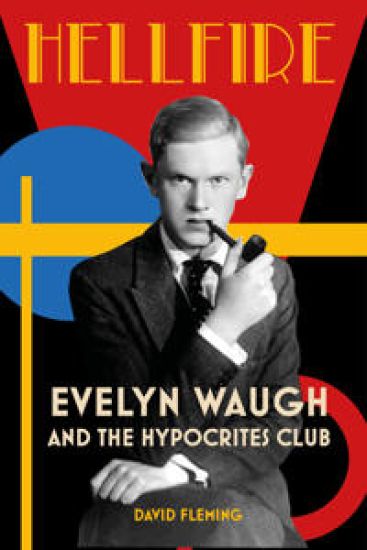
Hellfire

Hellfire

David Fleming

THE HISTORY PRESS LTD
2022
sidottu
Late one evening in March 1924, a tipsy young nun was seen trying to slip into Balliol, an all-male Oxford college, just as the gates were about to close for the night. The nun – subsequently unmasked as the son of the college bursar – was returning after a fancy-dress party at a notorious Oxford social club, one known to the university proctors for its hedonistic ways, heavy drinking and wayward behaviour. This was the final straw; the club was shut down.Described by one habitué as ‘a kind of early twentieth-century Hell Fire Club’, the Hypocrites Club counted some of the brightest of the future ‘Bright Young People’ among its members. The one-time secretary was Evelyn Waugh, who used ten of his fellow Hypocrites as inspiration for his fictional characters – seven of them in Brideshead Revisited alone.The Hypocrites didn’t just lend themselves to Waugh’s fiction. Many went on to prominence themselves, including Anthony Powell, Robert Byron, Henry Green, Claud Cockburn and Tom Driberg. **Hellfire is the first full-length portrait of this scandalous club and its famous members, who continued to be thorns in the Establishment’s side – throughout war and austerity – for the next five decades.**
City of Rhetoric

City of Rhetoric

David Fleming

State University of New York Press
2009
pokkari
Examines the relationship of civic discourse to built environments through a case study of the Cabrini Green urban revitalization project in Chicago.Combining a detailed case study of Chicago's Cabrini Green urban revitalization project with the concerns of modern political philosophy and rhetorical education, David Fleming examines the relationship between public discourse and the built environment in the contemporary United States. For more than half a century, low-income African American residents of the Cabrini Green public housing project have struggled against the extreme spatial inequality of their metropolitan region. The author examines three different options considered as part of revitalization efforts for the neighborhood: the dispersal of the project's residents into the largely white suburbs of Chicago; the building of a low-rise, mixed-income "urban village" on the same site; and the conversion of one of the original buildings into a democratically governed, not-for-profit housing cooperative.The author argues that each of these projects involves imagining the physical, socioeconomic, and rhetorical community of the contemporary city in dramatically different ways. Considered together, the projects provide evidence that places still matter in human flourishing, but show that the places of our contemporary landscape are unequal in resources and opportunities, and that our public philosophies support this inequality. Fleming reminds us, however, that these arrangements are plastic and can be redesigned to reflect a more equitable sharing of public problems and resources.
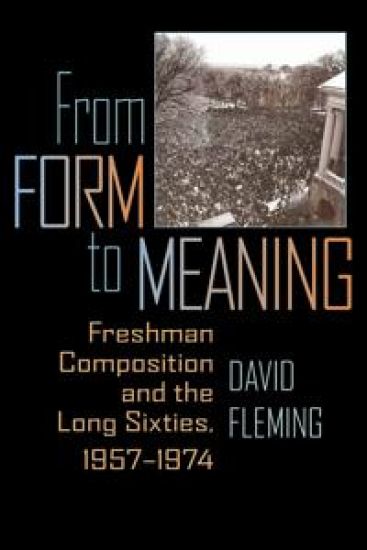
From Form to Meaning

From Form to Meaning

David Fleming

University of Pittsburgh Press
2011
nidottu
In the spring of 1968, the English faculty at the University of Wisconsin-Madison (UW) voted to remedialize the first semester of its required freshman composition course, English 101. The following year, it eliminated outright the second semester course, English 102. For the next quarter-century, UW had no real campus-wide writing requirement, putting it out of step with its peer institutions and preventing it from fully joining the \u201ccomposition revolution\u201d of the 1970s. In From Form to Meaning, David Fleming chronicles these events, situating them against the backdrop of late 1960s student radicalism and within the wider changes taking place in U.S. higher education at the time. Fleming begins with the founding of UW in 1848. He examines the rhetorical education provided in the universityÆs first half-century, the birth of a required, two semester composition course in 1898, faculty experimentation with that course in the 1920s and 1930s, and the rise of a massive \u201ccurrent-traditional\u201d writing program, staffed primarily by graduate teaching assistants (TAs), after World War II. He then reveals how, starting around 1965, tensions between faculty and TAs concerning English 101-102 began to mount. By 1969, as the TAs were trying to take over the committee that supervised the course, the English faculty simply abandoned its long-standing commitment to freshman writing. In telling the story of compositionÆs demise at UW, Fleming shows how contributing factors—the growing reliance on TAs; the questioning of traditional curricula by young instructors and their students; the disinterest of faculty in teaching and administering general education courses—were part of a larger shift affecting universities nationally. He also connects the events of this period to the long, embattled history of freshman composition in the United States. And he offers his own thoughts on the qualities of the course that have allowed it to survive and regenerate for over 125 years.
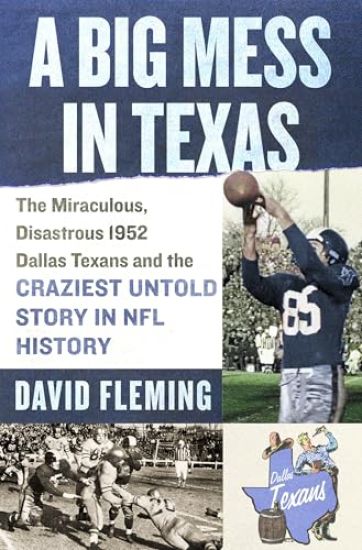
A Big Mess in Texas: The Miraculous, Disastrous 1952 Dallas Texans and the Craziest Untold Story in NFL History
The incredible, untold true story of the 1952 Dallas Texans--the most dysfunctional team in the craziest season in NFL history. Rattlesnakes on the practice field, barroom brawls between teammates, bounced checks, paternity suits, house bombings by the Ku Klux Klan, stadium fields covered in circus-elephant dung, one-legged trainers, humiliating defeats, miraculous wins, All-Pro quarterbacks getting drunk at halftime, strip poker with groupies, and even a future Hall of Fame coach stealing a cab. Nearly lost to history, this singular season in the most football-mad region of the world is a kaleidoscope of every larger-than-life, fictionalized Texas football folktale ever written or filmed, with one incredible twist: it's all true. Over a fascinating, ten-month rollercoaster ride in 1952, in the waning Wild West days of the NFL, before television turned the game into a corporation, the forgotten Dallas Texans would go down in history as one of the worst (and, wildest) teams of all time and the last NFL team to fail. But not before defying the Jim Crow South, pulling off a Thanksgiving Day miracle against George Halas's famed Chicago Bears and then celebrating with an even more infamous bender that would make Jimmy Johnson's Dallas Cowboys blush. A year later, the NFL buried all traces of the most loveable, dysfunctional, entertaining team in history by secretly rebranding the train wreck Texans as the wholesome, all-American Baltimore Colts, the team that would go on to save pro football. A Big Mess in Texas tells the Texans' tale with all the humor, drama, game action, colorful characters, villains, world-class athletes, civil rights trailblazers, and incredible plot twists of that legendary season.
Sudoku: Classic Puzzles Of Varying Difficulty Levels

Sudoku: Classic Puzzles Of Varying Difficulty Levels

David Fleming

Createspace Independent Publishing Platform
2017
nidottu
The popular Japanese puzzle game Sudoku is based on the logical placement of numbers. Sudoku doesn't require any calculation nor special math skills; all that is needed are brains and concentration. Why Do Sudoku? Lots of reasons -Playing Sudoku engages the brain -It can be relaxing, but challenging - you choose the level you want to play at -It increases concentration and focus -For some people it can be as helpful as meditation in improving relaxation and calmness -It improves your logic and memory -Studies have shown that using the brain for puzzles such as Sudoku and Crosswords helps to slow the effects of dementia and alzheimers -You can play a Sudoku puzzle a bit at a time, you don't have to do it all at once, so it's ideal if you're likely to be interrupted The classic symmetrical puzzles of varying difficulty levels. The difficulty level ("Easy", "Medium", "Hard", "Very hard") appears on the printed page along with a difficulty factor ranging between 0.01 and 1.00 (the higher the value, the more difficult the puzzle). - 50 puzzles - Random Difficulty - Solutions included Sudoku is one of the most popular puzzle games of all time.
Surviving the Future

Surviving the Future

David Fleming

Chelsea Green Publishing Co
2016
nidottu
Surviving the Future is a story drawn from the fertile ground of the late David Fleming's extraordinary Lean Logic: A Dictionary for the Future and How to Survive It. That hardback consists of four hundred and four interlinked dictionary entries, inviting readers to choose their own path through its radical vision.Recognizing that Lean Logic's sheer size and unusual structure can be daunting, Fleming's long-time collaborator Shaun Chamberlin has selected and edited one of these potential narratives to create Surviving the Future. The content, rare insights, and uniquely enjoyable writing style remain Fleming's, but are presented here at a more accessible paperback-length and in conventional read-it-front-to-back format.The subtitle-Culture, Carnival and Capital in the Aftermath of the Market Economy-hints at Fleming's vision. He believed that the market economy will not survive its inherent flaws beyond the early decades of this century, and that its failure will bring great challenges, but he did not dwell on this: "We know what we need to do. We need to build the sequel, to draw on inspiration which has lain dormant, like the seed beneath the snow."Surviving the Future lays out a compelling and powerfully different new economics for a post-growth world. One that relies not on taut competitiveness and eternally increasing productivity-"putting the grim into reality"-but on the play, humor, conversation, and reciprocal obligations of a rich culture. Building on a remarkable breadth of intellectual and cultural heritage-from Keynes to Kumar, Homer to Huxley, Mumford to MacIntyre, Scruton to Shiva, Shakespeare to Schumacher-Fleming describes a world in which, as he says, "there will be time for music."This is the world that many of us want to live in, yet we are told it is idealistic and unrealistic. With an evident mastery of both economic theory and historical precedent, Fleming shows that it is not only desirable, but actually the only system with a realistic claim to longevity. With friendliness, humor, and charm, Surviving the Future plucks this vision out of our daydreams and shows us how to make it real.
Lean Logic

Lean Logic

David Fleming

Chelsea Green Publishing Co
2016
sidottu
Lean Logic is David Fleming's masterpiece, the product of more than thirty years' work and a testament to the creative brilliance of one of Britain's most important intellectuals.A dictionary unlike any other, it leads readers through Fleming's stimulating exploration of fields as diverse as culture, history, science, art, logic, ethics, myth, economics, and anthropology, being made up of four hundred and four engaging essay-entries covering topics such as Boredom, Community, Debt, Growth, Harmless Lunatics, Land, Lean Thinking, Nanotechnology, Play, Religion, Spirit, Trust, and Utopia.The threads running through every entry are Fleming's deft and original analysis of how our present market-based economy is destroying the very foundations-ecological, economic, and cultural- on which it depends, and his core focus: a compelling, grounded vision for a cohesive society that might weather the consequences. A society that provides a satisfying, culturally-rich context for lives well lived, in an economy not reliant on the impossible promise of eternal economic growth. A society worth living in. Worth fighting for. Worth contributing to.The beauty of the dictionary format is that it allows Fleming to draw connections without detracting from his in-depth exploration of each topic. Each entry carries intriguing links to other entries, inviting the enchanted reader to break free of the imposed order of a conventional book, starting where she will and following the links in the order of her choosing. In combination with Fleming's refreshing writing style and good-natured humor, it also creates a book perfectly suited to dipping in and out.The decades Fleming spent honing his life's work are evident in the lightness and mastery with which Lean Logic draws on an incredible wealth of cultural and historical learning-from Whitman to Whitefield, Dickens to Daly, Kropotkin to Kafka, Keats to Kuhn, Oakeshott to Ostrom, Jung to Jensen, Machiavelli to Mumford, Mauss to Mandelbrot, Leopold to Lakatos, Polanyi to Putnam, Nietzsche to Naess, Keynes to Kumar, Scruton to Shiva, Thoreau to Toynbee, Rabelais to Rogers, Shakespeare to Schumacher, Locke to Lovelock, Homer to Homer-Dixon-in demonstrating that many of the principles it commends have a track-record of success long pre-dating our current society.Fleming acknowledges, with honesty, the challenges ahead, but rather than inducing despair, Lean Logic is rare in its ability to inspire optimism in the creativity and intelligence of humans to nurse our ecology back to health; to rediscover the importance of place and play, of reciprocity and resilience, and of community and culture.------Recognizing that Lean Logic's sheer size and unusual structure could be daunting, Fleming's long-time collaborator Shaun Chamberlin has also selected and edited one of the potential pathways through the dictionary to create a second, stand-alone volume, Surviving the Future: Culture, Carnival and Capital in the Aftermath of the Market Economy. The content, rare insights, and uniquely enjoyable writing style remain Fleming's, but presented at a more accessible paperback-length and in conventional read-it-front-to-back format.
Hellfire

Hellfire

David Fleming

THE HISTORY PRESS LTD
2024
nidottu
‘This is a pacey and colourful read … elegantly written.’ – Daisy Dunn, The Times‘The whole book reads rather like a Powell novel, with unexpected meetings and reversals … it is a constant pleasure.’ – Mark Amory, The Spectator‘At a rollicking pace, it follows the post-Oxford careers of all the main Hypocrites … Waugh addicts will wish to add it to their shelves.’ – A.N. Wilson, Times Literary SupplementDaily Mail top ten history book of 2022Described by one habitué as ‘a kind of early twentieth-century Hell Fire Club’, the Hypocrites Club counted some of the brightest of the future ‘Bright Young People’ among its members. The one-time secretary was Evelyn Waugh, who used ten of his fellow Hypocrites as inspiration for his fictional characters – seven of them in Brideshead Revisited alone.The Hypocrites didn’t just lend themselves to Waugh’s fiction. Many went on to prominence themselves, including Anthony Powell, Robert Byron, Henry Green, Claud Cockburn and Tom Driberg. Hellfire is the first full-length portrait of this scandalous club and its famous members, who continued to be thorns in the Establishment’s side – throughout war and austerity – for the next five decades.
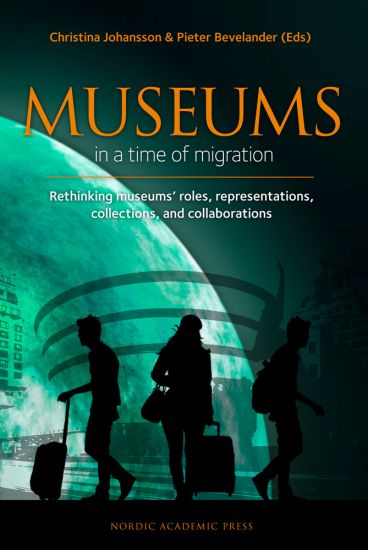
Museums in a Time of Migration

Museums in a Time of Migration

Parvin Adalan; Bonita Bennett; David Fleming; Jesper Johansson; Bernadette Lynch; Dragan Nikolic; Maja Povrzanovic Frykman; Fredrik Svanberg; Alistar Thomson; Malin Thor Tureby

Nordic Academic Press
2017
sidottu
Migration är ett av vår tids tongivande fenomen och har djupgående effekter i samhället. Museerna kan i dess spår inta en roll med potential att påverka vår förståelse av världen. När museer är som bäst utgör de platser där människor kan utforska transnationella kontakter, migrationens verkligheter och mänskliga rättigheter. Därigenom blir de relevanta som kulturinstitutioner och kan bidra till positiv social förändring, uppmuntra solidaritet och hållbar utveckling. I Museums in a time of migration reflekterar ledande forskare och museikuratorer över museernas engagemang i migrationsfrågor. Författarna presenterar nya och nyskapande projekt från hela världen tillsammans med grundliga analyser av de teoretiska och praktiska villkoren bakom dem. Särskild uppmärksamhet ägnas museernas roller, representationer, samlingar och samarbeten.