

Kirjahaku
Etsi kirjoja tekijän nimen, kirjan nimen tai ISBN:n perusteella.
33 kirjaa tekijältä David Fletcher


A highly illustrated history of the development and operation of the first British tanks, published to coincide with the 100th anniversary of their introduction in World War I.When British soldiers charged across the Somme in September 1916 they were accompanied by a new and astonishing weapon – the tank. After a stuttering start armoured behemoths such as the Mark IV, Mark V and Whippet played a crucial role in bringing World War I to an end. Marking the centenary of their battlefield debut, this comprehensive volume traces the design and development of the famous British invention during World War I and the increasingly tense years of the 1920s and 30s, from the first crude but revolutionary prototype to the ever-more sophisticated designs of later years.Bolstered by historic photographs and stunning illustrations, author David Fletcher brings us the thrilling history behind the early British battle tanks.

This lavishly illustrated volume details the design, development and operational history of the British-made tanks in World War II.Plagued by unreliable vehicles and poorly thought-out doctrine, the early years of World War II were years of struggle for Britain’s tank corps. Relying on tanks built in the late 1930s, and those designed and built with limited resources in the opening years of the war, they battled valiantly against an opponent well versed in the arts of armoured warfare.This book is the second of a multi-volume history of British tanks by renowned British armour expert David Fletcher MBE. It covers the development and use of the Matilda, Crusader, and Valentine tanks that pushed back the Axis in North Africa, the much-improved Churchill that fought with distinction from North Africa to Normandy, and the excellent Cromwell tank of 1944–45.It also looks at Britain's super-heavy tank projects, the TOG1 and TOG2, and the Tortoise heavy assault tank, designed to smash through the toughest of battlefield conditions, but never put into production.

The NVG covers all seven Marks of Churchill gun tank with variations and the curious self-propelled gun of 1941/42, but not the so-called ‘Funnies’ or the armoured recovery vehicle variants.It will begin with the prototype tank A20, which has not been covered in any detail before, then go on to look at all seven Marks of Churchill, in particular their different guns. This book will also look at the tank’s service in Russia and later with the Irish, Jordanian and Australian Armies. It will also feature on the disastrous Dieppe raid of August 1942, ending with a brief look at the Black Prince or super Churchill which was only developed up to the prototype stage at the end of World War II.The Churchill is an interesting tank, quite different from any other British tank of World War II, built outside the normal process of British tanks and the Department of Tank Design. It was built under the watchful eye of the Prime Minister, after whom it was named, by a firm with no previous experience of tank production. Despite being condemned as unsuitable and more than once being scheduled to be replaced by a better design this never actually happened. It remained in production and ultimately vindicated itself since, although it was slow and noisy it was found to have superior climbing ability and thicker frontal armour than the vaunted German Tiger.Its classification as an Infantry Tank has been extensively criticised although recently one or two authors, notably Americans, seem to have revised their views on this and even Field Marshal Montgomery, who advocated a Universal Tank to fulfil all roles, found the Churchill a useful tank on many occasions, particularly considering its ability to absorb punishment.
My Alluring Mind: Reason & Rhyme
David Fletcher
Createspace Independent Publishing Platform
2015
nidottu


This is the definitive study of British light tanks of the Second World War. The author draws upon a vast and comprehensive body of archival information and research to explore their technical characteristics and combat performance. The title focuses largely on the very widely used Mark VI, but also covers all the variants that preceded it. The type was truly ubiquitous, equipping the British Army in France, the Western Desert regions, Norway, Sumatra, Persia and India. This book chronicles various experiments and improvisations carried out on the design of these tanks. It ends with coverage of the final model, the Mark VIC, and details of the experimental Lloyd airborne light tank of 1942, which has a number of features in common with the better-known Vickers-Armstrongs designs. Augmented by original photographs and technical drawings, this title is essential for anybody interested in the development of British armoured vehicles.

This title looks at the Medium Mark A Whippet, one of the most successful British tanks of World War I and, when placed alongside existing titles covering the Mark I, Mark IV and Mark V, completes the New Vanguard series’ coverage of the major British tanks of the war. The evolution of the Whippet is examined in detail, from design and development to mechanical details and crew duties, and information on the operational use of the vehicle is drawn from war diaries and battalion records. The Whippet was involved in several well-known incidents that will be presented in this volume, including the clash at Cachy on April 24, 1918, the actions of the 6th Battalion tank known as “Musical Box” on August 8, 1918, and Sewell’s Victoria Cross-winning exploits with the 3rd Battalion on August 29, 1918. Mention will also be made of the Whippet’s involvement with the Tank Corps’ expedition to Russia. In addition to this examination of the Mark A Whippet is a study of the other Medium tanks up to the end of the war: the Medium B, Medium C, Medium D and the experimental American Studebaker tank.

Strip Pan Wrinkle (in Namibia and Botswana) is an account of a five-week expedition made by Brian (of Brahmaputra fame) and his wife, Sandra, as they drive their Land Cruiser in an extended loop through Namibia, Botswana and a little bit of Zambia. As with all of the other books in David Fletcher’s ‘Brian’s World’ series, the account is rather more than a day-by-day diary of their trip. It is also an insight into each of the countries visited, an exploration of what wildlife one might encounter in these countries and, above all else, an exercise in humour. It isn’t, therefore, a standard travelogue. Instead, with Brian’s experiences – and his contemplations – chronicled in a manner which is more wry than comprehensive, it is very much an amusing travelogue. It contains a consideration of how much our own Royal Mail is subsiding the Botswanan Post Office, an evaluation of the ugliness of the human form when compared to that of a leopard and a reflection on the efficacy of protecting rhinos by poisoning their horns with arsenic. Furthermore, there is a review of the failings of democracies and a suggestion that wild-dog dynamics might constitute a better model for the conduct of human affairs, and even an examination of the outcome of a reverse takeover of Disneyland by the Church of England. So not really a standard travelogue at all... Strip Pan Wrinkle (in Namibia and Botswana) is the fifth book in David’s seven-part series that details Brian and Sandra’s travels to Assam, Syria, Borneo, Cape Verde, Namibia/Botswana and Morocco – and in due course, Zambia.

A mauling of mankind and a travel diary make rather odd bedfellows. However, in The Country-cides of Namibia and Botswana, these unlikely playmates not only share the same pages, but they also enfold each other in a somewhat intimate embrace.

Life is full of trivia. More and more, it seems, every waking minute of our lives is spoken for - by the inconsequential, the irrelevant, the incidental, the positively wasteful, and by a whole host of other 'stuff' that serves no purpose whatsoever other than to distract us from what is really important.

Despite Brian’s longstanding aversion to cruises, there was no way he could pass up the opportunity to join an ‘expedition cruise’ to Melanesia. After all, this little known corner of the Pacific Ocean included any number of delectable destinations, not least the myriad islands that made up New Caledonia, Vanuatu and the Solomon Islands. So Brian and Sandra signed up – for two weeks at sea in the MS Caledonian Sky, and what would turn out to be two weeks of discovery as this pocket cruise ship made its way north from New Zealand up through Melanesia to Papua New Guinea. Along the way would be encountered isolated communities, novel cultures, lush tropical vegetation, volcanoes – and, if one was Brian, a series of self-induced melancholic episodes that threatened to ruin the whole trip. Whether it was a contemplation of the failing of friendships, the malignant nature of political correctness or just the trials of old age, Brian just couldn’t help immersing himself in gloom – despite his far from gloomy situation. Indeed, so relentless were these attacks of melancholia that Brian was obliged to resort to a remedy once used by Captain Cook’s crew when they were in this same part of the Pacific. Because to relieve the tedium of their long voyages, they would set about the composition of any number of crude limericks… So, Melanesia, Melancholia and Limericks provides not just an insight into the fascinating islands of Melanesia (and the not-so-fascinating depths of Brian’s melancholia) but also fifty brand new and not in the least bit melancholic limericks. Most of which Sandra found profoundly crude. Inevitably.

Tells the story of a pandemic from the perspective of the passengers on a small cruise ship in the Antarctic.

This book is the autobiography of one of the Baby Boomer generation of individuals who now stand accused of all manner of heinous crimes, including ruining the world and generally enjoying themselves in the process. This is, of course, a fallacious accusation, as is made very clear by the Baby Boomer subject of the autobiography. He does this by recording not just a series of events in his own life, but events that were taking place in the world around him, and what his thoughts were on these events – sometimes with not even a modest helping of reserve, but instead with a fairly large dollop of irreverence. After all, any Baby Boomer worth his salt, is hardly going to be constrained by the dictates of ‘wokism’ or the edicts of modern-day puritanism. Far from it. Indeed, this is only too apparent throughout the whole of the autobiography and even more apparent in the autobiography’s three appendices, three veritable treasure troves of poetic pearls, containing a carefully curated selection of the author’s entirely non-PC verses and his appalling epic odes. You have been warned.

In the middle of the 22nd Century, a time when humanity has lost its grip on all forms of advanced technology, Sidney is one of the few people in the world who still has access to ham radio, and who is making use of this facility to keep in contact with three other ‘hams’ around the world. With this small network of remote friends, he has been able for some time to endure his existence as a serf in what is now a rigidly partitioned Britain. However, he now finds himself facing a situation where it seems he will have to look to just his own resources to survive. Through overpopulation, ignorance, and an unwillingness to confront the reality of their situation, the people of this crowded country are facing imminent starvation. For Sidney, who lives in the ‘southerner’ part of the country, close to the partition line, this means that soon he will be exposed to a wave of desperate ‘northerners’ as, in their hundreds of thousands, they move south in search of food. This is the story of how Sidney seeks to save himself – albeit not solely through his own resources, but with the help of an improbable new friend.

Warren found being propelled back through time to his long-ago university days unnerving in the extreme. When he then realised that this time shift had been combined not only with the return of his long-lost youthful body and a complete understanding of a long-abandoned degree subject, but also with a full recollection of his post-university life, he was more than just unnerved. He was terrified. In fact, it took him quite some time to come to terms with his very novel situation, and even longer to realise what amazing opportunities this situation might present. After all, it seemed that he could now embark on an entirely new life, and one that would no doubt be much enhanced by his having a knowledge of what the future had in store. Furthermore – and best of all – he could now track down his soulmate from his first life, and make quite sure she fell in love with him all over again. What could possibly go wrong? And what could possibly go right?

Neither Brian nor Sandra knew whether there was a longer palindrome than 'a man a plan a canal Panama', but they did know that the country in this palindrome was well worth a visit.

This book is simply a collection of 366 original ribald limericks.
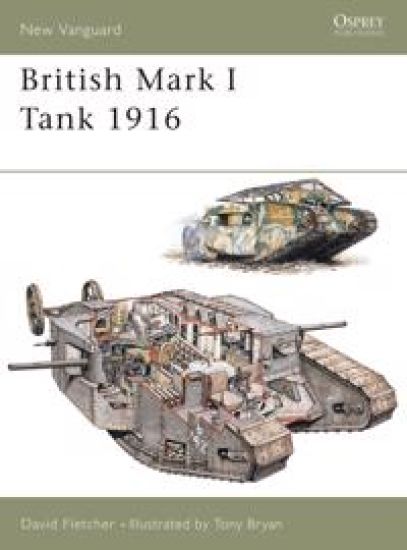
In 1915 a machine christened Little Willie changed the way that wars were fought. Little Willie was a fully tracked armoured vehicle that could break a trench system. Its development was completed in December 1915, but by then it had already been superseded by an improved design, Mother. This was the first rhomboid tank, and the prototype for the Mark I which would influence a whole generation of tank building. This book details the development of the Mark I, and its surprise arrival in France in the middle of 1916 during the closing weeks of the battles of the Somme.