Kirjojen hintavertailu. Mukana 12 016 292 kirjaa ja 12 kauppaa.

Kirjahaku

Etsi kirjoja tekijän nimen, kirjan nimen tai ISBN:n perusteella.

11 kirjaa tekijältä David Frankel

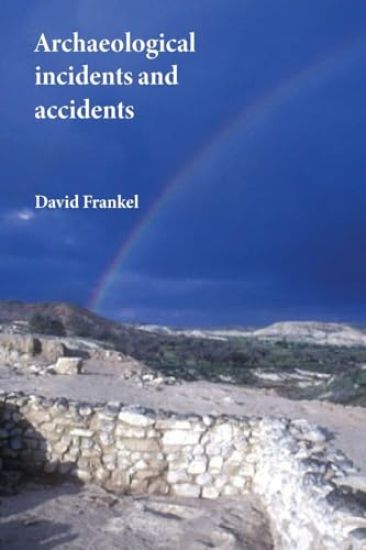
Archaeological Incidents and Accidents

Archaeological Incidents and Accidents

David Frankel

David Frankel
2025
pokkari
Archaeological Incidents and Accidents exposes some of the challenges, realities and pleasures of research. The work may be serious but we should never take ourselves too seriously. This book doesn't. It looks behind the scenes in an odd miscellany of memories of activities rather than a memoir in an assortment of 30 profusely illustrated general stories about archaeological and historical research projects carried out by the author over the last 50 years. Some of the tales are longer, others shorter and a few taller, but all are more-or-less true. Most incidents stem from excavations carried out on historical sites and Indigenous places in Australia, on Bronze Age cemeteries and settlements in Cyprus and in prehistoric villages in Papua New Guinea, but there are also one or two ring-ins. The stories are as much about the unexpected accidents that prompted or affected who did what, and how and why, as they are about the results, interesting though they are in giving insights into different worlds and how they can be discovered and understood. You will find some information and lots of questions, but perhaps fewer answers. Nothing can be taken for granted and you can choose which you want to believe.
The Land of Canaan and the Destiny of Israel
What part does the land of Canaan play in the biblical conception of “Israel”? To what extent does the religion promoted by the Hebrew Bible require that Israel live its communal life in the national homeland? And how does life in the land compare in importance with other elements presented as belonging to Israel’s ultimate destiny, such as, for example, adherence to the law? To what extent must the people of Israel take hold of and settle in the “entire land of Canaan” for them to fulfill their destiny? Might the land be shared with other peoples, or must non-Israelites be expelled and subjugated, or at least kept at a safe and isolated distance?Frankel asks these questions and others of the Hebrew Bible as a whole and of the biblical texts individually. He shows that all of these questions were addressed by various biblical authors and that diverse and even opposing answers were given to them. These issues are not completely new. Many of them have been addressed in recent times by various scholars and theologians who have taken a renewed interest in the “territorial dimension” of the Hebrew Bible. However, works of a predominantly theological or sociological orientation often suffer from a tendency to read the biblical texts holistically and to gloss over textual snags and inconsistencies. For Frankel, the snags and inconsistencies in the texts are of central importance. They allow him carefully to reconstruct the process of the growth of the texts in question and to reveal both their original forms and their final transformations at the hands of the editors. Frankel’s analysis shows that behind the present form of several biblical texts lie earlier versions that often displayed remarkably open and inclusive conceptions of the relationship between the people of Israel and the land of Canaan. Diachronic analysis of the biblical text is thus an essential component in this book’s attempt to retrieve something of the heated theological dynamic that animated the work of the authors and editors whose efforts were consummated in the formation of the Hebrew Bible.Frankel presents here many new and previously unrecognized biblical conceptions and traditions that have significant theological implications for the contemporary religious and political situation in the State of Israel. Once the biblical conceptions have been accurately identified, analyzed, and categorized, he opens a discussion of the possible relevance of these conceptions to the contemporary situation in which he lives.
Between the Murray and the Sea

Between the Murray and the Sea

David Frankel

Sydney University Press
2017
pokkari
Between the Murray and the Sea: Aboriginal Archaeology in South-eastern Australia explores the Indigenous archaeology of Victoria, focusing on areas south and east of the Murray River.Looking at multiple sites from the region, David Frankel considers what the archaeological evidence reveals about Indigenous society, migration, and hunting techniques. He looks at how an understanding of the changing environment, combined with information drawn from 19th-century ethnohistory, can inform our interpretation of the archaeological record. In the process, he investigates the nature of archaeological evidence and explanation, and proposes approaches for future research.‘A carefully crafted and impressively illustrated depiction of the economic and social lives of past Aboriginal peoples who lived in the diverse landscapes that existed between the Murray and the sea. This book will be valuable to both specialists and non-specialists alike, as it provides a foundation for thinking about the remarkable variety of ways Aboriginal foragers adapted to the lands of southeastern Australia.’ Peter Hiscock, Tom Austen Brown Professor of Australian Archaeology, University of Sydney
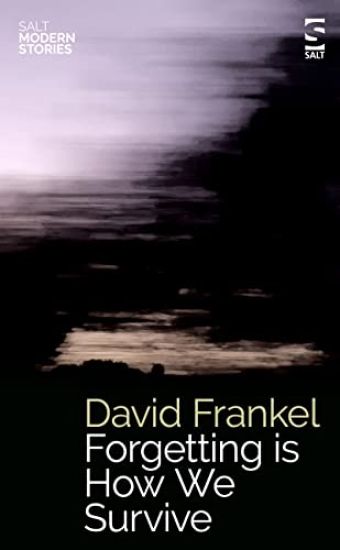
Forgetting is How We Survive

Forgetting is How We Survive

David Frankel

SALT PUBLISHING
2023
pokkari
Shortlisted for The Edge Hill Short Story Prize 2024 A plane crashes. A boy drowns. A body is found on a dark lakeside. A woman tries to make sense of a strange memory from her childhood. A father searches for a missing dog – his only link to his lost son. A boy on the brink of adolescence embarks on a journey and gets more than he bargained for. Young lovers get their kicks trespassing in empty houses. A young man prepares to leave his hometown for the last time, and a giant sink hole threatens to swallow everything. In Forgetting Is How We Survive, people are haunted by ghosts of the past, tormented by doppelgangers and pining for the futures that have been lost to them. Each faces a turning point – an event that will move their life from one path to another, and every event casts a shadow. The stories in this collection come from another England where earthy realism hides another world where anything is possible.