Kirjojen hintavertailu. Mukana 11 627 469 kirjaa ja 12 kauppaa.

Kirjahaku

Etsi kirjoja tekijän nimen, kirjan nimen tai ISBN:n perusteella.

5 kirjaa tekijältä David Frederick Ross

The Intimate Supply Chain

The Intimate Supply Chain

David Frederick Ross

Auerbach Publishers Inc.
2008
sidottu
The growing power being exercised by today’s consumer is causing significant paradigm shifts away from traditional marketing. This is leading to a whole new take on the structure and functioning of supply chain management (SCM). It’s no longer so much about improving the manufacturing process as it is improving the point and speed of contact and the continued interaction that you have with your customer.The Intimate Supply Chain: Leveraging the Supply Chain to Manage the Customer Experience explores how SCM can assist companies to grow and prosper in the new global economy. It focuses on what the customer wants from the supply chain and how organizations must restructure their outdated business models to meet their customer’s needs. Covering this dramatic shift in customer management, David Ross, bestselling author and recognized industry expert, demonstrates how to design and maintain an efficient and up-to-date delivery channel, showcasing the methods and technologies needed to adapt to the evolving, demand-driven market. Exceptionally practical in his approach, Ross provides a new perspective that requires a broader mindset about the structure and functioning of SCM. He explains how effective management must start with the aim of getting personal with customers in order to bring total value to their shopping experience. Rather than concentrate on a range of products, this work defines a roadmap that will lead to increased empathy for your customers so that you will be able to provide them with unbeatable and readily recognizable value. When properly traveled, you will discover that it is a roadmap to increased profitability and market share.
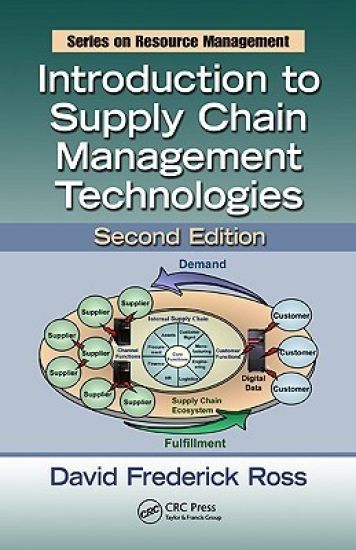
Introduction to Supply Chain Management Technologies
It is almost impossible to conceive of the concept and practical application of supply chain management (SCM) without linking it to the enabling power of today’s information technologies. Building upon the foundations of the first edition, Introduction to Supply Chain Management Technologies, Second Edition details the software toolsets and suites driving integration in the areas of customer management, manufacturing, procurement, warehousing, and logistics. By investigating the breakthroughs brought about by the emergence of new Internet-based technologies in information, channel, customer, production, sourcing, and logistics management, the author provides new insights into the continuously emerging field of SCM.New in the Second Edition: New model of SCMExtended discussion of the concepts of lean, adaptive, and demand-driven supply chain technologiesCustomer experience management and social networkingFundamentals of computing and their enabling power Basics of today's ERP/supply chain business solutionsIntegrative software tools that allow for new levels of collaboration, flexibility, and performanceThe new edition expands on emerging technologies that have provided all forms of enterprises with the capability to continuously automate cost, redundancy, and variation out of the process; enhance information creation and visibility; and expand the peer-to-peer connectivity that allows people to network their tasks, ideas, and aspirations to produce a form of collective open-ended knowing, collaborating, and experiencing. The information presented builds an understanding of how today’s technology-driven SCM provides new avenues to execute superlative, customer-winning value through the digital, real-time synchronization of productive competencies, products, services, and logistics delivery capabilities with the priorities of an increasingly global business environment.
Distribution Planning and Control

Distribution Planning and Control

David Frederick Ross

Springer-Verlag New York Inc.
2015
sidottu
This third edition provides operations management students, academics and professionals with a fully up-to-date, practical and comprehensive sourcebook in the science of distribution and Supply Chain Management (SCM). Its objective is not only to discover the roots and detail the techniques of supply and delivery channel networks, but also to explore the impact of the merger of SCM concepts and information technologies on all aspects of internal business and supply channel management. This textbook provides a thorough and sometimes analytical view of the topic, while remaining approachable from the standpoint of the reader. Although the text is broad enough to encompass all the management activities found in today's logistics and distribution channel organizations, it is detailed enough to provide the reader with a thorough understanding of essential strategic and tactical planning and control processes, as well as problem-solving techniques that can be applied to everyday operations.Distribution Planning and Control: Managing in the Era of Supply Chain Management, 3rd Ed. is comprised of fifteen chapters, divided into five units. Unit 1 of the text, The SCM and Distribution Management Environment, sets the background necessary to understand today’s supply chain environment. Unit 2, SCM Strategies, Channel Structures and Demand Management, reviews the activities involved in performing strategic planning, designing channel networks, forecasting and managing channel demand. Unit 3, Inventory Management in the Supply Chain Environment, provides an in-depth review of managing supply chain inventories, statistical inventory management, and inventory management in a multiechelon channel environment. Unit 4, Supply Chain Execution, traces the translation of the strategic supply chain plans into detailed customer and supplier management, warehousing and transportation operations activities.Finally Unit 5, International Distribution and Supply Chain Technologies, concludes the text by exploring the role of two integral elements of SCM: international distribution management and the deployment of information technologies in the supply chain environment. Each chapter includes summary questions and problems to challenge readers to their knowledge of concepts and topics covered. Additionally supplementary materials for instructors are also available as tools for learning reinforcement.
Distribution Planning and Control

Distribution Planning and Control

David Frederick Ross

Springer-Verlag New York Inc.
2016
nidottu
This third edition provides operations management students, academics and professionals with a fully up-to-date, practical and comprehensive sourcebook in the science of distribution and Supply Chain Management (SCM). Its objective is not only to discover the roots and detail the techniques of supply and delivery channel networks, but also to explore the impact of the merger of SCM concepts and information technologies on all aspects of internal business and supply channel management. This textbook provides a thorough and sometimes analytical view of the topic, while remaining approachable from the standpoint of the reader. Although the text is broad enough to encompass all the management activities found in today's logistics and distribution channel organizations, it is detailed enough to provide the reader with a thorough understanding of essential strategic and tactical planning and control processes, as well as problem-solving techniques that can be applied to everyday operations.Distribution Planning and Control: Managing in the Era of Supply Chain Management, 3rd Ed. is comprised of fifteen chapters, divided into five units. Unit 1 of the text, The SCM and Distribution Management Environment, sets the background necessary to understand today’s supply chain environment. Unit 2, SCM Strategies, Channel Structures and Demand Management, reviews the activities involved in performing strategic planning, designing channel networks, forecasting and managing channel demand. Unit 3, Inventory Management in the Supply Chain Environment, provides an in-depth review of managing supply chain inventories, statistical inventory management, and inventory management in a multiechelon channel environment. Unit 4, Supply Chain Execution, traces the translation of the strategic supply chain plans into detailed customer and supplier management, warehousing and transportation operations activities.Finally Unit 5, International Distribution and Supply Chain Technologies, concludes the text by exploring the role of two integral elements of SCM: international distribution management and the deployment of information technologies in the supply chain environment. Each chapter includes summary questions and problems to challenge readers to their knowledge of concepts and topics covered. Additionally supplementary materials for instructors are also available as tools for learning reinforcement.
Introduction to e-Supply Chain Management

Introduction to e-Supply Chain Management

David Frederick Ross

CRC Press Inc
2002
sidottu
In the quest to remove supply channel costs, streamline channel communications, and link customers to the value-added resources found along the supply chain continuum, Supply Chain Management (SCM) has emerged as a tactical operations tool. The first book to completely define the architecture of the merger of SCM and the Internet, Introduction to e-Supply Chain Management: Engaging Technology to Build Market-Winning Business Partnerships shows you how to exploit this merger and gain an unbeatable competitive advantage. The tightening of the economy and heavier restrictions and security measures placed on channel flows have rendered access to real-time, accurate supply chain information more critical than ever. Connectivity, messaging, and collaboration have become today's foremost buzzwords, as companies compete for survival in an environment where cycle times and permissable margins of error continue to shrink. Introduction to e-Supply Chain Management explores the concepts, techniques, and vocabulary of the convergence of SCM and the Internet so that companies can move beyond merely surviving and thrive in today's competitive marketplace.