Kirjojen hintavertailu. Mukana 11 514 604 kirjaa ja 12 kauppaa.

Kirjahaku

Etsi kirjoja tekijän nimen, kirjan nimen tai ISBN:n perusteella.

10 kirjaa tekijältä David G. Horrell

1 Peter (New Testament Guides)

1 Peter (New Testament Guides)

David G. Horrell

T. T.Clark Ltd
2008
sidottu
This volume offers a concise and accessible introduction to 1 Peter, especially aimed at undergraduate-level students. It provides information on the likely historical and social setting of this letter, on its literary form and theological content, and on issues involved in its interpretation. In particular, this volume suggests that 1 Peter is an important text not least for the ways in which it both reflects and constructs early Christian identity, in its relationships with Judaism and the Roman Empire. Although 1 Peter remains neglected compared with the canonical gospels and the major Pauline letters, Horrell argues that the letter deserves much more attention for the pivotal contribution it makes to the development of early Christianity and for the ways in which it reveals this development in progress.
1 Peter (New Testament Guides)

1 Peter (New Testament Guides)

David G. Horrell

T. T.Clark Ltd
2008
nidottu
This volume offers a concise and accessible introduction to 1 Peter, especially aimed at undergraduate-level students. It provides information on the likely historical and social setting of this letter, on its literary form and theological content, and on issues involved in its interpretation. In particular, this volume suggests that 1 Peter is an important text not least for the ways in which it both reflects and constructs early Christian identity, in its relationships with Judaism and the Roman Empire. Although 1 Peter remains neglected compared with the canonical gospels and the major Pauline letters, Horrell argues that the letter deserves much more attention for the pivotal contribution it makes to the development of early Christianity and for the ways in which it reveals this development in progress.
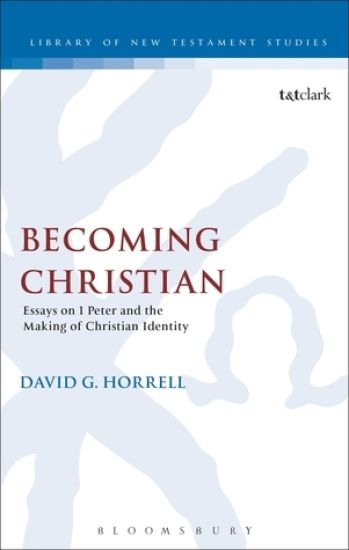
Becoming Christian

Becoming Christian

David G. Horrell

T. T.Clark Ltd
2013
sidottu
Becoming Christian examines various facets of the first letter of Peter, in its social and historical setting, in some cases using new social-scientific and postcolonial methods to shed light on the ways in which the letter contributes to the making of Christian identity. At the heart of the book chapters 5-7, examine the contribution of 1 Peter to the construction of Christian identity, the persecution and suffering of Christians in Asia Minor, the significance of the name ‘Christian', and the response of the letter to the hostility encountered by Christians in society. There are no recent books which bring together such a wealth of information and analysis of this crucial early Christian text. Becoming Christian has developed out of Horrell's ongoing research for the International Critical Commentary on 1 Peter. Together these chapters offer a series of significant and original engagements with this letter, and a resource for studies of 1 Peter for some time to come.
An Introduction to the Study of Paul

An Introduction to the Study of Paul

David G. Horrell

T. T.Clark Ltd
2015
sidottu
This tried and tested introduction to Paul needs little introduction of its own. After considering Paul's importance and influence, and the important sources for the study of Paul, the volume covers the following key topics: the earliest period of Christianity - from Jesus to Paul; Paul's life before and after his 'conversion'; his individual letters; the major elements of his theology; his attitude to Israel and the Jewish law; perspectives on the Pauline assemblies, including their socio-economic location, meeting places, and attitudes towards women; and Paul's legacy in the New Testament and beyond. The volume has been revised throughout and fully updated with respect to bibliography, and to presenting the latest debates surrounding Paul's thought in a manageable format - including those around ‘old’ and ‘new’ perspectives, with a new section on the ‘radical’ new Jewish perspective, and those related to the socio-economic status and character of the Pauline assemblies. The helpful study questions and reading lists have also been revised.
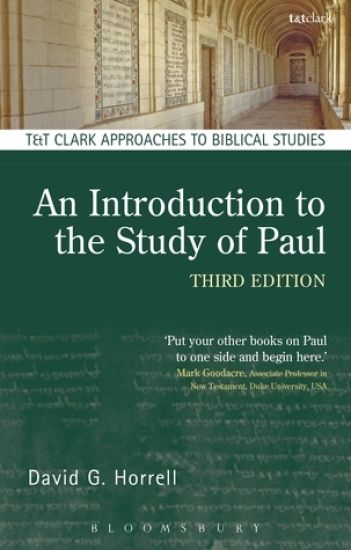
An Introduction to the Study of Paul

An Introduction to the Study of Paul

David G. Horrell

T. T.Clark Ltd
2015
nidottu
This tried and tested introduction to Paul needs little introduction of its own. After considering Paul's importance and influence, and the important sources for the study of Paul, the volume covers the following key topics: the earliest period of Christianity - from Jesus to Paul; Paul's life before and after his 'conversion'; his individual letters; the major elements of his theology; his attitude to Israel and the Jewish law; perspectives on the Pauline assemblies, including their socio-economic location, meeting places, and attitudes towards women; and Paul's legacy in the New Testament and beyond. The volume has been revised throughout and fully updated with respect to bibliography, and to presenting the latest debates surrounding Paul's thought in a manageable format - including those around ‘old’ and ‘new’ perspectives, with a new section on the ‘radical’ new Jewish perspective, and those related to the socio-economic status and character of the Pauline assemblies. The helpful study questions and reading lists have also been revised.
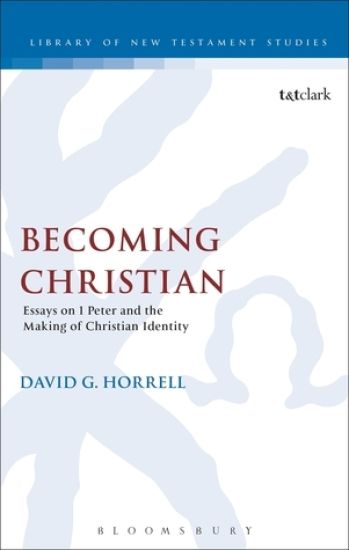
Becoming Christian

Becoming Christian

David G. Horrell

T. T.Clark Ltd
2015
nidottu
Becoming Christian examines various facets of the first letter of Peter, in its social and historical setting, in some cases using new social-scientific and postcolonial methods to shed light on the ways in which the letter contributes to the making of Christian identity. The heart of the book, chapters 5-7, examines the contribution of 1 Peter to the construction of Christian identity, the persecution and suffering of Christians in Asia Minor, the significance of the name ‘Christian', and the response of the letter to the hostility encountered by Christians in society. There are no recent books which bring together such a wealth of information and analysis of this crucial early Christian text. Becoming Christian has developed out of Horrell's ongoing research for the International Critical Commentary on 1 Peter. Together these chapters offer a series of significant and original engagements with this letter, and a resource for studies of 1 Peter for some time to come.
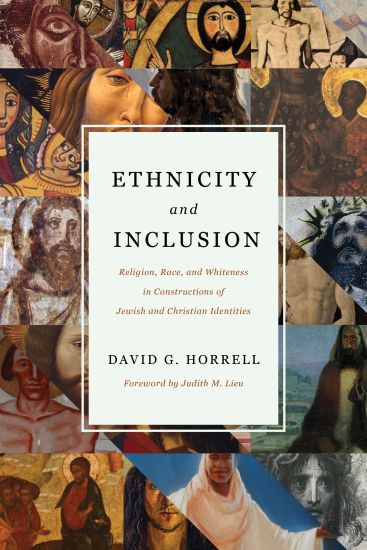
Ethnicity and Inclusion: Religion, Race, and Whiteness in Constructions of Jewish and Christian Identities
Some of today's problematic ideologies of racial and religious difference can be traced back to constructions of the relationship between Judaism and early Christianity. New Testament studies, which developed contemporaneously with Europe's colonial expansion and racial ideologies, is, David Horrell argues, therefore an important site at which to probe critically these ideological constructions and their contemporary implications. In Ethnicity and Inclusion, Horrell explores the ways in which "ethnic" (and "religious") characteristics feature in key Jewish and early Christian texts, challenging the widely accepted dichotomy between a Judaism that is ethnically defined and a Christianity that is open and inclusive. Then, through an engagement with whiteness studies, he offers a critique of the implicit whiteness and Christianness that continue to dominate New Testament studies today, arguing that a diversity of embodied perspectives is epistemologically necessary.
The Bible and the Environment

The Bible and the Environment

David G. Horrell

Acumen Publishing Ltd
2014
nidottu
Environmental issues have in recent years come to the centre stage of political and ethical debate. This is a crucial topic to engage in this series. Moreover, there has long been the charge, classically formulated by Lynn White Jr, that the biblical and Christian tradition has legitimated and encouraged humanity's aggressive domination of nature to serve human interests. Biblical visions of the future, with destruction for the earth and rescue for the elect, might also seem to discourage any concern for the earth's future or the welfare of future generations. In this volume, David Horrell sets out this context for discussion, and illustrates the diverse ways in which the Bible has been interpreted in relation to issues of ecology and the environment. A wide range of biblical texts are discussed, from "Genesis" to "Revelation", and competing interpretations are contrasted and evaluated. This analysis shows that the Bible provides a thoroughly ambivalent legacy, which cannot straightforwardly provide positive teaching on care for the environment, but nor can it simply be seen as an anti-ecological book. Finally, then, Horrell argues that what is needed is the explicit development of an 'ecological hermeneutic'. This involves constructing certain interpretative lenses which both arise from the engagement between our contemporary context and the biblical text and also generate a new reading of the biblical tradition appropriate to face the challenges of the ecological issues that face humanity at the beginning of the third millennium.
The Bible and the Environment

The Bible and the Environment

David G. Horrell

Equinox Publishing Ltd
2010
sidottu
The biblical and Christian traditions have long been seen to have legitimated and encouraged humanity's aggressive domination of nature. Biblical visions of the future, with destruction for the earth and rescue for the elect, have also discouraged any concern for the earth's future or the welfare of future generations. But we now live in a time when environmental issues are at the centre of political and ethical debate. What is needed is a new reading of the biblical tradition that can meet the challenges of the ecological issues that face humanity at the beginning of the third millennium. 'The Bible and the Environment' examines a range of biblical texts - from Genesis to Revelation - evaluating competing interpretations. The Bible provides a thoroughly ambivalent legacy. Certainly, it cannot provide straightforward teaching on care for the environment but nor can it simply be seen as an anti-ecological book. Developing an 'ecological hermeneutic' as a way of mediating between contemporary concerns and the biblical text, 'The Bible and the Environment' presents a way of productively reading the Bible in the context of contemporary ecology.