Kirjojen hintavertailu. Mukana 11 717 486 kirjaa ja 12 kauppaa.

Kirjahaku

Etsi kirjoja tekijän nimen, kirjan nimen tai ISBN:n perusteella.

10 kirjaa tekijältä David Gordon White

Daemons Are Forever

Daemons Are Forever

David Gordon White

University of Chicago Press
2021
sidottu
A richly illustrated tapestry of interwoven studies spanning some six thousand years of history, Daemons Are Forever is at once a record of archaic contacts and transactions between humans and protean spirit beings--daemons--and an account of exchanges, among human populations, of the science of spirit beings: daemon-ology. Since the time of the Indo-European migrations, and especially following the opening of the Silk Road, a common daemonological vernacular has been shared among populations ranging from East and South Asia to Northern Europe. In this virtuoso work of historical sleuthing, David Gordon White recovers the trajectories of both the "inner demons" cohabiting the bodies of their human hosts and the "outer daemons" that those same humans recognized each time they encountered them in their enchanted haunts: sylvan pools, sites of geothermal eruptions, and dark forest groves. Along the way, he invites his readers to reconsider the potential and promise of the historical method in religious studies, suggesting that a "connected histories" approach to Eurasian daemonology may serve as a model for restoring history to its proper place, at the heart of the history of religions discipline.

Daemons Are Forever

Daemons Are Forever

David Gordon White

University of Chicago Press
2021
pokkari
A richly illustrated tapestry of interwoven studies spanning some six thousand years of history, Daemons Are Forever is at once a record of archaic contacts and transactions between humans and protean spirit beings--daemons--and an account of exchanges, among human populations, of the science of spirit beings: daemon-ology. Since the time of the Indo-European migrations, and especially following the opening of the Silk Road, a common daemonological vernacular has been shared among populations ranging from East and South Asia to Northern Europe. In this virtuoso work of historical sleuthing, David Gordon White recovers the trajectories of both the "inner demons" cohabiting the bodies of their human hosts and the "outer daemons" that those same humans recognized each time they encountered them in their enchanted haunts: sylvan pools, sites of geothermal eruptions, and dark forest groves. Along the way, he invites his readers to reconsider the potential and promise of the historical method in religious studies, suggesting that a "connected histories" approach to Eurasian daemonology may serve as a model for restoring history to its proper place, at the heart of the history of religions discipline.
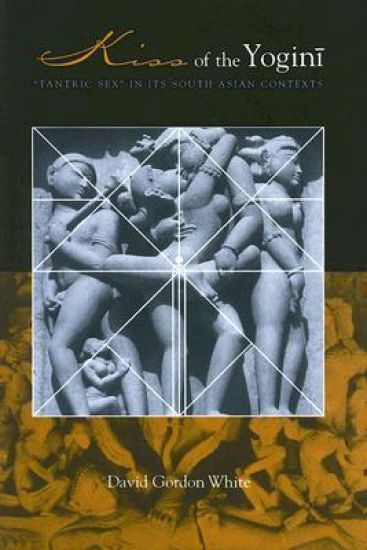
Kiss of the Yogini

Kiss of the Yogini

David Gordon White

University of Chicago Press
2006
nidottu
With "Kiss of the Yogini", David Gordon White sweeps away centuries of misunderstandings and misrepresentations, returning to original texts, images, and ritual practices to reconstruct the history of South Asian Tantra from the medieval period to the present day. "Kiss of the Yogini" contains White's own translations from over a dozen Tantras that have never before been translated into any European language. It will prove to be the definitive work for anyone seeking to understand Tantra and the crucial role it has played in South Asian history, society, culture, and religion.
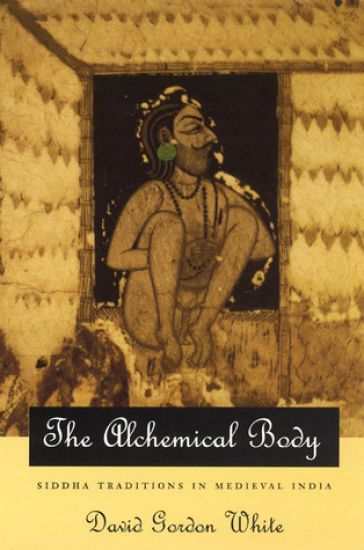
The Alchemical Body – Siddha Traditions in Medieval India

The Alchemical Body – Siddha Traditions in Medieval India

David Gordon White

University of Chicago Press
1998
nidottu
Preface Note on Transliteration Abbreviations 1: Indian Paths to Immortality 2: Categories of Indian Thought: The Universe by Numbers 3: The Prehistory of Tantric Alchemy 4: Sources for the History of Tantric Alchemy in India 5: Tantric and Siddha Alchemical Literature 6: Tantra in the Rasarnava 7: Corresponding Hierarchies: The Substance of the Alchemical Body8: Homologous Structures of the Alchemical Body 9: The Dynamics of Transformation in Siddha Alchemy 10: Penetration, Perfection, and Immortality Epilogue: The Siddha Legacy in Modern India Notes Selected Bibliography Index
Myths of the Dog-Man

Myths of the Dog-Man

David Gordon White

University of Chicago Press
1991
nidottu
"An impressive and important cross-cultural study that has vast implications for history, religion, anthropology, folklore, and other fields. . . . Remarkably wide-ranging and extremely well-documented, it covers (among much else) the following: medieval Christian legends such as the 14th-century Ethiopian Gadla Hawaryat (Contendings of the Apostles) that had their roots in Parthian Gnosticism and Manichaeism; dog-stars (especially Sirius), dog-days, and canine psychopomps in the ancient and Hellenistic world; the cynocephalic hordes of the ancient geographers; the legend of Prester John; Visvamitra and the Svapacas ("Dog-Cookers"); the Dog Rong ("warlike barbarians") during the Xia, Shang, and Zhou periods; the nochoy ghajar (Mongolian for "Dog Country") of the Khitans; the Panju myth of the Southern Man and Yao "barbarians" from chapter 116 of the History of the Latter Han and variants in a series of later texts; and the importance of dogs in ancient Chinese burial rites. . . . Extremely well-researched and highly significant."—Victor H. Mair, Asian Folklore Studies
Sinister Yogis

Sinister Yogis

David Gordon White

University of Chicago Press
2009
sidottu
Since the 1960s, yoga has become a billion-dollar industry in the West, attracting housewives and hipsters, New Agers and the old-aged. But our modern conception of yoga derives much from nineteenth-century European spirituality, and the true story of yoga's origins in South Asia is far richer, stranger, and more entertaining than most of us realize. To uncover this history, David Gordon White focuses on yoga's practitioners. Combing through millennia of South Asia's vast and diverse literature, he discovers that yogis are usually portrayed as wonder-workers or sorcerers who use their dangerous supernatural abilities - which can include raising the dead, possession, and levitation - to acquire power, wealth, and sexual gratification. As White shows, even those yogis who aren't downright villainous bear little resemblance to Western assumptions about them. By turns rollicking and sophisticated, "Sinister Yogis" tears down the image of yogis as detached, contemplative teachers, finally placing them in their proper context.
Sinister Yogis

Sinister Yogis

David Gordon White

University of Chicago Press
2011
nidottu
Since the 1960s, yoga has become a billion-dollar industry in the West, attracting housewives and hipsters, New Agers and the old-aged. But our modern conception of yoga derives much from nineteenth-century European spirituality, and the true story of yoga's origins in South Asia is far richer, stranger, and more entertaining than most of us realize. To uncover this history, David Gordon White focuses on yoga's practitioners. Combing through millennia of South Asia's vast and diverse literature, he discovers that yogis are usually portrayed as wonder-workers or sorcerers who use their dangerous supernatural abilities - which can include raising the dead, possession, and levitation - to acquire power, wealth, and sexual gratification. As White shows, even those yogis who aren't downright villainous bear little resemblance to Western assumptions about them. By turns rollicking and sophisticated, "Sinister Yogis" tears down the image of yogis as detached, contemplative teachers, finally placing them in their proper context.
The Yoga Sutra of Patanjali

The Yoga Sutra of Patanjali

David Gordon White

Princeton University Press
2019
pokkari
The rise, fall, and modern resurgence of an enigmatic book revered by yoga enthusiasts around the worldConsisting of fewer than two hundred verses written in an obscure if not impenetrable language and style, Patanjali's Yoga Sutra is extolled by the yoga establishment as a perennial classic and guide to yoga practice—except it isn't. Virtually forgotten in India for hundreds of years and maligned when it was first discovered in the West, the Yoga Sutra has been elevated to its present iconic status only in the course of the past forty years. David Gordon White retraces the strange and circuitous journey of this confounding work from its ancient origins to today, bringing to life the improbable cast of characters whose interpretations and misappropriations of the Yoga Sutra led to its revered place in contemporary popular culture.
The Assimilation of Yogic Religions through Pop Culture
The image of the meditating yogi has become a near-universal symbol for transcendent perfection used to market everything from perfume and jewelry to luxury resorts and sports cars, and popular culture has readily absorbed it along similar lines. Yet the religious traditions grounding such images are often readily abandoned or caricatured beyond recognition, or so it would seem. The essays contained in The Assimilation of Yogic Religions through Pop Culture explore the references to yogis and their native cultures of India, Tibet, and China as they are found in the stories of many famous icons of popular culture, from Batman, Spider-Man, and Doctor Strange to Star Trek, Doctor Who, Twin Peaks, and others. In doing so, the authors challenge the reader to look deeper into the seemingly superficial appropriation of the image of the yogi and Asian religious themes found in all manner of comic books, novels, television, movies, and theater and to carefully examine how they are being represented and what exactly is being said.