Kirjojen hintavertailu. Mukana 12 083 983 kirjaa ja 12 kauppaa.

Kirjahaku

Etsi kirjoja tekijän nimen, kirjan nimen tai ISBN:n perusteella.

19 kirjaa tekijältä David Greentree

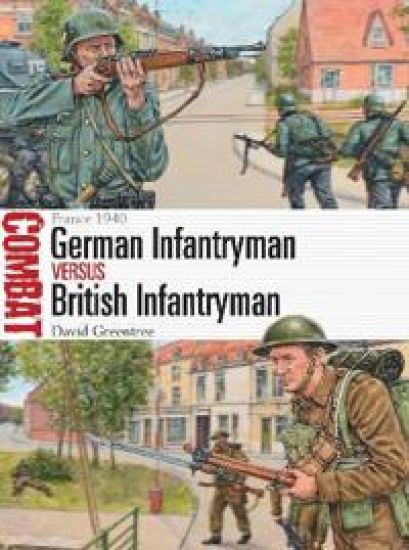
German Infantryman vs British Infantryman

German Infantryman vs British Infantryman

David Greentree

Osprey Publishing
2015
nidottu
When Hitler’s forces poured into France and the Low Countries in 1940, the uneasy peace of the ‘Phoney War’ was shattered, and Europe was ripped apart by another Blitzkrieg.Forming the backbone of the German advance were the well-equipped Schützen (Rifles), motorized infantry who embodied the essence of the fluid, swift warfare that had characterized World War II thus far. Facing them were infantrymen of the British Expeditionary Force, units of considerable fighting quality who had nevertheless received no special training to conduct combined-arms warfare in conjunction with armour. This study investigates the combat between the two adversaries at small-unit level, recreating the ferocity of the fighting on the front lines of the Battle of France in three key clashes at Arras, Calais and Merville.Assessing the training, organization and unit ethos of both sides in the context of a new type of mobile warfare, David Greentree reveals the extraordinary difficulties encountered by infantry units in trying to remain in contact with their armoured and mechanized formations.
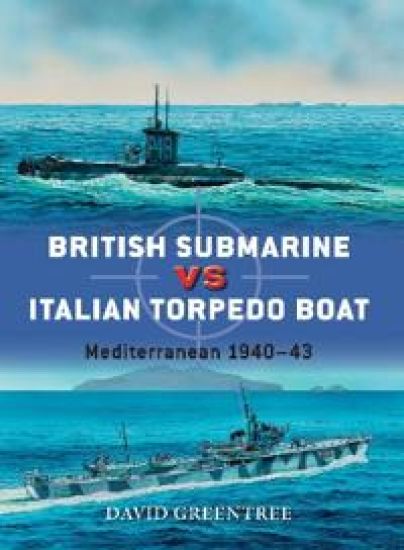
British Submarine vs Italian Torpedo Boat

British Submarine vs Italian Torpedo Boat

David Greentree

Osprey Publishing
2016
nidottu
This fully illustrated study casts new light on the prolonged duel between the submarines of the Royal Navy and their chief opponents, Italy's torpedo boats.As the war in North Africa escalated, Axis war efforts became increasingly dependent on supply lines across the Mediterranean. To try to cut off these lines of supply the British deployed submarines from the besieged island of Malta with the directive to sink as much merchant convoy tonnage as possible. Italy responded by sending her Torpedo boats to protect and escort Axis convoys.Featuring specially commissioned full-colour artwork and carefully chosen archive photographs, this engaging study assesses the evolving battle between Britain's submarines and Italy's torpedo boats in the struggle for primacy in the Mediterranean at the height of World War II.
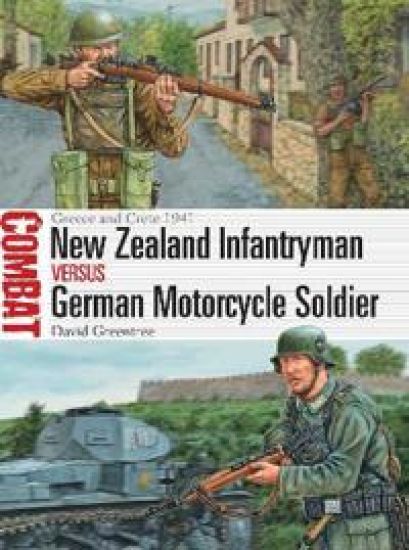
New Zealand Infantryman vs German Motorcycle Soldier
In April 1941, as Churchill strove to counter the German threat to the Balkans, New Zealand troops were hastily committed to combat in the wake of the German invasion of Greece where they would face off against the German Kradschützen – motorcycle troops. Examining three major encounters in detail with the help of maps and contemporary photographs, this lively study shows how the New Zealanders used all their courage and ingenuity to counter the mobile and well-trained motorcycle forces opposing them in the mountains and plains of Greece and Crete.Featuring specially commissioned artwork and drawing upon first-hand accounts, this exciting account pits New Zealand’s infantrymen against Germany’s motorcycle troops at the height of World War II in the Mediterranean theatre, assessing the origins, doctrine and combat performance of both sides.
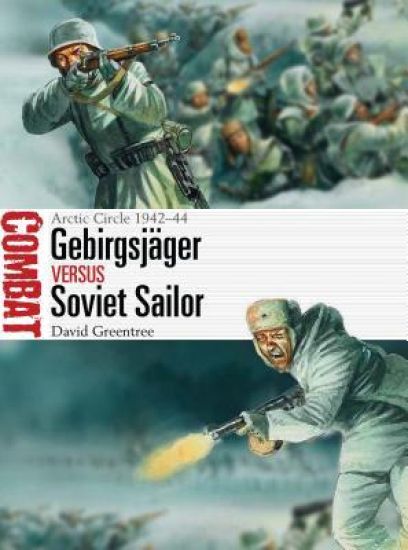
Gebirgsjäger vs Soviet Sailor

Gebirgsjäger vs Soviet Sailor

David Greentree

Osprey Publishing
2018
nidottu
In 1941–44, Nazi Germany’s Gebirgsjäger - elite mountain troops - clashed repeatedly with land-based units of the Soviet Navy during the mighty struggle on World War II’s Eastern Front. Formed into naval infantry and naval rifle brigades, some 350,000 of Stalin’s sailors would serve the Motherland on land, playing a key role in the defence of Moscow, Leningrad, and Sevastopol. The Gebirgsjäger, many among them veterans of victories in Norway and then Crete, would find their specialist skills to be at a premium in the harsh terrain and bitter weather encountered at the northern end of the front line. Operating many hundreds of miles north of Moscow, the two sides endured savage conditions as they fought one another inside the Arctic Circle.Featuring archive photographs, specially commissioned artwork and expert analysis, this is the absorbing story of the men who fought and died in the struggle for the Soviet Union’s northern flank at the height of World War II.
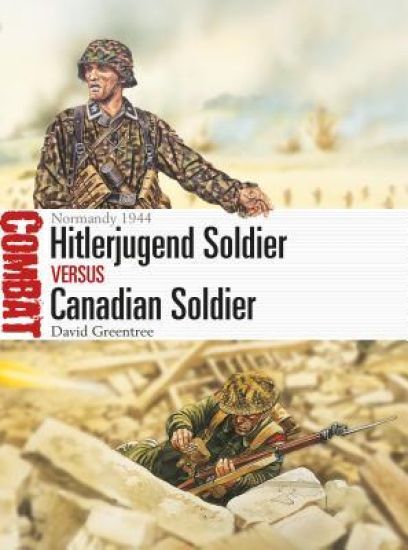
Hitlerjugend Soldier vs Canadian Soldier

Hitlerjugend Soldier vs Canadian Soldier

David Greentree

Osprey Publishing
2018
nidottu
Canadian and Waffen-SS troops of 12. SS-Panzer-Division Hitlerjugend faced one another in a series of bloody battles following the D-Day landings of June 1944. The Canadian units fought in a number of distinguished regiments, while the Hitlerjugend Division were drawn from the ranks of the Hitler Youth organizations. Veteran officers and NCOs were joined by inexperienced teenagers, and clashed with the Canadians repeatedly, notably at Authie, Bretteville and Hill 168. The struggle quickly took on an especially bitter nature, fuelled by the massacre of Canadian prisoners by Hitlerjugend personnel. Employing first-hand accounts and the latest research, as well as specially commissioned artwork and carefully selected archive photographs this absorbing study investigates the origins, ethos, training, fighting techniques and weapons of both sides during the epic struggle for Normandy.
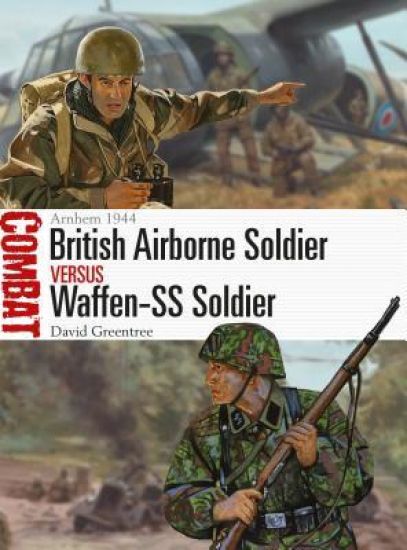
British Airborne Soldier vs Waffen-SS Soldier

British Airborne Soldier vs Waffen-SS Soldier

David Greentree

Osprey Publishing
2019
nidottu
Operation Market Garden was an Allied plan to try and end the war before the end of 1944, and relied on landing airborne troops to secure bridges over the Rhine bridges in the Netherlands. Critical to this plan were the glider troops of Britain’s 1st Airlanding Brigade. Short on heavy weapons and not trained in street fighting, the glider troops were meant to secure and defend the Allied perimeter around Arnhem as the parachute brigades fought their way into the city. Facing the airborne forces were understrength Waffen-SS units that were hastily formed into ad hoc battle groups, some supported by armour. The troops on both sides would have their tactical flexibility and powers of endurance tested to the limit in the bitter actions that ensued. Employing first-hand accounts and drawing upon the latest research, David Greentree tells the story of the glider troops’ dogged defence of the Allied perimeter at Arnhem, and the Waffen-SS forces’ efforts to overcome them.
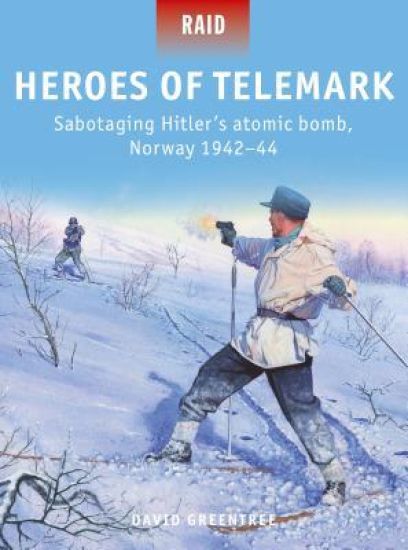
Heroes of Telemark

Heroes of Telemark

David Greentree

Osprey Publishing
2018
nidottu
In May 1941, the Norwegian Section of SOE received a dossier warning of the dangers of a hydroelectric fertiliser plant in Norway. Vemork produced heavy water, an essential part of making plutonium for nuclear weapons. When the Germans overran Norway the entire stock had been smuggled out of the country, but the plant was intact and soon producing heavy water again, destined for the German nuclear programme.Despite the difficulties of getting to and operating in such a remote, hostile area, SOE decided it had to destroy the plant. Six ski-borne commandos had the task of slipping past 300 heavily armed guards and passing through a ravine the Germans thought impassable.Fully illustrated with stunning new commissioned artwork, this is the thrilling story of the daring Norwegian-led SOE raid that prevented Hitler from building an atomic bomb.
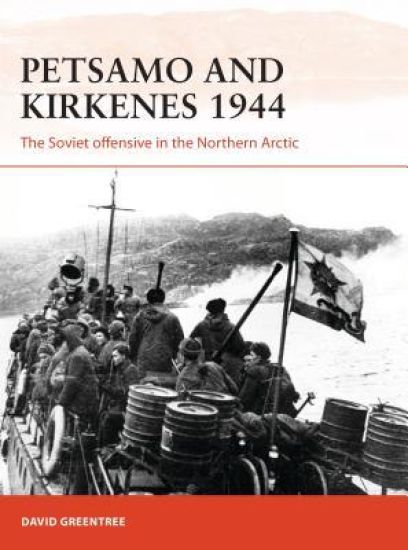
Petsamo and Kirkenes 1944

Petsamo and Kirkenes 1944

David Greentree

Osprey Publishing
2019
nidottu
A highly illustrated study of this unique and bitter struggle in the far North, an epic battle between two elite forces fighting in a demanding environment.Petsamo and Kirkenes 1944 examines the bitter conflict between two highly tactical armies as they battled across challenging terrain to gain control of strategically significant Northern Finland. On the one side were the invading Soviet troops, hoping to liberate an area full of rich resources and littered with bases that that would enable the arrival of Arctic convoys from Britain. They employed naval infantry in abundance, not only to make amphibious landings to capture strategically significant port facilities, but also on deep outflanking manoeuvres inland. Their opponents were the elite Gebirgsjäger from XIX Gebirgskorps; trained to be self-sufficient and resourceful and equipped with a range of bespoke weaponry, this mountain division was ideally suited to operate in the harsh climate. Combat conditions were unique: the extremely rough terrain, laced with bogs, streams, boulder fields, and large rivers, presented a significant challenge in its own right, even without the added threat of attacks by highly trained soldiers.With bird's-eye views and maps of key battlefields, this is a comprehensive guide to one of the most challenging campaigns of the Eastern Front.
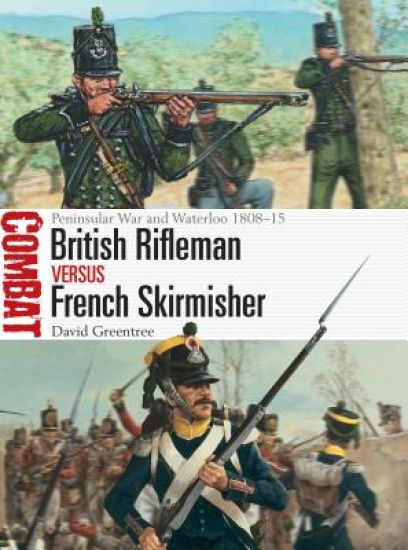
British Rifleman vs French Skirmisher

British Rifleman vs French Skirmisher

David Greentree

Osprey Publishing
2020
nidottu
The battles between British and French forces during the Peninsular War (1807–14) and the Hundred Days campaign of 1815 saw both sides deploy specialist units of skirmishers trained in marksmanship and open-order combat. These ‘light’ troops fulfilled several important roles on the battlefield, such as ‘masking’ large bodies of close-order troops as they manoeuvred in battle, firing upon enemy troops to provoke them into attacking prematurely, and harassing enemy artillery crews and senior officers with aimed fire. On occasion, the skirmishers were tasked with special missions requiring individual initiative, such as the capture or defence of key battlefield positions, especially those situated in difficult terrain. While Napoleon’s skirmishers carried the smoothbore musket, notoriously inaccurate and short-ranged, several elite units fighting for Britain were armed with the rifle, a far more accurate weapon that was hampered by a slower rate of fire. As well as the legendary 95th Rifles, Britain fielded rifle-armed German troops of the 60th Regiment and the King’s German Legion, while France’s light troops were fielded in individual companies but also entire regiments. In this study, David Greentree assesses the role and effectiveness of rifle-armed British troops and their French open-order opponents in three very different encounters: Roliça (August 1808), the first British battle of the Peninsular War; the struggle for a key bridge at Barba del Puerco (March 1810); and the bitter fight for the La Haye Sainte farmhouse during the battle of Waterloo (June 1815).
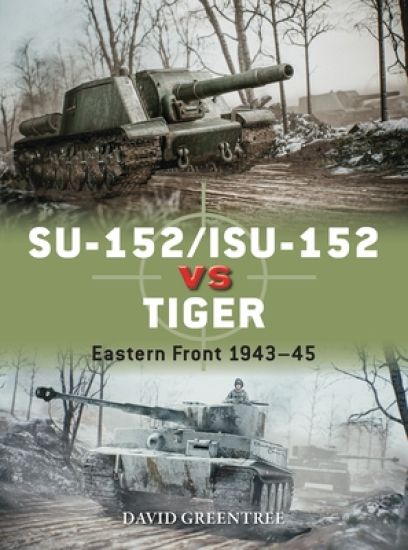
SU-152/ISU-152 vs Tiger

SU-152/ISU-152 vs Tiger

David Greentree

BLOOMSBURY PUBLISHING PLC
2022
nidottu
This fully illustrated volume compares two of the most iconic AFV's: the SU-152/ISU-152 and the Tiger, used on the Eastern Front during World War II.On the Eastern Front in 1943, the Tiger-equipped heavy Panzer battalions gave German armoured divisions an unmatched capability that cost the Red Army dearly. The Tiger’s 88mm gun had the potential to carve through Soviet defences in the attack and cause havoc amongst advancing Soviet armoured formations when used in defence. Neither of the Red Army’s heavy tanks (the KV-1 and KV-2) could match the Tiger’s gun, and, more importantly, penetrate its armour at anything approaching standard combat range. The Soviet response was a stopgap Tiger-killing vehicle that mounted a 152mm artillery piece onto the KV tank’s chassis: the SU-152. The latter would evolve into the ISU-152 in late 1943 (mounting the same powerful gun on an IS chassis). This fascinating book describes the mighty duels fought between these opposing AFVs. The colour illustrations explore key details of both the SU-152/ISU-152 and Eastern Front Tigers, including armament, ammunition and crew positions, and the period photographs show rarely seen views of these iconic AFVs in action. How each attempted to best the other using its strengths and advantages is documented across a wide range of dramatic Eastern Front armoured battles.
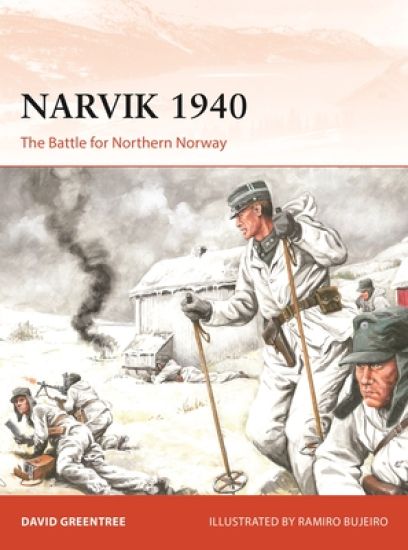
Narvik 1940

Narvik 1940

David Greentree

BLOOMSBURY PUBLISHING PLC
2022
nidottu
In early 1940, a battle raged to control the ice-free, iron-ore port in northern Norway – with changing fortunes until the very end. This highly detailed book covers both the naval battles and the individual Norwegian, British, Polish, French and German units that fought the land campaign over northern Norway. Highly detailed maps guide you step by step through the events. Few other books on Narvik give you as much detail on the forces of the fighting five. From Gebirgsjägers to Guardsmen, Fallschirmjägers to Foreign Legionnaires, it offers you an impressive level of tactical detail, even down to company command, whilst also helping you understand the strategic confusion surrounding the whole Allied expedition to the north too. Among the naval clashes covered in this action-packed story are the destroyer battles in the fjords, the sinking of the aircraft carrier HMS Glorious and the roles the famous battlecruisers Scharnhorst and Gneisenau played in the fighting. No less dramatic are the land battles, which include amphibious landings, sabotage, commando raids, daring ski missions and a rare parachute insertion by Gebirgsjäger troops.
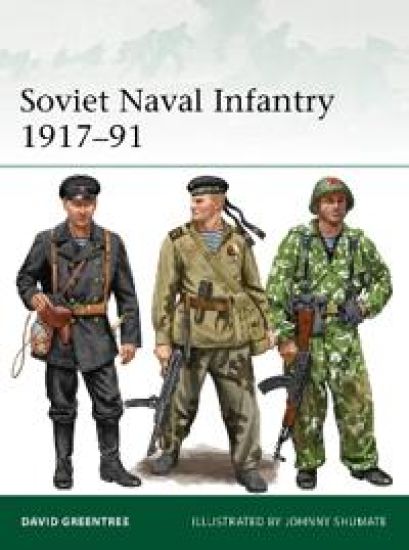
Soviet Naval Infantry 1917–91

Soviet Naval Infantry 1917–91

David Greentree

BLOOMSBURY PUBLISHING PLC
2023
nidottu
Drawing upon Soviet sources, this book assesses the evolving organization, uniforms, insignia, weaponry and personal equipment of Soviet naval infantry units from 1917 to 1991.Featuring eight plates of specially commissioned artwork alongside carefully chosen archive photographs, this study charts the history and appearance of the Soviet Union’s naval infantry, from the October Revolution to the end of the Soviet era.Although Russian naval infantry achieved fame during the October Revolution they were quickly disbanded, only being re-established in 1939. Following the Axis invasion of 1941 some 500,000 Soviet Navy personnel served on land, fighting in the defence of Leningrad, Odessa and Sevastopol and the recapture of the Crimea in 1943–44; Soviet naval troops also participated in the invasion of Manchuria in 1945.During the Cold War era the Soviet Union developed an amphibious assault capability that had a vital strategic role – to capture an aggressor’s geographical exits to the oceans and thereby forestall threats to Soviet submarine bases. Naval infantry forces could deploy a wealth of firepower assets, while the use of amphibious ships, hovercraft and helicopters aided their rapid deployment, even amid ice-bound terrain in the Arctic. All of these developments are described and illustrated in absorbing detail in this study.
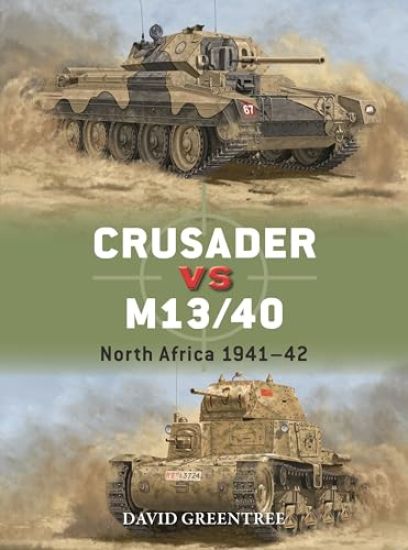
Crusader vs M13/40

Crusader vs M13/40

David Greentree

BLOOMSBURY PUBLISHING PLC
2024
nidottu
This illustrated study assesses the British Crusader and the Italian M13/40, two medium tanks that played crucial roles in World War II’s Desert War. Making its combat debut in North Africa during December 1940, Italy’s M13/40 medium tank was armed with a 47mm main gun. Its British opposite number, the Crusader I, was armed with a 2-pdr (40mm) main gun; it entered the fighting in June 1941. While the M13/40 could fire armour-piercing rounds but also high-explosive ammunition against infantry and towed-gun targets, the Crusader could only fire armour-piercing ammunition. In this book, David Greentree charts the evolution of these two tanks as the Desert War raged on.While the Crusader III, making its debut at the Second Battle of El Alamein in October 1942, was armed with the much more effective 6-pdr (57mm), the M13/40 could not be upgunned or uparmoured; new types such as the US-built M3 Grant tipped the balance in favour of the British. Joined in the front line by the similar M14/41, the M13/40 soldiered on; as the M4 Sherman also entered British service, the Italian tanks were largely wiped out as the Axis forces retreated from Egypt.Featuring all-new full-colour artwork, archive photographs and expert analysis, this engaging study assess the origins, development and combat effectiveness of these two mainstays of the Desert War during 1941–42.
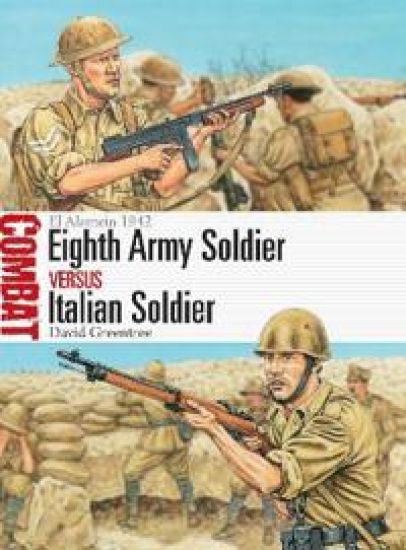
Eighth Army Soldier vs Italian Soldier

Eighth Army Soldier vs Italian Soldier

David Greentree

BLOOMSBURY PUBLISHING PLC
2024
nidottu
Fully illustrated, this absorbing study assesses the Commonwealth and Italian infantrymen pitted against one another during the First and Second battles of El Alamein in 1942. By July 1942, the Allied troops fighting in North Africa, the multinational Eighth Army, had withdrawn to the El Alamein line, the last position stopping their German and Italian opponents from reaching the Suez Canal. Featuring full-colour artwork, carefully chosen archive photographs and incisive analysis, this book casts light on the Commonwealth and Italian infantrymen who participated in the seesaw battle for control of the North African coastline as it entered its decisive phase, played out over two bloody engagements during July–October 1942. Although Allied and Axis commanders saw armour as the decisive weapon in the Desert War, the infantry fielded by both sides would be key to the outcomes of the two El Alamein battles. While the majority of the 96,000 Axis troops at the first battle were Italian, mostly infantry, Commonwealth forces provided the greater part of Eighth Army’s fighting strength. During the First Battle of El Alamein in July 1942, Italian infantry units clashed with Indian troops at Ruweisat Ridge and Australian forces at Makh Khad Ridge; both battles are assessed in this book, along with the defence mounted by New Zealand troops at Miteiriya Ridge during the Second Battle of El Alamein that October.
British Paratrooper vs Fallschirmjäger

British Paratrooper vs Fallschirmjäger

David Greentree

Osprey Publishing
2013
nidottu
Britain’s budding airborne forces saw their first prolonged combat in the battles for North Africa and Sicily in 1942–43, while their German counterparts - reinforced and expanded since their costly victory in Crete - proved their value as veteran ‘fire fighters’, able to counter emergencies.The airborne forces of Britain and Germany were among their best troops of World War II and when they met in battle the result was a brutal trial of strength. British paratroopers and German Fallschirmjäger clashed repeatedly and their training, tactics, experience, morale and weaponry were tested against each other, not least in the three bruising encounters outlined here, in Tunisia and Sicily.From the British attempts to seize the airfields at Depienne and Oudna to the bloody night battle for Green Hill and the bitter struggle for Primosole Bridge in Sicily, this book explores the ways in which highly trained parachute troops clashed with their opposite numbers, gaining experience, refining tactics and learning valuable lessons.
Q Ship vs U-Boat

Q Ship vs U-Boat

David Greentree

Osprey Publishing
2014
nidottu
A fully-illustrated account of the British Q ship, a heavily armed small craft disguised as a merchant vessel, and its tactics against the Kaiser’s formidable U-boat fleet during World War I.Q ships came in all shapes and sizes – coastal steamer, trawler, barque, yacht or schooner – but all had to look harmless in order to lure their opponents to the surface and encourage them to attack. Armaments differed according to ship size; steamers commonly had 4in guns mounted amidships and in the bow, trawlers 3-pdrs and sailing ships 12-pdrs.David Greentree covers how the Q ship used a ‘panic crew’, trained to act out an elaborate evacuation to convince the U-boat commander that the ship was being abandoned by its crew. The Q ship captain would remain behind with a handful of other crewmen manning the guns, which remained hidden until the most opportune time to unmask and engage the U-boat.Packed with illustrations, this book explores the Q ship concept in detail, from its emergence early in the war, when no other method seemed likely to counter the U-boat threat, and as it flourished, until new technologies and tactics were developed, tested and implemented.
A Far-Flung Gamble

A Far-Flung Gamble

David Greentree

Osprey Publishing
2010
nidottu
At the height of the Seven Years' War, Great Britain made an audacious strike at the heart of Spanish colonial power in the Caribbean. Gathering troops from bases in Britain and Canada and sailing across the Atlantic in secrecy was an incredible feat. The raid on Havana took Spanish colonial forces completely by surprise and following vicious fighting, the city defences at El Moro collapsed. Havana, the jewel in the Spanish colonial crown, now belonged to Britain. The success of the raid influenced British military policy for centuries as the true potential off amphibious warfare was realized.
Knight’s Move

Knight’s Move

David Greentree

Osprey Publishing
2012
nidottu
On 25 May 1944, 800 men of the 500th SS Parachute Battalion descended on Drvar, a town behind enemy lines in north-western Bosnia. Their aim was to kill or capture Tito, the leader of the partisan movement in the region. The plan was to land the battalion by glider and parachute in two waves which would be relieved the next day by a ground assault. Tito knew an attack was imminent but dismissed the idea of an airborne assault. The attempt to eliminate Tito was a colossal failure. The elite battalion had been decimated, with only 200 men fit for duty the next day. Inter-agency rivalry between the Abwehr and the SS had meant that intelligence was not shared, a problem exacerbated by a failure to exploit HUMINT about Tito's precise location and the adoption of a plan that did not take into account these intelligence limitations.
Napoleon’s Swiss Troops

Napoleon’s Swiss Troops

David Greentree

Osprey Publishing
2012
nidottu
Ever since the 15th century Switzerland had been exporting professional soldiers to serve as mercenaries for foreign monarchies.Napoleon, therefore, was not the first to make full use of the martial qualities of the Swiss and obtained Swiss agreement to expand the recruitment of regiments for service in the French Army. Napoleon would use Swiss troops on the battlefields of Italy and Spain, and in 1812 re-organize the four original regiments into a single division for the invasion of Russia, with each regiment having three full-strength battalions.In November of 1812, meeting up with Napoleon's main force retreating from Moscow at the Berezina River, the Swiss on the west bank guarded the approaches to the pontoon bridges from the Russian attack to the south. Just 1,200 Swiss out of the approximately 8,000 that entered Russia were left to face, along with 8,000 other remnants of other units, the 30,000-strong Russian army. The Swiss held their ground and when their ammunition ran out they charged the Russians with bayonets.This book reveals the proud combat history of the Swiss troops of Napoleon's army as well as the colourful uniforms they wore.