Kirjojen hintavertailu. Mukana 11 244 527 kirjaa ja 12 kauppaa.

Kirjahaku

Etsi kirjoja tekijän nimen, kirjan nimen tai ISBN:n perusteella.

21 kirjaa tekijältä David Greven

Intimate Violence

Intimate Violence

David Greven

Oxford University Press Inc
2017
sidottu
Intimate Violence explores the consistent cold war in Hitchcock's films between his heterosexual heroines and his queer characters, usually though not always male. Decentering the authority of the male hero, Hitchcock's films allow his female and queer characters to vie for narrative power, often in conflict with one another. These conflicts eerily echo the tense standoff between feminism and queer theory. From a reparative psychoanalytic perspective, David Greven merges queer and feminist approaches to Hitchcock. Using the theories of Melanie Klein, Greven argues that Hitchcock's work thematizes a constant battle between desires to injure and to repair the loved object. Greven develops a theory of sexual hegemony. The feminine versus the queer conflict, as he calls it, in Hitchcock films illuminates the shared but rivalrous struggles for autonomy and visibility on the part of female and queer subjects. The heroine is vulnerable to misogyny, but she often gains an access to agency that the queer subject longs for, mistaking her partial autonomy for social power. Hitchcock's queer personae, however, wield a seductive power over his heterosexual subjects, having access to illusion and masquerade that the knowledge-seeking heroine must destroy. Freud's theory of paranoia, understood as a tool for the dissection of cultural homophobia, illuminates the feminine versus the queer conflict, the female subject position, and the consistent forms of homoerotic antagonism in the Hitchcock film. Through close readings of such key Hitchcock works as North by Northwest, Psycho, Strangers on a Train, Spellbound, Rope, Marnie, and The Birds, Greven explores the ongoing conflicts between the heroine and queer subjects and the simultaneous allure and horror of same-sex relationships in the director's films.
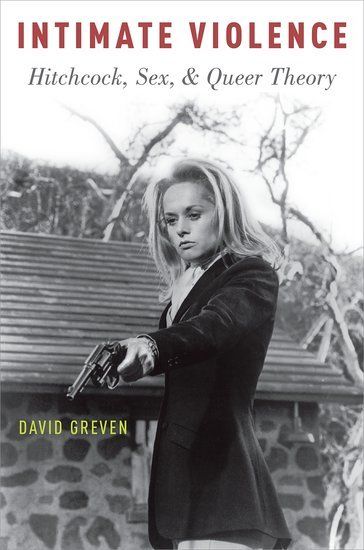
Intimate Violence

Intimate Violence

David Greven

Oxford University Press Inc
2017
nidottu
Intimate Violence explores the consistent cold war in Hitchcock's films between his heterosexual heroines and his queer characters, usually though not always male. Decentering the authority of the male hero, Hitchcock's films allow his female and queer characters to vie for narrative power, often in conflict with one another. These conflicts eerily echo the tense standoff between feminism and queer theory. From a reparative psychoanalytic perspective, David Greven merges queer and feminist approaches to Hitchcock. Using the theories of Melanie Klein, Greven argues that Hitchcock's work thematizes a constant battle between desires to injure and to repair the loved object. Greven develops a theory of sexual hegemony. The feminine versus the queer conflict, as he calls it, in Hitchcock films illuminates the shared but rivalrous struggles for autonomy and visibility on the part of female and queer subjects. The heroine is vulnerable to misogyny, but she often gains an access to agency that the queer subject longs for, mistaking her partial autonomy for social power. Hitchcock's queer personae, however, wield a seductive power over his heterosexual subjects, having access to illusion and masquerade that the knowledge-seeking heroine must destroy. Freud's theory of paranoia, understood as a tool for the dissection of cultural homophobia, illuminates the feminine versus the queer conflict, the female subject position, and the consistent forms of homoerotic antagonism in the Hitchcock film. Through close readings of such key Hitchcock works as North by Northwest, Psycho, Strangers on a Train, Spellbound, Rope, Marnie, and The Birds, Greven explores the ongoing conflicts between the heroine and queer subjects and the simultaneous allure and horror of same-sex relationships in the director's films.
Maurice

Maurice

David Greven

MCGILL-QUEEN'S UNIVERSITY PRESS
2023
sidottu
Maurice, James Ivory’s 1987 adaptation of the E.M. Forster novel, follows an Edwardian man’s journey from the awakening of his desire for and love of men to self-acceptance. One of the most politically resistant films of the 1980s, Maurice dared to depict a young man’s coming-out story and a happy ending for its lovers, Maurice and Alec.James Ivory and producer Ismail Merchant, a couple whose cinema is synonymous with period film adaptation, released Maurice during the first AIDS decade, a time of flagrant transatlantic homophobia. Criticism following its release described Ivory as a superficial and staid director, while the film was received as a regression to the uncinematic and overly faithful style that characterized the early adaptations by Merchant Ivory Productions. Offering a close reading of Forster’s novel and an analysis of Ivory’s distinctive visual style, Richard Robbins’s indelible score, and the performances of James Wilby, Hugh Grant, and Rupert Graves, David Greven argues that the film is a model of sympathetic adaptation. This study champions the film as the finest of the Merchant Ivory works, making a case for Ivory’s underappreciated talents as a director of great subtlety and intelligence, and for the film as one worth recuperating from its detractors.Understanding Maurice as a fully realized work of art and adaptation, this volume offers insight into how a stunning novel of gay love became a classic of queer film.
Maurice

Maurice

David Greven

MCGILL-QUEEN'S UNIVERSITY PRESS
2023
nidottu
Maurice, James Ivory’s 1987 adaptation of the E.M. Forster novel, follows an Edwardian man’s journey from the awakening of his desire for and love of men to self-acceptance. One of the most politically resistant films of the 1980s, Maurice dared to depict a young man’s coming-out story and a happy ending for its lovers, Maurice and Alec.James Ivory and producer Ismail Merchant, a couple whose cinema is synonymous with period film adaptation, released Maurice during the first AIDS decade, a time of flagrant transatlantic homophobia. Criticism following its release described Ivory as a superficial and staid director, while the film was received as a regression to the uncinematic and overly faithful style that characterized the early adaptations by Merchant Ivory Productions. Offering a close reading of Forster’s novel and an analysis of Ivory’s distinctive visual style, Richard Robbins’s indelible score, and the performances of James Wilby, Hugh Grant, and Rupert Graves, David Greven argues that the film is a model of sympathetic adaptation. This study champions the film as the finest of the Merchant Ivory works, making a case for Ivory’s underappreciated talents as a director of great subtlety and intelligence, and for the film as one worth recuperating from its detractors.Understanding Maurice as a fully realized work of art and adaptation, this volume offers insight into how a stunning novel of gay love became a classic of queer film.
Representations of Femininity in American Genre Cinema
The theme of female transformation informs the Hollywood representation of femininity from the studio era to the present. Whether it occurs physically, emotionally, or on some other level, transformation allows female protagonists to negotiate their own complex desires and to resist the compulsory marriage plot. A sweeping study of Hollywood from Now, Voyager, The Heiress, and Flamingo Road to Carrie, the Alien films, The Brave One, and the slasher horror genre, this book boldly unsettles commonplace understandings of genre film, female sexuality, and Freudian theory as it makes a strong new case for the queer relevance of female representation.
Manhood in Hollywood from Bush to Bush

Manhood in Hollywood from Bush to Bush

David Greven

University of Texas Press
2009
pokkari
A struggle between narcissistic and masochistic modes of manhood defined Hollywood masculinity in the period between the presidencies of George H. W. Bush and George W. Bush. David Greven's contention is that a profound shift in representation occurred during the early 1990s when Hollywood was transformed by an explosion of films that foregrounded non-normative gendered identity and sexualities. In the years that have followed, popular cinema has either emulated or evaded the representational strategies of this era, especially in terms of gender and sexuality.One major focus of this study is that, in a great deal of the criticism in both the fields of film theory and queer theory, masochism has been positively cast as a form of male sexuality that resists the structures of normative power, while narcissism has been negatively cast as either a regressive sexuality or the bastion of white male privilege. Greven argues that narcissism is a potentially radical mode of male sexuality that can defy normative codes and categories of gender, whereas masochism, far from being radical, has emerged as the default mode of a traditional normative masculinity. This study combines approaches from a variety of disciplines-psychoanalysis, queer theory, American studies, men's studies, and film theory-as it offers fresh readings of several important films of the past twenty years, including Casualties of War, The Silence of the Lambs, Fight Club, The Passion of the Christ, Auto Focus, and Brokeback Mountain.
Psycho-Sexual

Psycho-Sexual

David Greven

University of Texas Press
2013
nidottu
Bridging landmark territory in film studies, Psycho-Sexual is the first book to apply Alfred Hitchcock’s legacy to three key directors of 1970s Hollywood-Brian De Palma, Martin Scorsese, and William Friedkin-whose work suggests the pornographic male gaze that emerged in Hitchcock’s depiction of the voyeuristic, homoerotically inclined American man. Combining queer theory with a psychoanalytic perspective, David Greven begins with a reconsideration of Psycho and the 1956 remake of The Man Who Knew Too Much to introduce the filmmaker’s evolutionary development of American masculinity.Psycho-Sexual probes De Palma’s early Vietnam War draft-dodger comedies as well as his film Dressed to Kill, along with Scorsese’s Taxi Driver and Friedkin’s Cruising as reactions to and inventive elaborations upon Hitchcock’s gendered themes and aesthetic approaches. Greven demonstrates how the significant political achievement of these films arises from a deeply disturbing, violent, even sorrowful psychological and social context. Engaging with contemporary theories of pornography while establishing pornography’s emergence during the classical Hollywood era, Greven argues that New Hollywood filmmakers seized upon Hitchcock’s radical decentering of heterosexual male dominance. The resulting images of heterosexual male ambivalence allowed for an investment in same-sex desire; an aura of homophobia became informed by a fascination with the homoerotic. Psycho-Sexual also explores the broader gender crisis and disorganization that permeated the Cold War and New Hollywood eras, reimagining the defining premises of Hitchcock criticism.
Gender and Sexuality in Star Trek

Gender and Sexuality in Star Trek

David Greven

McFarland Co Inc
2009
pokkari
Studying the Star Trek myth from the original 1960s series to the 2009 franchise-reboot film, this book challenges frequent accusations that the Star Trek saga refuses to represent queer sexuality. Arguing that Star Trek speaks to queer audiences through subtle yet provocative allegorical narratives, the analysis pays close attention to representations of gender, race, and sexuality to develop an understanding of the franchise's queer sensibility. Topics include the 1960s original's deconstruction of the male gaze and the traditional assumptions of male visual mastery; constructions of femininity in Star Trek: Voyager, particularly in the relationship between Captain Janeway and Seven of Nine; and the ways in which Star Trek: Enterprise's adoption of neoconservative politics may have led to its commercial and aesthetic failure.
All the Devils Are Here

All the Devils Are Here

David Greven

UNIVERSITY OF VIRGINIA PRESS
2024
sidottu
The English literary influence on classic American novelists’ depictions of gender, sexuality, and race With All The Devils Are Here, the literary scholar David Greven makes a signal contribution to the growing list of studies dedicated to tracing threads of literary influence. Herman Melville’s, Nathaniel Hawthorne’s, and James Fenimore Cooper’s uses of Shakespeare and Milton, he finds, reflect not just an intertextual relationship between American Romanticism and the English tradition but also an ongoing engagement with gender and sexual politics. Greven limns the effect of Shakespeare’s Much Ado about Nothing on Hawthorne’s exploration of patriarchy, and he shows how misogyny in King Lear informed Melville’s evocation of “the step-mother world” of orphaned men in Moby-Dick. Throughout, Greven focuses particularly on male authors’ treatment of femininity, arguing that the figure of woman functions for them as a multivalent signifier for artistic expression. Ultimately, Greven demonstrates the ambitions of these writers to comment on the history of the Western tradition and the future of art from their unique positions as Americans.
All the Devils Are Here

All the Devils Are Here

David Greven

UNIVERSITY OF VIRGINIA PRESS
2024
pokkari
The English literary influence on classic American novelists’ depictions of gender, sexuality, and race With All the Devils Are Here, the literary scholar David Greven makes a signal contribution to the growing list of studies dedicated to tracing threads of literary influence. Herman Melville’s, Nathaniel Hawthorne’s, and James Fenimore Cooper’s uses of Shakespeare and Milton, he finds, reflect not just an intertextual relationship between American Romanticism and the English tradition but also an ongoing engagement with gender and sexual politics. Greven limns the effect of Shakespeare’s Much Ado about Nothing on Hawthorne’s exploration of patriarchy, and he shows how misogyny in King Lear informed Melville’s evocation of “the step-mother world” of orphaned men in Moby-Dick. Throughout, Greven focuses particularly on male authors’ treatment of femininity, arguing that the figure of woman functions for them as a multivalent signifier for artistic expression. Ultimately, Greven demonstrates the ambitions of these writers to comment on the history of the Western tradition and the future of art from their unique positions as Americans.
Men Beyond Desire

Men Beyond Desire

David Greven

Palgrave Macmillan
2012
nidottu
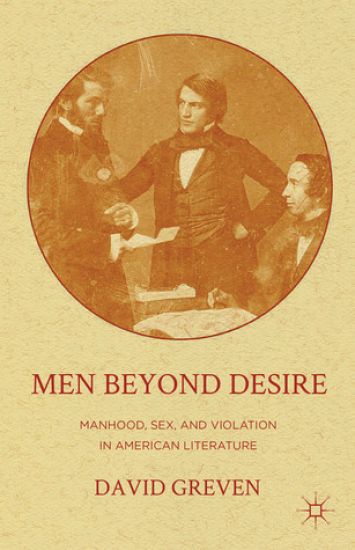
This book explores the construction of male sexuality in nineteenth-century American literature and comes up with some startling findings. Far from desiring heterosexual sex and wishing to bond with other men through fraternity, the male protagonists of classic American literature mainly want to be left alone. Greven makes the claim that American men, eschewing both marriage and male friendship, strive to remain emotionally and sexually inviolate. Examining the work of traditional authors - Hawthorne, Poe, Melville, Cooper, Irving, Stowe - Greven discovers highly untraditional and transgressive representations of desire and sexuality. Objects of desire from both women and other men, the inviolate males discussed in this study overturn established gendered and sexual categories, just as this study overturns archetypal assumptions about American manhood and American literature.
Representations of Femininity in American Genre Cinema
The theme of female transformation informs the Hollywood representation of femininity from the studio era to the present. Whether it occurs physically, emotionally, or on some other level, transformation allows female protagonists to negotiate their own complex desires and to resist the compulsory marriage plot. A sweeping study of Hollywood from Now, Voyager, The Heiress, and Flamingo Road to Carrie, the Alien films, The Brave One, and the slasher horror genre, this book boldly unsettles commonplace understandings of genre film, female sexuality, and Freudian theory as it makes a strong new case for the queer relevance of female representation.
Gender Protest and Same-Sex Desire in Antebellum American Literature
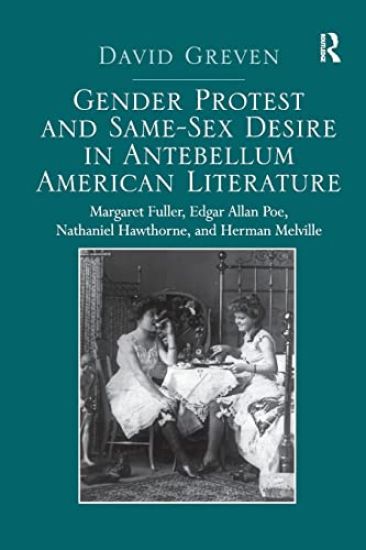
Expanding our understanding of the possibilities and challenges inherent in the expression of same-sex desire before the Civil War, David Greven identifies a pattern of what he calls ’gender protest’ and sexual possibility recurring in antebellum works. He suggests that major authors such as Margaret Fuller, Edgar Allan Poe, Herman Melville, and Nathaniel Hawthorne consciously sought to represent same-sex desire in their writings. Focusing especially on conceptions of the melancholia of gender identification and shame, Greven argues that same-sex desire was inextricably enmeshed in scenes of gender-role strain, as exemplified in the extent to which The Narrative of Arthur Gordon Pym depicts masculine identity adrift and in disarray. Greven finds similarly compelling representations of gender protest in Fuller’s exploration of the crisis of gendered identity in Summer on the Lakes, in Melville’s representation of Redburn’s experience of gender nonconformity, and in Hawthorne’s complicated delineation of desire in The Scarlet Letter. As Greven shows, antebellum authors not only took up the taboo subjects of same-sex desire and female sexuality, but were adept in their use of a variety of rhetorical means for expressing the inexpressible.
Gender Protest and Same-Sex Desire in Antebellum American Literature
Expanding our understanding of the possibilities and challenges inherent in the expression of same-sex desire before the Civil War, David Greven identifies a pattern of what he calls ’gender protest’ and sexual possibility recurring in antebellum works. He suggests that major authors such as Margaret Fuller, Edgar Allan Poe, Herman Melville, and Nathaniel Hawthorne consciously sought to represent same-sex desire in their writings. Focusing especially on conceptions of the melancholia of gender identification and shame, Greven argues that same-sex desire was inextricably enmeshed in scenes of gender-role strain, as exemplified in the extent to which The Narrative of Arthur Gordon Pym depicts masculine identity adrift and in disarray. Greven finds similarly compelling representations of gender protest in Fuller’s exploration of the crisis of gendered identity in Summer on the Lakes, in Melville’s representation of Redburn’s experience of gender nonconformity, and in Hawthorne’s complicated delineation of desire in The Scarlet Letter. As Greven shows, antebellum authors not only took up the taboo subjects of same-sex desire and female sexuality, but were adept in their use of a variety of rhetorical means for expressing the inexpressible.
Ghost Faces

Ghost Faces

David Greven

State University of New York Press
2016
sidottu
Combines psychoanalysis, queer theory, masculinity studies, and cultural studies to explore contemporary manhood in film.Finalist for the 2017 Lambda Literary Award in the LGBT Nonfiction category presented by the Lambda Literary Foundation Ghost Faces explores the insidious nature of homophobia even in contemporary Hollywood films that promote their own homo-tolerance and appear to destabilize hegemonic masculinity. Reframing Laura Mulvey's and Gilles Deleuze's paradigms and offering close readings grounded in psychoanalysis and queer theory, David Greven examines several key films and genre trends from the late 1990s forward. Movies considered range from the slasher film Scream to bromances and beta male comedies such as I Love You, Man to dramas such as Donnie Darko and 25th Hour to Rob Zombie's remake of the horror film Halloween. Greven also traces the disturbing connections between torture porn found in such films as Hostel and gay male Internet pornography.
The Bionic Woman and Feminist Ethics

The Bionic Woman and Feminist Ethics

David Greven

McFarland Co Inc
2020
pokkari
The ABC TV series The Bionic Woman, created by Kenneth Johnson, was a 1970s pop culture phenomenon. Starring Lindsay Wagner as Jaime Sommers, the groundbreaking series follows Jaime's evolution from a young woman vulnerable to an exploitative social order, to a fierce individualist defying a government that sees her as property. Beneath the action-packed surface of Jaime's battles with Fembots, themes such as the chosen family, technophobia, class passing, the cyborg, artificial beings, and a growing racial consciousness receive a sophisticated treatment. This book links the series to precedents such as classical mythology, first-wave feminist literature, and the Hollywood woman's film, to place The Bionic Woman in a tradition of feminist ethics deeply concerned with female autonomy, community, and the rights of nonhuman animals. Seen through the lens of feminist philosophy and gender studies, Jaime's constantly changing disguises, attempts to pass as human, and struggles to accept her new bionic abilities offer provocative engagement with issues of identity. Jaime Sommers is a feminist icon who continues to speak to women and queer audiences, and her struggles and triumphs resonate with a worldwide fanbase that still remains enthralled and represented by The Bionic Woman.
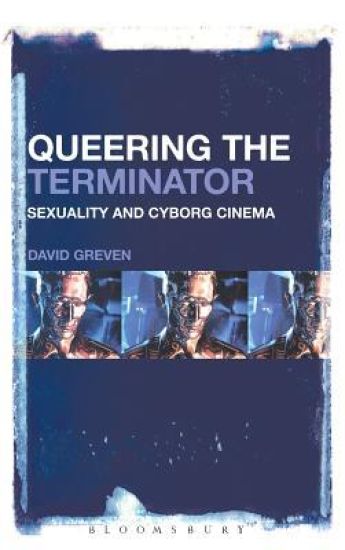
Queering The Terminator

Queering The Terminator

David Greven

Bloomsbury Academic USA
2017
sidottu
The Terminator film series is an unlikely site of queer affiliation. The entire premise revolves around both heterosexual intercourse and the woman’s pregnancy and giving birth. It is precisely the Terminator’s indifference to both that signifies it as an unimaginably inhuman monstrosity. Indeed, the films' overarching contention that humanity must be saved, rooted as it is in a particular story about pregnancy and birth that exclusively focuses on the heterosexual couple and the family, would appear to put it at odds with the political stances of contemporary queer theory. Yet, as this book argues, there is considerable queer interest in the Terminator mythos.The films provide a framework for interpreting shifting gender codes and the emergence of queer sexuality over the period of three decades. Significantly, the series emerges in the Reagan 80s, which marked a decisive break with the sexual fluidity of the 70s. As a franchise and on the individual basis of each film, The Terminator series combines both radical and reactionary elements. Each film reflects the struggles over gender and sexuality specific to its release. At the same time, the series foregrounds the intersection of technology and gender that has become a definitive aspect of contemporary experience. A narrative organized around a conservative view of female sexuality and the family, the Terminator myth is nevertheless a richly suggestive narrative for queer theory and gender studies.
Queering The Terminator

Queering The Terminator

David Greven

Bloomsbury Academic USA
2018
nidottu
The Terminator film series is an unlikely site of queer affiliation. The entire premise revolves around both heterosexual intercourse and the woman’s pregnancy and giving birth. It is precisely the Terminator’s indifference to both that signifies it as an unimaginably inhuman monstrosity. Indeed, the films' overarching contention that humanity must be saved, rooted as it is in a particular story about pregnancy and birth that exclusively focuses on the heterosexual couple and the family, would appear to put it at odds with the political stances of contemporary queer theory. Yet, as this book argues, there is considerable queer interest in the Terminator mythos.The films provide a framework for interpreting shifting gender codes and the emergence of queer sexuality over the period of three decades. Significantly, the series emerges in the Reagan 80s, which marked a decisive break with the sexual fluidity of the 70s. As a franchise and on the individual basis of each film, The Terminator series combines both radical and reactionary elements. Each film reflects the struggles over gender and sexuality specific to its release. At the same time, the series foregrounds the intersection of technology and gender that has become a definitive aspect of contemporary experience. A narrative organized around a conservative view of female sexuality and the family, the Terminator myth is nevertheless a richly suggestive narrative for queer theory and gender studies.
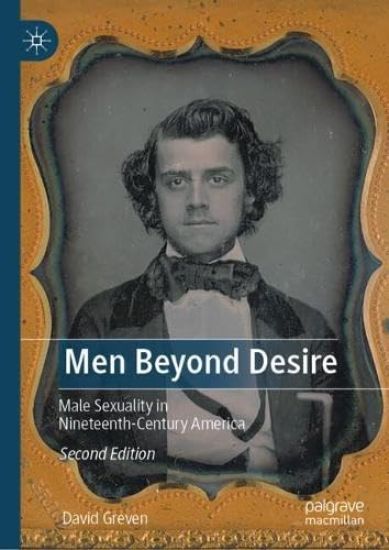
Men Beyond Desire

Men Beyond Desire

David Greven

Springer International Publishing AG
2025
sidottu
This book explores the construction of male sexuality in nineteenth-century American literature and overturns longstanding views. Far from desiring heterosexual sex and wishing to bond with other men through fraternity, the male protagonists of classic American literature mainly want to be left alone. Greven makes the claim that American men, eschewing both marriage and male friendship, strive to remain emotionally and sexually inviolate. Examining the work of traditional authors - Hawthorne, Poe, Melville, Cooper, Irving, Stowe - Greven discovers consistently resistant portrayals of male characters who defend their individuality through a lockdown on sexuality. Objects of desire from both women and other men, the inviolate males discussed in this study disrupt established gendered and sexual categories, inspiring fresh analysis of the era and its literary depiction of American manhood. This second edition of Men Beyond Desire (2005) expands the analysis of male sexuality to include discussions of developments in the field of masculinity studies. It includes a new introduction that introduces the complementary figure of the “victim-monster” and revisits the work of Leslie Fiedler, and a new chapter that focuses on Melville's tale "Bartleby the Scrivener" (1856). Chapter 4 expands the analysis of the intersections among free love, health reform, and male sexuality in The Blithedale Romance (1852), and chapter 9 expands the discussion of Billy Budd, Sailor to address questions of race and the role of the Handsome Sailor.