Kirjojen hintavertailu. Mukana 12 390 323 kirjaa ja 12 kauppaa.

Kirjahaku

Etsi kirjoja tekijän nimen, kirjan nimen tai ISBN:n perusteella.

12 kirjaa tekijältä David H. Rosenbloom

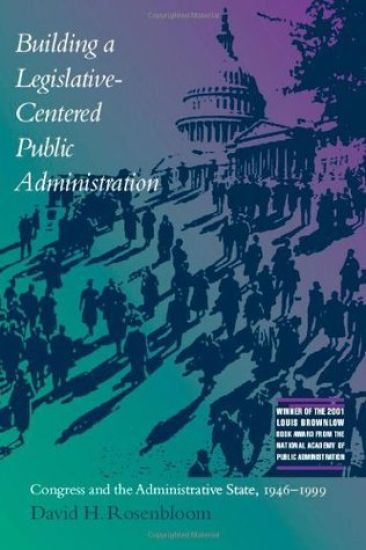
Building a Legislative-centered Public Administration

Building a Legislative-centered Public Administration

David H. Rosenbloom

The University of Alabama Press
2002
nidottu
Before 1946 the congressional role in public administration had been limited to authorization, funding, and review of federal administrative operations, which had grown rapidly as a result of the New Deal and the Second World War. But in passing the Administrative Procedure Act and the Legislative Reorganization Act that pivotal year, Congress self-consciously created for itself a comprehensive role in public administration. Reluctant to delegate legislative authority to federal agencies, Congress decided to treat the agencies as extensions of itself and established a framework for comprehensive regulation of the agencies' procedures. Additionally, Congress reorganized itself so it could provide continuous supervision of federal agencies. Rosenbloom shows how these 1946 changes in the congressional role in public administration laid the groundwork for future major legislative acts, including the Freedom of Information Act (1966), Privacy Act (1974), Government in the Sunshine Act (1976), Paperwork Reduction Acts (1980, 1995), Chief Financial Officers Act (1990), and Small Business Regulatory Fairness Enforcement Act (1996). Each of these acts, and many others, has contributed to the legislative-centered public administration that Congress has formed over the past 50 years. This first book-length study of the subject provides a comprehensive explanation of the institutional interests, values, and logic behind the contemporary role of Congress in federal administration and attempts to move the public administration field beyond condemning legislative ""micromanagement"" to understanding why Congress values it.
Administrative Law for Public Managers

Administrative Law for Public Managers

David H. Rosenbloom

TAYLOR FRANCIS LTD
2022
nidottu
This book focuses on the essentials that public administration students and public managers should know about administrative law—why we have administrative law, the constitutional structure for and constraints on public administration, and administrative law’s formats for rulemaking, adjudication, enforcement, transparency, and judicial and legislative review of administrative activity. Author David Rosenbloom views administrative law from the perspectives of administrative practice, rather than lawyering, with an emphasis on how various administrative law provisions promote their underlying goals of improving the fit between public administration and US democratic-constitutionalism. Organized around federal administrative law while including material on state practices where appropriate, the book explains the essentials of administrative law clearly and accurately, in non-technical terms, and in sufficient depth to provide readers with a sophisticated, lasting understanding of the subject matter. This thoroughly revised third edition includes:Separate chapters on the constitutional frameworks for administrative authority and individual constitutional rights in the contemporary administrative stateInclusion of newer court decisions and examples throughout the textTreatment of Donald J. Trump’s presidency and President Joseph R. Biden Jr.’s first year in officeGreater attention to guidance documents, administrative "dark matter," and the Congressional Review ActThorough updating and refreshing of the text, suggested additional readings, and chapter discussion questions.Written in a reader-friendly style, Administrative Law for Public Managers, 3rd Edition is an ideal introduction to the subject for students in public administration, public policy, American government, law and practicing public managers alike.
Administrative Law for Public Managers

Administrative Law for Public Managers

David H. Rosenbloom

TAYLOR FRANCIS LTD
2022
sidottu
This book focuses on the essentials that public administration students and public managers should know about administrative law—why we have administrative law, the constitutional structure for and constraints on public administration, and administrative law’s formats for rulemaking, adjudication, enforcement, transparency, and judicial and legislative review of administrative activity. Author David Rosenbloom views administrative law from the perspectives of administrative practice, rather than lawyering, with an emphasis on how various administrative law provisions promote their underlying goals of improving the fit between public administration and US democratic-constitutionalism. Organized around federal administrative law while including material on state practices where appropriate, the book explains the essentials of administrative law clearly and accurately, in non-technical terms, and in sufficient depth to provide readers with a sophisticated, lasting understanding of the subject matter. This thoroughly revised third edition includes:Separate chapters on the constitutional frameworks for administrative authority and individual constitutional rights in the contemporary administrative stateInclusion of newer court decisions and examples throughout the textTreatment of Donald J. Trump’s presidency and President Joseph R. Biden Jr.’s first year in officeGreater attention to guidance documents, administrative "dark matter," and the Congressional Review ActThorough updating and refreshing of the text, suggested additional readings, and chapter discussion questions.Written in a reader-friendly style, Administrative Law for Public Managers, 3rd Edition is an ideal introduction to the subject for students in public administration, public policy, American government, law and practicing public managers alike.
Federal Service and the Constitution

Federal Service and the Constitution

David H. Rosenbloom

Georgetown University Press
2014
pokkari
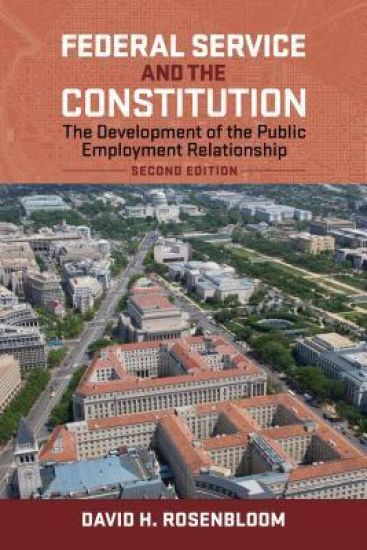
Conceived during the turbulent period of the late 1960s when 'rights talk' was ubiquitous, Federal Service and the Constitution, a landmark study first published in 1971, strove to understand how the rights of federal civil servants had become so differentiated from those of ordinary citizens. Now in a new, second edition, this legal-historical analysis reviews and enlarges its look at the constitutional rights of federal employees from the nation's founding to the present. Thoroughly revised and updated, this highly readable history of the constitutional relationship between federal employees and the government describes how the changing political, administrative, and institutional concepts of what the federal service is or should be are related to the development of constitutional doctrines defining federal employees' constitutional rights. Developments in society since 1971 have dramatically changed the federal bureaucracy, protecting and expanding employment rights, while at the same time Supreme Court decisions are eroding the special legal status of federal employees. Looking at the current status of these constitutional rights, Rosenbloom concludes by suggesting that recent Supreme Court decisions may reflect a shift to a model based on private sector practices.
Federal Service and the Constitution

Federal Service and the Constitution

David H. Rosenbloom

Georgetown University Press
2014
sidottu
Conceived during the turbulent period of the late 1960s when 'rights talk' was ubiquitous, Federal Service and the Constitution, a landmark study first published in 1971, strove to understand how the rights of federal civil servants had become so differentiated from those of ordinary citizens. Now in a new, second edition, this legal-historical analysis reviews and enlarges its look at the constitutional rights of federal employees from the nation's founding to the present. Thoroughly revised and updated, this highly readable history of the constitutional relationship between federal employees and the government describes how the changing political, administrative, and institutional concepts of what the federal service is or should be are related to the development of constitutional doctrines defining federal employees' constitutional rights. Developments in society since 1971 have dramatically changed the federal bureaucracy, protecting and expanding employment rights, while at the same time Supreme Court decisions are eroding the special legal status of federal employees. Looking at the current status of these constitutional rights, Rosenbloom concludes by suggesting that recent Supreme Court decisions may reflect a shift to a model based on private sector practices.
Public Administration

Public Administration

David H. Rosenbloom; Robert S. Kravchuk; Richard M Clerkin

Taylor Francis Ltd
2022
nidottu
The ninth edition of Public Administration: Understanding Management, Politics, and Law in the Public Sector grounds students in the fundamentals of public administration while embracing its complexity. It describes, explains, and analyzes public administration through the lenses of three well-established perspectives: management, politics, and law. In addition to thoroughly refreshed examples and case studies, significant updates to this new edition include the following:The discussion of management has been collapsed into a single category, contemporary public management, to better reflect the blending of traditional/orthodox and new public management approaches in the field.Significant changes to federal administration initiated by the Trump administration, the emergence of "hyper-" partisanship, major court decisions affecting public administration, and newer scholarship and foci in public administration. A thoroughly rewritten chapter on budgeting and public finance. New public governance material is incorporated throughout the book, including collaborative models for coordinating administration with private organizations, particularly nonprofits. Additional attention is paid to public participation in public administration, including public administration's potential contribution to strengthening democratic citizenship. Thorough discussion of the latest managerial techniques and concepts as well as the contemporary performance orientation in the public sector. Downloadable instructor support materials including Key Points, Discussion and/or Test Questions, Multiple Choice Questions, True or False Questions, and an Answer Key to accompany each chapter in the book. Together these revisions reinvigorate the book yet retain its core structure, ideas, and familiarity for students and instructors alike. While the new edition retains its focus on the U.S. context, the focus on managerial, legislative, and judicial functions lends itself well to public administration in many developed nations, making the book a popular choice with instructors around the globe. This time-tested and fully up-to-date textbook is required reading for all students of public administration, public management, and nonprofit management.
Public Administration

Public Administration

David H. Rosenbloom; Robert S. Kravchuk; Richard M Clerkin

Taylor Francis Ltd
2022
sidottu
The ninth edition of Public Administration: Understanding Management, Politics, and Law in the Public Sector grounds students in the fundamentals of public administration while embracing its complexity. It describes, explains, and analyzes public administration through the lenses of three well-established perspectives: management, politics, and law. In addition to thoroughly refreshed examples and case studies, significant updates to this new edition include the following:The discussion of management has been collapsed into a single category, contemporary public management, to better reflect the blending of traditional/orthodox and new public management approaches in the field.Significant changes to federal administration initiated by the Trump administration, the emergence of "hyper-" partisanship, major court decisions affecting public administration, and newer scholarship and foci in public administration. A thoroughly rewritten chapter on budgeting and public finance. New public governance material is incorporated throughout the book, including collaborative models for coordinating administration with private organizations, particularly nonprofits. Additional attention is paid to public participation in public administration, including public administration's potential contribution to strengthening democratic citizenship. Thorough discussion of the latest managerial techniques and concepts as well as the contemporary performance orientation in the public sector. Downloadable instructor support materials including Key Points, Discussion and/or Test Questions, Multiple Choice Questions, True or False Questions, and an Answer Key to accompany each chapter in the book. Together these revisions reinvigorate the book yet retain its core structure, ideas, and familiarity for students and instructors alike. While the new edition retains its focus on the U.S. context, the focus on managerial, legislative, and judicial functions lends itself well to public administration in many developed nations, making the book a popular choice with instructors around the globe. This time-tested and fully up-to-date textbook is required reading for all students of public administration, public management, and nonprofit management.
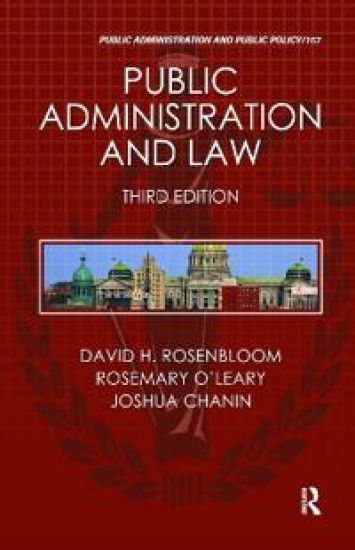
Public Administration and Law

Public Administration and Law

David H. Rosenbloom; Rosemary O'Leary; Joshua Chanin

Routledge Member of the Taylor and Francis Group
2010
sidottu
Since the first edition of Public Administration and Law was published in 1983, it has retained its unique status of being the only book in the field of public administration that analyzes how constitutional law regulates and informs the way administrators interact with each other and the public. Examining First, Fourth, Fifth, Eighth, and Fourteenth Amendment rights as they pertain to these encounters, it explains how public administrators must do their jobs and how administrative systems must operate in order to comply with constitutional law.Explores the conflicts between lawsThe book begins by presenting a historical account of the way constitutional and administrative law have incrementally "retrofitted" public agencies into the nation’s constitutional design. It examines the federal judiciary’s impact on federal administration and the effect of the nation’s myriad environmental laws on public administration. Next, it focuses on the role of the individual as a client and customer of public agencies. In a discussion of the Fourth Amendment, it examines street-level encounters between citizens and law enforcement agents. Responding to the rise of the new public management (NPM), it also adds, for the first time in this edition, a chapter that analyzes the rights of the individual not only as a government employee but also as a government contractor.Enhanced with numerous referencesThe final chapters of the book address issues concerning the rights of inmates in administrative institutions and balancing the need to protect individual rights with the ability of agencies to function effectively. Supplemented with case citations and lists of articles, books, and documents, this text is designed to facilitate further study in a constantly evolving area.About the Authors:David H. Rosenbloom, Ph.D. is Distinguished Professor of Public Administration in the School of Public Affairs at American University in Washington, D.C., and Chair Professor of Public Management at City University of Hong Kong. Rosemary O’Leary, Ph.D., J.D. is Distinguished Professor of Public Administration and the Howard G. and S. Louise Phanstiel Chair in Strategic Management and Leadership at Syracuse University. Joshua M. Chanin, M.P.A., J.D. is a Ph.D. candidate in Public Administration and Justice, Law, and Society in the School of Public Affairs at American University in Washington, D.C.
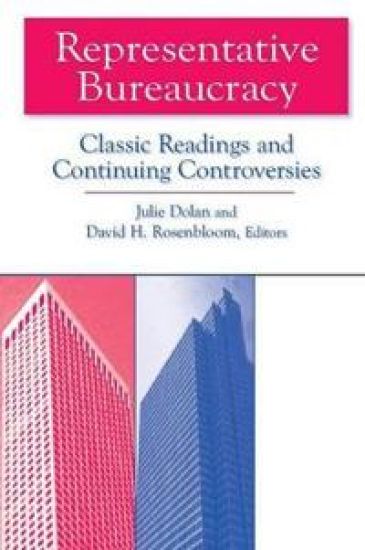
Representative Bureaucracy

Representative Bureaucracy

Julie Dolan; David H. Rosenbloom

Routledge
2003
sidottu
The readings in this collection provide a comprehensive guide to the established knowledge and emerging issues regarding democratizing public bureaucracies by making them socially representative. The book includes both classic and cutting-edge works, and presents a contemporary model for analyzing representative bureaucracy that focuses on the linkages between social origins, life experiences, attitudes, and administrators' decision making. The selections address many of the leading concerns of contemporary politics, including diversity and equal opportunity policy, democratic control of administration, administrative performance, the pros and cons of the new public management, and reinventing government. Many of the field's most cited works are included. Each chapter starts with an introductory summary of the key questions under consideration and concludes with discussion questions. With it's extensive selection of classic and contemporary readings, the book will have wide application for courses on bureaucracy, public administration, and public sector human resource management.
Representative Bureaucracy

Representative Bureaucracy

Julie Dolan; David H. Rosenbloom

Routledge
2003
nidottu
The readings in this collection provide a comprehensive guide to the established knowledge and emerging issues regarding democratizing public bureaucracies by making them socially representative. The book includes both classic and cutting-edge works, and presents a contemporary model for analyzing representative bureaucracy that focuses on the linkages between social origins, life experiences, attitudes, and administrators' decision making. The selections address many of the leading concerns of contemporary politics, including diversity and equal opportunity policy, democratic control of administration, administrative performance, the pros and cons of the new public management, and reinventing government. Many of the field's most cited works are included. Each chapter starts with an introductory summary of the key questions under consideration and concludes with discussion questions. With it's extensive selection of classic and contemporary readings, the book will have wide application for courses on bureaucracy, public administration, and public sector human resource management.
A Reasonable Public Servant

A Reasonable Public Servant

Lily Xiao Hong Lee; David H. Rosenbloom

Routledge
2005
sidottu
An essential text for PA courses on Human Resource Management as well as Public Management and Law, this book illuminates the role of the reasonable public servant, who strives to perform authorized functions efficiently, yet in a manner that aligns with constitutional values embodied in the Bill of Rights. "A Reasonable Public Servant" provides a comprehensive review of Supreme Court opinions in explaining the reasonable conduct of a public servant and the development of clearly established constitutional and statutory rights that a reasonable public servant is expected to observe: property rights; procedural due process; freedom of critical speech; privacy; equal protection; and anti-discrimination laws. The author relies on the Court's opinions as the exemplar of public reason, and pays close attention to the manner in which the Court balances among competing value priorities - for example, the rights of a public servant as an employee as well as an individual citizen, and the efficiency needs of the government as an employer as well as a sovereign state. This book's detailed appendices include the U.S. Constitution, the Bill of Rights, and Title VII of the Civil Rights Act of 1964.
A Reasonable Public Servant

A Reasonable Public Servant

Lily Xiao Hong Lee; David H. Rosenbloom

Routledge
2005
nidottu
An essential text for PA courses on Human Resource Management as well as Public Management and Law, this book illuminates the role of the reasonable public servant, who strives to perform authorized functions efficiently, yet in a manner that aligns with constitutional values embodied in the Bill of Rights. "A Reasonable Public Servant" provides a comprehensive review of Supreme Court opinions in explaining the reasonable conduct of a public servant and the development of clearly established constitutional and statutory rights that a reasonable public servant is expected to observe: property rights; procedural due process; freedom of critical speech; privacy; equal protection; and anti-discrimination laws. The author relies on the Court's opinions as the exemplar of public reason, and pays close attention to the manner in which the Court balances among competing value priorities - for example, the rights of a public servant as an employee as well as an individual citizen, and the efficiency needs of the government as an employer as well as a sovereign state. This book's detailed appendices include the U.S. Constitution, the Bill of Rights, and Title VII of the Civil Rights Act of 1964.