Kirjojen hintavertailu. Mukana 11 342 296 kirjaa ja 12 kauppaa.

Kirjahaku

Etsi kirjoja tekijän nimen, kirjan nimen tai ISBN:n perusteella.

7 kirjaa tekijältä David Hajdu

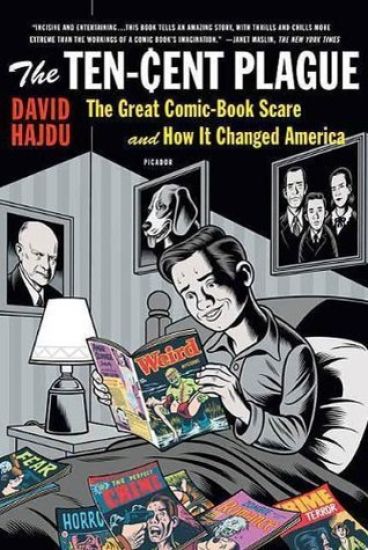
The Ten-Cent Plague

The Ten-Cent Plague

David Hajdu

Picador USA
2009
pokkari
In the years between the end of World War II and the mid-1950s, the popular culture of today was invented in the pulpy, boldly illustrated pages of comic books. But no sooner had comics emerged than they were beaten down by mass bonfires, congressional hearings, and a McCarthyish panic over their unmonitored and uncensored content. Esteemed critic David Hajdu vividly evokes the rise, fall, and rise again of comics in this engrossing history.
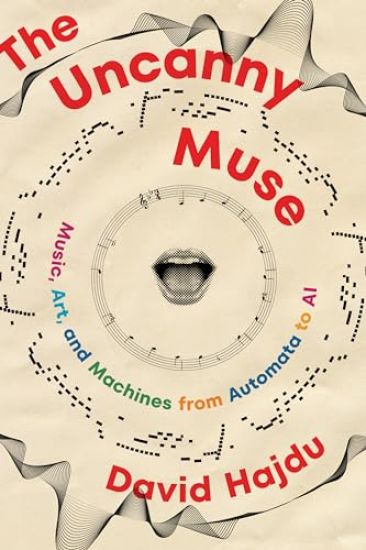
The Uncanny Muse

The Uncanny Muse

David Hajdu

WW NORTON CO
2025
sidottu
What does it mean to be human in a world where machines, too, can be artists? The Uncanny Muse explores the history of automation in the arts and delves into one of the most momentous and controversial aspects of AI: artificial creativity. The adoption of technology and machinery has long transformed the world, but as the potential for artificial intelligence expands, David Hajdu examines the new, increasingly urgent questions about technology’s role in culture. From the life-size mechanical doll that made headlines in Victorian London to the doll’s modern AI–pop star counterpart, Hajdu traces the fascinating, varied ways in which inventors and artists have sought to emulate mental processes and mechanise creative production. For decades, machines and artists have engaged in expressing the human condition—along with the condition of living with machines—through player pianos, broadcasting technology, electric organs, digital movie effects, synthesisers and motion capture. By communicating and informing human knowledge, the machines have exerted considerable influence on the history of art—and often more influence than humans have been willing to recognise. As Hajdu proclaims: “before machine learning, there was machine teaching". With thoughtful, wide-ranging and surprising turns from Berry Gordy and George Harrison to Andy Warhol and Stevie Wonder, David Hajdu takes a novel and contrarian approach: he sees how machines through the ages have enabled creativity, not stifled it—and The Uncanny Muse sees no reason why this shouldn’t be the case with AI today.
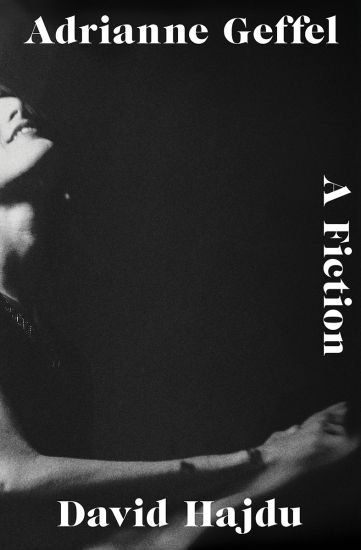
Adrianne Geffel: A Fiction

Adrianne Geffel: A Fiction

David Hajdu

W. W. Norton Company
2020
sidottu
Adrianne Geffel was a genius. Praised as the "Geyser of Grand Street" and the "Queen of Bleak Chic," she was a one-of-a-kind artist, a pianist and composer with a rare neurological condition that enabled her to make music that was nothing less than pure, unmediated emotional expression. She and her sensibility are now fully integrated into the cultural lexicon; her music has been portrayed, represented, and appropriated endlessly in popular culture. But what do we really know about her? Despite her renown, Adrianne Geffel vanished from public life, and her whereabouts remain a mystery to this day.David Hajdu cuts through the noise to tell, for the first time, the full story of Geffel's life and work, piecing it together through the memories of those who knew her, inspired her, and exploited her--her parents, teachers, best friend, manager, critics, and lovers. Adrianne Geffel made music so strange, so compelling, so utterly unique that it is simply not to be believed. Hajdu has us believing every note of it in this slyly entertaining work of fiction.A brilliantly funny satire, with characters that leap off the page, Adrianne Geffel is a vividly twisted evocation of the New York City avant-garde of the 1970s and '80s, and a strangely moving portrait of a world both utterly familiar and like none we've ever encountered.
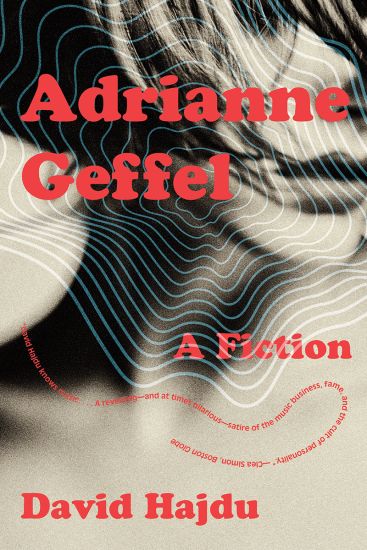
Adrianne Geffel: A Fiction

Adrianne Geffel: A Fiction

David Hajdu

W. W. Norton Company
2021
nidottu
Adrianne Geffel was a genius. Praised as the "Geyser of Grand Street" and the "Queen of Bleak Chic," she was a one-of-a-kind artist, a pianist and composer with a rare neurological condition that enabled her to make music that was nothing less than pure, unmediated emotional expression. She and her sensibility are now fully integrated into the cultural lexicon; her music has been portrayed, represented, and appropriated endlessly in popular culture. But what do we really know about her? Despite her renown, Adrianne Geffel vanished from public life, and her whereabouts remain a mystery to this day.David Hajdu cuts through the noise to tell, for the first time, the full story of Geffel's life and work, piecing it together through the memories of those who knew her, inspired her, and exploited her--her parents, teachers, best friend, manager, critics, and lovers. Adrianne Geffel made music so strange, so compelling, so utterly unique that it is simply not to be believed. Hajdu has us believing every note of it in this slyly entertaining work of fiction.A brilliantly funny satire, with characters that leap off the page, Adrianne Geffel is a vividly twisted evocation of the New York City avant-garde of the 1970s and '80s, and a strangely moving portrait of a world both utterly familiar and like none we've ever encountered.
Positively 4th Street

Positively 4th Street

David Hajdu

Bloomsbury Publishing PLC
2002
pokkari
In the 1960s, folk music was being crossed with rock 'n' roll to form a throughtful, literate, new musical style. This title relates just how folk became rock by looking at four young beatniks and their rise to fame: Bob Dylan, Joan Baez, her sister Mimi and Mimi's husband, Richard Farina.
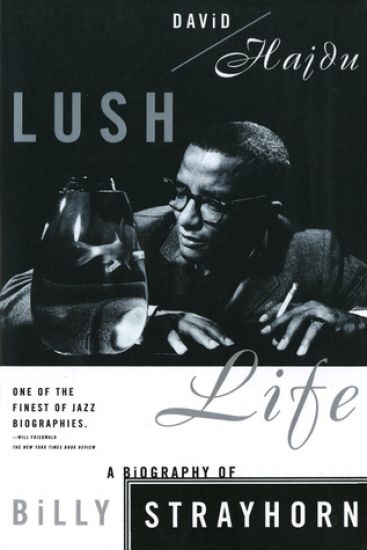
Lush Life

Lush Life

David Hajdu

North Point Press
1997
pokkari
A finalist for the National Book Critics Circle Award Billy Strayhorn (1915-67) was one of the greatest composers in the history of American music, the creator of a body of work that includes such standards as "Take the 'A' Train." Yet all his life Strayhorn was overshadowed by his friend and collaborator Duke Ellington, with whom he worked for three decades as the Ellington Orchestra's ace songwriter and arranger. A "definitive" corrective (USA Today) to decades of patchwork scholarship and journalism about this giant of jazz, David Hajdu's Lush Life is a vibrant and absorbing account of the "lush life" that Strayhorn and other jazz musicians led in Harlem and Paris. While composing some of the most gorgeous American music of the twentieth century, Strayhorn labored under a complex agreement whereby Ellington took the bows for his work. Until his life was tragically cut short by cancer and alcohol abuse, the small, shy composer carried himself with singular style and grace as one of the few jazzmen to be openly homosexual. Lush Life has sparked an enthusiastic revival of interest in Strayhorn's work and is already acknowledged as a jazz classic.
Love for Sale

Love for Sale

David Hajdu

St Martin's Press
2017
nidottu
David Hajdu begins Love for Sale, his personal history of pop music, in an unexpected place - not with nostalgic reminiscences of the 45s of his youth but with the sheet-music era at the end of the nineteenth century. It was not so much the beginning of popular music - many songs were already popular - as it was the beginning of the popular music industry. And if he's going to understand what his 45s meant to him, this is the place to start: the rise of Tin Pan Alley, of minstrelsy, of million-copy sellers and one-hit wonders and cultural arbiters decrying the baseness, simplicity, and signs of the end of times in popular music. Love for Sale does ultimately spin through more familiar territory - the Cotton Club, the rise of radio, the battle of disco versus punk for the soul of New York as Hajdu made his chops as a critic, the rise of hip-hop, and the current atomisation of the music landscape - but it is always with a unique, insightful, and eloquently presented point of view, as one would expect from one of our most celebrated music critics.