Kirjojen hintavertailu. Mukana 11 627 670 kirjaa ja 12 kauppaa.

Kirjahaku

Etsi kirjoja tekijän nimen, kirjan nimen tai ISBN:n perusteella.

30 kirjaa tekijältä David Hamilton

Något att leva för : berättelsen om David Hamiltons väg ut ur terrorismen på Nordirland
David ”Packie” Hamilton går tidigt med i UVF, en av Nordirlands protestantiska terror- grupper. En organisation som finansieras med hjälp av bankrån. Hamiltons liv blir lika dramatiskt som meningslöst – trots bekännelsen att organisationens målsättning är ”något värt att dö för”. Till sist döms han till tolv års fängelse och får avtjäna en del av sitt straff i det beryktade Maze-fängelset i Belfast. Cirkeln bryts inte förrän han oväntat blir kristen. Något att leva för är en rå men gripande skildring från verklighetens Nordirland. En sann berättelse som inger hopp. En bok att sträckläsa.
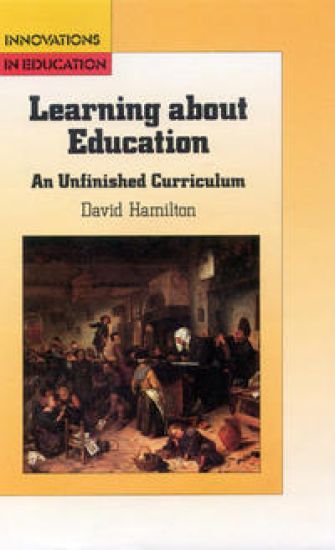
LEARNING ABOUT EDUCATION

LEARNING ABOUT EDUCATION

David Hamilton

Open University Press
1990
nidottu
This is an introductory text for students of education and will be of interest to those concerned about the future of education and schooling. It focuses upon the role that education and schooling have played in the creation, maintainance and transformation of the human species. It also considers the negative and positive consequences of schooling and education. The book invites readers to draw their own conclusions from many of its arguments.
Towards a Theory of Schooling (Routledge Revivals)
First published in 1989, Towards a Theory of Schooling explores and debates the relationship between school and society. It examines the form and function of one of humankind’s most important social institutions, following the cutting edge of pedagogic innovation from mainland Europe through the British Isles to the USA. In the process, the book throws important light upon the origins and evolution of the school based notions of class, curriculum, classroom, recitation and class teaching.
Towards a Theory of Schooling (Routledge Revivals)
First published in 1989, Towards a Theory of Schooling explores and debates the relationship between school and society. It examines the form and function of one of humankind’s most important social institutions, following the cutting edge of pedagogic innovation from mainland Europe through the British Isles to the USA. In the process, the book throws important light upon the origins and evolution of the school based notions of class, curriculum, classroom, recitation and class teaching.
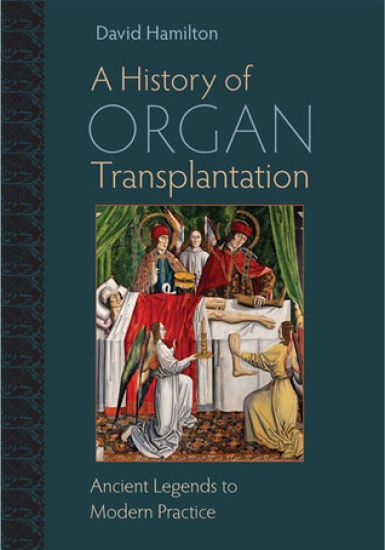
A History of Organ Transplantation

A History of Organ Transplantation

David Hamilton

University of Pittsburgh Press
2012
sidottu
Foreword by Clyde Barker and Thomas E. Starzl A History of Organ Transplantation is a comprehensive and ambitious exploration of transplant surgery - which, surprisingly, is one of the longest continuous medical endeavors in history. Moreover, no other medical enterprise has had so many multiple interactions with other fields, including biology, ethics, law, government, and technology. Exploring the medical, scientific, and surgical events that led to modern transplant techniques, Hamilton argues that progress in successful transplantation required a unique combination of multiple methods, bold surgical empiricism, and major immunological insights in order for surgeons to develop an understanding of the body's most complex and mysterious mechanisms. Surgical progress was nonlinear, sometimes reverting and sometimes significantly advancing through luck, serendipity, or helpful accidents of nature. The first book of its kind, A History of Organ Transplantation examines the evolution of surgical tissue replacement from classical times to the medieval period to the present day. This well-executed volume will be useful to undergraduates, graduate students, scholars, surgeons, and the general public. Both Western and non-Western experiences as well as folk practices are included.
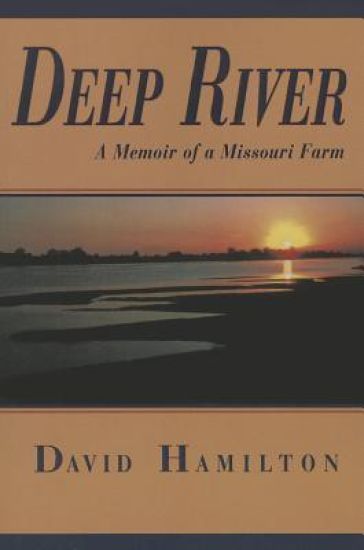
Deep River

Deep River

David Hamilton

University of Missouri Press
2014
nidottu
Deep River uncovers the layers of history - both personal and regional - that have accumulated on a river-bottom farm in west-central Missouri. This land was part of a late frontier, passed over, then developed through the middle of the last century as the author's father and uncle cleared a portion of it and established their farm.Hamilton traces the generations of Native Americans, frontiersmen, settlers, and farmers who lived on and alongside the bottomland over the past two centuries. It was a region fought over by Union militia and Confederate bushwhackers, as well as by their respective armies; an area that invited speculation and the establishment of several small towns, both before and after the Civil War; land on which the Missouri Indians made their long last stand, less as a military force than as a settlement and civilization; land that attracted French explorers, the first Europeans to encounter the Missouris and their relatives, the Ioways, Otoes, and Osage, a century before Lewis and Clark. It is land with a long history of occupation and use, extending millennia before the Missouris. Most recently it was briefly and intensively receptive to farming before being restored in large part as state-managed wetlands.Deep River is composed of four sections, each exploring aspects of the farm and its neighbourhood. While the family story remains central to each, slavery and the Civil War in the nineteenth century and Native American history in the centuries before that become major themes as well. The resulting portrait is both personal memoir and informal history, brought up from layers of time, the compound of which forms an emblematic American story.
Evolutionary Economics

Evolutionary Economics

David Hamilton

Transaction Publishers
1991
nidottu
In reviewing this book in The Economic Journal, S.G. Checkland said that it should be read as a vigorous attempt to relate economics to general thinking and as a challenge to those who are practitioners or elaborators of narrowly prescribed techniques.
Evolutionary Economics

Evolutionary Economics

David Hamilton

Routledge
2017
sidottu
In reviewing this book in The Economic Journal, S.G. Checkland said that it should be read as a vigorous attempt to relate economics to general thinking and as a challenge to those who are practitioners or elaborators of narrowly prescribed techniques.
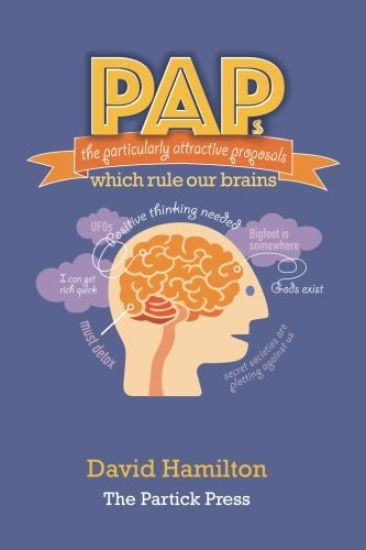
PAPs: The Particularly Attractive Proposals Which Rule Our Brains

PAPs: The Particularly Attractive Proposals Which Rule Our Brains

David Hamilton

Createspace Independent Publishing Platform
2016
nidottu
This quirky guide lists A to Z the many irrational ideas which lodge firmly in the human brain. Though many are familiar and notorious, they are here plucked from their niche locations and gathered, for the first time, under the catchy acronym 'PAP'. We yield to the attractive proposals of charismatic preachers and politicians, and we support the hunt for non-existent animals. Against all reason we trust financiers who offer ways to get rich quickly and we heed the confident therapists who tempt us to de-tox from mythical toxins.Most PAPs are harmless but some can lead us into danger. Unstoppable and always around, the author uncovers PAPs at the root of (nearly) everything. Our brain, he says, has a design fault: it is hard-wired to accept such PAPs, and offers evidence in an extensive bibliography .
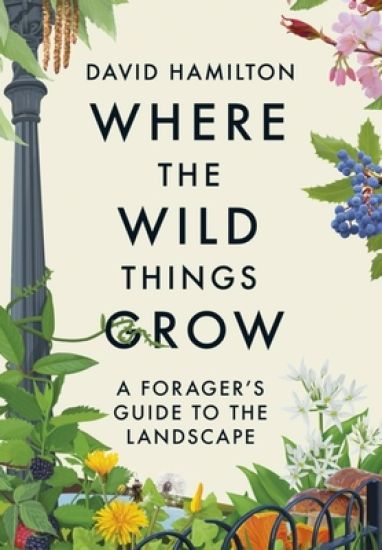
Where the Wild Things Grow

Where the Wild Things Grow

David Hamilton

Hodder Stoughton
2023
pokkari
Nestled by the roadside, peeking through the hedgerows, hidden in the woods and even in city streets and parks, wild food is all around us - if you know where to look.From woodland mushrooms and riverbank redcurrants to garden weeds and urban cherry blossoms, Where the Wild Things Grow takes us on a journey through the forager's landscape.Drawing on 25 years of foraging experience, David Hamilton show us how and where to hunt for the food that is hidden all around us. Along the way he delves into the forgotten histories and science of wild foods and their habitats and reveals his many foraging secrets, tips and recipes. You'll discover where to find mallows, mustards and pennywort, as well as sumac, figs and mulberries. You'll learn how to pick the sweetest berries, preserve mushrooms using only a radiator and prepare salads, risottos and puddings all with wild food.In all weathers, landscapes and seasons, David shows us that foraging doesn't just introduce us to new tastes and sensations, it also brings us closer to the natural world on our doorstep. Beautifully illustrated and rich in detail, Where the Wild Things Grow is more than a field guide - it is a celebration of the wonderful and fragile gifts hidden in our landscape.
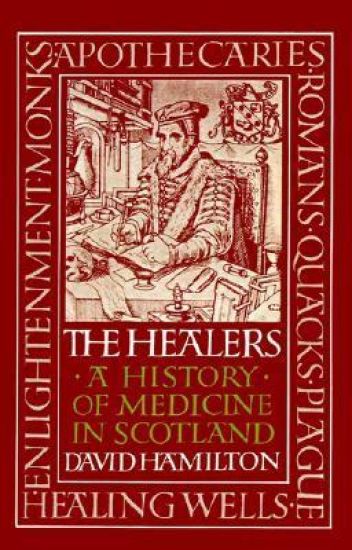
Healers, The

Healers, The

David Hamilton

Pelican Publishing Co
1982
nidottu
Scotland offers almost unique opportunities for medical historians. For a conventional history, there is a rich stock of famous doctors and their discoveries. There are also the contributions of four ancient universities and three equally old colleges of physicians and surgeons. For historians of public health there is the famous struggle against the problems of the industrial revolution and the lives and works of the great sanitary reformers in Glasgow and Edinburgh. For the social historian there are equal opportunities in the diversity of the health care in the Highlands and Lowlands, the rich traditions of Scottish folk medicine and the interactions of Scottish and English medical practice. Much else can be learnt in relating Scotland's great innovative periods to her cultural and political state at the time. It is perhaps surprising therefore that there are no up-to-date accounts of any of these aspects of health and health care in Scotland. . . . there are now many new sources available and new questions to be asked. -from the Introduction In this book, author David Hamilton explores new sources and evaluates the rich history of medicinal practices in Scotland. Thus, for historians both of medicine and of Scotland, this study is necessary to more fully understand the country's history.
Time Flies

Time Flies

David Hamilton

Fonthill Media
2017
sidottu
'Time Flies: Reflections of a Fighter Pilot' retells the exploits of David Hamilton's thirty years of service in the Royal Air Force. He had a wide and varied career; flying Lightnings to defend UK airspace, operating from HMS Ark Royal in F-4 Phantoms, and defending the Inner German Border from RAF Wildenwrath. In the UK MoD he was a staff officer responsible for the Eurofighter project. He served in the First Gulf War, as the commander of a Tornado F3 Squadron deployed in Saudi Arabia, and worked as General Sir Peter de la Billiere's air advisor afterwards. He flew with and was supervisor of the Red Arrows. In NATO's Brussels Headquarters, he served as a Group Captain, formulating the Rules of Engagement for the Bosnian air campaign, and then became the deputy station commander at RAF Leuchars. Hamilton also led the Tornado F3 four-ship flypast over Edinburgh Castle as the Stone of Destiny returned to Scotland on 30 November 1996, before taking early retirement from the RAF to work in the defence industry on the Eurofighter project.
Storyteller

Storyteller

David Hamilton

Troubador Publishing
2017
pokkari
This is a collection of stories in verse with shorter poems within the stories . Each story is told by historical figures with the author as an overarching narrator. It is different from the usual academic poems standardised by creative writing courses. Those are not popular with the public and this fills the need by offering something refreshing.