Kirjojen hintavertailu. Mukana 11 244 527 kirjaa ja 12 kauppaa.

Kirjahaku

Etsi kirjoja tekijän nimen, kirjan nimen tai ISBN:n perusteella.

42 kirjaa tekijältä David Hare

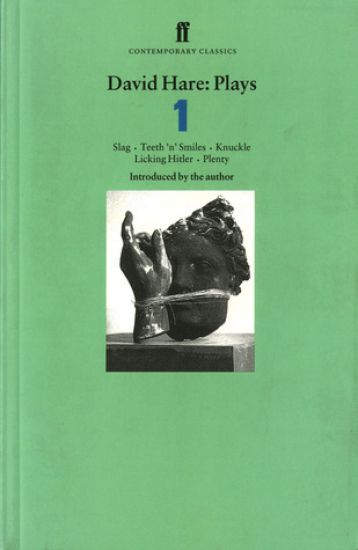
David Hare Plays 1

David Hare Plays 1

David Hare

Faber Faber
1996
pokkari
This first volume of David Hare's plays contains his work from the 1970s, including his landmark play of that decade, Plenty, charting the development of 'one of the great post-war British playwrights' (Independent on Sunday).The volume also includes the plays Slag, Teeth 'n' Smiles, Knuckle and Licking Hitler, and is introduced by the author.
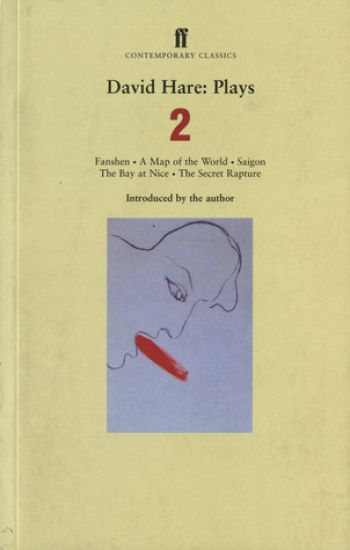
David Hare Plays 2

David Hare Plays 2

David Hare

Faber Faber
1997
pokkari
This second volume of plays by David Hare contains work from the 1970s and 1980s which confirmed him as one of the major contemporary playwrights in the English language. It includes Fanshen, his remarkable 1975 play which focused on the Chinese Revolution with Brechtian subtlety, his screenplay for Saigon: Year of the Cat, The Secret Rapture, his biting portrait of a family in crisis, and the plays A Map of the World and The Bay at Nice. The collection is introduced by the author.
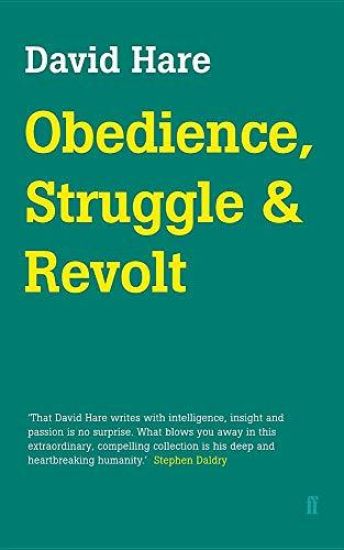
Obedience, Struggle and Revolt

Obedience, Struggle and Revolt

David Hare

Farrar, Straus and Giroux
2018
nidottu
"Please reject absolutely the crazy . . . suggestion that playwrights don't have intentions . . . They do." In this intimate collection of writings by the author of Stuff Happens and Plenty, David Hare reveals a perspective as meticulously constructed as one of his dramas. In selections ranging from his beginnings as a politically charged upstart in the seventies through to his current position as one of the world's most respected playwrights, Hare skillfully expands upon the prevailing themes of his astounding body of work. With a serious eye on social issues--tempered by a distinct irreverence--Hare dissects the role of entertainment in contemporary society, mapping, in the process, a dynamic new trajectory for post-millennium theater.
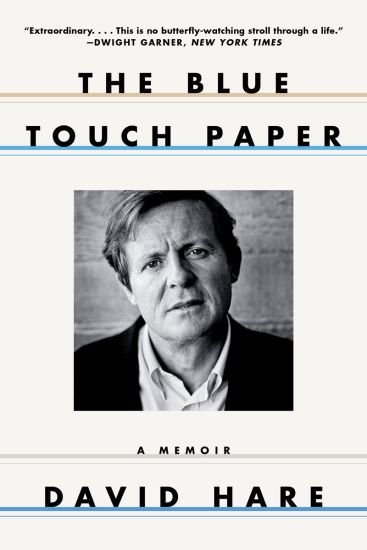
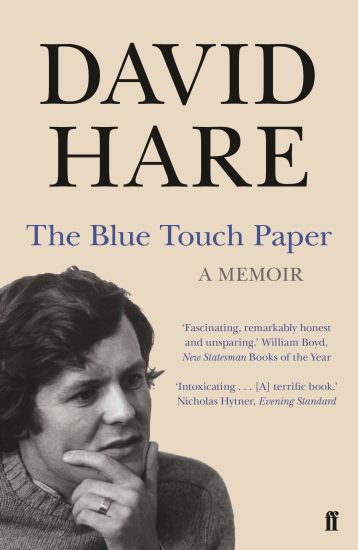
Blue Touch Paper: A Memoir

Blue Touch Paper: A Memoir

David Hare

W. W. Norton Company
2016
nidottu
David Hare has long been one of Britain's best-known screenwriters and dramatists. He's the author of more than thirty acclaimed plays that have appeared on Broadway, in the West End, and at the National Theatre. He wrote the screenplays for the hugely successful films The Hours, Plenty, and The Reader. Most recently, his play Skylight won the 2015 Tony Award for Best Revival on Broadway.Now, in his debut work of autobiography, "Britain's leading contemporary playwright" (Sunday Times) offers a vibrant and affecting account of becoming a writer amid the enormous flux of postwar England. In his customarily dazzling prose and with great warmth and humor, he takes us from his university days at Cambridge to the swinging 1960s, when he cofounded the influential Portable Theatre in London and took a memorable road trip across America, to his breakthrough successes as a playwright amid the political ferment of the '70s and the moment when Margaret Thatcher came to power at the end of the decade.Through it all, Hare sets the progress of his own life against the dramatic changes in postwar England, in which faith in hierarchy, religion, empire, and the public good all withered away. Filled with indelible glimpses of such figures as Alfred Hitchcock, Laurence Olivier, Tennessee Williams, Helen Mirren, and Joseph Papp, The Blue Touch Paper is a powerful evocation of a society in transition and a writer in the making.
Racing Demon

Racing Demon

David Hare

Faber Faber
2001
pokkari
How do you fight without hate?Racing Demon reveals the struggle of four clergymen to make sense of their mission. David Hare's play opened at the National Theatre, London, in 1990 to universal acclaim, and won four awards as Play of the Year. Racing Demon was the first part of David Hare's trilogy of plays about British institutions; Murmuring Judges and The Absence of War completed the trilogy.
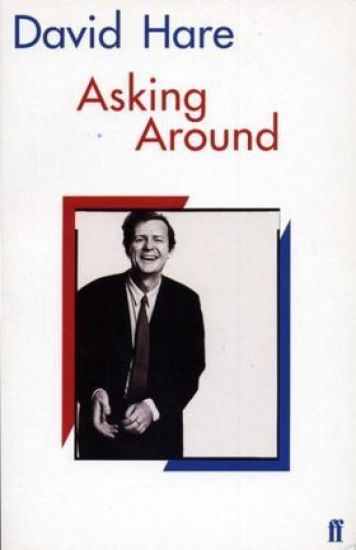
Asking Around

Asking Around

David Hare

Faber Faber
1993
pokkari
David Hare's trilogy of plays - Racing Demon, Murmuring Judges, The Absence of War - first presented at the National Theatre, London, in 1993, examines the crises facing three great British institutions - the Church, the Law and the Labour Party. In order to learn about these organisations, Hare amassed a body of hard research from first-hand interviews with many of the people involved: from vicars to high-ranking policemen, from judges to MPs. Asking Around presents a judicious selection of those interviews and also includes a commentary by Hare, describing how he threaded his way through the complex structures of Church, Law and Politics.
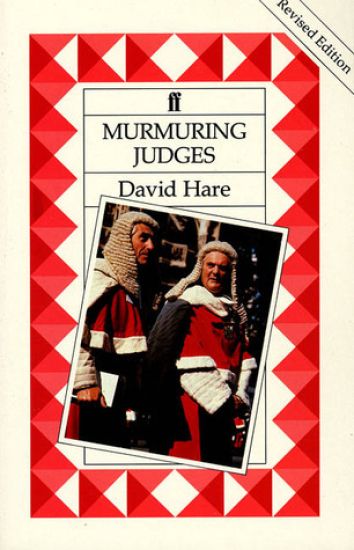
Murmuring Judges

Murmuring Judges

David Hare

Faber Faber
2002
pokkari
A young lawyer's involvement in her first case leads her through a criminal justice system - police, courts and prisons - which is cracking at the seams.Murmuring Judges is the second play in David Hare's highly acclaimed trilogy about British institutions. Racing Demon, which won four awards as Play of the Year in 1990, was the first part of the trilogy and examined the Church. The Absence of War, a play about the Labour Party, completed the trilogy.
Amy's View

Amy's View

David Hare

Faber Faber
1997
nidottu
It is 1979. Esme Allen is a well-known West End actress at just the moment when the West End is ceasing to offer actors a regular way of life. The visit of her young daughter, Amy, with a new boyfriend sets in train a series of events which only find their shape eighteen years later. A generational play about the long term struggle between a strong mother and her loving daughter, Amy's View mixes love, death and the theatre in a way which is both heady and original.
Via Dolorosa

Via Dolorosa

David Hare

Faber Faber
1998
pokkari
'My whole life, it's been assumed, Western civilisation is an old bitch gone in the teeth. And so people say, go to Israel. Because in Israel at least people are fighting. In Israel, they're fighting for something they believe in.' Via Dolorosa. In 1997, after many invitations, the 50-year-old British playwright resolved finally to visit the 50-year-old State of Israel. The resulting play, written to be performed by the author himself, offers a meditation on an extraordinary trip to both Israel and the Palestinian territory, which leaves Hare questioning his own values as searchingly as the powerful beliefs of those he met. Accompanying Via Dolorosa is the 1996 lecture When Shall We Live?, which also addresses questions of art and faith. Originally given in Westminster Abbey as the Eric Symes Memorial Lecture, it attracted record correspondence when an abridged version was published in the Daily Telegraph.
The Blue Room

The Blue Room

David Hare

Faber Faber
1998
pokkari
David Hare's new adaptation of Arthur Schnitzler's classic and notorious "La Ronde". With just two actors (Nicole Kidman and Ian Glenn at the Donmar Warehouse, London) playing all of the parts, he creates a fascinating landscape of dream and longing.
Acting Up

Acting Up

David Hare

Faber Faber
1999
nidottu
In 1997 the 50-year-old playwright David Hare decided to visit the 50-year-old state of Israel and write a play - Via Dolorosa - about the conflict. He then chose to become the actor of his own play and set about learning to act the monologue for an uninterrupted 95 minutes on stage. Acting Up is a diary of the ups and downs of that learning curve as well as an insight into what it is actors, directors, producers and stage staff actually do in rehearsals. Hare's hilarious diary of his experience on both sides of the Atlantic tells of his difficulties in coming to terms with his terrifying change of career, but also grapples with more serious questions about the nature of acting itself.
The Hours

The Hours

David Hare

Faber Faber
2003
pokkari
The Hours is David Hare's screen adaptation of Michael Cunningham's Pulitzer Prize-winning novel. In Richmond, England in 1923, Virginia Woolf is setting out to write the first words of her new book. In Los Angeles in 1951, a housewife, Laura Brown, is contemplating suicide. And in present-day New York, a hostess, Clarissa Vaughan, is planning a party for her friends. In extraordinary and ingenious ways, the film shows how a single day - and the novel Mrs Dalloway - inextricably link the lives of three very different women.
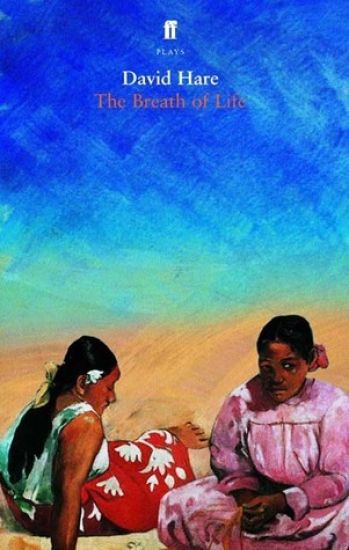
The Breath of Life

The Breath of Life

David Hare

Faber Faber
2002
pokkari
'Life being what it is, one dreams of revenge.'Gauguin's aphorism serves as the motto for this morality tale of two women, both in their sixties, whose lives are interwoven in ways neither of them yet understand. Madeline Palmer is a retired curator, living alone on the Isle of Wight. One day to her door comes Angela Beale, a woman she has met only once, who is now enjoying sudden success, late in life, as a popular novelist. The progress of a single night comes fascinatingly to echo the hidden course of their lives.
The Secret Rapture

The Secret Rapture

David Hare

Faber Faber
2003
pokkari
An elderly antiquarian bookseller has just died at his home in the country. His two daughters come to attend to things. Isobel, who has been nursing him, is a partner in a small design firm. Marion is in politics - already a junior minister. It is Marion's profession to provide answers, and to back those who offer solutions, but not all human situations yield to a professional approach - least of all when they involve their junior step-mother Katherine.In this elegantly constructed play, a mordant comedy of manners deepens into a painfully unsparing examination of the consequences of applying principled pragmatism to human feelings.'David Hare has written one of the best English plays since the war and established himself as the finest British dramatist of his generation.' John Peter, Sunday Times
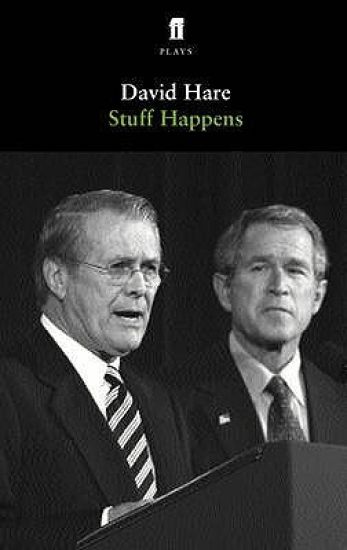
Stuff Happens

Stuff Happens

David Hare

Faber Faber
2006
pokkari
Stuff happens... And it's untidy, and freedom's untidy, and free people are free to make mistakes and commit crimes and do bad things.'The famous response of American Secretary of Defense Donald Rumsfeld to the looting of Baghdad at a press conference in 2003 provides the title for David Hare's play about the extraordinary process leading up to the invasion of Iraq.Stuff Happens premiered at the National Theatre, London, in 2004 and has subsequently been performed around the world.'Stuff Happens may make you openly boo, hiss, cheer or even cry, but it will also remind you why this 2,500 year-old art form remains the best way for human beings to collectively experience and contemplate the effects of war.' Los Angeles Times'A totally compelling play that ruthlessly exposes the dubious premises on which the Iraq war was fought... One comes out enriched, informed and moved by Hare's ability to turn recent politics into historical drama.' Guardian
The Permanent Way

The Permanent Way

David Hare

Faber Faber
2007
pokkari
In 1991, before an election they did not expect to win, the Conservative government made a fateful decision to privatize the railways. As a result, the taxpayer subsidizes rail more lavishly then ever before. In The Permanent Way, David Hare, working with actors from the Out of Joint Company, tells the intricate, madcap story of a dream gone sour, by gathering together the first-hand accounts of those most intimately involved - from every level of the system.
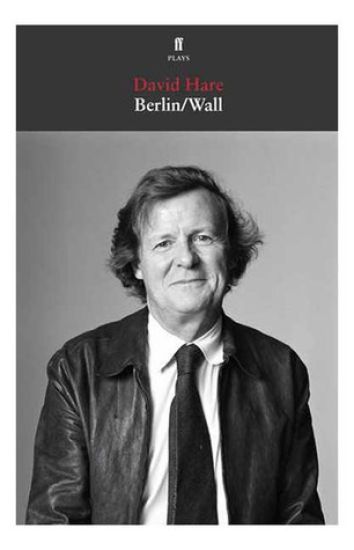
Berlin/Wall

Berlin/Wall

David Hare

Faber Faber
2009
pokkari
Berlin/WallIn two contrasted readings for the stage, David Hare visits a place where a famous wall has come down; then another where a wall is going up.BerlinFor his whole adult life, David Hare has been visiting the city which so many young people regard as the most exciting in Europe. But there's something in Berlin's elusive character that makes him feel he's always missing the point. Now, to celebrate the twentieth anniversary of the reunification, he offers a meditation about Germany's restored capital - both what it represents in European history, and the peculiar part it has played in his own life.WallThe Israeli/Palestine security fence will one day stretch 486 miles, from one end of Israel to the other. It will be four times as long as the Berlin wall, and in places twice as high. In this second monologue, the playwright recalls his trips to both Israel and the Palestinian territory and offers a history of the wall's building, an exploration of the philosophy behind it and a personal account of those who live on either side. Berlin premiered at the National Theatre, London, in February 2009 and Wall premiered at the Royal Court Theatre, London, in March 2009.
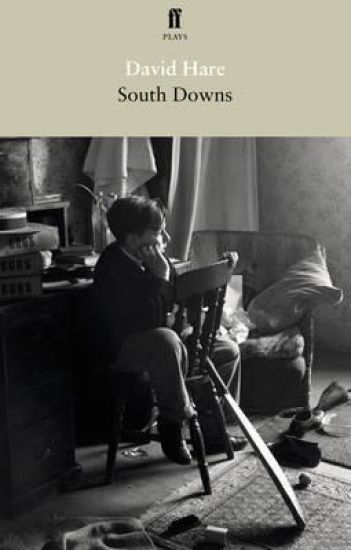
South Downs and Mere Fact, Mere Fiction
1962: A public school on the South Downs.John Blakemore is a solitary boy who finds it impossible either to understand or adapt to the ways of the school. His adolescent earnestness put off teacher and pupil alike. And now suddenly he seems to be in danger of losing his only friend.David Hare's emotional new play, written at the invitation of the Rattigan estate as a response to The Browning Version, is a meditation on faith, learning and teenage friendship, played against the backdrop of a Britain still fighting to maintain an established rule.Collected with South Downs is the text of Hare's lecture Mere Fact, Mere Fiction, delivered to the Royal Society of Literature in 2010. In a famous defence of documentary theatre, the author celebrates the power of metaphor to transform factual quite as much as fictional material.
The Blue Touch Paper

The Blue Touch Paper

David Hare

Faber Faber
2016
nidottu
When, in 2000, the National Theatre published its poll of the hundred best plays of the 20th century, David Hare had written five of them. Yet he was born in 1947 into an anonymous suburban street in Hastings. It is a world he believes to be as completely vanished as Victorian England.Now in his first panoramic work of memoir, ending as Margaret Thatcher comes to power in 1979, David Hare describes his childhood, his Anglo-Catholic education and his painful apprenticeship to the trade of dramatist. He sets the progress of his own life against the history of a time in which faith in hierarchy, deference, religion, the empire and finally politics all withered away. Only belief in private virtue remains.In his customarily dazzling prose and with great warmth and humour, David Hare explores how so radical a shift could have occurred, and how it is reflected in his own lifelong engagement with two disparate art forms - film and theatre. In The Blue Touch Paper David Hare describes a life of trial and error: both how he became a writer and the high price he and those around him paid for that decision.