Kirjojen hintavertailu. Mukana 11 342 296 kirjaa ja 12 kauppaa.

Kirjahaku

Etsi kirjoja tekijän nimen, kirjan nimen tai ISBN:n perusteella.

49 kirjaa tekijältä David Harrison

The Melancholy Narrative of the Distressful Voyage and Miraculous Deliverance of Captain David Harrison, of the Sloop, Peggy, of New-York, on his Voyage From Fyal, one of the Western Islands, to New-York ... Till he was Happily Relieved by ... Capt. Evers
This work has been selected by scholars as being culturally important, and is part of the knowledge base of civilization as we know it. This work was reproduced from the original artifact, and remains as true to the original work as possible. Therefore, you will see the original copyright references, library stamps (as most of these works have been housed in our most important libraries around the world), and other notations in the work.This work is in the public domain in the United States of America, and possibly other nations. Within the United States, you may freely copy and distribute this work, as no entity (individual or corporate) has a copyright on the body of the work.As a reproduction of a historical artifact, this work may contain missing or blurred pages, poor pictures, errant marks, etc. Scholars believe, and we concur, that this work is important enough to be preserved, reproduced, and made generally available to the public. We appreciate your support of the preservation process, and thank you for being an important part of keeping this knowledge alive and relevant.

The Bridges of Medieval England

The Bridges of Medieval England

David Harrison

Oxford University Press
2007
nidottu
Medieval bridges are startling achievements of design and engineering comparable with the great cathedrals of the period, and are also proof of the great importance of road transport in the middle ages and of the size and sophistication of the medieval economy. David Harrison rewrites their history from early Anglo-Saxon England right up to the Industrial Revolution, providing new insights into many aspects of the subject. Looking at the role of bridges in the creation of a new road system, which was significantly different from its Roman predecessor and which largely survived until the twentieth century, he examines their design. Often built in the most difficult circumstances: broad flood plains, deep tidal waters, and steep upland valleys, they withstood all but the most catastrophic floods. He also investigates the immense efforts put into their construction and upkeep, ranging from the mobilization of large work forces by the old English state to the role of resident hermits and the charitable donations which produced bridge trusts with huge incomes. The evidence presented in The Bridges of Medieval England shows that the network of bridges, which had been in place since the thirteenth century, was capable of serving the needs of the economy on the eve of the Industrial Revolution. This has profound implications for our understanding of pre-industrial society, challenging accepted accounts of the development of medieval trade and communications, and bringing to the fore the continuities from the late Anglo-Saxon period to the eighteenth century. This book is essential reading for those interested in architecture, engineering, transport, and economics, and any historian sceptical about the achievements of medieval England.
The Bridges of Medieval England

The Bridges of Medieval England

David Harrison

Clarendon Press
2004
sidottu
Medieval bridges are startling achievements of design and engineering comparable with the great cathedrals of the period, and are also proof of the great importance of road transport in the middle ages and of the size and sophistication of the medieval economy. Dr Harrison has undertaken the first thorough study of bridges and in this book he rewrites their history from early Anglo-Saxon England right up to the Industrial Revolution, providing new insights into many aspects of the subject. Dr Harrison looks at the role of bridges in the creation of a new road system, which was significantly different from its Roman predecessor and which largely survived until the twentieth century. He examines the design of bridges, which were built in the most difficult circumstances - broad flood plains, deep tidal waters, and steep upland valleys - and withstood all but the most catastrophic floods. He also investigates the immense efforts put into their construction and upkeep, ranging from the mobilization of large work forces by the old English state to the role of resident hermits and the charitable donations which produced bridge trusts with huge incomes. The evidence presented in The Bridges of Medieval England shows that the network of bridges, which had been in place since the thirteenth century, was capable of serving the needs of the economy on the eve of the Industrial Revolution. This has profound implications for our understanding of pre-industrial society, challenging accepted accounts of the development of medieval trade and communications, and bringing to the fore the continuities from the late Anglo-Saxon period to the eighteenth century. This book is essential reading for those interested in architecture, engineering, transport, and economics, and any historian sceptical about the achievements of medieval England.
Dot graph paper Journal

Dot graph paper Journal

David Harrison

Oliver Matthew
2022
pokkari
Dot graph paper Journal: Dotted grid paper 8.5*11 for drawing Book FeaturesMatte-finished cover8.5*11 page-sizeHigh-quality print Look inside "sample"Perfect as a gift to your family members Scroll Up and Grab Your Copy Today
Workshop Machining

Workshop Machining

David Harrison

Routledge
2021
nidottu
Workshop Machining is a comprehensive textbook that explains the fundamental principles of manually operating machinery to form shapes in a variety of materials. It bridges the gap between people who have traditional toolmaking skills and those who have been trained in programming and operation of CNC machines in a focused production environment, rather than general machine shop. Using a subject-based approach, David Harrison intuitively guides readers and supplies practical skills. The chapters cover everything from the basic machine controls to advanced cutting operations using a wide range of tooling and work-holding devices. Theory and practice are shown via a mixture of diagrams, text and illustrated worked examples, as well as through exercises.The book is ideal for students and lecturing staff who participate in, or lead, practical machining sessions, and for those who wish to further develop their machining skills. It also serves as an excellent reference to understand the principles and limitations of producing shapes with cutters that move in a limited combination of linear and radial paths.
Workshop Machining

Workshop Machining

David Harrison

Routledge
2021
sidottu
Workshop Machining is a comprehensive textbook that explains the fundamental principles of manually operating machinery to form shapes in a variety of materials. It bridges the gap between people who have traditional toolmaking skills and those who have been trained in programming and operation of CNC machines in a focused production environment, rather than general machine shop. Using a subject-based approach, David Harrison intuitively guides readers and supplies practical skills. The chapters cover everything from the basic machine controls to advanced cutting operations using a wide range of tooling and work-holding devices. Theory and practice are shown via a mixture of diagrams, text and illustrated worked examples, as well as through exercises.The book is ideal for students and lecturing staff who participate in, or lead, practical machining sessions, and for those who wish to further develop their machining skills. It also serves as an excellent reference to understand the principles and limitations of producing shapes with cutters that move in a limited combination of linear and radial paths.
Price and Financial Stability

Price and Financial Stability

David Harrison

Routledge
2020
nidottu
Why are financial prices so much more crisis-prone and unstable than real economy prices? Because they are doing different things. Unlike real economy prices, rooted in the real goods and services produced and exchanged, financial prices attempt to value future income flows from financial and capital assets. These valuations fluctuate erratically because expectations of the future fluctuate – and large liquid financial markets can amplify, rather than correct, these effects. The book builds on the insights of economists Frank Knight and John Maynard Keynes, that uncertainty of the future is essential to understand the processes of economic production and capital investment, and adds to this Karl Popper's general explanation of how expectations of an uncertain future are formed and tested through a trial and error process. Rather than relying on fluctuating financial prices to provide a guide to an uncertain future, it suggests a better approach would be to adopt the methods common to other branches of science, and create testable (falsifiable) theories allowing reasonable predictions to be made. In finance, the elements of one such theory could be based on the concept of forecasting yield from capital assets, which is a measurable phenomenon tending towards aggregate and long-term stability, and where there is a plentiful supply of historic data. By methods like this, financial economics could become a branch of science like any other. To buttress this approach, the widely accepted public policy objective of promoting real economy price stability could be widened to include financial price stability.
Competition Law and Financial Services
Competition law underpins the market economy by prohibiting anti-competitive agreements and practices, and the abuse of dominant positions in the market. Until the financial crisis it was widely assumed that the financial services industry was highly competitive. This book explores the extent to which this is the case. By analysing crisis and pre-crisis competition law cases and examples from the UK, the EU and around the world, David Harrison asks whether there exists good reason for financial services to be treated differently from the rest of the market economy. The theory of market efficiency is not borne out in practice. He particularly draws upon John Maynard Keynes in examining the differences between price mechanisms in product markets for "normal" goods, and price mechanisms in financial and investment markets where expectations of the future tend to play a greater role, leading to greater price fluctuations. In this evaluation, the book examines aspects of the practical functioning of capital markets such as the phenomenon of herding behaviour by financial participants, how short-term behaviour by intermediaries can be to the disadvantage of savers and productive investment, the relationship between investment markets and product markets and the extent to which the same competition rules apply to undertakings involved in both. The book will be invaluable to students, researchers and practitioners of banking and finance law, and commercial and competition law..
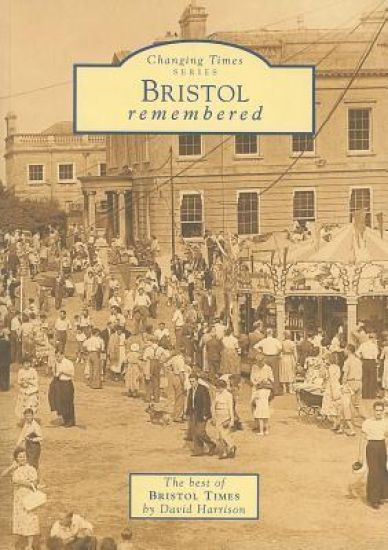
Bristol Remembered

Bristol Remembered

David Harrison

NPI Media Group
2002
nidottu
This book is part of the Changing Times series, which combines history records with nostalgia, and public accounts with personal reminiscences to show the history of various local places in Great Britain, and how things have changed over the years.
"Bristol Times" Revisited

"Bristol Times" Revisited

David Harrison

NPI Media Group
2003
nidottu
This book is part of the Changing Times series, which combines history records with nostalgia, and public accounts with personal reminiscences to show the history of various local places in Great Britain, and how things have changed over the years.
Competition Law and Financial Services
Competition law underpins the market economy by prohibiting anti-competitive agreements and practices, and the abuse of dominant positions in the market. Until the financial crisis it was widely assumed that the financial services industry was highly competitive. This book explores the extent to which this is the case. By analysing crisis and pre-crisis competition law cases and examples from the UK, the EU and around the world, David Harrison asks whether there exists good reason for financial services to be treated differently from the rest of the market economy. The theory of market efficiency is not borne out in practice. He particularly draws upon John Maynard Keynes in examining the differences between price mechanisms in product markets for "normal" goods, and price mechanisms in financial and investment markets where expectations of the future tend to play a greater role, leading to greater price fluctuations. In this evaluation, the book examines aspects of the practical functioning of capital markets such as the phenomenon of herding behaviour by financial participants, how short-term behaviour by intermediaries can be to the disadvantage of savers and productive investment, the relationship between investment markets and product markets and the extent to which the same competition rules apply to undertakings involved in both. The book will be invaluable to students, researchers and practitioners of banking and finance law, and commercial and competition law..
Price and Financial Stability

Price and Financial Stability

David Harrison

Routledge
2018
sidottu
Why are financial prices so much more crisis-prone and unstable than real economy prices? Because they are doing different things. Unlike real economy prices, rooted in the real goods and services produced and exchanged, financial prices attempt to value future income flows from financial and capital assets. These valuations fluctuate erratically because expectations of the future fluctuate – and large liquid financial markets can amplify, rather than correct, these effects. The book builds on the insights of economists Frank Knight and John Maynard Keynes, that uncertainty of the future is essential to understand the processes of economic production and capital investment, and adds to this Karl Popper's general explanation of how expectations of an uncertain future are formed and tested through a trial and error process. Rather than relying on fluctuating financial prices to provide a guide to an uncertain future, it suggests a better approach would be to adopt the methods common to other branches of science, and create testable (falsifiable) theories allowing reasonable predictions to be made. In finance, the elements of one such theory could be based on the concept of forecasting yield from capital assets, which is a measurable phenomenon tending towards aggregate and long-term stability, and where there is a plentiful supply of historic data. By methods like this, financial economics could become a branch of science like any other. To buttress this approach, the widely accepted public policy objective of promoting real economy price stability could be widened to include financial price stability.
The Journey: the Elements for Success, Winning and Increased Performance
Everything we do in life is a Journey. You need to keep moving forward no matter how fast. The Journey highlights the importance and impact of Belief, Awareness and Balance. These form the Building Blocks of your Journey and work with the Principles of Hard Work, Extending Your Comfort Zone and Controlling the Controllables to propel you forward on your journey towards success, winning and increased performance. The Journey brings together theory and unique experiences from elite sport, business, education and the military to give you an insight into how these elements can be used to you increase your chances of success, winning and improvement in everything you do. This is not another self-help book or textbook but a guide that will help you on your Journey.