Kirjahaku
Etsi kirjoja tekijän nimen, kirjan nimen tai ISBN:n perusteella.
13 kirjaa tekijältä David Hayes

"Murder " she whispered. "Do you think he knows we saw him?" Four separate vacations intersect as four young strangers meet on a ferry to a northern island wilderness. The fun couple they meet over a friendly card games seems more and more mysterious as the week wears on. Days later, as each family looks to head back home, the six of them collide as not one but two horrific events suddenly and permanently alters the course of every one of their lives. They are afraid, but determined to find the truth...someday. Meanwhile, one of them seeks answers. One of them builds up his body and his courage. One of determines to forget. One of them struggles to remember. Eventually, all will remember clearly how, in the middle of Lake Superior, a voice admonished them to meet..."10 years from tonight."

A nostalgic overview of the rail scene in the 1970s. The photographs in this book try to capture a flavour of the railways during this fascinating transition period.


This monograph considers the correlation between the relative success of retributive penal policies in English-speaking liberal democracies since the 1970s, and the practical evidence of increasingly excessive reliance on the penal State in those jurisdictions. It sets out three key arguments. First, that increasingly excessive conditions in England and Wales over the last three decades represent a failure of retributive theory. Second, that the penal minimalist cause cannot do without retributive proportionality, at least in comparison to the limiting principles espoused by rehabilitation, restorative justice and penal abolitionism. Third, that another retributivism is therefore necessary if we are to confront penal excess. The monograph offers a sketch of this new approach, ‘late retributivism’, as both a theory of punishment and of minimalist political action, within a democratic society. Centrally, criminal punishment is approached as both a political act and a policy choice. Consequently, penal theorists must take account of contemporary political contexts in designing and advocating for their theories. Although this inquiry focuses primarily on England and Wales, its models of retributivism and of academic contribution to democratic penal policy-making are relevant to other jurisdictions, too.
This monograph considers the correlation between the relative success of retributive penal policies in English-speaking liberal democracies since the 1970s, and the practical evidence of increasingly excessive reliance on the penal State in those jurisdictions.It sets out three key arguments. First, that increasingly excessive conditions in England and Wales over the last three decades represent a failure of retributive theory. Second, that the penal minimalist cause cannot do without retributive proportionality, at least in comparison to the limiting principles espoused by rehabilitation, restorative justice and penal abolitionism. Third, that another retributivism is therefore necessary if we are to confront penal excess. The monograph offers a sketch of this new approach, ‘late retributivism’, as both a theory of punishment and of minimalist political action, within a democratic society.Centrally, criminal punishment is approached as both a political act and a policy choice. Consequently, penal theorists must take account of contemporary political contexts in designing and advocating for their theories. Although this inquiry focuses primarily on England and Wales, its models of retributivism and of academic contribution to democratic penal policy-making are relevant to other jurisdictions, too.


Are ghost stories and tales of haunted houses your thing? These stories are here to entertain you at many different levels. They are creepy, but they also put you right there in the middle of the action and the emotions of the events. They not only set out to entertain and be downright spooky, but they also highlight the emotional side of these occurrences. A few of my stories definitely tug at the heartstrings.Aberration is such a good word. The dictionary definition says it is 'a departure from what is normal, usual, or expected, typically an unwelcome one'. Most of my stories contain such things. These tales are fictional, and for entertainment purposes only (as all the paranormal TV programmes state), but that doesn't mean that they COULDN'T happen, does it? Some are meant as cautionary tales against using the paranormal and occult as a plaything. This book is a follow-on from my previous book 'Mysteria - An anthology of spooky and mysterious tales'. It is meant to be enjoyed in a quiet room when you are all alone. A room where the light throws certain corners into darkness. It is in those corners that the demons and anomalies in my book dwell - there.....and in your nightmares.
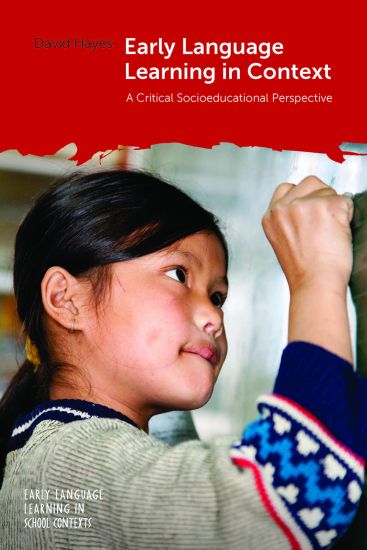
This book critically analyses early school foreign language teaching policy and practice, foregrounding the influence of the socioeducational and cultural context on how policies are implemented and assessing the factors which either promote or constrain their effectiveness. It focuses on four Asian contexts – Malaysia, South Korea, Sri Lanka and Thailand – while providing a discussion of policy and practice in Canada and Finland as a comparison. Concentrating on the state school sector, it criticises the worldwide trend for a focus on English as the principal or only foreign language taught in primary schools, founded on a rationale that widespread proficiency in English is important for future national success in a globalised economy. It maintains that the economic rationale is not only largely unfounded and irrelevant to the language learning experiences of young children but also that the focus on English exacerbates system inequalities rather than contributing to their reduction. The book argues for a broader perspective on language learning in primary schools, one that values multilingualism and knowledge of regional and indigenous languages alongside a more diverse range of foreign languages. This book will appeal to educational policymakers, researchers and students interested in early foreign language learning in state educational systems worldwide.
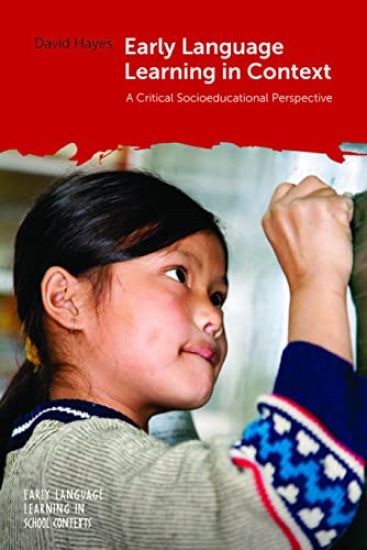
This book critically analyses early school foreign language teaching policy and practice, foregrounding the influence of the socioeducational and cultural context on how policies are implemented and assessing the factors which either promote or constrain their effectiveness. It focuses on four Asian contexts – Malaysia, South Korea, Sri Lanka and Thailand – while providing a discussion of policy and practice in Canada and Finland as a comparison. Concentrating on the state school sector, it criticises the worldwide trend for a focus on English as the principal or only foreign language taught in primary schools, founded on a rationale that widespread proficiency in English is important for future national success in a globalised economy. It maintains that the economic rationale is not only largely unfounded and irrelevant to the language learning experiences of young children but also that the focus on English exacerbates system inequalities rather than contributing to their reduction. The book argues for a broader perspective on language learning in primary schools, one that values multilingualism and knowledge of regional and indigenous languages alongside a more diverse range of foreign languages. This book will appeal to educational policymakers, researchers and students interested in early foreign language learning in state educational systems worldwide.

His grandson is Henry and the poor boy can't seem to keep track of his shoes when he comes to visit Nana and Papa. Join him on his trek to recover them.