Kirjojen hintavertailu. Mukana 11 455 625 kirjaa ja 12 kauppaa.

Kirjahaku

Etsi kirjoja tekijän nimen, kirjan nimen tai ISBN:n perusteella.

17 kirjaa tekijältä David Healy

US Expansionism

US Expansionism

David Healy

University of Wisconsin Press
2011
nidottu
Americans, in viewing the globe in 1897, saw a world of empires that were dynamic and fast-growing. Western powers such as Germany, France, and particularly Great Britain were making colonial imperialism fashionable, and the United States, eager to flex its muscles as an emerging world power, was swept along with the European tide. One year later, the United States had truly established itself as a contender in the global game, victorious in a war with Spain and committed to imperialism. In US Expansionism, David Healy examines this brief but important chapter in American history. Analyzing the various intellectual, cultural, and economic forces that engendered and shaped America s imperialist drive, Healy also illustrates the key personalities involved, including the soon-to-be president, Theodore Roosevelt. A final section of the book examines the anti-imperialist opposition inspired by the new policy, and the ensuing debates about the proper role of American power."

The Psychopharmacologists 3

The Psychopharmacologists 3

David Healy

Hodder Arnold
2000
sidottu
The Psychopharmacologists 3 completes a trio of interview-based books about the process of therapeutic innovation in clinical psychiatry. David Healy's method is to interview key individuals involved in the discovery and deployment of drugs that have proved useful to psychiatry, and to draw them together within a model of the mechanism and clinical discovery that he uses as an overall framework.These are historical accounts but highly relevant to the clinical psychiatrist of today, emphasising the importance of research, and of the marketing strategies of pharmaceutical companies in formulating disease entities as well as treatments for them.
The Psychopharmacologists

The Psychopharmacologists

David Healy

CRC Press
2019
nidottu
The Psychopharmacologists. An interview-based book about the process of therapeutic innovation in clinical psychiatry. David Healy's method is to interview key individuals involved in the discovery and deployment of drugs that have proved useful to psychiatry, and to draw them together within a model of the mechanism and clinical discovery that he uses as an overall framework. These are historical accounts but highly relevant to the clinical psychiatrist of today, emphasising the importance of research, and of the marketing strategies of pharmaceutical companies in formulating disease entities as well as treatments for them.
Pharmageddon

Pharmageddon

David Healy

University of California Press
2012
sidottu
This searing indictment, David Healy's most comprehensive and forceful argument against the pharmaceuticalization of medicine, tackles problems in health care that are leading to a growing number of deaths and disabilities. Healy, who was the first to draw attention to the now well-publicized suicide-inducing side effects of many anti-depressants, attributes our current state of affairs to three. Key factors: product rather than process patents on drugs, the classification of certain drugs as prescription-only, and industry-controlled drug trials. These developments have tied the survival of pharmaceutical companies to the development of blockbuster drugs, so that they must overhype benefits and deny real hazards. Healy further explains why these trends have basically ended the possibility of universal health care in the United States and elsewhere around the world. He concludes with suggestions for reform of our currently corrupted evidence-based medical system.
Pharmageddon

Pharmageddon

David Healy

University of California Press
2012
pokkari
This searing indictment, David Healy's most comprehensive and forceful argument against the pharmaceuticalization of medicine, tackles problems in health care that are leading to a growing number of deaths and disabilities. Healy, who was the first to draw attention to the now well-publicized suicide-inducing side effects of many anti-depressants, attributes our current state of affairs to three key factors: product rather than process patents on drugs, the classification of certain drugs as prescription-only, and industry-controlled drug trials. These developments have tied the survival of pharmaceutical companies to the development of blockbuster drugs, so that they must overhype benefits and deny real hazards. Healy further explains why these trends have basically ended the possibility of universal health care in the United States and elsewhere around the world. He concludes with suggestions for reform of our currently corrupted evidence-based medical system.
The Creation of Psychopharmacology

The Creation of Psychopharmacology

David Healy

Harvard University Press
2004
nidottu
David Healy follows his widely praised study, The Antidepressant Era, with an even more ambitious and dramatic story: the discovery and development of antipsychotic medication. Healy argues that the discovery of chlorpromazine (more generally known as Thorazine) is as significant in the history of medicine as the discovery of penicillin, reminding readers of the worldwide prevalence of insanity within living memory. But Healy tells not of the triumph of science but of a stream of fruitful accidents, of technological discovery leading neuroscientific research, of fierce professional competition and the backlash of the antipsychiatry movement of the 1960s. A chemical treatment was developed for one purpose, and as long as some theoretical rationale could be found, doctors administered it to the insane patients in their care to see if it would help. Sometimes it did, dramatically. Why these treatments worked, Healy argues provocatively, was, and often still is, a mystery. Nonetheless, such discoveries made and unmade academic reputations and inspired intense politicking for the Nobel Prize. Once pharmaceutical companies recognized the commercial potential of antipsychotic medications, financial as well as clinical pressures drove the development of ever more aggressively marketed medications. With verve and immense learning, Healy tells a story with surprising implications in a book that will become the leading scholarly work on its compelling subject.
The Antidepressant Era

The Antidepressant Era

David Healy

Harvard University Press
1999
nidottu
When we stop at the pharmacy to pick up our Prozac, are we simply buying a drug? Or are we buying into a disease as well? The first complete account of the phenomenon of antidepressants, this authoritative, highly readable book relates how depression, a disease only recently deemed too rare to merit study, has become one of the most common disorders of our day--and a booming business to boot.The Antidepressant Era chronicles the history of psychopharmacology from its inception with the discovery of chlorpromazine in 1951 to current battles over whether these powerful chemical compounds should replace psychotherapy. An expert in both the history and the science of neurochemistry and psychopharmacology, David Healy offers a close-up perspective on early research and clinical trials, the stumbling and successes that have made Prozac and Zoloft household names. The complex story he tells, against a backdrop of changing ideas about medicine, details the origins of the pharmaceutical industry, the pressures for regulation of drug companies, and the emergence of the idea of a depressive disease. This historical and neurochemical analysis leads to a clear look at what antidepressants reveal about both the workings of the brain and the sociology of drug marketing. Most arresting is Healy's insight into the marketing of antidepressants and the medicalization of the neuroses. Demonstrating that pharmaceutical companies are as much in the business of selling psychiatric diagnoses as of selling psychotropic drugs, he raises disturbing questions about how much of medical science is governed by financial interest.
Psychiatric Drugs Explained

Psychiatric Drugs Explained

David Healy

Elsevier Health Sciences
2022
nidottu
Psychiatric Drugs Explained offers a wealth of evidence-based information on psychiatric drugs in an easy-to-use format that can be quickly referenced in the clinical setting. Written by internationally recognised author Dr David Healy, the book provides a comprehensive review of drug effects, action and side-effects. There is an emphasis on the lived experience of patients, providing the reader with a sense of what the adverse effects of drugs might feel like to those who use them. A reader-friendly approach and clear layout, with information organised by disorder, make this popular title accessible and useful not only to nursing staff, but to all members of the multidisciplinary team. Quick reference guide suitable for all members of the multidisciplinary team Helpful boxes on user issues make potential complications easy to spot Distinctive, reader-friendly style helps the reader understand the benefits and impacts of psychotropic drugs New topics include management of dependence disorders, stimulants and drugs for children, cognitive impairment and sleep disorders The only book with detailed coverage of the sexual side effects of psychiatric drugs and the abusive prescribing of prescription drugs
Mania

Mania

David Healy

Johns Hopkins University Press
2008
sidottu
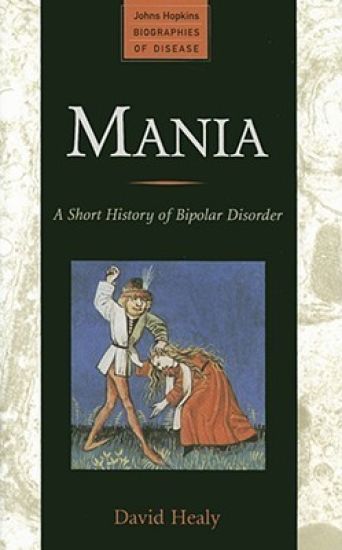
This provocative history of bipolar disorder illuminates how perceptions of illness, if not the illnesses themselves, are mutable over time. Beginning with the origins of the concept of mania-and the term maniac-in ancient Greek and Roman civilizations, renowned psychiatrist David Healy examines how concepts of mental afflictions evolved as scientific breakthroughs established connections between brain function and mental illness. Healy recounts the changing definitions of mania through the centuries, explores the effects of new terminology and growing public awareness of the disease on culture and society, and examines the rise of psychotropic treatments and pharmacological marketing over the past four decades. Along the way, Healy clears much of the confusion surrounding bipolar disorder even as he raises crucial questions about how, why, and by whom the disease is diagnosed. Drawing heavily on primary sources and supplemented with interviews and insight gained over Healy's long career, this lucid and engaging overview of mania sheds new light on one of humankind's most vexing ailments.
Let Them Eat Prozac

Let Them Eat Prozac

David Healy

New York University Press
2004
sidottu
Prozac. Paxil. Zoloft. Turn on your television and you are likely to see a commercial for one of the many selective serotonin reuptake inhibitors (SSRIs) on the market. We hear a lot about them, but do we really understand how these drugs work and what risks are involved for anyone who uses them?Let Them Eat Prozac explores the history of SSRIs-from their early development to their latest marketing campaigns-and the controversies that surround them. Initially, they seemed like wonder drugs for those with mild to moderate depression. When Prozac was released in the late 1980s, David Healy was among the psychiatrists who prescribed it. But he soon observed that some of these patients became agitated and even attempted suicide. Could the new wonder drug actually be making patients worse?Healy draws on his own research and expertise to demonstrate the potential hazards associated with these drugs. He intersperses case histories with insider accounts of the research leading to the development and approval of SSRIs as a treatment for depression. Let Them Eat Prozac clearly demonstrates that the problems go much deeper than a side-effect of a particular drug. The pharmaceutical industry would like us to believe that SSRIs can safely treat depression, anxiety, and a host of other mental problems. But, as Let Them Eat Prozac reveals, this "cure" may be worse than the disease.
Let Them Eat Prozac

Let Them Eat Prozac

David Healy

New York University Press
2006
pokkari
A psychiatrist provides an insider account on the controversial use of selective serotonin reuptake inhibitors (SSRIs) Prozac. Paxil. Zoloft. Turn on your television and you are likely to see a commercial for one of the many selective serotonin reuptake inhibitors (SSRIs) on the market. We hear a lot about them, but do we really understand how these drugs work and what risks are involved for anyone who uses them? Let Them Eat Prozac explores the history of SSRIs—from their early development to their latest marketing campaigns—and the controversies that surround them. Initially, they seemed like wonder drugs for those with mild to moderate depression. When Prozac was released in the late 1980s, David Healy was among the psychiatrists who prescribed it. But he soon observed that some of these patients became agitated and even attempted suicide. Could the new wonder drug actually be making patients worse? Healy draws on his own research and expertise to demonstrate the potential hazards associated with these drugs. He intersperses case histories with insider accounts of the research leading to the development and approval of SSRIs as a treatment for depression. Let Them Eat Prozac clearly demonstrates that the problems go much deeper than a side-effect of a particular drug. The pharmaceutical industry would like us to believe that SSRIs can safely treat depression, anxiety, and a host of other mental problems. But, as Let Them Eat Prozac reveals, this "cure" may be worse than the disease.
James G.Blaine and Latin America

James G.Blaine and Latin America

David Healy

University of Missouri Press
2002
sidottu
James G. Blaine was a leader of the Republican Party and a major shaper of national politics for more than a decade. This biography asserts that Latin America lay at the heart of Blaine's foreign policy and vision for America, and examines seven issues that defined his methods, goals and views.
Mania

Mania

David Healy

Johns Hopkins University Press
2011
pokkari
This provocative history of bipolar disorder illuminates how perceptions of illness, if not the illnesses themselves, are mutable over time. Beginning with the origins of the concept of mania-and the term maniac-in ancient Greek and Roman civilizations, renowned psychiatrist David Healy examines how concepts of mental afflictions evolved as scientific breakthroughs established connections between brain function and mental illness. Healy recounts the changing definitions of mania through the centuries, explores the effects of new terminology and growing public awareness of the disease on culture and society, and examines the rise of psychotropic treatments and pharmacological marketing over the past four decades. Along the way, Healy clears much of the confusion surrounding bipolar disorder even as he raises crucial questions about how, why, and by whom the disease is diagnosed. Drawing heavily on primary sources and supplemented with interviews and insight gained over Healy's long career, this lucid and engaging overview of mania sheds new light on one of humankind's most vexing ailments.
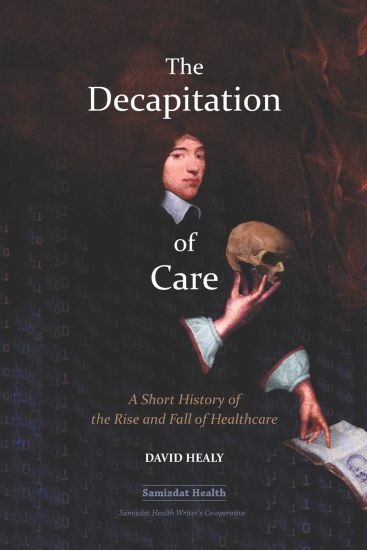
The Decapitation of Care: A Short History of the Rise and Fall of Healthcare
Before 1990, we brought our health problems to doctors and got "care". Today health services bring us problems with our bones, lipids, breathing, glucose, blood pressure, and even our moods. The managers of health services require staff to keep to guidelines, which means giving us medicines in order to reduce the risks we pose the services rather than to help us. In the 1980s few of us were on more than one drug. Now many of us are on five or more drugs every day of the year and those of us over sixty-five may be on ten or more. We have reached a crisis point-life expectancy is now falling. To restore Healthcare, we need to be able to restore validity to our judgements about the adverse effects of treatments
The Psychopharmacologists

The Psychopharmacologists

David Healy

Hodder Arnold
1998
sidottu
The Psychopharmacologists. An interview-based book about the process of therapeutic innovation in clinical psychiatry. David Healy's method is to interview key individuals involved in the discovery and deployment of drugs that have proved useful to psychiatry, and to draw them together within a model of the mechanism and clinical discovery that he uses as an overall framework. These are historical accounts but highly relevant to the clinical psychiatrist of today, emphasising the importance of research, and of the marketing strategies of pharmaceutical companies in formulating disease entities as well as treatments for them.
Shipwreck of the Singular

Shipwreck of the Singular

David Healy

Samizdat Health Writer's Co-Operative Inc,
2021
pokkari
Life Expectancy in the West has been falling since 2015. Linked to this, the climate of healthcare has become toxic. This crisis, as urgent as global climate change, has its roots in the same factors that drive climate change. Shipwreck of the Singular looks at our changing environment through a healthcare lens rather than an economic one. One advantage to this is that each of us is better placed to put right what is going wrong in the climate of healthcare than we are to tackle the global climate. In tackling what needs changing in health, we may solve our wider climate crisis. This book does not come with recommendations from people of distinction, or experts who have turned a blind eye to developments that have landed us in the mess we now have. The people best placed to grasp what is going wrong and force our 'betters' to justify the distinctions that have been bestowed on them are those whose lives have been touched by what is going wrong in healthcare. Shipwreck shows you how we got to the point of peril we are now at. It points to a Care that needs courage. A book won't get us there. It needs you to engage and engage others.