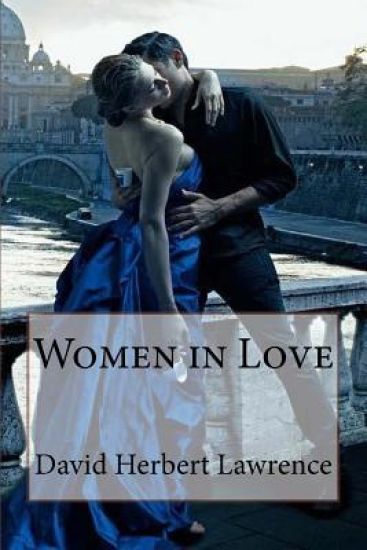
Women in Love is a novel by British author D. H. Lawrence published in 1920. It is a sequel to his earlier novel The Rainbow (1915), and follows the continuing loves and lives of the Brangwen sisters, Gudrun and Ursula. Gudrun Brangwen, an artist, pursues a destructive relationship with Gerald Crich, an industrialist. Lawrence contrasts this pair with the love that develops between Ursula and Rupert Birkin, an alienated intellectual who articulates many opinions associated with the author. The emotional relationships thus established are given further depth and tension by an unadmitted homoerotic attraction between Gerald and Rupert. The novel ranges over the whole of British society at the time of the First World War and eventually ends high up in the snows of the Swiss Alps. As with most of Lawrence's works, Women in Love caused controversy over its sexual subject matter. One early reviewer said of it, "I do not claim to be a literary critic, but I know dirt when I smell it, and here is dirt in heaps - festering, putrid heaps which smell to high Heaven."
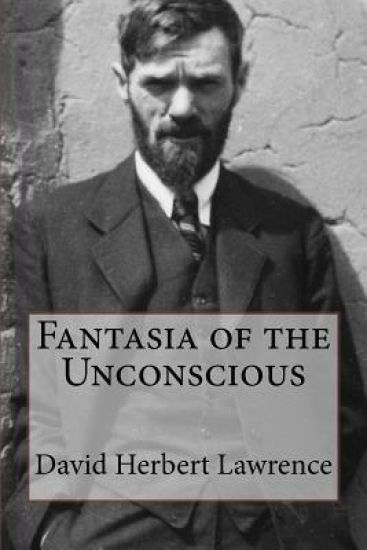
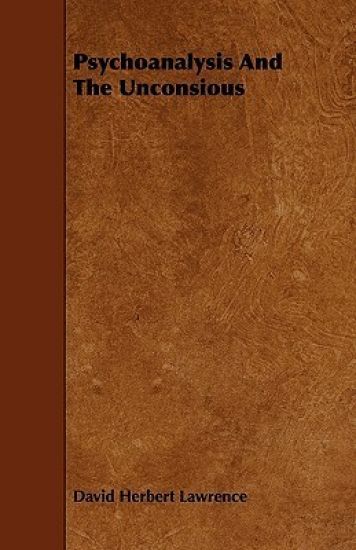
I am not a proper archaeologist nor an anthropologist nor an ethnologist. I am no "scholar" of any sort. But I am very grateful to scholars for their sound work. I have found hints, suggestions for what I say here in all kinds of scholarly books, from the Yoga and Plato and St. John the Evangel and the early Greek philosophers like Herakleitos down to Fraser and his "Golden Bough," and even Freud and Frobenius. Even then I only remember hints--and I proceed by intuition. This leaves you quite free to dismiss the whole wordy mass of revolting nonsense, without a qualm.
The two large fields lay on a hillside facing south. Being newly cleared of hay, they were golden green, and they shone almost blindingly in the sunlight. Across the hill, half-way up, ran a high hedge, that flung its black shadow finely across the molten glow of the sward. The stack was being built just above the hedge. It was of great size, massive, but so silvery and delicately bright in tone that it seemed not to have weight. It rose dishevelled and radiant among the steady, golden-green glare of the field. A little farther back was another, finished stack.
"H n var sv finn kjaftur.""H n var a ekki. Og h n var falleg, er a ekki?"" g leit ekki ... Og seg u stelpunum num, sonur minn, a egar r hlaupa eftir r, eiga r ekki a koma og bi ja m ur na um ig - seg u eim a - frj ar t skur sem hittir danskennslu "Hj naband Gertrude og Walter Morel er or i v gv llur. Hrakin af menntu um og stundum ofbeldisfullum eiginmanni s num, vi kv m Gertrude helgar l f sitt b rnum s num, s rstaklega sonum s num, William og Paul - sta r inn a eir muni ekki fylgja f ur s num til a vinna ni ur kolan murnar. En t k eru hj kv mileg egar P ll reynir a komast undan k fandi t kum m ur sinnar me samb ndum vi konur s num aldri. Sons and Lovers, sem sta sett er heimalandi Nottinghamshire Lawrence, er mj g sj lfs vis guleg og sannf randi l sing bernsku, unglings rum og t kum kynsl a.
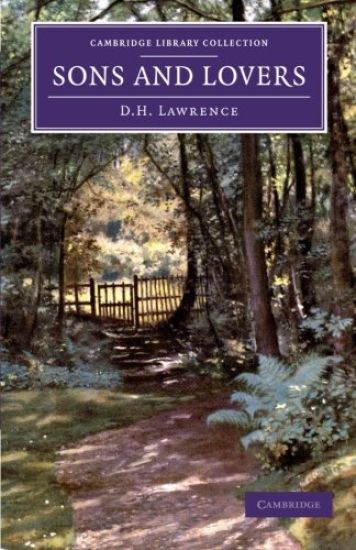
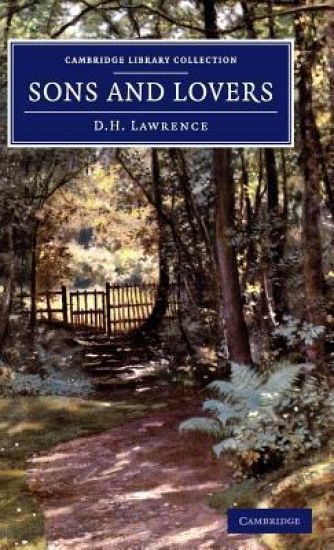
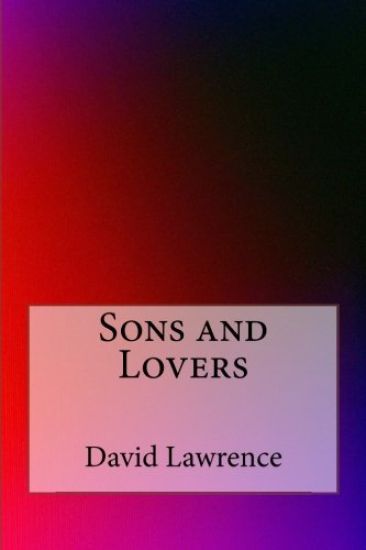
Born within walking distance of ten Nottinghamshire pits, David Herbert Lawrence (1885–1930) was painfully aware that his frail physique and quiet character were ill suited to the mining industry upon which his community depended. The difficulties of his youth are manifest in Sons and Lovers, his first major novel and an insider's portrayal of the culture of the collieries. Writing to a friend, Lawrence explained the seed of his plot: 'a woman of character and refinement goes into the lower class, and has no satisfaction in her own life'. Stemming from this are the intricate difficulties in the relationships of Paul Morel, the second son of this unhappy mother, torn between her overpowering influence and two vastly different women - the quiet, old-fashioned Miriam and the modern divorcee Clara. Although initially deemed indecent and rejected for publication, Sons and Lovers appeared for the first time in 1913.
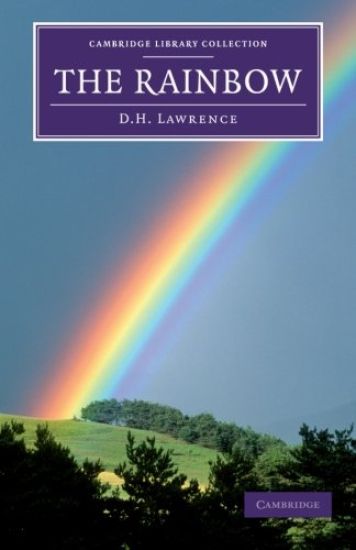
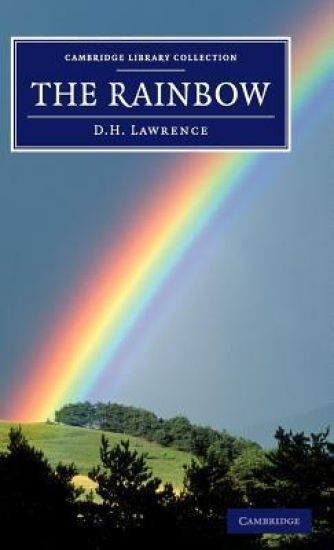
David Herbert Lawrence (1885–1930) expected The Rainbow to cause a stir. In a characteristically open exploration of sensual and explicit themes, the novel traces more than sixty years of pre-war life and three generations of the Brangwen family. Employing language infused with the rich imagery and repetition of biblical texts to treat all subjects - from the green fields and empty skies of the Brangwen farm through to Ursula's encounter with a female schoolteacher - Lawrence took an assuredly striking approach. However, he was unprepared for the vitriolic attacks of his reviewers. The novel was branded 'utter filth' and 'a mass of obscenity'; it was banned only a month after its publication in 1915, unsold copies being confiscated and destroyed. A second, abridged edition would not appear for another eleven years. Now a landmark in the early modernist canon, the original and unabridged text of 1915 is reissued here.
Born within walking distance of ten Nottinghamshire pits, David Herbert Lawrence (1885–1930) was painfully aware that his frail physique and quiet character were ill suited to the mining industry upon which his community depended. The difficulties of his youth are manifest in Sons and Lovers, his first major novel and an insider's portrayal of the culture of the collieries. Writing to a friend, Lawrence explained the seed of his plot: 'a woman of character and refinement goes into the lower class, and has no satisfaction in her own life'. Stemming from this are the intricate difficulties in the relationships of Paul Morel, the second son of this unhappy mother, torn between her overpowering influence and two vastly different women - the quiet, old-fashioned Miriam and the modern divorcee Clara. Although initially deemed indecent and rejected for publication, Sons and Lovers appeared for the first time in 1913.
David Herbert Lawrence (1885–1930) expected The Rainbow to cause a stir. In a characteristically open exploration of sensual and explicit themes, the novel traces more than sixty years of pre-war life and three generations of the Brangwen family. Employing language infused with the rich imagery and repetition of biblical texts to treat all subjects - from the green fields and empty skies of the Brangwen farm through to Ursula's encounter with a female schoolteacher - Lawrence took an assuredly striking approach. However, he was unprepared for the vitriolic attacks of his reviewers. The novel was branded 'utter filth' and 'a mass of obscenity'; it was banned only a month after its publication in 1915, unsold copies being confiscated and destroyed. A second, abridged edition would not appear for another eleven years. Now a landmark in the early modernist canon, the original and unabridged text of 1915 is reissued here.