Kirjojen hintavertailu. Mukana 11 244 527 kirjaa ja 12 kauppaa.

Kirjahaku

Etsi kirjoja tekijän nimen, kirjan nimen tai ISBN:n perusteella.

31 kirjaa tekijältä David Hopkins

Dada and Surrealism

Dada and Surrealism

David Hopkins

Oxford University Press
2004
nidottu
An introduction to the many debates surrounding the Dadaist and Surrealist movements, such as the Marquis de Sade's position as a Surrealist deity, attitudes towards the city, the impact of Freud, and attitudes towards women.
Marcel Duchamp and Max Ernst

Marcel Duchamp and Max Ernst

David Hopkins

Clarendon Press
1998
sidottu
David Hopkins analyses the extensive network of shared concerns and images in the work of Marcel Duchamp and Max Ernst, the greatest names associated with Dada and Surrealist art. This book covers a broad period from c.1912 to the mid-1940s, during which the emergence of Dada and Surrealism in Europe and the United States challenged earlier movements such as Cubism and Expressionism, creating scope for the expression of the unconscious fears and desires of artists acutely sensitive to the troubled nature of their times. Examining Duchamp's and Ernst's subversion and manipulation of religious and hermetic beliefs such as Catholicism, Rosicrucianism and Masonry, David Hopkins demonstrates the ways in which these esoteric concerns intersect with themes of peculiarly contemporary relevance, including the social construction of gender and notions of ordering and taxonomy. This detailed comparison of components of Duchamp's and Ernst's work reveals fascinating structural patterns, enabling the reader to discover an entirely new way of understanding the mechanisms underlying Dada and Surrealist iconography.
Conversing with Antiquity

Conversing with Antiquity

David Hopkins

Oxford University Press
2014
nidottu
Conversing with Antiquity collects, in a substantially revised and updated form, studies of the reception of the classics by English poets of the seventeenth and eighteenth centuries by one of the leading scholars in the field. A new Introduction locates the book's investigations within the context of current debates between aestheticians and cultural historians about the reception of classical culture. Where some recent studies have regarded English poets' dealings with the classics as acts of 'appropriation', or even 'colonialization', David Hopkins emphasizes the element of dialogic give-and-take in the relationship between these poets and their classical peers. He argues that, rather than simply 'updating' or 'assimilating' the classics to their own cultural norms, poets such as Abraham Cowley, Lucy Hutchinson, Thomas Creech, John Milton, John Dryden, and Alexander Pope engaged in trans-historical conversation with Greek and Roman poets, in which self-discovery and self-transcendence were as important as any simple 'accommodation' of ancient texts to modern tastes.
After Modern Art

After Modern Art

David Hopkins

Oxford University Press
2018
nidottu
Contemporary art can be baffling and beautiful, provocative and disturbing. This pioneering book presents a new look at the controversial period between 1945 and 2015, when art and its traditional forms were called into question. It focuses on the relationship between American and European art, and challenges previously held views about the origins of some of the most innovative ideas in art of this time. Major artists such as Jackson Pollock, Robert Rauschenberg, Andy Warhol, Joseph Beuys, Gerhard Richter, Louise Bourgeois, Cindy Sherman, Jeff Koons, and Shiran Neshat are all discussed, as is the art world of the last fifty years. Important trends are also covered including Abstract Expressionism, Pop Art, Minimalism, Conceptualism, Postmodernism, and Performance Art. This revised and updated second edition includes a new chapter exploring art since 2000 and how globalization has caused shifts in the art world, an updated Bibliography, and 16 new, colour illustrations.
Conversing with Antiquity

Conversing with Antiquity

David Hopkins

Oxford University Press
2009
sidottu
Conversing with Antiquity collects, in a substantially revised and updated form, studies, by one of the leading scholars in the field, of the reception of the classics by English poets of the seventeenth and eighteenth centuries. A new Introduction locates the book's investigations within the context of current debates between aestheticians and cultural historians about the reception of classical culture. Where some recent studies have regarded English poets' dealings with the classics as acts of 'appropriation', or even 'colonialization', David Hopkins emphasizes the element of dialogic give-and-take in the relationship between these poets and their classical peers. He argues that, rather than simply 'updating' or 'assimilating' the classics to their own cultural norms, poets such as Abraham Cowley, Lucy Hutchinson, Thomas Creech, John Milton, John Dryden, and Alexander Pope engaged in trans-historical conversation with Greek and Roman poets, in which self-discovery and self-transcendence were as important as any simple 'accommodation' of ancient texts to modern tastes.
Dada's Boys

Dada's Boys

David Hopkins

Yale University Press
2008
sidottu
In this provocative and stimulating book, David Hopkins addresses the homosocial structures in Dada and Surrealist art with an eye to their relevance to current artistic and theoretical debate. Bestriding the book is the pivotal figure of the artist Marcel Duchamp, who was at the center of various groups of artistic and literary figures—predominantly male—in Europe and America. And at the heart of the investigation are Duchamp’s relationships with these men, the various interactions of those within the groups, and the impact of this type of male camaraderie on the artworks they produced. Hopkins looks at specific moments in the careers of Duchamp and some of his associates—Francis Picabia, Man Ray, Max Ernst and André Breton—and discusses in detail the reception of Duchamp’s ideas in the post-war period. He goes on to trace the influence of the homosocial nature of Surrealism and Dada on the art world from the 1950s to the work of contemporary male and female artists.
Dark Toys

Dark Toys

David Hopkins

Yale University Press
2021
sidottu
A wide-ranging look at surrealist and postsurrealist engagements with the culture and imagery of childhood We all have memories of the object-world of childhood. For many of us, playthings and images from those days continue to resonate. Rereading a swathe of modern and contemporary artistic production through the lens of its engagement with childhood, this book blends in-depth art historical analysis with sustained theoretical exploration of topics such as surrealist temporality, toys, play, nostalgia, memory, and twentieth-century constructions of the child. The result is an entirely new approach to the surrealist tradition via its engagement with “childish things.” Providing what the author describes as a “long history of surrealism,” this book plots a trajectory from surrealism itself to the art of the 1980s and 1990s, through to the present day. It addresses a range of figures from Marcel Duchamp, Giorgio de Chirico, Max Ernst, Hans Bellmer, Joseph Cornell, and Helen Levitt, at one end of the spectrum, to Louise Bourgeois, Eduardo Paolozzi, Claes Oldenburg, Susan Hiller, Martin Sharp, Helen Chadwick, Mike Kelley, and Jeff Koons, at the other.
Every School a Great School

Every School a Great School

David Hopkins

Open University Press
2007
nidottu
'Every school a great school' is not just a slogan, but an aspiration for the next stage of education reform, in which each student has the opportunity to reach their full potential. The book argues that, for 'every school a great school' to become a reality, requires a move from individual school improvement efforts and short term objectives to a sustainable system-wide response that seeks to re-establish a balance between national prescription and schools leading reform. Achieving this goal requires strategies that not only continue to raise standards, but also build capacity within the system. David Hopkins identifies four key educational 'drivers' that, if pursued, have the potential to deliver 'every school a great school':Personalized learningProfessionalized teaching Networking and innovation Intelligent accountabilityThe author believes that it is the responsibility of system leaders to mould the four drivers to fit individual school contexts. It is this leadership that enables systemic reform to be generic in terms of overall strategy and specific in adapting to individual and particular situations.Every School a Great School is inspirational reading for head teachers, senior leaders and managers, researchers, lecturers and those with a passionate interest in improving education for all.
A Teacher's Guide to Classroom Research

A Teacher's Guide to Classroom Research

David Hopkins

Open University Press
2014
nidottu
A Teacher's Guide to Classroom Research 5E is a great 'one-stop' guide for trainee or qualified teachers looking to undertake classroom research.Through its friendly, supportive and authoritative approach, A Teacher's Guide to Classroom Research 5E tackles the big issues and questions of education research and offers a clear framework for doing classroom research. The updated fifth edition retains all the features that have made it so popular over the past thirty years - such as a rich range of insightful case studies demonstrating successful classroom research in practice - whilst offering expanded coverage of research methods and techniques.Key features include:How to get started on classroom researchThe principles and methods of classroom research for professional learning Interpreting and analyzing data Reporting classroom researchLinking to teaching and learningWhether you are a trainee teacher undertaking some form of classroom-based research as an essential element of your teacher training course, or a qualified teacher doing research to explore and improve your practice, this classic and seminal text guides and supports you throughout the entire process from initial research idea to final dissemination.
The Routledge Anthology of Poets on Poets
The Routledge Anthology of Poets on Poets collects together writings by all the major poetic figures from Chaucer to Yeats demonstrating their vivid responses to each other, ranging from elegiac eulogy to burlesque and satire. The anthology is arranged in two sections. Part One contains poets' writings on the nature, qualities and purpose of poetry Part Two is a chronological collection of poets' writings on their peers, with an individual entry for each poet. Each extract is presented in modernized spelling and punctuation, and is carefully annotated to provide full explanations of unfamiliar phrases and references. The index has been fully revised for this paperback edition.The Routledge Anthology of Poets on Poets will be stimulating and enjoyable for anyone interested in the history of English poetry, but will also be an invaluable collection of primary source material for students and their teachers.
School Improvement for Real

School Improvement for Real

David Hopkins

Routledge
2001
sidottu
As societies continue to set educational goals that are, on current performance, beyond the capacity of the system to deliver, strategies for enhancing student learning through school and classroom intervention have become increasingly important. Yet, as David Hopkins argues in his book, many of the educational initiatives recently developed under the umbrella of school improvement are inadequate or unhelpful. Simply blaming teachers and delegating financial responsibility, he maintains, has little positive impact on classroom practice. This is the bleak context within which school improvement has to operate today.School Improvement for Real offers a genuine alternative: a strategy for educational change that focuses on student achievement by modifying classroom practice and adapting the management arrangements within the school to support teaching and learning. It outlines an approach to school improvement that has a medium term, systemic orientation, providing both principles and suggestions for better practice. The author's experience in the field of school improvement ensures that the text is informed by a practical wisdom that is so often lacking from the more typical managerial texts on improvement and effectiveness.
School Improvement for Real

School Improvement for Real

David Hopkins

Routledge
2001
nidottu
As societies continue to set educational goals that are, on current performance, beyond the capacity of the system to deliver, strategies for enhancing student learning through school and classroom intervention have become increasingly important. Yet, as David Hopkins argues in his book, many of the educational initiatives recently developed under the umbrella of school improvement are inadequate or unhelpful. Simply blaming teachers and delegating financial responsibility, he maintains, has little positive impact on classroom practice. This is the bleak context within which school improvement has to operate today.School Improvement for Real offers a genuine alternative: a strategy for educational change that focuses on student achievement by modifying classroom practice and adapting the management arrangements within the school to support teaching and learning. It outlines an approach to school improvement that has a medium term, systemic orientation, providing both principles and suggestions for better practice. The author's experience in the field of school improvement ensures that the text is informed by a practical wisdom that is so often lacking from the more typical managerial texts on improvement and effectiveness.
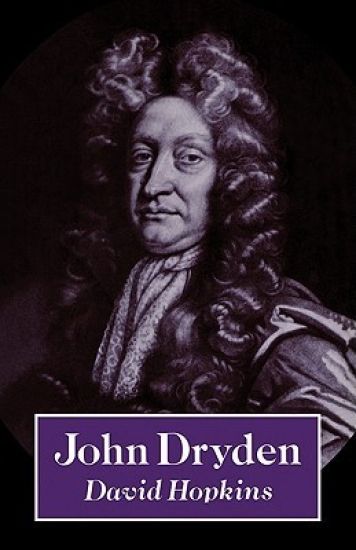
John Dryden

John Dryden

David Hopkins

Cambridge University Press
1986
sidottu
Dryden has sometimes been regarded as a writer narrowly of his period, a Restoration satirist whose work is largely concerned with the personalities, debates, and tastes of his own age. In this study David Hopkins shows him to be both a man of his time and a writer for all times - a great philosophical poet, the author of penetrating and exhilarating verse of general and permanent interest about love, the natural world, and the laws of human life. Dr Hopkins also analyses the personal, commercial, political, literary, and religious influences on his writing, and discusses in detail his major poetry, prose, and drama - paying special attention to the often neglected verse translations of his old age. With its emphasis on Dryden as a poet - as opposed simply to topical commentator or controversialist - the book will prove an ideal introduction for students of his work.
John Dryden

John Dryden

David Hopkins

Cambridge University Press
1986
pokkari
Dryden has sometimes been regarded as a writer narrowly of his period, a Restoration satirist whose work is largely concerned with the personalities, debates, and tastes of his own age. In this study David Hopkins shows him to be both a man of his time and a writer for all times - a great philosophical poet, the author of penetrating and exhilarating verse of general and permanent interest about love, the natural world, and the laws of human life. Dr Hopkins also analyses the personal, commercial, political, literary, and religious influences on his writing, and discusses in detail his major poetry, prose, and drama - paying special attention to the often neglected verse translations of his old age. With its emphasis on Dryden as a poet - as opposed simply to topical commentator or controversialist - the book will prove an ideal introduction for students of his work.
John Dryden

John Dryden

David Hopkins

Northcote House Publishers Ltd
2003
nidottu
This book is a concise introduction, drawing on the latest research, to the life and work of the most celebrated English poet of the late seventeenth century. It is unusual in stressing not only the poet’s responses to events, personalities, and ideas of his day, but also the way in which his work engages (in a far more speculative and pluralistic way than is often supposed) with human issues and dilemmas of permanent concern: the relation of human to animal and inanimate nature; the forces, internal and external which serve to ennoble, enrich and confound human endeavour; the capacities and limits of human reason; the relations between the sexes. Dryden emerges from this study as, simultaneously, ‘a man of his times’ and a writer with important things to say to us all.
John Dryden

John Dryden

David Hopkins

Northcote House Publishers Ltd
2004
sidottu
This book is a concise introduction, drawing on the latest research, to the life and work of the most celebrated English poet of the late seventeenth century. It is unusual in stressing not only the poet’s responses to events, personalities, and ideas of his day, but also the way in which his work engages (in a far more speculative and pluralistic way than is often supposed) with human issues and dilemmas of permanent concern: the relation of human to animal and inanimate nature; the forces, internal and external which serve to ennoble, enrich and confound human endeavour; the capacities and limits of human reason; the relations between the sexes. Dryden emerges from this study as, simultaneously, ‘a man of his times’ and a writer with important things to say to us all.
Reading Paradise Lost

Reading Paradise Lost

David Hopkins

John Wiley Sons Inc
2013
sidottu
Reading Paradise Lost “This lucid and entirely jargon-free guide to Paradise Lost will help any reader of the poem to find their feet, and to understand what makes it the best poem in the English language. Hopkins has one, and only one, resemblance to Milton’s Satan, which is that he can make intricate seem straight.”Colin Burrow, Oxford University“This is the best introduction to Paradise Lost there is, suitable for the intelligent sixth-former or undergraduate, or the enquiring general reader outside the academy – or indeed anyone who cares about poetry. It is also a joy to read, indeed a real page-turner – and of how many academic books can one say that?”Charles Martindale, Bristol UniversityConcise enough to be assimilated in a single session, this short volume maps the wonders of Milton’s poetic landscape. The book offers an exploration of some of the main narrative and poetic elements of the epic poem – qualities which have compelled and fascinated readers for more than three centuries. The author, a celebrated authority on English poetry of the period, engages with (and attempts to counter) some of the critical arguments that impede readers’ enjoyment of the poem. This volume emphasizes the aesthetic experience of reading Paradise Lost and brings out the pleasure to be derived from one of the great literary achievements of humanity.
Reading Paradise Lost

Reading Paradise Lost

David Hopkins

John Wiley Sons Inc
2014
nidottu
Reading Paradise Lost “This lucid and entirely jargon-free guide to Paradise Lost will help any reader of the poem to find their feet, and to understand what makes it the best poem in the English language. Hopkins has one, and only one, resemblance to Milton’s Satan, which is that he can make intricate seem straight.”Colin Burrow, Oxford University“This is the best introduction to Paradise Lost there is, suitable for the intelligent sixth-former or undergraduate, or the enquiring general reader outside the academy – or indeed anyone who cares about poetry. It is also a joy to read, indeed a real page-turner – and of how many academic books can one say that?”Charles Martindale, Bristol UniversityConcise enough to be assimilated in a single session, this short volume maps the wonders of Milton’s poetic landscape. The book offers an exploration of some of the main narrative and poetic elements of the epic poem – qualities which have compelled and fascinated readers for more than three centuries. The author, a celebrated authority on English poetry of the period, engages with (and attempts to counter) some of the critical arguments that impede readers’ enjoyment of the poem. This volume emphasizes the aesthetic experience of reading Paradise Lost and brings out the pleasure to be derived from one of the great literary achievements of humanity.