Kirjojen hintavertailu. Mukana 12 390 323 kirjaa ja 12 kauppaa.

Kirjahaku

Etsi kirjoja tekijän nimen, kirjan nimen tai ISBN:n perusteella.

8 kirjaa tekijältä David Huddart, Tim A. Stott

Earth Environments

Earth Environments

David Huddart; Tim A. Stott

Wiley-Blackwell
2020
nidottu
Comprehensive coverage of the whole Earth system throughout its entire existence and beyond Complete with a new introduction by the authors, this updated edition helps provide an understanding of the past, present, and future processes that occur on and in our Earth—the fascinating, yet potentially lethal, set of atmospheric, surface, and internal processes that interact to produce our living environment. It introduces students to our planet’s four key interdependent systems: the atmosphere, lithosphere, hydrosphere and biosphere, focusing on their key components, the interactions between them, and environmental change. The book also uses geological case studies throughout, in addition to the modern processes. Topics covered in the Second Edition of Earth Environments: Past, Present and Future include: an Earth systems model; components systems and processes; atmospheric systems; oceanography; surface and internal geological systems; biogeography; and aspects of Earth's record. The book also discusses the impact of climate and environmental change in a final chapter that draws together Earth's systems and their evolution, and looks ahead to potential future changes in Earth’s environments. Updated to include all the major developments since 2008Features research boxes containing summaries based on recent key journal articlesIncludes a companion web site containing multiple choice revision quizzes for students, PowerPoint slides for lecturers, useful links, and morePresents further reading for each topic so that students can build their knowledge base to underpin their own undergraduate research project/dissertationOffers additional case studies in each chapter for enhanced reader understanding Earth Environments: Past, Present and Future is an excellent text for undergraduates in geosciences, environmental science, physical geography, natural hazards, and ecology.
Adventure Tourism

Adventure Tourism

David Huddart; Tim Stott

Springer Nature Switzerland AG
2019
nidottu
This textbook presents a comprehensive overview of the environmental impacts of various types of adventure tourism and how these can be best managed. This volume follows on from the authors previous textbook – ‘Outdoor Recreation: Environmental Impacts and Management’ and continues the aim of developing a deeper understanding of how tourist numbers impact the environment and to provide practical solutions to these problems. Combining their own first-hand experience and research with extensive literature review the authors' present several popular adventure tourism destinations from across the globe, including the Arctic, the Himalayas, Africa, Australia and Scotland as case studies. Chapters cover the particular challenges faced by each region: including impacts on animals and birds; the spread of invasive plant species and diseases; trail impacts on vegetation; impacts on geological, historical and archaeological sites and pollution and waste issues. A discussion and evaluation of the possible management actions for minimising these impacts and how outdoor recreation tourists can be regulated concludes each chapter. This practical and engaging textbook will be invaluable to students and scholars of adventure tourism and outdoor recreation as well as practitioners and managers working in the field.
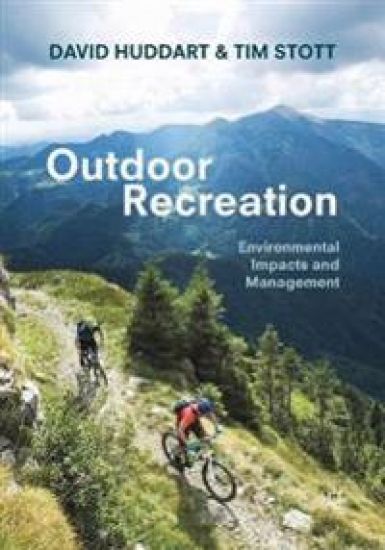
Outdoor Recreation

Outdoor Recreation

David Huddart; Tim Stott

Springer International Publishing AG
2019
nidottu
This textbook presents a comprehensive overview of the environmental impacts of various types of outdoor recreation, and how these can be best managed. As a field of study, recreational ecology is both multidisciplinary and interdisciplinary, and the authors seek to develop a deeper understanding of both the role and function of the factors that influence visitor numbers and their impact. An accessible and comprehensive textbook, it features numerous types of outdoor recreational activities including hill walking, rock climbing, mountain marathons, skiing, scuba diving and more.Drawn from several global case studies, the authors estimate the current and future numbers involved in outdoor recreation, and how best these numbers can be managed. Effective visitor impact management actions arise from collaboration between recreation ecologists, social scientists, experienced recreation managers, recreation stakeholders and the recreationalists themselves: as such, this book will be multi-disciplinary in scope. This practical and engaging textbook will be invaluable to students and scholars of outdoor recreation and adventure tourism as well as practitioners and managers working in the field.
Homi K. Bhabha

Homi K. Bhabha

David Huddart

Routledge
2005
sidottu
Homi K. Bhabha is one of the most highly renowned figures in contemporary post-colonial studies. This volume explores his writings and their influence on postcolonial theory, introducing in clear and accessible language the key concepts of his work, such as 'ambivalence', 'mimicry', 'hybridity' and 'translation'. David Huddart draws on a range of contexts, including art history, contemporary cinema and canonical texts in order to illustrate the practical application of Bhabha's theories. This introductory guidebook is ideal for all students working in the fields of literary, cultural and postcolonial theory.
Homi K. Bhabha

Homi K. Bhabha

David Huddart

Routledge
2005
nidottu
Homi K. Bhabha is one of the most highly renowned figures in contemporary post-colonial studies. This volume explores his writings and their influence on postcolonial theory, introducing in clear and accessible language the key concepts of his work, such as 'ambivalence', 'mimicry', 'hybridity' and 'translation'. David Huddart draws on a range of contexts, including art history, contemporary cinema and canonical texts in order to illustrate the practical application of Bhabha's theories. This introductory guidebook is ideal for all students working in the fields of literary, cultural and postcolonial theory.
Postcolonial Theory and Autobiography
Cultural theory has often been criticized for covert Eurocentric and universalist tendencies. Its concepts and ideas are implicitly applicable to everyone, ironing over any individuality or cultural difference. Postcolonial theory has challenged these limitations of cultural theory, and Postcolonial Theory and Autobiography addresses the central challenge posed by its autobiographical turn.Despite the fact that autobiography is frequently dismissed for its Western, masculine bias, David Huddart argues for its continued relevance as a central explanatory category in understanding postcolonial theory and its relation to subjectivity. Focusing on the influence of post-structuralist theory on postcolonial theory and vice versa, this study suggests that autobiography constitutes a general philosophical resistance to universal concepts and theories.Offering a fresh perspective on familiar critical figures like Edward W. Said and Gayatri Chakravorty Spivak, by putting them in the context of readings of the work of Jacques Derrida, Gilles Deleuze, and Alain Badiou, this book relates the theory of autobiography to expressions of new universalisms that, together with postcolonial theory, rethink and extend norms of experience, investigation, and knowledge.
Postcolonial Theory and Autobiography
Cultural theory has often been criticized for covert Eurocentric and universalist tendencies. Its concepts and ideas are implicitly applicable to everyone, ironing over any individuality or cultural difference. Postcolonial theory has challenged these limitations of cultural theory, and Postcolonial Theory and Autobiography addresses the central challenge posed by its autobiographical turn.Despite the fact that autobiography is frequently dismissed for its Western, masculine bias, David Huddart argues for its continued relevance as a central explanatory category in understanding postcolonial theory and its relation to subjectivity. Focusing on the influence of post-structuralist theory on postcolonial theory and vice versa, this study suggests that autobiography constitutes a general philosophical resistance to universal concepts and theories.Offering a fresh perspective on familiar critical figures like Edward W. Said and Gayatri Chakravorty Spivak, by putting them in the context of readings of the work of Jacques Derrida, Gilles Deleuze, and Alain Badiou, this book relates the theory of autobiography to expressions of new universalisms that, together with postcolonial theory, rethink and extend norms of experience, investigation, and knowledge.
Involuntary Associations

Involuntary Associations

David Huddart

Liverpool University Press
2014
sidottu
An Open Access edition of this book is available on the Liverpool University Press website and the OAPEN library.The consequences of English’s spread have become increasingly clear to its diverse speakers. Sometimes associated with a standardization leading to homogenization, often also with imperialism, English is increasingly understood to have no necessary connection with any country or group of countries. The willingness to accept that English has become Englishes might be less evident among so-called native speakers, but their authority is weaker than it seemed. The idea of World Englishes encourages us to re-imagine our understanding of the language. The difference between error and innovation can no longer be decided through assumptions about the language 'ownership'. In fact, the language is beginning to be a medium of the expression of identity for more and more people in very different contexts. This book puts examples from World Englishes into dialogue with postcolonial studies, in the belief that while postcolonial studies has obviously had much to say about English, it has either directly concerned or been influenced by English literary studies. The dialogue will correct misconceptions and misapprehensions in postcolonial studies, with World Englishes offering renewal for postcolonial studies. At the same time, the dialogue will also apply postcolonial studies' political and philosophical ideas to World Englishes, resulting in a postcolonial perspective on English today.