Kirjojen hintavertailu. Mukana 11 699 587 kirjaa ja 12 kauppaa.

Kirjahaku

Etsi kirjoja tekijän nimen, kirjan nimen tai ISBN:n perusteella.

11 kirjaa tekijältä David J. A. Clines

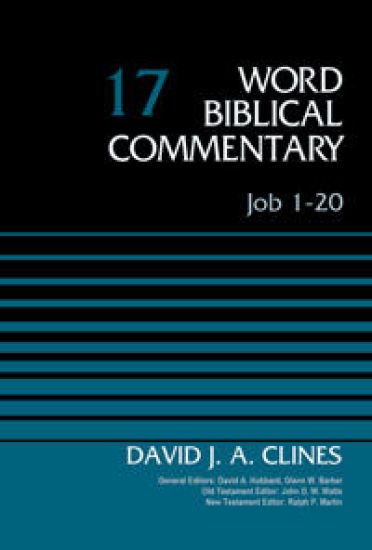
Job 1-20, Volume 17

Job 1-20, Volume 17

David J. A. Clines

Zondervan
2015
sidottu
The Word Biblical Commentary delivers the best in biblical scholarship, from the leading scholars of our day who share a commitment to Scripture as divine revelation. This series emphasizes a thorough analysis of textual, linguistic, structural, and theological evidence. The result is judicious and balanced insight into the meanings of the text in the framework of biblical theology. These widely acclaimed commentaries serve as exceptional resources for the professional theologian and instructor, the seminary or university student, the working minister, and everyone concerned with building theological understanding from a solid base of biblical scholarship.Overview of Commentary OrganizationIntroduction—covers issues pertaining to the whole book, including context, date, authorship, composition, interpretive issues, purpose, and theology.Each section of the commentary includes:Pericope Bibliography—a helpful resource containing the most important works that pertain to each particular pericope.Translation—the author’s own translation of the biblical text, reflecting the end result of exegesis and attending to Hebrew and Greek idiomatic usage of words, phrases, and tenses, yet in reasonably good English.Notes—the author’s notes to the translation that address any textual variants, grammatical forms, syntactical constructions, basic meanings of words, and problems of translation.Form/Structure/Setting—a discussion of redaction, genre, sources, and tradition as they concern the origin of the pericope, its canonical form, and its relation to the biblical and extra-biblical contexts in order to illuminate the structure and character of the pericope. Rhetorical or compositional features important to understanding the passage are also introduced here.Comment—verse-by-verse interpretation of the text and dialogue with other interpreters, engaging with current opinion and scholarly research.Explanation—brings together all the results of the discussion in previous sections to expose the meaning and intention of the text at several levels: (1) within the context of the book itself; (2) its meaning in the OT or NT; (3) its place in the entire canon; (4) theological relevance to broader OT or NT issues.General Bibliography—occurring at the end of each volume, this extensive bibliographycontains all sources used anywhere in the commentary.
Job 21-37, Volume 18A

Job 21-37, Volume 18A

David J. A. Clines

Zondervan
2015
sidottu
The Word Biblical Commentary delivers the best in biblical scholarship, from the leading scholars of our day who share a commitment to Scripture as divine revelation. This series emphasizes a thorough analysis of textual, linguistic, structural, and theological evidence. The result is judicious and balanced insight into the meanings of the text in the framework of biblical theology. These widely acclaimed commentaries serve as exceptional resources for the professional theologian and instructor, the seminary or university student, the working minister, and everyone concerned with building theological understanding from a solid base of biblical scholarship.Overview of Commentary OrganizationIntroduction—covers issues pertaining to the whole book, including context, date, authorship, composition, interpretive issues, purpose, and theology.Each section of the commentary includes:Pericope Bibliography—a helpful resource containing the most important works that pertain to each particular pericope.Translation—the author’s own translation of the biblical text, reflecting the end result of exegesis and attending to Hebrew and Greek idiomatic usage of words, phrases, and tenses, yet in reasonably good English.Notes—the author’s notes to the translation that address any textual variants, grammatical forms, syntactical constructions, basic meanings of words, and problems of translation.Form/Structure/Setting—a discussion of redaction, genre, sources, and tradition as they concern the origin of the pericope, its canonical form, and its relation to the biblical and extra-biblical contexts in order to illuminate the structure and character of the pericope. Rhetorical or compositional features important to understanding the passage are also introduced here.Comment—verse-by-verse interpretation of the text and dialogue with other interpreters, engaging with current opinion and scholarly research.Explanation—brings together all the results of the discussion in previous sections to expose the meaning and intention of the text at several levels: (1) within the context of the book itself; (2) its meaning in the OT or NT; (3) its place in the entire canon; (4) theological relevance to broader OT or NT issues.General Bibliography—occurring at the end of each volume, this extensive bibliographycontains all sources used anywhere in the commentary.
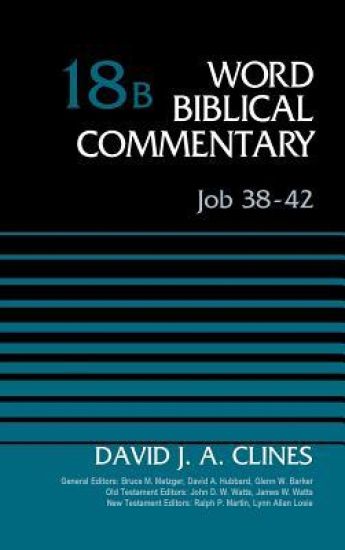
Job 38-42, Volume 18B

Job 38-42, Volume 18B

David J. A. Clines

Zondervan
2015
sidottu
The Word Biblical Commentary delivers the best in biblical scholarship, from the leading scholars of our day who share a commitment to Scripture as divine revelation. This series emphasizes a thorough analysis of textual, linguistic, structural, and theological evidence. The result is judicious and balanced insight into the meanings of the text in the framework of biblical theology. These widely acclaimed commentaries serve as exceptional resources for the professional theologian and instructor, the seminary or university student, the working minister, and everyone concerned with building theological understanding from a solid base of biblical scholarship.Overview of Commentary OrganizationIntroduction—covers issues pertaining to the whole book, including context, date, authorship, composition, interpretive issues, purpose, and theology.Each section of the commentary includes:Pericope Bibliography—a helpful resource containing the most important works that pertain to each particular pericope.Translation—the author’s own translation of the biblical text, reflecting the end result of exegesis and attending to Hebrew and Greek idiomatic usage of words, phrases, and tenses, yet in reasonably good English.Notes—the author’s notes to the translation that address any textual variants, grammatical forms, syntactical constructions, basic meanings of words, and problems of translation.Form/Structure/Setting—a discussion of redaction, genre, sources, and tradition as they concern the origin of the pericope, its canonical form, and its relation to the biblical and extra-biblical contexts in order to illuminate the structure and character of the pericope. Rhetorical or compositional features important to understanding the passage are also introduced here.Comment—verse-by-verse interpretation of the text and dialogue with other interpreters, engaging with current opinion and scholarly research.Explanation—brings together all the results of the discussion in previous sections to expose the meaning and intention of the text at several levels: (1) within the context of the book itself; (2) its meaning in the OT or NT; (3) its place in the entire canon; (4) theological relevance to broader OT or NT issues.General Bibliography—occurring at the end of each volume, this extensive bibliographycontains all sources used anywhere in the commentary.
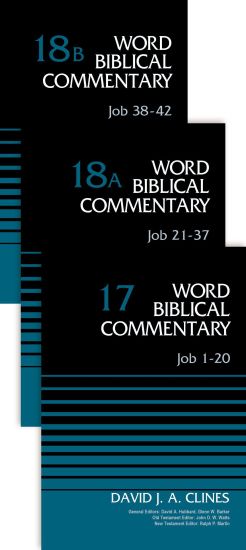
Job (3-Volume Set---17, 18A, and 18B)

Job (3-Volume Set---17, 18A, and 18B)

David J. A. Clines

Zondervan Academic
2017
sidottu
The Word Biblical Commentary delivers the best in biblical scholarship, from the leading scholars of our day who share a commitment to Scripture as divine revelation. This series emphasizes a thorough analysis of textual, linguistic, structural, and theological evidence. The result is judicious and balanced insight into the meanings of the text in the framework of biblical theology. These widely acclaimed commentaries serve as exceptional resources for the professional theologian and instructor, the seminary or university student, the working minister, and everyone concerned with building theological understanding from a solid base of biblical scholarship. Overview of Commentary Organization Introduction—covers issues pertaining to the whole book, including context, date, authorship, composition, interpretive issues, purpose, and theology. Each section of the commentary includes: Pericope Bibliography—a helpful resource containing the most important works that pertain to each particular pericope. Translation—the author’s own translation of the biblical text, reflecting the end result of exegesis and attending to Hebrew and Greek idiomatic usage of words, phrases, and tenses, yet in reasonably good English. Notes—the author’s notes to the translation that address any textual variants, grammatical forms, syntactical constructions, basic meanings of words, and problems of translation. Form/Structure/Setting—a discussion of redaction, genre, sources, and tradition as they concern the origin of the pericope, its canonical form, and its relation to the biblical and extra-biblical contexts in order to illuminate the structure and character of the pericope. Rhetorical or compositional features important to understanding the passage are also introduced here. Comment—verse-by-verse interpretation of the text and dialogue with other interpreters, engaging with current opinion and scholarly research. Explanation—brings together all the results of the discussion in previous sections to expose the meaning and intention of the text at several levels: (1) within the context of the book itself; (2) its meaning in the OT or NT; (3) its place in the entire canon; (4) theological relevance to broader OT or NT issues. General Bibliography—occurring at the end of each volume, this extensive bibliographycontains all sources used anywhere in the commentary.
What Does Eve Do To Help?

What Does Eve Do To Help?

David J. A. Clines

Sheffield Academic Press
1990
nidottu
Readerly questions are raised when readers are explicitly and programmatically brought into the process of interpreting texts. Traditionally, the reader and readerly interest and identities have been screened out when we have set about interpreting texts, and we have set our sights on attaining an interpretation that shouldbe as "objective " as possible. Things are rather different now. Not only is quest for objective interpretation seen as chiaera, but the rewards of unabashed "readerly" interpretations that foreground the process of reading and the context of the reader have now been shown to be very well worth seeking. That reader-response approach characterizes this collection of six essays, prefaces by an introduction to reader-response criticism. The essays for the most part read in their original form to meetings of the Society of Biblical Literature, are: "What Does Eve Do To Help? and other Irredeemably Androcentric Orienations in Genesis 1-3"; What Happens in Genesis"; "The Ancestor in Danger: But Not the Same Danger"; " The Old Testament Histories: A Reader's Guide"; "Deconstructing the Book of Job"; and "Nehemiah Memoir: The perils of Autobigraphy". ".....one of the livliest writers on the Old Testament. " What Does Eve Do To Help ?" does not disappoint and at times is hailariously funny" C S Rodd Expository Times
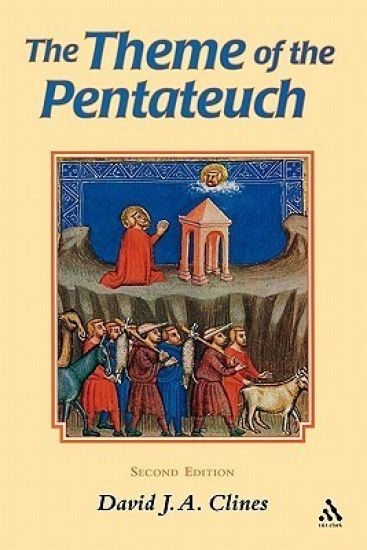
Theme of the Pentateuch

Theme of the Pentateuch

David J. A. Clines

Sheffield Academic Press
1997
nidottu
This popular textbook regards the Pentateuch as a literary whole, with a single theme that binds it together. The overarching theme is the partial fulfilment of the promises to the patriarchs. Though the method of the book is holistic, the origin and growth of the theme is also explored using the methods of traditional source analysis. An important chapter explores the theological function of the Pentateuch both in the community for which the Pentateuch was first composed and in our own time. For this second, enlarged edition, the author has written an Epilogue reassessing the theme of the Pentateuch from a more current postmodern perspective.
On the Way to the Postmodern

On the Way to the Postmodern

David J. A. Clines

Sheffield Academic Press
1998
sidottu
For these two volumes, the author has selected 50 articles and papers, ten of them not previously published, from his work as an Old Testament scholar over the last 30 years. Some of the papers, like 'The Evidence for an Autumnal New Year in Pre-exilic Israel Reconsidered', are far from postmodern in their outlook. But there is ample evidence here that the postmodern is indeed the direction in which his mind has been moving. The essays are organized in eight sections (Method, Literature, History, Theology, Language, Psalms, Job-and, for entertainment, Divertimenti). They include 'Reading Esther from Left to Right', 'Beyond Synchronic Diachronic', 'Story and Poem: The Old Testament as Literature and as Scripture', 'In Search of the Indian Job', and 'Philology and Power'-as well as 'The Postmodern Adventure in Biblical Studies'.
On the Way to the Postmodern

On the Way to the Postmodern

David J. A. Clines

Sheffield Academic Press
1998
sidottu
For these volumes, the author has selected 50 articles and papers, ten of them not previously published, from his work as an Old Testament scholar over the last 30 years. Some of the papers, like 'The Evidence for an Autumnal New Year in Pre-exilic Israel Reconsidered', are far from postmodern in their outlook. But there is ample evidence here that the postmodern is indeed the direction in which his mind has been moving. The essays are organized in eight sections (Method, Literature, History, Theology, Language, Psalms, Job-and, for entertainment, Divertimenti). They include 'Reading Esther from Left to Right', 'Beyond Synchronic Diachronic', 'Story and Poem: The Old Testament as Literature and as Scripture', 'In Search of the Indian Job', and 'Philology and Power'-as well as 'The Postmodern Adventure in Biblical Studies'.