Kirjojen hintavertailu. Mukana 12 016 292 kirjaa ja 12 kauppaa.

Kirjahaku

Etsi kirjoja tekijän nimen, kirjan nimen tai ISBN:n perusteella.

4 kirjaa tekijältä David J. Bercuson

Confrontation at Winnipeg

Confrontation at Winnipeg

David J. Bercuson

McGill-Queen's University Press
1990
nidottu
Why was Winnipeg the scene of the longest and most complete general strike in North American history? Bercuson answers this question by examining the development of union labour and the impact of depression and war in the two decades preceding the strike.
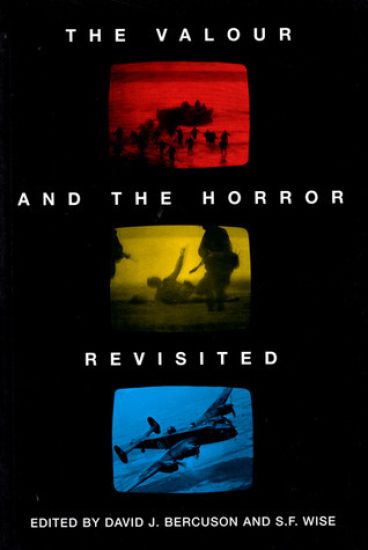
The Valour and the Horror Revisited

The Valour and the Horror Revisited

David J. Bercuson

McGill-Queen's University Press
1994
sidottu
In January 1992 the Canadian Broadcasting Corporation (CBC) broadcast The Valour and the Horror, a three-part television series on Canada's role in World War II. It sparked a major controversy among viewers, war veterans, and historians. Brian and Terence McKenna, the authors-producers of the series, were accused of distorting historical facts, maligning individuals such as commanders Arthur Harris and Guy Simonds, presenting a biased account of events, and overstepping the line between journalism and drama. The Valour and the Horror Revisited brings together source documents, original essays, and commentaries to provide an analysis of the specific accusations and of larger questions concerning responsible journalism. Included in the collection are reports by David Bercuson and S.F. Wise, who were asked by the CBC ombudsman to assess the series; the CBC ombudsman's report; the McKennas' response to the ombudsman's report; the ombudsman's commentary on the McKennas' response; and three new essays by historians John Ferris, William McAndrew, and Scot Robertson on the incidents covered in the series - Canadian involvement in the battles in Hong Kong and Normandy, and the bombing of Germany. The Valour and the Horror Revisited addresses such important issues as the dangers of "docudrama," the calibre of the Canadian media, the meaning of the Canadian experience in the war, and the nature of history.
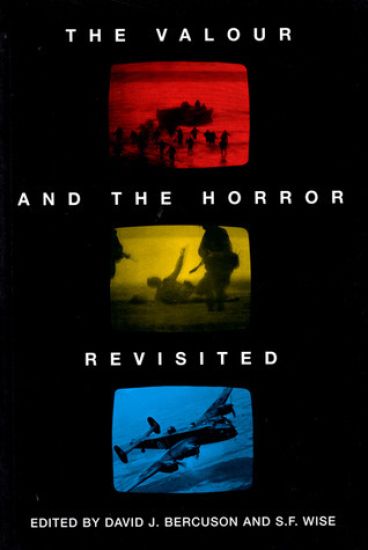
The Valour and the Horror Revisited

The Valour and the Horror Revisited

David J. Bercuson

McGill-Queen's University Press
1994
nidottu
In January 1992 the Canadian Broadcasting Corporation (CBC) broadcast The Valour and the Horror, a three-part television series on Canada's role in World War II. It sparked a major controversy among viewers, war veterans, and historians. Brian and Terence McKenna, the authors-producers of the series, were accused of distorting historical facts, maligning individuals such as commanders Arthur Harris and Guy Simonds, presenting a biased account of events, and overstepping the line between journalism and drama. The Valour and the Horror Revisited brings together source documents, original essays, and commentaries to provide an analysis of the specific accusations and of larger questions concerning responsible journalism. Included in the collection are reports by David Bercuson and S.F. Wise, who were asked by the CBC ombudsman to assess the series; the CBC ombudsman's report; the McKennas' response to the ombudsman's report; the ombudsman's commentary on the McKennas' response; and three new essays by historians John Ferris, William McAndrew, and Scot Robertson on the incidents covered in the series - Canadian involvement in the battles in Hong Kong and Normandy, and the bombing of Germany. The Valour and the Horror Revisited addresses such important issues as the dangers of "docudrama," the calibre of the Canadian media, the meaning of the Canadian experience in the war, and the nature of history.
Canada and the Birth of Israel

Canada and the Birth of Israel

David J. Bercuson

University of Toronto Press
1985
pokkari
Canadian Zionists of the 1930s were anxious to involve their government in the Palestine question. The pressure they brought to bear was fuelled by a new urgency when British policy in Palestine denied entry to Jewish refugees from the Nazi terror. Today there is a widely held impression that the Canadian government responded quickly and sympathetically to that pressure. Jews and Arabs alike, each for their own purposes, have created the image of a Canada friendly to Zionism, and of Canadian policy directed by such pro-Zionists as Lester Pearson. But as David Bercuson demonstrates, the truth is far more complex. In fact, Zionist efforts to involve Canada in the Palestine question met with considerable resistance from Ottawa, even when Canada was elected to membership on the United Nations Special Committee on Palestine in 1947. The partition of Palestine was eventually supported by Canada, but begrudgingly. Ottawa viewed partition as the ‘least lousy’ solution to a problem that was acutely sensitive both diplomatically and politically. Hardly the champions of Zionism that it has generally been considered, Canada is revealed in Bercuson’s study as having established a middle east policy, not on moral or ideological grounds, but on the basis of the politicians’ view of its own national interests.