Kirjojen hintavertailu. Mukana 12 083 983 kirjaa ja 12 kauppaa.

Kirjahaku

Etsi kirjoja tekijän nimen, kirjan nimen tai ISBN:n perusteella.

13 kirjaa tekijältä David J. Chalmers

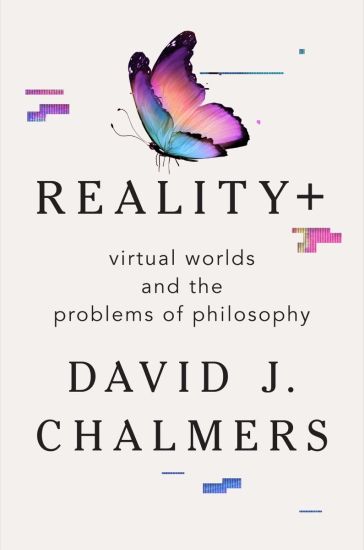
Reality+

Reality+

David J. Chalmers

PENGUIN BOOKS LTD
2023
pokkari
From one of our leading thinkers, a dazzling philosophical journey through virtual worldsIn the coming decades, the technology that enables virtual and augmented reality will improve beyond recognition. Within a century, world-renowned philosopher David J. Chalmers predicts, we will have virtual worlds that are impossible to distinguish from non-virtual worlds. But is virtual reality just escapism? In a highly original work of 'technophilosophy', Chalmers argues categorically, no: virtual reality is genuine reality. Virtual worlds are not second-class worlds. We can live a meaningful life in virtual reality - and increasingly, we will.What is reality, anyway? How can we lead a good life? Is there a god? How do we know there's an external world - and how do we know we're not living in a computer simulation? In Reality+, Chalmers conducts a grand tour of philosophy, using cutting-edge technology to provide invigorating new answers to age-old questions.Drawing on examples from pop culture, literature and film that help bring philosophical issues to life, Reality+ is a mind-bending journey through virtual worlds, illuminating the nature of reality and our place within it.
Philosophy of Mind

Philosophy of Mind

David J. Chalmers

Oxford University Press Inc
2021
nidottu
Philosophy of Mind: Classical and Contemporary Readings is a grand tour of writings on the perplexing questions about the nature of the mind. The most comprehensive and best-selling collection of its kind, the book includes selections that range from the classical contributions of Descartes to the leading edge of contemporary debates. Extensive sections cover foundational issues, the nature of consciousness, and the nature of mental content. Three of the selections are published for the first time, while many other articles have been revised especially for this volume. Each section opens with an introduction by the editor.
The Conscious Mind

The Conscious Mind

David J. Chalmers

Oxford University Press Inc
1998
nidottu
What is consciousness? How do physical processes in the brain give rise to the self-aware mind and to feelings as profoundly varied as love or hate, aesthetic pleasure or spiritual yearning? David J. Chalmers unveils a major new theory of consciousness, one that rejects the prevailing reductionist trend of science, while offering provocative insights into the relationship between mind and brain. Writing in a thought-provoking style, Chalmers proposes that conscious experience must be understood as an irreducible entity similar to such physical properties as time, mass, and space that exists at a fundamental level and cannot be understood as the sum of its parts. Engaging and penetrating, this book adds a fresh new perspective to the subject that is sure to spark debate about our understanding of the mind for years to come.
The Character of Consciousness

The Character of Consciousness

David J. Chalmers

Oxford University Press Inc
2010
sidottu
What is consciousness? How does the subjective character of consciousness fit into an objective world? How can there be a science of consciousness? In this sequel to his groundbreaking and controversial The Conscious Mind, David Chalmers develops a unified framework that addresses these questions and many others. Starting with a statement of the "hard problem" of consciousness, Chalmers builds a positive framework for the science of consciousness and a nonreductive vision of the metaphysics of consciousness. He replies to many critics of The Conscious Mind, and then develops a positive theory in new directions. The book includes original accounts of how we think and know about consciousness, of the unity of consciousness, and of how consciousness relates to the external world. Along the way, Chalmers develops many provocative ideas: the "consciousness meter", the Garden of Eden as a model of perceptual experience, and The Matrix as a guide to the deepest philosophical problems about consciousness and the external world. This book will be required reading for anyone interested in the problems of mind, brain, consciousness, and reality.
The Character of Consciousness

The Character of Consciousness

David J. Chalmers

Oxford University Press Inc
2010
nidottu
What is consciousness? How does the subjective character of consciousness fit into an objective world? How can there be a science of consciousness? In this sequel to his groundbreaking and controversial The Conscious Mind, David Chalmers develops a unified framework that addresses these questions and many others. Starting with a statement of the "hard problem" of consciousness, Chalmers builds a positive framework for the science of consciousness and a nonreductive vision of the metaphysics of consciousness. He replies to many critics of The Conscious Mind, and then develops a positive theory in new directions. The book includes original accounts of how we think and know about consciousness, of the unity of consciousness, and of how consciousness relates to the external world. Along the way, Chalmers develops many provocative ideas: the "consciousness meter", the Garden of Eden as a model of perceptual experience, and The Matrix as a guide to the deepest philosophical problems about consciousness and the external world. This book will be required reading for anyone interested in the problems of mind, brain, consciousness, and reality.
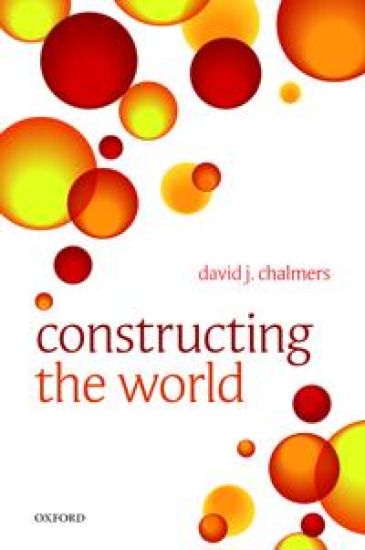
Constructing the World

Constructing the World

David J. Chalmers

Oxford University Press
2012
sidottu
David Chalmers develops a picture of reality on which all truths can be derived from a limited class of basic truths. The picture is inspired by Rudolf Carnap's construction of the world in Der Logische Aufbau Der Welt. Carnap's Aufbau is often seen as a noble failure, but Chalmers argues that a version of the project can succeed. With the right basic elements and the right derivation relation, we can indeed construct the world. The focal point of Chalmers' project is scrutability: the thesis that ideal reasoning from a limited class of basic truths yields all truths about the world. Chalmers first argues for the scrutability thesis and then considers how small the base can be. The result is a framework in "metaphysical epistemology": epistemology in service of a global picture of the world. The scrutability framework has ramifications throughout philosophy. Using it, Chalmers defends a broadly Fregean approach to meaning, argues for an internalist approach to the contents of thought, and rebuts W.V. Quine's arguments against the analytic and the a priori. He also uses scrutability to analyze the unity of science, to defend a sort of conceptual metaphysics, and to mount a structuralist response to skepticism. Based on Chalmers's 2010 John Locke lectures, Constructing the World opens up debate on central philosophical issues concerning knowledge, language, mind, and reality.
Constructing the World

Constructing the World

David J. Chalmers

Oxford University Press
2014
nidottu
David J. Chalmers constructs a highly ambitious and original picture of the world, from a few basic elements. He develops and extends Rudolf Carnap's attempt to do the same in Der Logische Aufbau Der Welt (1928). Carnap gave a blueprint for describing the entire world using a limited vocabulary, so that all truths about the world could be derived from that description--but his Aufbau is often seen as a noble failure. In Constructing the World, Chalmers argues that something like the Aufbau project can succeed. With the right vocabulary and the right derivation relation, we can indeed construct the world. The focal point of Chalmers's project is scrutability: roughly, the thesis that ideal reasoning from a limited class of basic truths yields all truths about the world. Chalmers first argues for the scrutability thesis and then considers how small the base can be. All this can be seen as a project in metaphysical epistemology: epistemology in service of a global picture of the world and of our conception thereof. The scrutability framework has ramifications throughout philosophy. Using it, Chalmers defends a broadly Fregean approach to meaning, argues for an internalist approach to the contents of thought, and rebuts W. V. Quine's arguments against the analytic and the a priori. He also uses scrutability to analyze the unity of science, to defend a conceptual approach to metaphysics, and to mount a structuralist response to skepticism. Based on Chalmers's 2010 John Locke lectures, Constructing the World opens up debate on central areas of philosophy including philosophy of language, consciousness, knowledge, and reality. This major work by a leading philosopher will appeal to philosophers in all areas.
Reality+: Virtual Worlds and the Problems of Philosophy

Reality+: Virtual Worlds and the Problems of Philosophy

David J. Chalmers

W. W. Norton Company
2022
sidottu
Virtual reality is genuine reality; that's the central thesis of Reality+. In a highly original work of "technophilosophy," David J. Chalmers gives a compelling analysis of our technological future. He argues that virtual worlds are not second-class worlds, and that we can live a meaningful life in virtual reality. We may even be in a virtual world already.Along the way, Chalmers conducts a grand tour of big ideas in philosophy and science. He uses virtual reality technology to offer a new perspective on long-established philosophical questions. How do we know that there's an external world? Is there a god? What is the nature of reality? What's the relation between mind and body? How can we lead a good life? All of these questions are illuminated or transformed by Chalmers' mind-bending analysis.Studded with illustrations that bring philosophical issues to life, Reality+ is a major statement that will shape discussion of philosophy, science, and technology for years to come.
Reality+: Virtual Worlds and the Problems of Philosophy

Reality+: Virtual Worlds and the Problems of Philosophy

David J. Chalmers

W. W. Norton Company
2023
nidottu
Virtual reality is genuine reality; that's the central thesis of Reality+. In a highly original work of "technophilosophy," David J. Chalmers gives a compelling analysis of our technological future. He argues that virtual worlds are not second-class worlds, and that we can live a meaningful life in virtual reality. We may even be in a virtual world already.Along the way, Chalmers conducts a grand tour of big ideas in philosophy and science. He uses virtual reality technology to offer a new perspective on long-established philosophical questions. How do we know that there's an external world? Is there a god? What is the nature of reality? What's the relation between mind and body? How can we lead a good life? All of these questions are illuminated or transformed by Chalmers' mind-bending analysis.Studded with illustrations that bring philosophical issues to life, Reality+ is a major statement that will shape discussion of philosophy, science, and technology for years to come.
Virtuella världar : filosofiska problem

Virtuella världar : filosofiska problem

David J. Chalmers

Fri Tanke
2023
sidottu
Vi kan ännu inte ta på en virtuell yta, smaka på en virtuell dryck eller känna en virtuell doft. Men enligt filosofen David Chalmers utvecklas tekniken så fort att det inom ett århundrade knappt kommer att vara möjligt att skilja mellan det virtuella och det verkliga.Vad är egentligen verkligt? Kan det finnas medvetande i en digital värld? Kan vi undgå att luras av deepfakes? Leder förstärkt verklighet till alternativa fakta? Är det möjligt att leva ett gott liv i en virtuell värld?I Virtuella världar formulerar David Chalmers de avgörande filosofiska frågorna för vår omvälvande tid – då världen som vi känner den är på väg att försvinna, och nya världar är på väg att ta form.