Kirjojen hintavertailu. Mukana 11 627 064 kirjaa ja 12 kauppaa.

Kirjahaku

Etsi kirjoja tekijän nimen, kirjan nimen tai ISBN:n perusteella.

3 kirjaa tekijältä David J. Downs

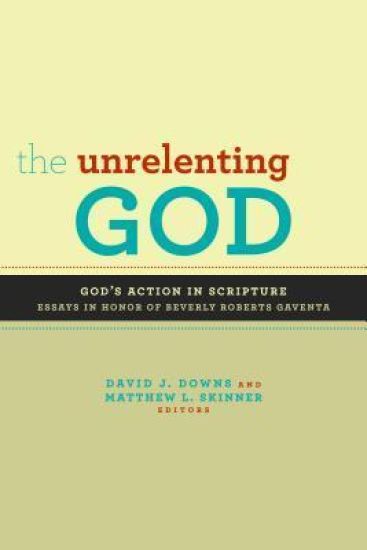
Unrelenting God

Unrelenting God

David J. Downs

William B Eerdmans Publishing Co
2013
nidottu
Is God still, as it has been argued, the -neglected factor- in New Testament theology? How does the Bible speak imaginatively and concretely about who God is and what God's activity on behalf of the world looks like? In The Unrelenting God sixteen accomplished scholars in the fields of biblical and theological studies explore ways in which Scripture speaks about God's character and God's activity in the world. As honoree Beverly Roberts Gaventa has done throughout her career, the contributors address important and nuanced theological themes such as God's dramatic invasion of the world in the gospel of Jesus Christ, God's ultimate triumph over the powers of sin and death, and humanity's ongoing participation with God in Christ. Scholars, students, and church leaders will appreciate this volume's careful theological interpretation of whole scriptural books and individual passages -- and its ability to model instructively how that interpretation is best done. Contributors Shane BergMartinus C. de BoerAlexandra R. BrownWilliam Sanger CampbellDavid J. DownsSusan Grove EastmanJoel B. GreenDouglas HarinkRichard B. HaysL. Ann JervisJacqueline E. LapsleyJ. Louis MartynJohn B. F. MillerMatthew L. SkinnerKatherine SondereggerFrancis WatsonMichael Welker
Alms

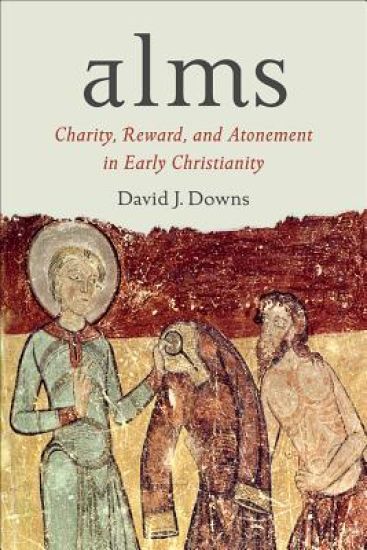
Alms

David J. Downs

Baylor University Press
2016
sidottu
Christianity has often understood the death of Jesus on the cross as the sole means for forgiveness of sin. Despite this tradition, David Downs traces the early and sustained presence of yet another means by which Christians imagined atonement for sin: merciful care for the poor. In Alms: Charity, Reward, and Atonement in Early Christianity, Downs begins by considering the economic context of almsgiving in the Greco-Roman world, a context in which the overwhelming reality of poverty cultivated the formation of relationships of reciprocity and solidarity. Downs then provides detailed examinations of almsgiving and the rewards associated with it in the Old Testament, Second Temple Judaism, and the New Testament. He then attends to early Christian texts and authors in which a theology of atoning almsgiving is developed - 2 Clement, the Didache, the Epistle of Barnabas, Polycarp, Clement of Alexandria, Origen, and Cyprian. In this historical and theological reconstruction, Downs outlines the emergence of a model for the atonement of sin in Christian literature of the first three centuries of the Common Era, namely, atoning almsgiving, or the notion that providing material assistance to the needy cleanses or covers sin. Downs shows that early Christian advocacy of almsgiving's atoning power is located in an ancient economic context in which fiscal and social relationships were deeply interconnected. Within this context, the concept of atoning almsgiving developed in large part as a result of nascent Christian engagement with scriptural traditions that present care for the poor as having the potential to secure future reward, including heavenly merit and even the cleansing of sin, for those who practice mercy. Downs thus reveals how sin and its solution were socially and ecclesiologically embodied, a vision that frequently contrasted with disregard for the social body, and the bodies of the poor, in Docetic and Gnostic Christianity. Alms, in the end, illuminates the challenge of reading Scripture with the early church, for numerous patristic witnesses held together the conviction that salvation and atonement for sin come through the life, death, and resurrection of Jesus and the affirmation that the practice of mercifully caring for the needy cleanses or covers sin. Perhaps the ancient Christian integration of charity, reward, and atonement has the potential to reshape contemporary Christian traditions in which those spheres are separated.
The Offering of the Gentiles

The Offering of the Gentiles

David J. Downs

Mohr Siebeck
2008
nidottu
Money mattered to the apostle Paul. One economic endeavor of signal importance for Paul was the monetary fund that he organized among the largely Gentile congregations of his mission for the Jewish-Christian community in Jerusalem.David J. Downs investigates this offering from a variety of angles. He begins with an attempt to piece together a relative chronological account, based primarily on information from Paul's epistles, of the apostle's fundraising efforts on behalf of the Jerusalem church. After reconstructing this complex story, Downs examines the socio-cultural context of the collection, focusing on analogous forms of giving among ancient pagan and Jewish voluntary associations, including practices of benefaction, common funds, care for the poor, and translocal economic links among these associations.With this chronological and socio-cultural context in mind, the author then explores Paul's use of several cultic metaphors to frame the contribution as a religious offering consecrated to God. Drawing on recent work in the field of metaphor theory, Downs contends that Paul metaphorically frames his readers' responsive participation in the collection as an act of cultic worship, thus underscoring the point that the fulfillment of mutual obligations within the community of believers results in praise, not human benefactors, but to God, the one from whom all benefactions come. This rhetorical strategy suggests that even the very human action of raising money for those in material need originates in "the grace ( charis) of God" and will eventuate in "thanksgiving ( charis) to God" (2 Cor 9:14-15).