Kirjojen hintavertailu. Mukana 11 244 527 kirjaa ja 12 kauppaa.

Kirjahaku

Etsi kirjoja tekijän nimen, kirjan nimen tai ISBN:n perusteella.

53 kirjaa tekijältä David Kennedy

A Social and Political History of Everton and Liverpool Football Clubs
This book focuses on the advent of professional football in Liverpool and, in particular, the formation of Everton and Liverpool football clubs and their development prior to World War I. This book details the factors that led to the early dominance within Liverpool of Everton FC, and addresses the complexity of the dispute within that club leading to the later formation of Liverpool FC by expelled club members. This book also highlights, via a comparative study, the different patterns of ownership and control that emerged within the two clubs between their incorporation as limited liability companies in 1892. This book was originally published as a special issue of Soccer & Society.
Elegy

Elegy

David Kennedy

Routledge
2007
sidottu
Grief and mourning are generally considered to be private, yet universal instincts. But in a media age of televised funerals and visible bereavement, elegies are increasingly significant and open to public scrutiny. Providing an overview of the history of the term and the different ways in which it is used, David Kennedy:outlines the origins of elegy, and the characteristics of the genreexamines the psychology and cultural background underlying works of mourningexplores how the modern elegy has evolved, and how it differs from ‘canonical elegy’, also looking at female elegists and feminist readingsconsiders the elegy in the light of writing by theorists such as Jacques Derrida and Catherine Waldbylooks at the elegy in contemporary writing, and particularly at how it has emerged and been adapted as a response to terrorist attacks such as 9/11.Emphasising and explaining the significance of elegy today, this illuminating guide to an emotive literary genre will be of interest to students of literature, media and culture.
Elegy

Elegy

David Kennedy

Routledge
2007
nidottu
Grief and mourning are generally considered to be private, yet universal instincts. But in a media age of televised funerals and visible bereavement, elegies are increasingly significant and open to public scrutiny. Providing an overview of the history of the term and the different ways in which it is used, David Kennedy:outlines the origins of elegy, and the characteristics of the genreexamines the psychology and cultural background underlying works of mourningexplores how the modern elegy has evolved, and how it differs from ‘canonical elegy’, also looking at female elegists and feminist readingsconsiders the elegy in the light of writing by theorists such as Jacques Derrida and Catherine Waldbylooks at the elegy in contemporary writing, and particularly at how it has emerged and been adapted as a response to terrorist attacks such as 9/11.Emphasising and explaining the significance of elegy today, this illuminating guide to an emotive literary genre will be of interest to students of literature, media and culture.
The Dark Sides of Virtue

The Dark Sides of Virtue

David Kennedy

Princeton University Press
2005
pokkari
In this provocative and timely book, David Kennedy explores what can go awry when we put our humanitarian yearnings into action on a global scale--and what we can do in response. Rooted in Kennedy's own experience in numerous humanitarian efforts, the book examines campaigns for human rights, refugee protection, economic development, and for humanitarian limits to the conduct of war. It takes us from the jails of Uruguay to the corridors of the United Nations, from the founding of a non-governmental organization dedicated to the liberation of East Timor to work aboard an aircraft carrier in the Persian Gulf. Kennedy shares the satisfactions of international humanitarian engagement--but also the disappointments of a faith betrayed. With humanitarianism's new power comes knowledge that even the most well-intentioned projects can create as many problems as they solve. Kennedy develops a checklist of the unforeseen consequences, blind spots, and biases of humanitarian work--from focusing too much on rules and too little on results to the ambiguities of waging war in the name of human rights. He explores the mix of altruism, self-doubt, self-congratulation, and simple disorientation that accompany efforts to bring humanitarian commitments to foreign settings. Writing for all those who wish that "globalization" could be more humane, Kennedy urges us to think and work more pragmatically. A work of unusual verve, honesty, and insight, this insider's account urges us to embrace the freedom and the responsibility that come with a deeper awareness of the dark sides of humanitarian governance.
Of War and Law

Of War and Law

David Kennedy

Princeton University Press
2006
sidottu
Modern war is law pursued by other means. Once a bit player in military conflict, law now shapes the institutional, logistical, and physical landscape of war. At the same time, law has become a political and ethical vocabulary for marking legitimate power and justifiable death. As a result, the battlespace is as legally regulated as the rest of modern life. In Of War and Law, David Kennedy examines this important development, retelling the history of modern war and statecraft as a tale of the changing role of law and the dramatic growth of law's power. Not only a restraint and an ethical yardstick, law can also be a weapon--a strategic partner, a force multiplier, and an excuse for terrifying violence. Kennedy focuses on what can go wrong when humanitarian and military planners speak the same legal language--wrong for humanitarianism, and wrong for warfare. He argues that law has beaten ploughshares into swords while encouraging the bureaucratization of strategy and leadership. A culture of rules has eroded the experience of personal decision-making and responsibility among soldiers and statesmen alike. Kennedy urges those inside and outside the military who wish to reduce the ferocity of battle to understand the new roles--and the limits--of law. Only then will we be able to revitalize our responsibility for war.
The Rights of Spring

The Rights of Spring

David Kennedy

Princeton University Press
2009
pokkari
Ana reported being blindfolded, doused in cold water. She was tied to a metal frame; electrodes were fastened to her body. Someone cranked a hand-operated generator. One spring more than twenty years ago, David Kennedy visited Ana in an Uruguayan prison as part of the first wave of humanitarian activists to take the fight for human rights to the very sites where atrocities were committed. Kennedy was eager to learn what human rights workers could do, idealistic about changing the world and helping people like Ana. But he also had doubts. What could activists really change? Was there something unseemly about humanitarians from wealthy countries flitting into dictatorships, presenting themselves as white knights, and taking in the tourist sites before flying home? Kennedy wrote up a memoir of his hopes and doubts on that trip to Uruguay and combines it here with reflections on what has happened to the world of international humanitarianism since. Now bureaucratized, naming and shaming from a great height in big-city office towers, human rights workers have achieved positions of formidable power. They have done much good. But the moral ambiguity of their work and questions about whether they can sometimes cause real harm endure. Kennedy tackles those questions here with his trademark combination of narrative drive and unflinching honesty. This is a powerful and disturbing tale of the bright sides and the dark sides of the humanitarian world built by good intentions.
A World of Struggle

A World of Struggle

David Kennedy

PRINCETON UNIVERSITY PRESS
2016
sidottu
A World of Struggle reveals the role of expert knowledge in our political and economic life. As politicians, citizens, and experts engage one another on a technocratic terrain of irresolvable argument and uncertain knowledge, a world of astonishing inequality and injustice is born. In this provocative book, David Kennedy draws on his experience working with international lawyers, human rights advocates, policy professionals, economic development specialists, military lawyers, and humanitarian strategists to provide a unique insider's perspective on the complexities of global governance. He describes the conflicts, unexamined assumptions, and assertions of power and entitlement that lie at the center of expert rule. Kennedy explores the history of intellectual innovation by which experts developed a sophisticated legal vocabulary for global management strangely detached from its distributive consequences. At the center of expert rule is struggle: myriad everyday disputes in which expertise drifts free of its moorings in analytic rigor and observable fact. He proposes tools to model and contest expert work and concludes with an in-depth examination of modern law in warfare as an example of sophisticated expertise in action. Charting a major new direction in global governance at a moment when the international order is ready for change, this critically important book explains how we can harness expert knowledge to remake an unjust world.
A World of Struggle

A World of Struggle

David Kennedy

Princeton University Press
2018
pokkari
How today's unjust global order is shaped by uncertain expert knowledge—and how to fix itA World of Struggle reveals the role of expert knowledge in our political and economic life. As politicians, citizens, and experts engage one another on a technocratic terrain of irresolvable argument and uncertain knowledge, a world of astonishing inequality and injustice is born.In this provocative book, David Kennedy draws on his experience working with international lawyers, human rights advocates, policy professionals, economic development specialists, military lawyers, and humanitarian strategists to provide a unique insider's perspective on the complexities of global governance. He describes the conflicts, unexamined assumptions, and assertions of power and entitlement that lie at the center of expert rule. Kennedy explores the history of intellectual innovation by which experts developed a sophisticated legal vocabulary for global management strangely detached from its distributive consequences. At the center of expert rule is struggle: myriad everyday disputes in which expertise drifts free of its moorings in analytic rigor and observable fact. He proposes tools to model and contest expert work and concludes with an in-depth examination of modern law in warfare as an example of sophisticated expertise in action.Charting a major new direction in global governance at a moment when the international order is ready for change, this critically important book explains how we can harness expert knowledge to remake an unjust world.
Using Common Worship

Using Common Worship

David Kennedy

Church House Publishing
2015
nidottu
This invaluable guide helps all who plan worship to appreciate the rich possibilities and spiritual depth of the seasonal material for All Saints to Candlemas in Common Worship: Times and Seasons. It focuses on All Saints to the Eve of Advent Sunday, Advent, the Christmas Season and the Epiphany Season. The main part of the guide provides a range of practical tips and illuminating case studies to encourage creative use at a local level. It also gives succinct background information both for seasons and individual major seasonal occasions as well as for all the liturgical texts. John Sweet's introduction explains the raison d'etre of 'Times and Seasons' and provides a helpful brief introduction to the history and theology of the Christian Year.
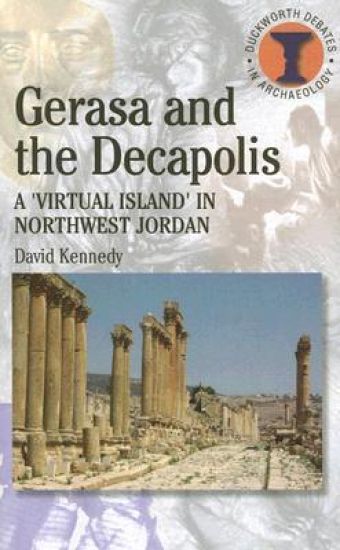
Gerasa and the Decapolis

Gerasa and the Decapolis

David Kennedy

Bristol Classical Press
2007
nidottu
During the Long Classical Millennium (fourth century BC to eighth century AD), Northwest Jordan was part of two worlds, looking west to the Mediterranean as well as east towards the Arabian desert. It was not only a collection of distinctive micro-regions but a 'virtual island', isolated by geography on all sides. Here one finds historical and archaeological data of an intensity and quality probably superior to that of any region in the Near East other than Israel.This book exploits some of that evidence to explain the character of an unusual region with a dense network of cities and an unexpected surge of settlement which reached a peak and extent not encountered again until the mid-twentieth century. It explores and develops some of the principal themes one may investigate for the region of Northwest Jordan, but which often apply to the Near East as a whole.
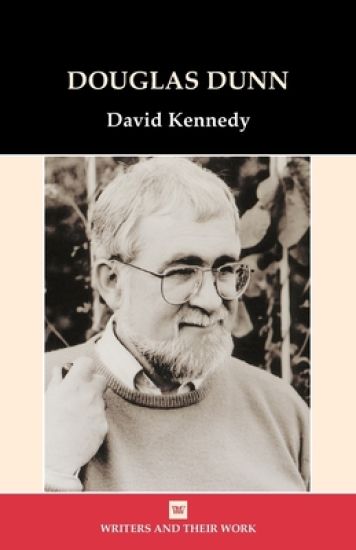
Douglas Dunn

Douglas Dunn

David Kennedy

Liverpool University Press
2008
nidottu
Douglas Dunn is one of the most widely-read and respected poets of his generation. In a career spanning over 30 years, he has refined lyric and elegiac poetry into an instrument with which to make acute observations of English urban scenes, pastoral traditions, class and education, and the past, present and future of his native Scotland. In this lucid and wide-ranging critical study, poet and critic David Kennedy charts Dunn’s career from his debut volume Terry Street (1969) to his New Selected Poems 1964-2000 (2003). He argues that Dunn’s poetry has developed through often highly ambivalent relationships with form, culture and the public identity and role of the poet. Subtle readings of Dunn’s most intimate poetry are combined with careful analysis of Dunn’s exploration of what form Scotland’s national consciousness might take. Dunn emerges as a complex writer passionately concerned with both the private and the political.
The Ekphrastic Encounter in Contemporary British Poetry and Elsewhere
Examining a wide range of ekphrastic poems, David Kennedy argues that contemporary British poets writing out of both mainstream and avant-garde traditions challenge established critical models of ekphrasis with work that is more complex than representational or counter-representational responses to paintings in museums and galleries. Even when the poem appears to be straightforwardly representational, it is often selectively so, producing a 'virtual' work that doesn't exist in actuality. Poets such as Kelvin Corcoran, Peter Hughes, and Gillian Clarke, Kennedy suggests, relish the ekphrastic encounter as one in which word and image become mutually destabilizing. Similarly, other poets engage with the source artwork as a performance that participates in the ethical realm. Showing that the ethical turn in ekphrastic poetry is often powerfully gendered, Kennedy also surveys a range of ekphrastic poets from the Renaissance and nineteenth century to trace a tradition of female ekphrastic poetry that includes Pauline Stainer and Frances Presley. Kennedy concludes with a critique of ekphrastic exercises in creative writing teaching, proposing that ekphrastic writing that takes greater account of performance spectatorship may offer more fruitful models for the classroom than the narrativizing of images.
A Social and Political History of Everton and Liverpool Football Clubs
This book focuses on the advent of professional football in Liverpool and, in particular, the formation of Everton and Liverpool football clubs and their development prior to World War I. This book details the factors that led to the early dominance within Liverpool of Everton FC, and addresses the complexity of the dispute within that club leading to the later formation of Liverpool FC by expelled club members. This book also highlights, via a comparative study, the different patterns of ownership and control that emerged within the two clubs between their incorporation as limited liability companies in 1892. This book was originally published as a special issue of Soccer & Society.
The Book of Wicca

The Book of Wicca

David Kennedy

David Kennedy
2018
pokkari
Some people will call Wicca a Religion or a cult. But in reality it is neither. I would like to think of Wicca as a family on the journey together to find the true Love and light.The Book of Wicca is a roadmap onto your inner being on a lifelong quest of living that Love and Light.We have everything you need to know to start your Wiccan journey or to assist you on a journey that is already begun. We will journey with you from the early history of Wicca up to the practices of magick in today's world.We not only guide you in the historical information of this amazing life we also give you the tools and knowledge to venture out into today's world of Wicca.By the end of the book you will have a solid sense for the basics of Wicca and Witchcraft, and the knowledge and tools to take your own journey through Love and Light.
The Mother of all Lies The Casey Anthony Story
The search for Caylee made front-page headlines when news broke of two-year-old Caylee Anthony's disappearance from her home in Orlando Florida in mid-July 2008.Caylee's own mother, Casey Anthony stepped into the national spotlight after the suspicious disappearance of her daughter. As her story unfolded the strange story started to come out, this included a dysfunctional family life, an array of deceptions and criminal conduct.As the investigation continued and suspicions mounted, Casey became the prime suspect. In October 2008, based on new evidence against Casey--her erratic behavior and lies, her car that showed signs of human decomposition--a grand jury indicted the young single mother. Then, two months later, police found Caylee's remains a quarter of a mile away from her home.Society believed that Casey was guilty, but the jury, however, felt differently due to evidence considered by them to be circumstantial. Casey was acquitted of the murder charge, but she found herself loathed by the general public.Did she or didn't she kill Caylee? This is the story of one of the most shocking, confusing, and horrific crimes in modern American history.