Kirjojen hintavertailu. Mukana 12 039 528 kirjaa ja 12 kauppaa.

Kirjahaku

Etsi kirjoja tekijän nimen, kirjan nimen tai ISBN:n perusteella.

3 kirjaa tekijältä David Koepsell

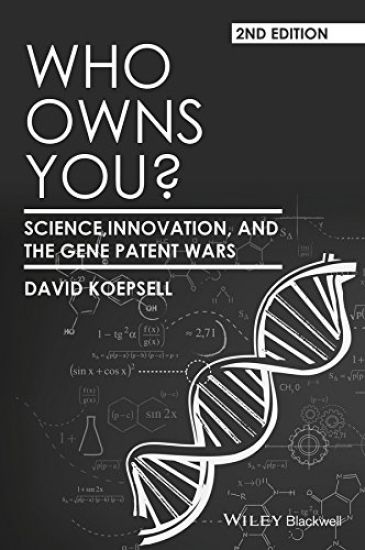
Who Owns You?

Who Owns You?

David Koepsell

John Wiley Sons Inc
2015
nidottu
The 2nd Edition of Who Owns You, David Koepsell’s widely acclaimed exploration of the philosophical and legal problems of patenting human genes, is updated to reflect the most recent changes to the cultural and legal climate relating to the practice of gene patenting. Lays bare the theoretical assumptions that underpin the injustice of patents on unmodified genesMakes a unique argument for a commons-by-necessity, explaining how parts of the universe are simply not susceptible to monopoly claimsRepresents the only work that attempts to first define the nature of the genetic objects involved before any ethical conclusions are reachedProvides the most comprehensive accounting of the various lawsuits, legislative changes, and the public debate surrounding AMP v. Myriad, the most significant case regarding gene patents
Innovation and Nanotechnology

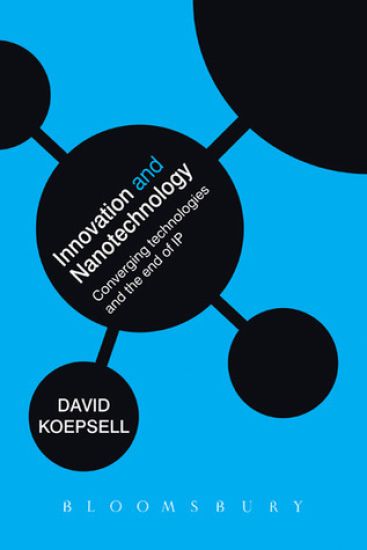
Innovation and Nanotechnology

David Koepsell

Bloomsbury Academic
2011
sidottu
This book is available as open access through the Bloomsbury Open Access programme and is available on www.bloomsburycollections.com.This book defines 'nanowares' as the ideas and products arising out of nanotechnology. Koepsell argues that these rapidly developing new technologies demand a new approach to scientific discovery and innovation in our society. He takes established ideas from social philosophy and applies them to the nanoparticle world. In doing so he breaks down the subject into its elemental form and from there we are better able to understand how these elements fit into the construction of a more complex system of products, rules and regulations about these products.Where existing research in the field has tended to focus on potential social harm, Koepsell takes a different approach by looking at ways in which developments in distributed design and fabrication can be harnessed to enable wealth creation by those with good ideas but no access to capital. He argues that the key challenge facing us is the error implicit in current intellectual property regimes and presents new modes of relating inventors to artifacts in this new context. In conclusion he offers contractual models which he believes encourage innovation in nano-media by embracing open source and alternative means of protection for innovators.
Scientific Integrity and Research Ethics

Scientific Integrity and Research Ethics

David Koepsell

Springer International Publishing AG
2017
nidottu
This book is an easy to read, yet comprehensive introduction to practical issues in research ethics and scientific integrity. It addresses questions about what constitutes appropriate academic and scientific behaviors from the point of view of what Robert Merton called the “ethos of science.” In other words, without getting into tricky questions about the nature of the good or right (as philosophers often do), Koepsell’s concise book provides an approach to behaving according to the norms of science and academia without delving into the morass of philosophical ethics. The central thesis is that: since we know certain behaviors are necessary for science and its institutions to work properly (rather than pathologically), we can extend those principles to guide good behaviors as scientists and academics. The Spanish version of this book was commissioned by the Mexican National Science Foundation (CONACyT) and is being distributed to and used by Mexican scientists in a unique, national plan to improve scientific integrity throughout all of Mexico. Available now in English, the examples and strategies employed can be used throughout the English speaking research world for discussing issues in research ethics, training for scientists and researchers across disciplines, and those who are generally interested in ethics in academia.