Kirjojen hintavertailu. Mukana 12 016 292 kirjaa ja 12 kauppaa.

Kirjahaku

Etsi kirjoja tekijän nimen, kirjan nimen tai ISBN:n perusteella.

5 kirjaa tekijältä David L. Caffey

When Cimarron Meant Wild

When Cimarron Meant Wild

David L. Caffey

UNIVERSITY OF OKLAHOMA PRESS
2023
sidottu
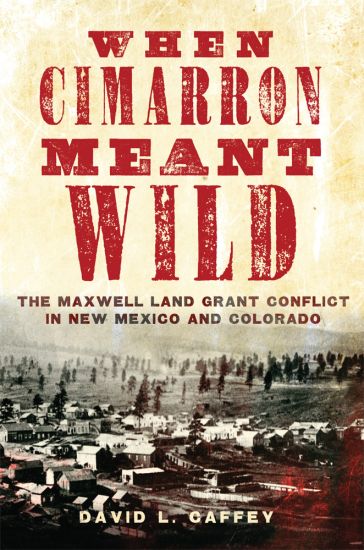
The Spanish word cimarron, meaning “wild” or “untamed,” refers to a region in the southern Rocky Mountains where control of timber, gold, coal, and grazing lands long bred violent struggle. After the U.S. occupation following the 1846–1848 war with Mexico, this tract of nearly two million acres came to be known as the Maxwell Land Grant. WhenCimarron Meant Wild presents a new history of the collision that occurred over the region’s resources between 1870 and 1900. Author David L. Caffey describes the epic late-nineteenth-century range war in an account deeply informed by his historical perspective on social, political, and cultural issues that beset the American West to this day. Cimarron country churned with the tensions of the Old West—land disputes, lawlessness, violence, and class war among miners, a foreign corporation, local elites, Texas cattlemen, and the haughty “Santa Fe Ring” of lawyerly speculators. And present, still, were the indigenous Jicarilla Apache and Mouache Ute people, dispossessed of their homeland by successive Spanish, Mexican, and American regimes. A Mexican grant of uncertain size and bounds, awarded to Carlos Beaubien and Guadalupe Miranda in 1841 and later acquired by Lucien Maxwell, marked the beginning of a fight for control of the land and set off overlapping conflicts known as the Colfax County War, the Maxwell Land Grant War, and the Stonewall War. Caffey draws on new research to paint a complex picture of these events, and of those that followed the sale of the claim to investors in 1870. These clashes played out over the following thirty years, involving the new English owners, miners and prospectors, livestock grazers and farmers, and Native Americans. Just how wild was the Cimarron country in the late 1800s? And what were the consequences for the region and for those caught up in the conflict? The answers, pursued through this remarkable work, enhance our understanding of cultural and economic struggle in the American West.
When Cimarron Meant Wild

When Cimarron Meant Wild

David L. Caffey

UNIVERSITY OF OKLAHOMA PRESS
2024
nidottu
The Spanish word cimarron, meaning “wild” or “untamed,” refers to a region in the southern Rocky Mountains where control of timber, gold, coal, and grazing lands long bred violent struggle. After the U.S. occupation following the 1846–1848 war with Mexico, this tract of nearly two million acres came to be known as the Maxwell Land Grant. WhenCimarron Meant Wild presents a new history of the collision that occurred over the region’s resources between 1870 and 1900. Author David L. Caffey describes the epic late-nineteenth-century range war in an account deeply informed by his historical perspective on social, political, and cultural issues that beset the American West to this day. Cimarron country churned with the tensions of the Old West—land disputes, lawlessness, violence, and class war among miners, a foreign corporation, local elites, Texas cattlemen, and the haughty “Santa Fe Ring” of lawyerly speculators. And present, still, were the indigenous Jicarilla Apache and Mouache Ute people, dispossessed of their homeland by successive Spanish, Mexican, and American regimes. A Mexican grant of uncertain size and bounds, awarded to Carlos Beaubien and Guadalupe Miranda in 1841 and later acquired by Lucien Maxwell, marked the beginning of a fight for control of the land and set off overlapping conflicts known as the Colfax County War, the Maxwell Land Grant War, and the Stonewall War. Caffey draws on new research to paint a complex picture of these events, and of those that followed the sale of the claim to investors in 1870. These clashes played out over the following thirty years, involving the new English owners, miners and prospectors, livestock grazers and farmers, and Native Americans. Just how wild was the Cimarron country in the late 1800s? And what were the consequences for the region and for those caught up in the conflict? The answers, pursued through this remarkable work, enhance our understanding of cultural and economic struggle in the American West.
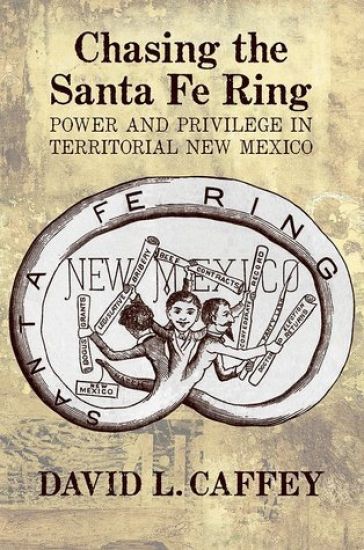
Chasing the Santa Fe Ring

Chasing the Santa Fe Ring

David L. Caffey

University of New Mexico Press
2015
nidottu
Anyone who has even a casual acquaintance with the history of New Mexico in the nineteenth century has heard of the Santa Fe Ring—seekers of power and wealth in the post–Civil War period famous for public corruption and for dispossessing landholders. Surprisingly, however, scholars have alluded to the Ring but never really described this shadowy entity, which to this day remains a kind of black hole in New Mexico’s territorial history.David Caffey looks beyond myth and symbol to explore its history. Who were its supposed members, and what did they do to deserve their unsavory reputation? Were their actions illegal or unethical? What were the roles of leading figures like Stephen B. Elkins and Thomas B. Catron? What was their influence on New Mexico’s struggle for statehood? Caffey’s book tells the story of the rise and fall of this remarkably durable alliance.
Frank Springer and New Mexico

Frank Springer and New Mexico

David L. Caffey

Texas A M University Press
2006
sidottu
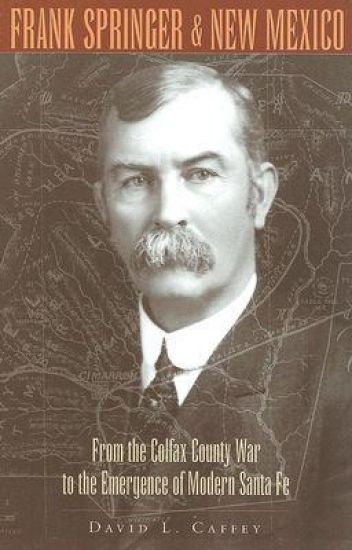
The country Frank Springer rode into in 1873 was one of immense beauty and abundant resources - grass and timber, wild game, precious metals, and a vast bed of commercial-grade coal. It was also a stage upon which dramatic and sometimes violent events played out during Springer's ten-year residence in Cimarron, New Mexico. A lawyer and newspaperman for the Maxwell Land Grant company and a foe of the speculators known as ""the Santa Fe Ring,"" Springer found himself in the middle of the Colfax County War. A man of many sides, he typified the Gilded Age entrepreneurs who transformed the territorial American Southwest. He was also an intriguing personality - an introvert who engaged in very public activities, speaking to large audiences and leading in major civic endeavors. As president of the Maxwell Land Grant company, he also led in the development of mining, logging, ranching, and irrigation enterprises. His Supreme Court victory establishing title to the 1.7 million acre Maxwell grant earned him a reputation as a brilliant attorney. He also helped lay the foundations of New Mexico Highlands University, the Museum of New Mexico, and other cultural institutions. Throughout his adult life, Springer also engaged in paleontological study, publishing his findings through the Smithsonian Institution and other leading scientific publishers. He amassed the largest collection in the world of a certain kind of fossil, a collection he donated to the Smithsonian Institution, where it is still housed. Frank Springer's influence on New Mexico's economic development was far-reaching and lasting. A thorough biography of the energetic Springer, this book offers insight into many colorful episodes in the region's history and the way a certain breed of Anglo-centric men left their stamp on the land and its people.
Frank Springer and New Mexico

Frank Springer and New Mexico

David L. Caffey

Texas A M University Press
2007
nidottu
The country Frank Springer rode into in 1873 was one of immense beauty and abundant resources - grass and timber, wild game, precious metals, and a vast bed of commercial-grade coal. It was also a stage upon which dramatic and sometimes violent events played out. A lawyer and newspaperman for the Maxwell Land Grant company and a foe of the speculators known as ""the Santa Fe Ring,"" Springer found himself in the middle of the Colfax County War. A man of many sides, he typified the Gilded Age entrepreneurs who transformed the territorial American Southwest. As president of the Maxwell Land Grant company, Springer led in the development of mining, logging, ranching, and irrigation enterprises. His Supreme Court victory establishing title to the 1.7 million acre Maxwell grant earned him a reputation as a brilliant attorney.