Despite the United States’ ban on slave importation in 1808, profitable interstate slave trading continued. The nineteenth century’s great cotton boom required vast human labor to bring new lands under cultivation, and many thousands of slaves were torn from their families and sold across state lines in distant markets. Shocked by the cruelty and extent of this practice, abolitionists called upon the federal government to exercise its constitutional authority over interstate commerce and outlaw the interstate selling of slaves. This groundbreaking book is the first to tell the complex story of the decades-long debate and legal battle over federal regulation of the slave trade.David Lightner explores a wide range of constitutional, social, and political issues that absorbed antebellum America. He revises accepted interpretations of various historical figures, including James Madison, Harriet Beecher Stowe, and Abraham Lincoln, and he argues convincingly that southern anxiety over the threat to the interstate slave trade was a key precipitant to the secession of the South and the Civil War.
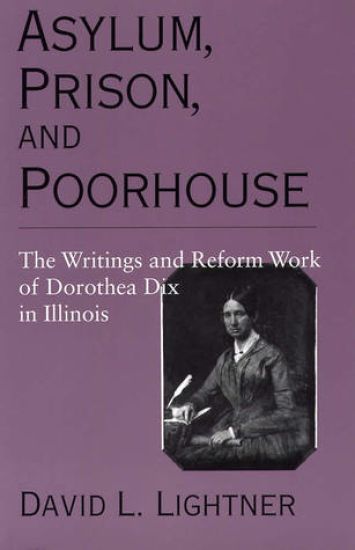
This illustrated collection of annotated newspaper articles and memorials by Dorothea Dix provides a forum for the great mid-nineteenth-century humanitarian and reformer to speak for herself. Dorothea Lynde Dix (1802–87) was perhaps the most famous and admired woman in America for much of the nineteenth century. Beginning in the early 1840s, she launched a personal crusade to persuade the various states to provide humane care and effective treatment for the mentally ill by funding specialized hospitals for that purpose. The appalling conditions endured by most mentally ill inmates in prisons, jails, and poorhouses led her to take an active interest also in prison reform and in efforts to ameliorate poverty. In 1846–47 Dix brought her crusade to Illinois. She presented two lengthy memorials to the legislature, the first describing conditions at the state penitentiary at Alton and the second discussing the sufferings of the insane and urging the establishment of a state hospital for their care. She also wrote a series of newspaper articles detailing conditions in the jails and poorhouses of many Illinois communities. These long-forgotten documents, which appear in unabridged form in this book, contain a wealth of information on the living conditions of some of the most unfortunate inhabitants of Illinois. In his preface, David L. Lightner describes some of the vivid images that emerge from Dorothea Dix's descriptions of social conditions in Illinois a century and a half ago: ""A helpless maniac confined throughout the bitter cold of winter to a dark and filthy pit. Prison inmates chained in hallways and cellars because no more men can be squeezed into the dank and airless cells. Aged paupers auctioned off by county officers to whoever will maintain them at the lowest cost."" Lightner provides an introduction to every document, placing each memorial and newspaper article in its proper social and historical context. He also furnishes detailed notes, making these documents readily accessible to readers a century and a half later. In his final chapter, Lightner assesses both the immediate and the continuing impact of Dix's work.