Kirjojen hintavertailu. Mukana 12 390 323 kirjaa ja 12 kauppaa.

Kirjahaku

Etsi kirjoja tekijän nimen, kirjan nimen tai ISBN:n perusteella.

2 kirjaa tekijältä David L. Rousseau

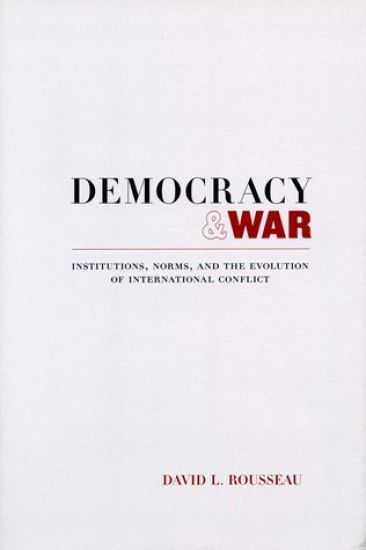
Democracy and War

Democracy and War

David L. Rousseau

Stanford University Press
2005
sidottu
Conventional wisdom in international relations maintains that democracies are only peaceful when encountering other democracies. Using a variety of social scientific methods of investigation ranging from statistical studies and laboratory experiments to case studies and computer simulations, Rousseau challenges this conventional wisdom by demonstrating that democracies are less likely to initiate violence at early stages of a dispute. Using multiple methods allows Rousseau to demonstrate that institutional constraints, rather than peaceful norms of conflict resolution, are responsible for inhibiting the quick resort to violence in democratic polities. Rousseau finds that conflicts evolve through successive stages and that the constraining power of participatory institutions can vary across these stages. Finally, he demonstrates how constraint within states encourages the rise of clusters of democratic states that resemble "zones of peace" within the anarchic international structure.
Identifying Threats and Threatening Identities

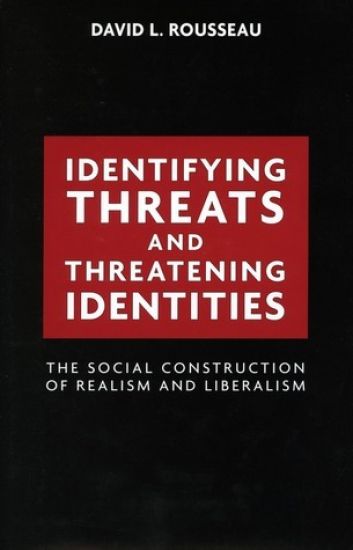
Identifying Threats and Threatening Identities

David L. Rousseau

Stanford University Press
2006
sidottu
How does a state determine if another state is an important military or economic threat? The issue of threat perception drives a wide variety of behaviors, from allegiance formation and defense spending to trade relations and regime membership. While liberal theorists and realists both agree that threat perception is a cornerstone of international relations, there is widespread disagreement on the factors that contribute to our fear of other states. In particular, the field is deeply divided between those who believe material factors such as the balance of military power determine the perception of threat and those who believe ideational factors such as shared democratic value determine the perception of threat. Using a variety of social scientific methods of investigation ranging from laboratory experiments and public opinion surveys to computer simulations and case studies, Rousseau challenges these conventional arguments and sheds new light on this debate. He presents a model of identity formation that can explain when ideas will (and will not) have a decisive impact on threat perception.