Kirjojen hintavertailu. Mukana 11 244 527 kirjaa ja 12 kauppaa.

Kirjahaku

Etsi kirjoja tekijän nimen, kirjan nimen tai ISBN:n perusteella.

66 kirjaa tekijältä David Lane

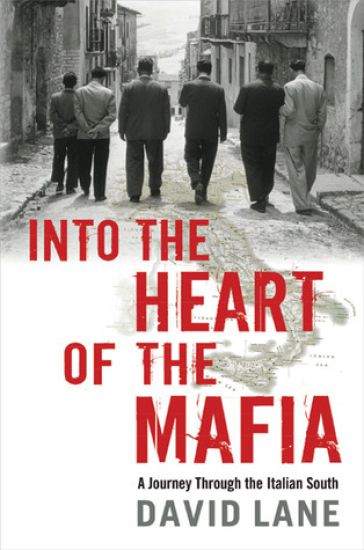
Into the Heart of the Mafia: A Journey Through the Italian South
In this investigation into the criminal underworld of the cities and villages of the Italian South, David Lane provides an unrivaled expos of the operations of the Mafia today From Naples, home of Mafia-controlled mozzarella and toxic waste, through the no less rotten Calabria, to Sicily, cradle of Cosa Nostra, the hold of the Mafia on Southern Italy is as strong as ever. Following a multi-decade career as a journalist in Italy, David Lane uses his extensive contacts into the world of organized crime to demonstrate how globalization has transformed the Mafia into more than simply a global phenomenon. In painful detail, Into the Heart of the Mafia describes the unceasing mafia pressure endured by priests and politicians, businessmen, trade unionists, and ordinary citizens, and the risks undertaken by the policemen, judges, and politicians who fight to weaken the Mafia's influence. A travelogue with the most deadly of implications, Into the Heart of the Mafia stands as a guide like no other into the darkest side of Italy.
Soviet Labour And The Ethic Of Communism
This book seeks to discover the extent to which the claim—the provision of regular paid labour and a permanent occupation for all who are able to work—is true and whether there are any features of society in distinction from capitalism which lead to the provision of full employment.
Soviet Labour And The Ethic Of Communism

Soviet Labour And The Ethic Of Communism

David Lane

TAYLOR FRANCIS LTD
2021
nidottu
This book seeks to discover the extent to which the claim—the provision of regular paid labour and a permanent occupation for all who are able to work—is true and whether there are any features of society in distinction from capitalism which lead to the provision of full employment.
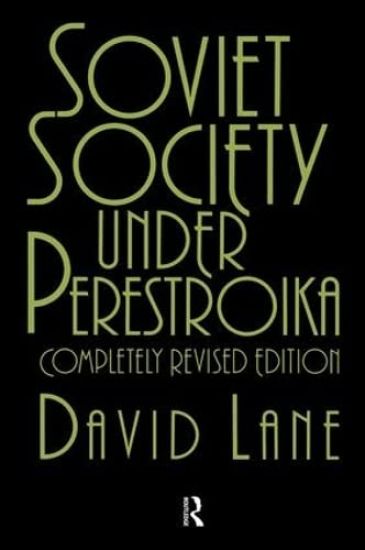
Soviet Society Under Perestroika
This is an up-to-the-minute revised edition of a text which, since its publication in 1990, has been extremely influential. The great changes of the past 18 months have entailed a comprehensive updating of the book. This edition takes account of new developments that include the independence of the Baltic states and the treaty which sparked 1991's attempted coup.
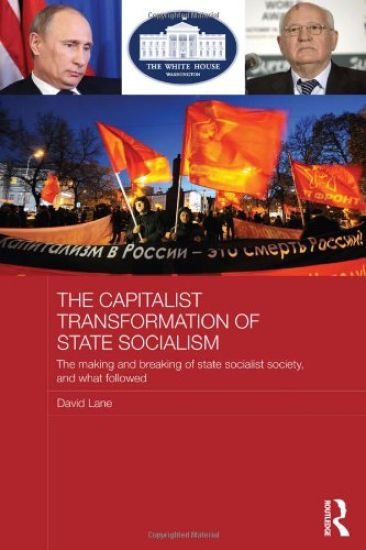
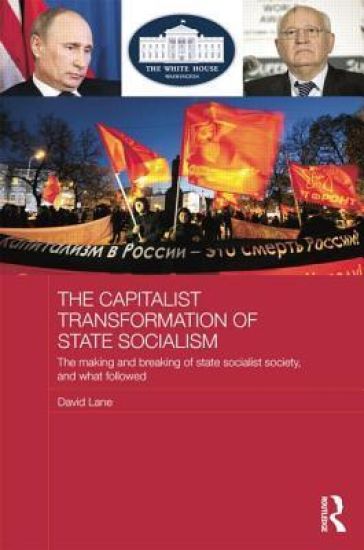
The Capitalist Transformation of State Socialism
David Lane outlines succinctly yet comprehensively the development and transformation of state socialism. While focussing on Russia and the countries of Eastern Europe, he also engages in a discussion of the Chinese path. In response to the changing social structure and external demands, he outlines different scenarios of reform. He contends that European state socialism did not collapse but was consciously dismantled. He brings out the West’s decisive support of the reform process and Gorbachev’s significant role in tipping the balance of political forces in favour of an emergent ascendant class. In the post-socialist period, he details developments in the economy and politics. He distinguishes different political and economic trajectories of countries of the former USSR, the New Member States of the European Union, and China; and he notes the attempts to promote further change through ‘coloured’ revolutions. The book provides a detailed account not only of the unequal impact of transformation on social inequality which has given rise to a privileged business and political class, but also how far the changes have fulfilled the promise of democracy promotion, wealth creation and human development. Finally, in the context of globalisation, the author considers possible future political and economic developments for Russia and China. Throughout the author, a leading expert in the field, brings to bear his deep knowledge of socialist countries, draws on his research on the former Soviet Union, and visits to nearly all the former state socialist countries, including China.
Leninism: A Sociological Interpretation

Leninism: A Sociological Interpretation

David Lane

Cambridge University Press
1981
pokkari
It is now well over a hundred years since the birth of Lenin. If his writings are to have the relevance for contemporary political action, it is necessary that they be understood within the specific historical context in which they arose. It is such an understanding that David Lane provides in this book. Dr Lane addresses four distinct, though related, topics: Lenin's analysis of revolution; Leninism as an ideology legitimating the Russian Revolution; a detached analysis of the revolutionary process; and the relevance of Lenin and the Russian Revolution for social and political change. He begins by showing that, studied thematically, the various parts of Lenin's thinking are complementary in providing an analysis of capitalism and the justification for socialist revolution. The book is a short, concise, detached, yet sympathetic account of Lenin's thinking on revolution, its implications for the rise of Stalinism and its significance for the model of socialism as developed in the USSR. It will appeal to sociologists, political scientists and historians interested in Leninism, Stalinism and revolutionary theory, as well as to others concerned with the theories and processes of social change.
Russia in Transition

Russia in Transition

David Lane

Longman
1995
nidottu
An accessible book covering the momentous changes that have occurred, and are still occurring, since the fall of the USSR in 1989. Contributions from an impressive collection of authors are drawn from the most recent and original research available and address political and social issues which impact on all levels of Russian society. The book consists of a selection of specially commissioned pieces which have evolved from the conference of the same name, held at Cambridge University in December 1994.
The Tragedy of King Lewis the Sixteenth
The play presents the life of King Louis XVI of France during the French Revolution and is based on the tradition dating from the seventeenth century of an unfulfilled request by Jesus Christ through St. Margaret Mary Alacoque that, to avert a future catastrophe in the realm, Louis' great grandfather, Louis XIV, must consecrate France to the Sacred Heart of Jesus. In return for this act of humility, the Lord promised to shower France with graces and blessings. Louis XIV and the kings who followed him delayed in making the consecration until, finally, on June 17, 1789, one hundred years later to the day, the Third Estate of the Estates General declared itself the National Assembly, challenging King Louis XVI and initiating the French Revolution. Louis was later stripped of his powers and sent to the guillotine to be put to death like a common criminal; France thereupon became engulfed in the horrors of the Revolutionary Terror. This play, therefore, like the ancient Greek tragedies, has a religious dimension in the concepts of divine retribution and the iniquity of the fathers visited upon the sons to the third and fourth generation (cf., The Bible, Euripides, Shakespeare).
Contemporary British Drama

Contemporary British Drama

David Lane

Edinburgh University Press
2010
sidottu
This book provides a critical assessment of dramatic literature since 1995, situating texts, companies and writers in a cultural, political and social context. It examines the shifting role of the playwright, the dominant genres and emerging styles of the past decade and how they are related. Beginning with an examination of how dramatic literature and the writer are placed in the contemporary theatre, the book then provides detailed analyses of the texts, companies and writing processes involved in six different professional contexts: new writing, verbatim theatre, writing and devising, Black and Asian theatre, writing for young people and adaptation and transposition. The chapters cover contemporary practitioners, including Simon Stephens, Gregory Burke, Robin Soans, Alecky Blythe, Kneehigh Theatre, Punchdrunk, Kwame Kwei-Armah, Edward Bond, Filter Theatre and Headlong, and offers detailed case-studies and examples of their work. Key Features * The first book to examine contemporary British drama from the In-Yer-Face era (1995 - 2000) to the present day and track the changes and developments through this period * Extended case-studies of Simon Stephens, Gregory Burke and Caryl Churchill and the last decade of new writing in Britain * Focus on recent adaptation, including Kneehigh Theatre, Punchdrunk, Filter Theatre and Headlong
Contemporary British Drama

Contemporary British Drama

David Lane

Edinburgh University Press
2010
nidottu
This book provides a critical assessment of dramatic literature since 1995, situating texts, companies and writers in a cultural, political and social context. It examines the shifting role of the playwright, the dominant genres and emerging styles of the past decade and how they are related. Beginning with an examination of how dramatic literature and the writer are placed in the contemporary theatre, the book then provides detailed analyses of the texts, companies and writing processes involved in six different professional contexts: new writing, verbatim theatre, writing and devising, Black and Asian theatre, writing for young people and adaptation and transposition. The chapters cover contemporary practitioners, including Simon Stephens, Gregory Burke, Robin Soans, Alecky Blythe, Kneehigh Theatre, Punchdrunk, Kwame Kwei-Armah, Edward Bond, Filter Theatre and Headlong, and offers detailed case-studies and examples of their work. Key Features * The first book to examine contemporary British drama from the In-Yer-Face era (1995 - 2000) to the present day and track the changes and developments through this period * Extended case-studies of Simon Stephens, Gregory Burke and Caryl Churchill and the last decade of new writing in Britain * Focus on recent adaptation, including Kneehigh Theatre, Punchdrunk, Filter Theatre and Headlong
A Guidebook for a New Humanity
Discover a roadmap for a life of purposeIn a time of unprecedented change, how do we go beyond old patterns and meet humanity's challenges from a new perspective? How can we harness ancient spiritual laws that quantum science is now demonstrating, too, and apply them to our lives? In A Guidebook for a New Humanity, author David Lane offers a step-by-step guide, including practical exercises that teach us how to build personal awareness, identify patterns of thought and behaviour that may be holding us back, and work with higher forces to fulfill the potential of our lives.This illuminating book provides tools to increase the vibration of our consciousness on a personal level and demonstrates how individual actions reverberate through the universe. Showing a way forward to a world of greater compassion and spiritual advancement, A Guidebook for a New Humanity is an inspirational manual to begin or continue the journey of mastery over our lives.
The Socialist Industrial State

The Socialist Industrial State

David Lane

TAYLOR FRANCIS LTD
2023
sidottu
The Socialist Industrial State (1976) examines the state-socialist system, taking as the central example the Soviet Union – where the goals and values of Marxism-Leninism and the particular institutions, the form of economy and polity, were first adopted and developed. It then considers the historical developments, differences in culture, the level of economic development and the political processes of different state-socialist countries around the globe.
The Socialist Industrial State

The Socialist Industrial State

David Lane

TAYLOR FRANCIS LTD
2024
nidottu
The Socialist Industrial State (1976) examines the state-socialist system, taking as the central example the Soviet Union – where the goals and values of Marxism-Leninism and the particular institutions, the form of economy and polity, were first adopted and developed. It then considers the historical developments, differences in culture, the level of economic development and the political processes of different state-socialist countries around the globe.
The End of Social Inequality?

The End of Social Inequality?

David Lane

TAYLOR FRANCIS LTD
2024
sidottu
The End of Social Inequality (1982) examines class and social stratification under state socialism and in particular in the Soviet Union. Its discussion ranges over such aspects as income and education differentials, the rise of white-collar occupations, the position of women and ethnic groups, and social mobility.
The End of Social Inequality?

The End of Social Inequality?

David Lane

TAYLOR FRANCIS LTD
2026
nidottu
The End of Social Inequality (1982) examines class and social stratification under state socialism and in particular in the Soviet Union. Its discussion ranges over such aspects as income and education differentials, the rise of white-collar occupations, the position of women and ethnic groups, and social mobility.
Russia in Transition

Russia in Transition

David Lane

Routledge
2017
sidottu
An accessible book covering the momentous changes that have occurred, and are still occurring, since the fall of the USSR in 1989. Contributions from an impressive collection of authors are drawn from the most recent and original research available and address political and social issues which impact on all levels of Russian society. The book consists of a selection of specially commissioned pieces which have evolved from the conference of the same name, held at Cambridge University in December 1994.
Soviet Society Under Perestroika
This is an up-to-the-minute revised edition of a text which, since its publication in 1990, has been extremely influential. The great changes of the past 18 months have entailed a comprehensive updating of the book. This edition takes account of new developments that include the independence of the Baltic states and the treaty which sparked 1991's attempted coup.
The Capitalist Transformation of State Socialism
David Lane outlines succinctly yet comprehensively the development and transformation of state socialism. While focussing on Russia and the countries of Eastern Europe, he also engages in a discussion of the Chinese path. In response to the changing social structure and external demands, he outlines different scenarios of reform. He contends that European state socialism did not collapse but was consciously dismantled. He brings out the West’s decisive support of the reform process and Gorbachev’s significant role in tipping the balance of political forces in favour of an emergent ascendant class. In the post-socialist period, he details developments in the economy and politics. He distinguishes different political and economic trajectories of countries of the former USSR, the New Member States of the European Union, and China; and he notes the attempts to promote further change through ‘coloured’ revolutions. The book provides a detailed account not only of the unequal impact of transformation on social inequality which has given rise to a privileged business and political class, but also how far the changes have fulfilled the promise of democracy promotion, wealth creation and human development. Finally, in the context of globalisation, the author considers possible future political and economic developments for Russia and China. Throughout the author, a leading expert in the field, brings to bear his deep knowledge of socialist countries, draws on his research on the former Soviet Union, and visits to nearly all the former state socialist countries, including China.