Kirjojen hintavertailu. Mukana 11 244 527 kirjaa ja 12 kauppaa.

Kirjahaku

Etsi kirjoja tekijän nimen, kirjan nimen tai ISBN:n perusteella.

13 kirjaa tekijältä David Leeming

A Dictionary of Asian Mythology

A Dictionary of Asian Mythology

David Leeming

Oxford University Press Inc
2001
nidottu
Meet the supreme Gautama Buddha, the elephant-headed Hindu god Ganesa, and Chang O--the Lunar Toad who is Chinese goddess of the Moon. Journey to the sacred Cambodian ruins of Angkor and golden Mount Meru, home of the Hindu gods. Discover myths like the Stone and the Banana of Indonesian origin and the Indian Churning of the Ocean of Milk, and explore archetypal themes such as the hero quest, sacrifice, and descent to the underworld. Myth expert David Leeming plumbs the exotic depths of Eastern spirituality to present a vivid portrait of the many mythologies of the Asian continent. In handy A to Z format, here are the stories of the revered deities, sacred places, key events and epics, and recurring themes and traditions that make up the rich and varied fabric of Asian mythology. Entries address the key mythologies of the regions we now call India, China, Tibet, Central Asia, Southeast Asia, and Japan. Throughout, an extensive network of cross-references highlights the diversity, interrelatedness, and complex beauty of Asia--allowing readers to pursue a particular trail of inquiry or read straight through the compelling entries. Broad overviews of specific cultures and their mythic traditions round out the coverage.
From Olympus to Camelot

From Olympus to Camelot

David Leeming

Oxford University Press Inc
2003
sidottu
From the stories suggested by the great cave paintings of the Paleolithic period to the thought experiments of modern scientists, From Olympus to Camelot provides a sweeping history of the development of the rich and varied European mythological tradition. David Leeming, an authority on world mythology, begins with a general introduction to mythology and mythological terms, and then turns to the stories themselves. Discussing well-known figures such as Zeus, Aphrodite, Thor, and Cuchulainn, and less familiar ones such as Perun, Mari, and the Sorcerer of Lescaux, Leeming illustrates and analyzes the enduring human endeavor to make sense of existence through deities and heroes. Following an initial exploration of the Indo-European sources of European mythology and the connections between the myths of Europe and those of India and Iran, the book proceeds to survey the major beliefs of Greek, Roman, Celtic, Germanic, Baltic, and Slavic cultures, as well as the mythologies of non-Indo-European cultures such as the Etruscans and the Finns. Among its contents are introductions to the pantheons of various mythologies, examinations of major mythological works, and retellings of the influential mythical stories. This work also examines European deities, creation myths, and heroes in the context of Christian belief, and considers the translation of traditional stories into the mythologies of modern European political, scientific, philosophical, and economic movements. European mythology is the core mythology of Western civilization. This wide-ranging volume offers a lively and informative survey, along with a provocative new way of understanding this fundamental aspect of European culture.
Jealous Gods and Chosen People

Jealous Gods and Chosen People

David Leeming

Oxford University Press Inc
2004
sidottu
Esteemed scholar David Leeming, who has authored more than twelve books on mythology, here offers the first comprehensive narrative study of the mythology of the Middle East, that tumultuous region that was the cradle of civilization. Leeming begins with a brief, engaging history of the Middle East, spanning Neolithic cultures, the Bronze Age and the Iron Age, the invention of writing and the rise of Egypt and Babylonia, Israel and Roman rule, and the early history of the Jews, Christians, and Muslims. This is followed by an in-depth discussion of the mythology of the region, covering individual pantheons, cosmic myths, mythic heroes, and much more. Leeming ranges from prehistoric figures such as the Mother Goddess of Çatal Hüyük to Mesopotamian gods such as Marduk and mythic heroes such as Gilgamesh, to the pantheon of Egyptian mythology, including the falcon-headed sky-sun god Horus and jackal-headed Anubis. The author also offers an illuminating exploration of the mythology of the three great monotheistic religions of the region: Judaism, Christianity, and Islam. In a provocative Epilogue, Leeming depicts today's crisis in the Middle East as "violent, clearly immoral, and illegal actions" justified by "what can only be called myths." He notes that fundamentalists in the area's three religions all see their way as the only way, forgetting that myths represent truths that are spiritual and philosophical--not historical events that can be used to justify acts of violence. With key maps, illustrations, bibliography, and index, Jealous Gods and Chosen People provides an inclusive, authoritative, and captivating account of a mythology that remains a potent--and often destructive--force in the world today.
The Oxford Companion to World Mythology

The Oxford Companion to World Mythology

David Leeming

Oxford University Press Inc
2005
sidottu
The role of mythology in history is explored in this comprehensive volume that consists of nearly two thousand A-Z entries covering all aspects of mythology, including the traditions of ancient Greece and Rome, Native American, Indian, Japanese, Sumerian, and Egyptian, as well as archtypal mythological figures and stories.
Myth

Myth

David Leeming

Oxford University Press Inc
2003
nidottu
Joseph Campbell wrote that mythology is "the wonderful song of the soul's high adventure." In Myth, David Leeming considers the role this "wonderful song" has to play in a world increasingly dependent on scientific and technical information. Exploring classic works such as the Song of Songs, the Tao Te Ching, the Rg Veda, the New Testament, and the Indonesian myth of Hainuwele, Myth reveals the cultural energies that ancient "mythmakers" sought to corral in their creations. Leeming argues that myths are, by definition, evolving creations that live on in the work of modern-day "mythmakers" such as W.B. Yeats, Virginia Woolf, and Albert Einstein. Leeming provides an engaging new outlook on the role of myth in the works of these and other contemporary artists and scientists. The similarities between modern concepts like the "Big Bang" and ancient myths of creation illustrate our continuing need to confront the mysteries of existence by way of metaphor and narrative. Leeming suggests that myth and factual knowledge do not negate, but complement each other. Whether it is the "American Dream," alien abduction, or belief in virgin birth and resurrection, these "living myths" play a very therapeutic role in the development of a healthy society. In Myth: A Biography of Belief, David Leeming shows that myths are still a fitting way to capture "the soul's high adventure."
Jealous Gods and Chosen People

Jealous Gods and Chosen People

David Leeming

Oxford University Press Inc
2005
nidottu
Esteemed scholar David Leeming, who has authored more than twelve books on mythology, here offers the first comprehensive narrative study of the mythology of the Middle East, that tumultuous region that was the cradle of civilization. Leeming begins with a brief, engaging history of the Middle East, spanning Neolithic cultures, the Bronze Age and the Iron Age, the invention of writing and the rise of Egypt and Babylonia, Israel and Roman rule, and the early history of the Jews, Christians, and Muslims. This is followed by an in-depth discussion of the mythology of the region, covering individual pantheons, cosmic myths, mythic heroes, and much more. Leeming ranges from prehistoric figures such as the Mother Goddess of Çatal Hüyük to Mesopotamian gods such as Marduk and mythic heroes such as Gilgamesh, to the pantheon of Egyptian mythology, including the falcon-headed sky-sun god Horus and jackal-headed Anubis. The author also offers an illuminating exploration of the mythology of the three great monotheistic religions of the region: Judaism, Christianity, and Islam. In a provocative Epilogue, Leeming depicts today's crisis in the Middle East as "violent, clearly immoral, and illegal actions" justified by "what can only be called myths." He notes that fundamentalists in the area's three religions all see their way as the only way, forgetting that myths represent truths that are spiritual and philosophical--not historical events that can be used to justify acts of violence. With key maps, illustrations, bibliography, and index, Jealous Gods and Chosen People provides an inclusive, authoritative, and captivating account of a mythology that remains a potent--and often destructive--force in the world today.
The Oxford Companion to World Mythology

The Oxford Companion to World Mythology

David Leeming

Oxford University Press Inc
2009
nidottu
Cave paintings at Lascaux, France and Altamira, Spain, fraught with expression thousands of years later; point to an early human desire to form a cultural identity. In The Oxford Companion to World Mythology, David Leeming explores the role of mythology, or myth-logic, in history and determines that the dreams of specific cultures add up to a larger collective story of humanity. Stopping short of attempting to be all-inclusive, this fascinating volume will nonetheless be comprehensive, opening with an introduction exploring the nature and dimensions of myth and proposing a definition as a universal language. Briefly dipping into the ways our understanding of myth has changed from Aristotle and Plato to modern scholars such as Joseph Campbell, the introduction loosely places the concept in its present context and precedes articles on influential mythologists and mythological approaches that appear later in the Companion. The main body of Leeming's work consists of A-Z entries covering all aspects of mythology, including substantial essays on the world's major mythological traditions (Greek, Native American, Indian, Japanese, Sumerian, Egyptian), mythological types and motifs (Descent to the Underworld, the Hero, the Trickster, Creation, the Quest), mythological figures (Odysseus, Zeus, Osiris, Spider Woman, and Inanna) as well as numerous interrelated subjects such as fairy tales and legends. The Companion also locates myth in our lives today, relating it to language patterns, psychology, religion, politics, art, and gender attitudes. Many of the better-known and more significant myths are vividly retold in this volume that will be illustrated with maps, more than 70 black and white images, and eight pages of color highlighting the central role art has often played in the transmission and perpetuation of myth. Following the entries, a rich section of appendices will include family trees of the major pantheons, equivalency charts for the gods of Greece and Rome, Babylon and Sumer, as well as other traditions, an extensive bibliography, and an index.
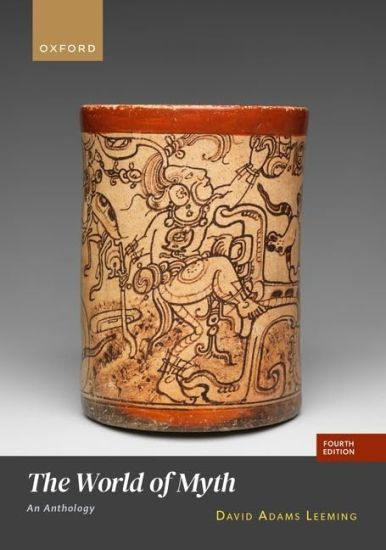
The World of Myth

The World of Myth

David Leeming

OXFORD UNIVERSITY PRESS INC
2024
nidottu
Building on the best-selling tradition of previous editions, The World of Myth, Fourth Edition, offers a uniquely comprehensive collection of myths from numerous cultures around the globe. Featuring a thematic organization, it helps students understand world mythology as a metaphor for humanity's search for meaning in a complex world. Author David Leeming provides a sweeping anthology of myths, ranging from ancient Egypt and Greece to the Polynesian islands and modern science. Students will be captivated by stories of great floods from the ancient Babylonians, Hebrews, Chinese, and Mayans; tales of apocalypse from India, the Norse, Christianity, and modern science; and myths of the mother goddess from Native American Hopi culture and James Lovelock's Gaia. Leeming has culled myths from Aztec, Greek, African, Australian Aboriginal, Caribbean, Japanese, Muslim, Hittite, Celtic, Chinese, and Persian cultures, offering one of the most wide-ranging collections of what he calls the "collective dreams of humanity."
James Baldwin

James Baldwin

David Leeming

Skyhorse Publishing
2015
pokkari
“The most revealing and subjectively penetrating assessment of Baldwin’s life yet published.” —The New York Times Book Review. “The first Baldwin biography in which one can recognize the human features of this brilliant, troubled, principled, supremely courageous man.” —Boston GlobeJames Baldwin was one of the great writers of the last century. In works that have become part of the American canon—Go Tell It on a Mountain, Giovanni’s Room, Another Country, The Fire Next Time, and The Evidence of Things Not Seen—he explored issues of race and racism in America, class distinction, and sexual difference.A gay, African American writer who was born in Harlem, he found the freedom to express himself living in exile in Paris. When he returned to America to cover the Civil Rights movement, he became an activist and controversial spokesman for the movement, writing books that became bestsellers and made him a celebrity, landing him on the cover of Time.In this biography, David Leeming creates an intimate portrait of a complex, troubled, driven, and brilliant man. He plumbs every aspect of Baldwin’s life: his relationships with the unknown and the famous, including painter Beauford Delaney, Richard Wright, Lorraine Hansberry, Marlon Brando, Harry Belafonte, Lena Horne, and childhood friend Richard Avedon; his expatriate years in France and Turkey; his gift for compassion and love; the public pressures that overwhelmed his quest for happiness, and his passionate battle for black identity, racial justice, and to “end the racial nightmare and achieve our country.”
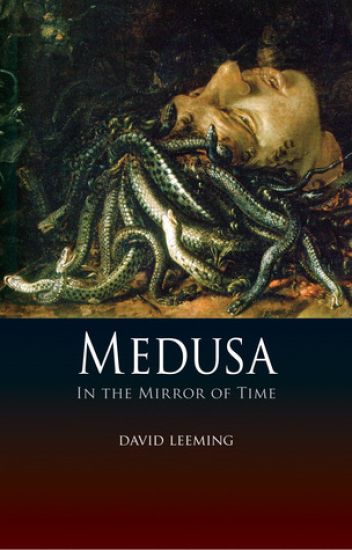
Medusa

Medusa

David Leeming

Reaktion Books
2013
sidottu
Medusa petrifies. Her gaze turned the ancients to stone; for Dante she was an erotic power that could destroy men. Freud saw in her serpentine hair a nest of terrifying penises signalling the castration complex, while for the Greek hero Perseus she was a dangerous female monster who must be destroyed. Yet in our time Medusa’s reputation has improved: feminists see her as a noble victim of a patriarchal society; the fashion house Versace celebrates the lure of her mysterious visage in a logo that stares out at us from his adverts; and she has served as a model for numerous theories by modern philosophers and intellectuals. In our contemporary culture she is once again a power player demanding to be recognized. Medusa still transfixes us. In Medusa: In the Mirror of Time David Leeming explores how and why the mythical figure of the Gorgon has become one of the most important and enduring of human history. He searches for Medusa’s origins in global cultures more disparate and more ancient than the well-known classical Greek and follows her path through the centuries. The author finds that the Medusa myth is a cultural dream that has continually developed and changed with each passing era, ultimately bringing him to the question: what does the Medusa dream say about us?
Sex in the World of Myth

Sex in the World of Myth

David Leeming

Reaktion Books
2018
sidottu
In Sex in the World of Myth, David Leeming argues that sex is as important in myths as it is in our lives. Myths are our cultural dreams, and sex is pervasive in all mythologies because it has obsessed and confused us like nothing else – what’s more, sexual myths, like all myths, can serve many purposes. The reproductive acts of the ancient Greek goddess Gaia perhaps reflect a pre-Olympian matriarchal social system. The tales of the unbridled sexual deeds of the Polynesian Maui, and many others, speak to a natural fascination with the power and mystery of sexual drives.Leeming demonstrates how even when such myths are meant to elicit laughter or titillation, the participation in them of sacred heroes and deities means they are in some sense religious – partial answers to the nature of existence in general, and human sexuality in particular.
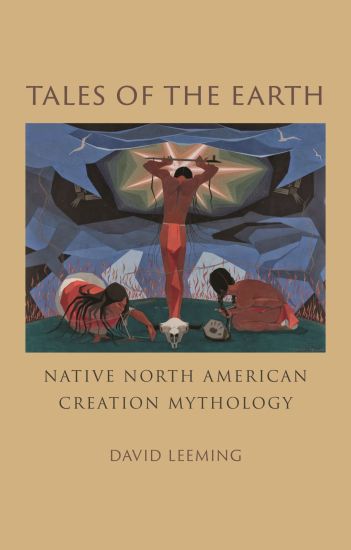
Tales of the Earth

Tales of the Earth

David Leeming

Reaktion Books
2021
sidottu
Tales of the Earth is a comprehensive yet concise overview of Native American mythologies. After outlining theories of the origins of Native North Americans, David Leeming considers the creation myths of many tribes, emphasizing four commonly occurring figures: the Great Spirit, the trickster, the goddess and the hero. Leeming suggests that in addition to these figures, Native American mythologies have in common a deep reverence for the earth, and for community responsibility as opposed to individualism - tenets that stand in stark contrast to the concepts of exceptionalism and Manifest Destiny that characterize the United States, a nation that was built on ancient tribal land.
Amazing Grace: A Life of Beauford Delaney
First published in 1998, Leeming’s landmark biography of Beauford Delaney returns to print Long out of print, this new edition of David Leeming’s landmark biography of Beauford Delaney (1901–79) features an introduction by Hilton Als. Leeming, also the author of James Baldwin’s acclaimed 1994 biography, delves into the captivating life of one of the most significant Black artists of our time. With rare affection, tact and insight, he paints a vivid portrait of an artist who defied convention and left an indelible mark on both art history and everyone he encountered—including a diverse array of writers, artists and musicians, from Henry Miller and Jean Genet to Baldwin and Georgia O’Keeffe. Tracing Delaney’s humble beginnings in a deeply religious family in Knoxville, Tennessee, to New York, to his untimely demise in a Parisian asylum, Leeming draws not only on his close friendship with the artist but also journals, notebooks, letters and critical reviews, guiding the reader through the evolution of his practice and his remarkable life. As Als writes in his introduction: “Sadly, there are many ways for the queer Black boy to die—but also, many ways for him to live. Delaney saved his own life through art, the making of worlds based on what he saw in his internal and external universe." David Adams Leeming (born 1937) is an American philologist and Professor Emeritus of English and Comparative Literature at the University of Connecticut. He is the author of The World of Myth (1990), James Baldwin: A Biography (1994) and the Oxford Companion to World Mythology (2005). He lives in Albuquerque, New Mexico.