Kirjojen hintavertailu. Mukana 11 244 527 kirjaa ja 12 kauppaa.

Kirjahaku

Etsi kirjoja tekijän nimen, kirjan nimen tai ISBN:n perusteella.

89 kirjaa tekijältä David Lewis

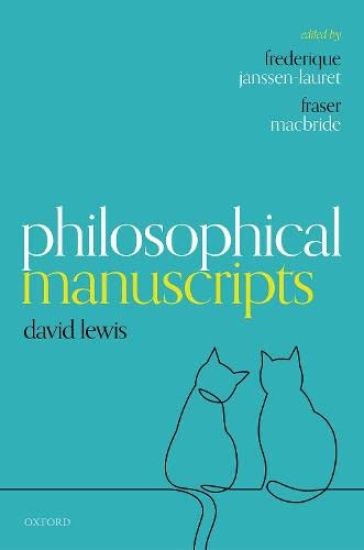
Philosophical Manuscripts

Philosophical Manuscripts

David Lewis

Oxford University Press
2023
sidottu
David Lewis (1941-2001) was a celebrated and influential figure in analytic philosophy. When Lewis died, he left behind a large body of unpublished notes, manuscripts, and letters. This volume contains two longer manuscripts which Lewis had originally intended to turn into books, and thirty-one shorter items. The longer manuscripts are 'The Paradoxes of Time Travel', his David Gavin Young Lectures at the University of Adelaide, and 'Confirmation Theory', which is based on a graduate course on probability and logic that he gave at UCLA. Lewis's described his purposes in 'The Paradoxes of Time Travel' as being, `(1) to solve a philosophical problem hitherto largely ignored or casually mis-solved by philosophers […]; (2) to introduce the layman to various topics in metaphysics, since our problem turns out to connect with many more familiar ones; and (3) to show of several of my favorite doctrines and methods in metaphysics'. By contrast, 'Confirmation Theory' is a technical work in which Lewis aimed to present in a unified fashion what he considered to be the best from competing theories of confirmation. Lewis described the work as 'Mathematically self-contained, with proofs for the major theorems; but the mathematics is kept down to hairy high-school algebra'. The thirty-one shorter items cover such topics as causation, freedom of the will, probability, counterparts, reference, logic, value, and divine evil. They are included here both for their intrinsic philosophical interest and their historical value. This volume also contains an intellectual biography of the young David Lewis by the editors.
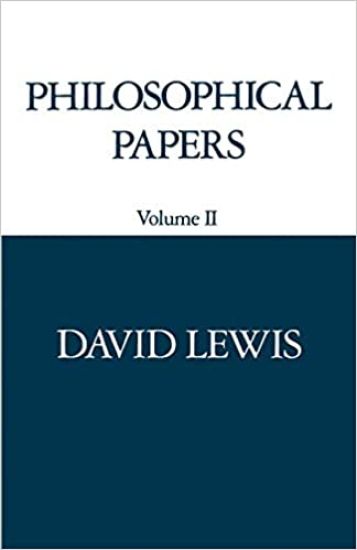
Philosophical Papers: Volume II

Philosophical Papers: Volume II

David Lewis

Oxford University Press Inc
1987
nidottu
This is the second volume of philosophical essays by one of the most innovative and influential philosophers now writing in English. Containing thirteen papers in all, the book includes both new essays and previously published papers, some of them with extensive new postscripts reflecting Lewis's current thinking. The papers in Volume II focus on causation and several other closely related topics, including counterfactual and indicative conditionals, the direction of time, subjective and objective probability, causation, explanation, perception, free will, and rational decision. Throughout, Lewis analyzes global features of the world in such a way as to show that they might turn out to supervene on the spatiotemporal arrangement of local qualities.
Occupation: Russian Rule in South-Eastern Ukraine

Occupation: Russian Rule in South-Eastern Ukraine

David Lewis

Oxford University Press
2025
sidottu
In September 2022, at a grandiose ceremony in the Kremlin, President Putin announced the incorporation into the Russian Federation of four provinces in southern and eastern Ukraine--the most significant attempted land seizure in Europe since World War II. Although Russia was not in control of large parts of these provinces, its military occupied more than 40,000 square miles of Ukrainian territory. Occupation explains how Russia sought to subjugate these territories through a toxic mix of violence, political influence and economic coercion. Its security forces kidnapped, tortured and killed civilians and officials, seized businesses and properties from Ukrainian owners, erased physical evidence of Ukrainian culture, and subjected the population to a barrage of constant propaganda. More than half of the pre-war population fled, to Europe, Russia or the rest of Ukraine, and most who remained were hostile to the occupiers. Yet Russia found local politicians to front its regime. A few people openly collaborated; most faced uncomfortable choices to survive under Russian rule. In occupied Ukraine, Moscow attempted to create an ersatz 'new Russia', based on fantasy, ideology and violence. This regime was a microcosm of the contemporary Russian Federation, reflecting its deepening militarization and authoritarianism.
Temptations of Tyranny in Central Asia

Temptations of Tyranny in Central Asia

David Lewis

Oxford University Press, USA
2008
sidottu
After the toppling of the Taliban regime in Afghanistan the important but overlooked former Soviet states of Central Asia became for a brief time key players in the US-led war on terror. American and other Western military and economic aid poured in on the assumption that stability and greater democratisation would follow in its wake. But only a few years later the West's strategy to exert geopolitical influence in the region is in tatters. How did it all go so wrong? The Temptations of Tyranny in Central Asia explains why the US alliance with Uzbekistan failed to produce reform and instead ended with the massacre of hundreds of civilians in Andijan; it provides the first detailed account of the 2005 revolution in Kyrgyzstan; investigates the bizarre dictatorship in Turkmenistan that threatens to be the next North Korea; and examines the Islamic militant groups that threaten stability in the region. The book concludes with some of the lessons for Western policy in Central Asia, including the possibility of democratisation in the Islamic world; the myths and realities of Islamist militancy; the role of authoritarian states in inciting radicalism and violence; the conflict in US policy between security relationships and rhetorical commitments to democracy and human rights; and the developing rivalry between China, Russia and the US in the region.
Reading Contemporary Picturebooks
Reading Contemporary Picturebooks takes a look at one of the most vibrant branches of children's literature - the modern picturebook. This exciting new book takes a sample of contemporary picturebooks and closely examines the features that make them distinctive and then suggests a way of characterising the 'interanimation' of words and pictures that is the essence of the form. The reasons for the picturebook's vitality and flexibility are also explored and the close bond between the picturebook and its readers is analyzed. Advances in our understanding of how visual images are organized are examined and the book concludes with an attempt to redescribe the picturebook in such a way that pictures, readers and text may be drawn together. Picturing Text will be of interest to students, teachers and researchers interested in reading, children's literature and media studies.
Reading Contemporary Picturebooks
Reading Contemporary Picturebooks takes a look at one of the most vibrant branches of children's literature - the modern picturebook. This exciting new book takes a sample of contemporary picturebooks and closely examines the features that make them distinctive and then suggests a way of characterising the 'interanimation' of words and pictures that is the essence of the form. The reasons for the picturebook's vitality and flexibility are also explored and the close bond between the picturebook and its readers is analyzed. Advances in our understanding of how visual images are organized are examined and the book concludes with an attempt to redescribe the picturebook in such a way that pictures, readers and text may be drawn together. Picturing Text will be of interest to students, teachers and researchers interested in reading, children's literature and media studies.
The Management of Non-Governmental Development Organizations
The first edition of this book was published in 2001 by Routledge and was the first academic text on the important new emerging field of NGO management. It sets out the field for researchers with a new and original conceptual framework, contains a comprehensive review of existing literature from a variety of disciplines (including management, development studies, and social policy) and provides wide-ranging examples from the author’s own practical and research experience. New to this edition:twelve new detailed case studies of NGO management issues and challengesnew discussion points, lessons learned and questions for debate to guide the reader through each chapterdefinitions of key termshighlighted key ideas to illustrate each chapter.Revealing the distinctive organizational challenges faced by NGOs this second edition provides a fully updated and revised text that will prove invaluable to all those studying or working in NGOs, the voluntary sector or development studies. Visit the Companion website at www.routledge.com/textbooks/978-0-415-37093-6.
The Management of Non-Governmental Development Organizations
The first edition of this book was published in 2001 by Routledge and was the first academic text on the important new emerging field of NGO management. It sets out the field for researchers with a new and original conceptual framework, contains a comprehensive review of existing literature from a variety of disciplines (including management, development studies, and social policy) and provides wide-ranging examples from the author’s own practical and research experience. New to this edition:twelve new detailed case studies of NGO management issues and challengesnew discussion points, lessons learned and questions for debate to guide the reader through each chapterdefinitions of key termshighlighted key ideas to illustrate each chapter.Revealing the distinctive organizational challenges faced by NGOs this second edition provides a fully updated and revised text that will prove invaluable to all those studying or working in NGOs, the voluntary sector or development studies. Visit the Companion website at www.routledge.com/textbooks/978-0-415-37093-6.
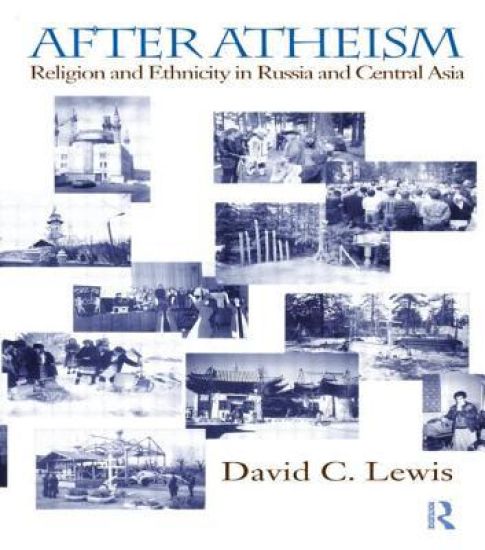
After Atheism

After Atheism

David Lewis

Routledge
2014
nidottu
Based on interviews with people throughout Siberia, Central Asia and European Russia about their spiritual experiences, this book brings together insights into the 'religious' worldview of those who claim to be Buddhist, Muslim, Christian, pagan or even 'atheist'. Throughout the ex-Soviet Union peoples of many different ethnic backgrounds report such experiences but often do not know how to interpret them, a position helped or hindered by the fact that at the same time these people are trying to rediscover their ethnic and cultural identity.
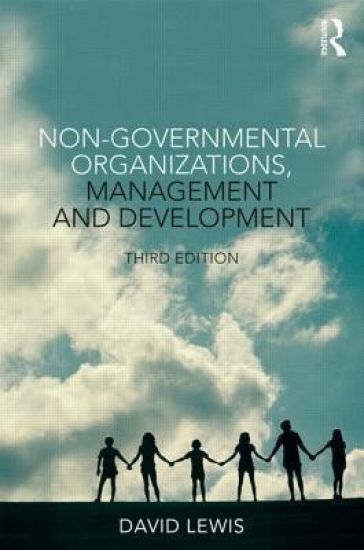
Non-Governmental Organizations, Management and Development
Non-Governmental Development Organizations have seen turbulent times over the decades; however, recent years have seen them grow to occupy high-profile positions in the fight against poverty. They are now seen as an important element of ‘civil society’, a concept that has been given increasing importance by global policy makers. This book has evolved during the course of that period to be a prime resource for those working (or wishing to work) with and for NGOs.The third edition of Non-Governmental Organizations, Management and Development is fully updated and thoroughly reorganized, covering key issues including, but not limited to, debates on the changing global context of international development and the changing concepts and practices used by NGOs. The interdisciplinary approach employed by David Lewis results in an impressive text that draws upon current research in non-pro?t management, development management, public management and management theory, exploring the activities, relationships and internal structure of the NGO. This book remains the first and only comprehensive and academically grounded guide to the issues facing international development NGOs as they operate in increasingly complex and challenging conditions around the world. It is the perfect resource for students undertaking studies of NGOs and the non-profit sector, in addition to being an excellent resource for development studies students more generally.
Non-Governmental Organizations, Management and Development
Non-Governmental Development Organizations have seen turbulent times over the decades; however, recent years have seen them grow to occupy high-profile positions in the fight against poverty. They are now seen as an important element of ‘civil society’, a concept that has been given increasing importance by global policy makers. This book has evolved during the course of that period to be a prime resource for those working (or wishing to work) with and for NGOs.The third edition of Non-Governmental Organizations, Management and Development is fully updated and thoroughly reorganized, covering key issues including, but not limited to, debates on the changing global context of international development and the changing concepts and practices used by NGOs. The interdisciplinary approach employed by David Lewis results in an impressive text that draws upon current research in non-pro?t management, development management, public management and management theory, exploring the activities, relationships and internal structure of the NGO. This book remains the first and only comprehensive and academically grounded guide to the issues facing international development NGOs as they operate in increasingly complex and challenging conditions around the world. It is the perfect resource for students undertaking studies of NGOs and the non-profit sector, in addition to being an excellent resource for development studies students more generally.
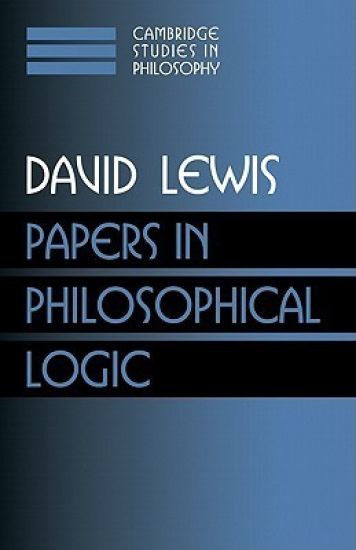
Papers in Philosophical Logic: Volume 1

Papers in Philosophical Logic: Volume 1

David Lewis

Cambridge University Press
1997
sidottu
This is the first of a three-volume collection of David Lewis's most recent papers in all the areas to which he has made significant contributions. The purpose of this collection (and the two volumes to follow) is to disseminate even more widely the work of a preeminent and influential late twentieth-century philosopher. The papers are now offered in a readily accessible format. This first volume is devoted to Lewis's work on philosophical logic from the last twenty-five years. The topics covered include: deploying the methods of formal semantics from artificial formalised languages to natural languages, model-theoretic investigations of intensional logic, contradiction, relevance, the differences between analog and digital representation, and questions arising from the construction of ambitious formalised philosophical systems. The volume will serve as an important reference tool for all philosophers and their students.
Papers in Metaphysics and Epistemology: Volume 2

Papers in Metaphysics and Epistemology: Volume 2

David Lewis

Cambridge University Press
1999
sidottu
This volume is devoted to Lewis's work in metaphysics and epistemology. Topics covered include properties, ontology, possibility, truthmaking, probability, the mind-body problem, vision, belief, and knowledge. The purpose of this collection, and the volumes that precede and follow it, is to disseminate more widely the work of an eminent and influential contemporary philosopher. The volume will serve as a useful work of reference for teachers and students of philosophy.
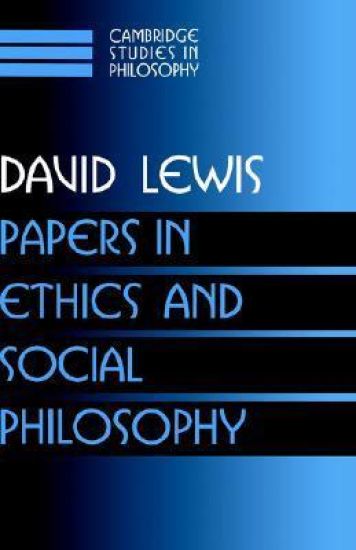
Papers in Ethics and Social Philosophy: Volume 3

Papers in Ethics and Social Philosophy: Volume 3

David Lewis

Cambridge University Press
1999
sidottu
This volume is devoted to Lewis's work in ethics and social philosophy. Topics covered include the logic of obligation and permission; decision theory and its relation to the idea that beliefs might play the motivating role of desires; a subjectivist analysis of value; dilemmas in virtue ethics; the problem of evil; problems about self-prediction; social coordination, linguistic and otherwise; alleged duties to rescue distant strangers; toleration as a tacit treaty; nuclear warfare; and punishment. This collection, and the two preceding volumes, will disseminate more widely the work of an eminent and influential contemporary philosopher.
Papers in Ethics and Social Philosophy: Volume 3

Papers in Ethics and Social Philosophy: Volume 3

David Lewis

Cambridge University Press
1999
pokkari
This volume is devoted to Lewis's work in ethics and social philosophy. Topics covered include the logic of obligation and permission; decision theory and its relation to the idea that beliefs might play the motivating role of desires; a subjectivist analysis of value; dilemmas in virtue ethics; the problem of evil; problems about self-prediction; social coordination, linguistic and otherwise; alleged duties to rescue distant strangers; toleration as a tacit treaty; nuclear warfare; and punishment. This collection, and the two preceding volumes, will disseminate more widely the work of an eminent and influential contemporary philosopher.
Papers in Metaphysics and Epistemology: Volume 2

Papers in Metaphysics and Epistemology: Volume 2

David Lewis

Cambridge University Press
1999
pokkari
This volume is devoted to Lewis's work in metaphysics and epistemology. Topics covered include properties, ontology, possibility, truthmaking, probability, the mind-body problem, vision, belief, and knowledge. The purpose of this collection, and the volumes that precede and follow it, is to disseminate more widely the work of an eminent and influential contemporary philosopher. The volume will serve as a useful work of reference for teachers and students of philosophy.
Papers in Philosophical Logic: Volume 1

Papers in Philosophical Logic: Volume 1

David Lewis

Cambridge University Press
1997
pokkari
This is the first of a three-volume collection of David Lewis’s most recent papers in all the areas to which he has made significant contributions. The purpose of this collection (and the two volumes to follow) is to disseminate even more widely the work of a preeminent and influential late twentieth-century philosopher. The papers are now offered in a readily accessible format. This first volume is devoted to Lewis’s work on philosophical logic from the last twenty-five years. The topics covered include: deploying the methods of formal semantics from artificial formalised languages to natural languages, model-theoretic investigations of intensional logic, contradiction, relevance, the differences between analog and digital representation, and questions arising from the construction of ambitious formalised philosophical systems. The volume will serve as an important reference tool for all philosophers and their students.