Kirjojen hintavertailu. Mukana 11 238 995 kirjaa ja 12 kauppaa.

Kirjahaku

Etsi kirjoja tekijän nimen, kirjan nimen tai ISBN:n perusteella.

22 kirjaa tekijältä David Loades

John Dudley, Duke of Northumberland 1504-1553
This book reconstructs the personal and political life of John Dudley (1504-1553), Viscount Lisle, Earl of Warwick, and Duke of Northumberland. For three and a half years (1549-1553) as Lord President of the Council, he was leader of Edward VI's minority government. His involvement in the notorious attempt to frustrate Mary's claim to the throne in favour of his daughter-in-law, Jane Grey, contributed substantially to the evil reputation which clung to him both at the time and since. He is conventionally portrayed as an ambitious, unscrupulous man, who embraced and renounced the Reformation to suit his own purposes. The fact that his father was Henry VII's detested financial agent Edmund Dudley, and one of his sons the colourful Earl of Leicester, has helped to confirm his unprincipled image. Now his reputation is being reassessed, but historians have concentrated almost entirely on his years in power - the last four years of his life. Drawing upon new research, Professor Loades looks at John Dudley's whole career and by considering the lives of his father, Edmund, and his sons, places him in longer historical perspective. A new and important interpretation of the Tudor service nobility emerges in which John Dudley is seen not merely as an overmighty subject and kingmaker, but first and foremost as a servant of the English Crown.

Power in Tudor England

Power in Tudor England

David Loades

Red Globe Press
1996
nidottu
England was the most centralised state in medieval Europe. The Tudors built on this situation to reduce still further the provincial power of the nobility, and to eliminate the remaining jurisdictional franchises. But sixteenth century England was not monolithic, nor homogeneous. There were still strong local identities, both political and culture, and the Tudors achieved success by working through the local elites, rather than against them.
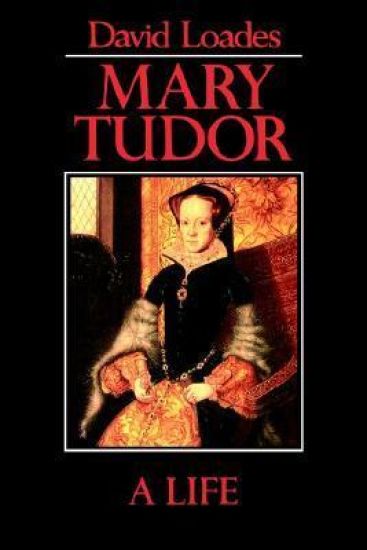
Mary Tudor

Mary Tudor

David Loades

JOHN WILEY AND SONS LTD
1992
nidottu
Few English monarchs have a worse reputation than Mary Tudor. She has been seen both as a religious fanatic who tried against the will of her people to reverse the course of the Reformation and as the pawn of her husband, Philip II of Spain - her infatuation with whom led her to betray England's vital interests. How this pious, and by contemporary accounts, gentle woman aroused an antipathy that survives until the present is a central question in David Loades's sensitive biography, now in paperback. Based on research into the documents of the time (many newly uncovered) the compelling story of Mary's life is revealed here in unprecedented detail and depth, packed with incident and intrigue, and enmeshed in the politics of secular and religious struggle in England and Europe.
Tudor Government

Tudor Government

David Loades

Blackwell Publishers
1997
sidottu
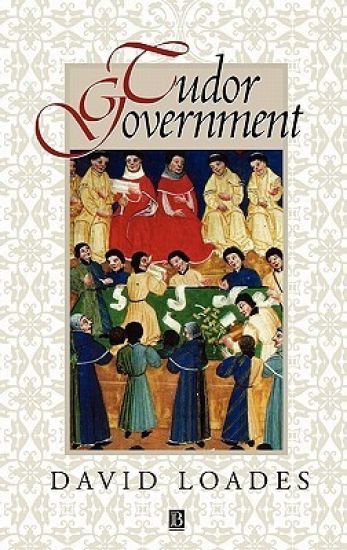
This book examines the structures of power and jurisdiction that operated in Tudor England. It explains what the institutions of central government were designed to do, and how they related to each other.
Tudor Government

Tudor Government

David Loades

Blackwell Publishers
1997
nidottu
This book examines the structures of power and jurisdiction that operated in Tudor England. It explains what the institutions of central government were designed to do, and how they related to each other.
The Life and Career of William Paulet (c.1475–1572)

The Life and Career of William Paulet (c.1475–1572)

David Loades

Ashgate Publishing Limited
2008
sidottu
William Paulet, first Marquis of Winchester, was one of the most remarkable and influential men of sixteenth-century England. Born in Wiltshire in 1475, he lived to the advanced age of 97, during which time he held the posts of Lord Treasurer, Master of the King's Wards, Controller of the Household, Lord Chamberlain, Speaker of the House of Lords, and President of the Council. In recognition of his services, Edward VI promoted him to the Marquisate of Winchester in 1551, cementing his position amongst the nation's elite. Providing for the first time a full length account of Paulet's life and his extended role at the heart of Tudor government, this book will be welcomed by scholars of sixteenth-century England as an invaluable aid to better understanding the period. Taking a broadly chronological approach, the book presents the main features of his life against the turbulent background of mid-sixteenth-century history. As well as demonstrating how he managed to hold office under three monarchs - Edward VI, Mary I and Elizabeth I - with radically different religious policies, this book considers Paulet's considerable impact on the economic, political and ecclesiastical landscape of Tudor England.
The Tudor Queens of England

The Tudor Queens of England

David Loades

Continuum Publishing Corporation
2010
nidottu
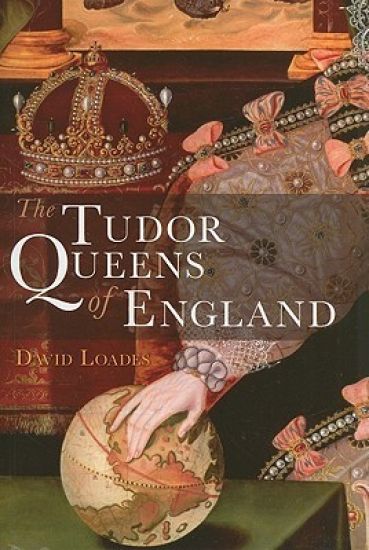
From Elizabeth of York - wife of Henry VII, the first Tudor monarch - through to Elizabeth I, her grand-daughter and the last in the line, this book explores some of the most colorful and dramatic women in British history. Queen consorts were central to the Royal Court but their role has rarely been examined or contrasted with the better known ruling queens. How did they behave (in and out of the bedchamber)? How powerful were they as patrons of learning and the arts? What religious views did they espouse and why? How successful and influential were they?
The Tudor Navy

The Tudor Navy

David Loades

Scolar Press
1992
sidottu
The Tudor Navy is a subject which is very unevenly known. The last significant general histories were written at the end of the last century. Since then much detailed research has been undertaken, particularly on the Armada, the end of Henry VIII's reign and the early Elizabethan period. As a result, it has been generally thought that the navy went through a series of booms and slumps during the sixteenth century. Further research on the intervening periods now presents a much more even picture of development, although the pace of advance was uneven. At the same time naval history has tended to be seen in isolation, presented by special naval experts. It is better understood as a part of the general administrative, political and above all financial history of the period. This book is designed to present a whole story, set in its proper contemporary context.
The Tudors

The Tudors

David Loades

Continuum Publishing Corporation
2012
sidottu
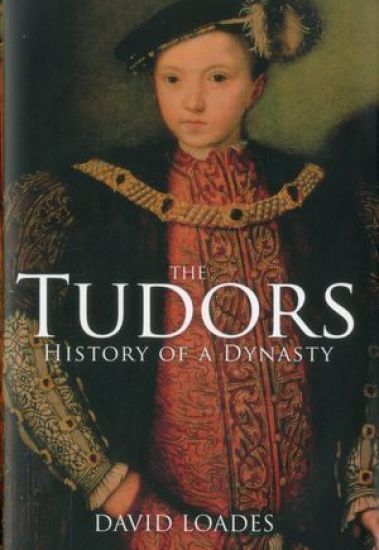
This title offers a new and comprehensive overview of the complete Tudor dynasty taking in the most recent scholarship. David Loades provides a masterful overview of this formative period of British history. Exploring the reign of each monarch within the framework of the dynasty, he unpacks the key questions surrounding the monarchy; the relationship between church and the state, development of government, war and foreign policy, the question of Ireland and the issue of succession in Tudor politics. Loades considers the recent scholarship on the dynasty as a whole, and Henry VIII, Elizabeth I and Mary Tudor in particular and considers how recent revisionist history asks new questions of their political and personal lives. This places our understanding of the dynasty as a whole in a new light.
Mary Tudor

Mary Tudor

David Loades

Amberley Publishing
2012
pokkari
Mary Tudor was the first female English sovereign - a ruling queen who was not simply the consort of the king. Yet little is known about this complex woman, whose reputation for ruthlessness belied her emotional fragility and who, like her half-sister Elizabeth, had to survive from childhood in the turbulent Tudor court. David Loades explores the twisting path whereby Princess Mary, daughter of a rejected wife, Catherine of Aragon, and a capricious father - Henry VIII - endured disfavour, personal crisis and house arrest to emerge as Queen of England with huge popular support. The high promise of her reign contrasts with the personal tragedies and disappointments that followed, from the Smithfield burnings and the loss of Calais to her doomed, loveless marriage to Philip of Spain. Loades' probing yet sympathetic account reveals an intriguing personality, impelled by deep-set beliefs and principles yet uncertain how to behave in a 'man's' role. Includes 59 Illustraions (14 in colour)
The Six Wives of Henry VIII

The Six Wives of Henry VIII

David Loades

Amberley Publishing
2014
pokkari
The story of Henry VIII and his six wives has passed from history into legend – taught in the cradle as a cautionary tale and remembered in adulthood as an object lesson in the dangers of marrying into royalty. The true story behind the legend, however, remains obscure to most people, whose knowledge of the affair begins and ends with the aide memoire ‘Divorced, executed, died, divorced, executed, survived’. David Loades’ masterly book recounts Henry’s whole sorry tale in detail from his first marriage, to his brother’s widow Catherine of Aragon, to his more or less contented old age in the care of the motherly Catherine Parr.
The Kings & Queens of England

The Kings & Queens of England

David Loades

Amberley Publishing
2013
pokkari
This is the history of the men and women who have occupied the highest position in English, and later British society. For about a thousand years they were superior lords, the leaders of a nobility which ruled; and for about three hundred years thereafter they were sovereigns, whose servants ruled in their name. Now, with the rise of democracy, they no longer rule. The Queen is a symbol and a social leader, vastly experienced in the ways of the world, and the head of a family which strives to be useful in a modern community. The records of the monarchy vary from one period to another, and many of them are political in nature. However, it is always necessary to remember the human being behind the constitutional façade. This is an attempt to recover their identities. An authoritative and accessible history of the lives of the kings and queens of England. Fabulously illustrated with over 150 contemporary images and genealogical tables, many in full colour. Praise for David Loades: Henry VIII (Amberley, 2011) ‘A triumph’ THE SPECTATOR; Mary Tudor: A Life (Blackwell, 1994) ‘An excellent and sensitive biography’ THE OBSERVER. Individual chapters on each reigning monarch, including the major pre-1066 rulers.
The Kings & Queens of England

The Kings & Queens of England

David Loades

Amberley Publishing
2014
pokkari
This is the history of the men and women who occupied the highest position in English, and later British, society. From Richard III’s infamous life and death, to Henry VIII’s wives, Charles I’s execution and Queen Victoria’s exceptionally long reign, their dramatic story unfolds within the pages of this book. For about a thousand years they were superior lords, the leaders of a nobility which ruled, and for about three hundred years thereafter they were sovereigns, whose servants ruled in their name. Now, with the rise of democracy, they no longer rule. The Queen is a symbol and a social leader, vastly experienced in the ways of the world, and the head of a family that strives to be useful in a modern community. The records of the monarchy vary from one period to another, and many of them are political in nature. However, it is always necessary to remember the human being behind the constitutional façade. This is an attempt to recover their identities.
Jane Seymour

Jane Seymour

David Loades

Amberley Publishing
2014
pokkari
Jane was Henry VIII’s third queen, and she was described by him as ‘his first true wife’, both his first two marriages having been annulled. She was twenty-seven when he married her, and came of a solid gentry family with good court connections. She had served both Catherine of Aragon and Anne Boleyn as a Lady of the Privy Chamber, and her failure to find a suitable marriage is something of a mystery. He was forty-four and desperate for the male heir who had so far eluded him, but which Jane’s placid disposition and sexual availability seemed to promise. She was no great beauty, but came of a good breeding stock, and therein lay his hope. They married at the end of May 1536, and she became pregnant at about the end of the year, a condition which advanced normally, but which caused the king acute anxiety as the summer of 1537 advanced. Then in October 1537 Jane performed the great miracle, and bore Henry a son, who lived and flourished. Tragically she died of puerperal fever a few days later, leaving the court in mourning and the king devastated. Her obsequies were elaborate and prolonged, and Henry stayed in mourning for many weeks. The king’s son, Prince Edward, was carefully nurtured, and probably did not miss the mother he had never known. When the time came, his education was overseen by Henry’s sixth queen, Catherine Parr, and he seems not to have had much of the Seymours in his make-up. He was very much his father’s boy.
The Seymours of Wolf Hall

The Seymours of Wolf Hall

David Loades

AMBERLEY PUBLISHING
2017
pokkari
Although the Seymours arrived with the Normans, it is with Jane, Henry VIII’s third queen, and her brothers – Edward, Duke of Somerset, and Thomas, Lord Seymour of Sudeley – that they became prominent. Jane bore Henry his longed-for son, Edward VI, and both her brothers achieved prominence through her. Her brother Edward was central to Henry’s activities in Scotland and became Lord Protector for the young king, his nephew, a hugely powerful position. Thomas married Henry’s sixth wife, Catherine Parr, and after her death in 1548 aimed to marry Princess Elizabeth (the future Elizabeth I), with whom he had flirted when she was in Catherine’s care, and for this he was executed for high treason. Edward fell foul of his fellow councillors and was also executed. Edward’s son was restored to the title of Lord Hertford by Elizabeth I, but was sent to the Tower when it emerged that he had secretly married Jane Grey’s sister, Catherine, who was Elizabeth’s protestant heir. Both her marriage and pregnancy were an affront to the queen. This is the epic rise and fall of the family at the heart of the Tudor court and of Henry VIII’s own heart; he described Jane as ‘my first true wife’ and left express orders to be buried next to her tomb at Windsor Castle. The family seat of Wolfhall or ‘Wolf Hall’ in Wiltshire is long gone, but it lives on as an icon of the Tudor age.
Henry VIII: King and Court

Henry VIII: King and Court

David Loades

Pitkin Publishing
2009
nidottu
This beautifully illustrated Pitkin guide looks beneath the glittering surface of the Henry VIII's court, peeping behind the scenes of Court splendour at everyday life and at every level of the royal household. A must for every resident and visitor to the UK.
The Religious Culture of Marian England

The Religious Culture of Marian England

David Loades

Pickering Chatto (Publishers) Ltd
2010
sidottu
Loades explores England's religious cultures during the reign of Mary Tudor. He investigates how conflicting traditions of conformity and dissent negotiated the new spiritual, political and legal landscape which followed her reintroduction of Catholicism to England.
Elizabeth I

Elizabeth I

David Loades

BLOOMSBURY PUBLISHING PLC
2003
sidottu
Elizabeth I, who reigned over Shakespeare's England and defeated the Spanish Armada, is familiar both from her portraits and as Gloriana, the Virgin Queen. Yet the reality of her character and her personal attitudes are harder to detect behind the public mask. Elizabeth I, a major biography by a leading Tudor expert to mark the 400th anniversary of her death in 1603, looks in detail behind the public life at the private woman. It treats at length her early years and examines her actions and policies as queen. David Loades's biography brings out her remarkable talents and unique achievements.
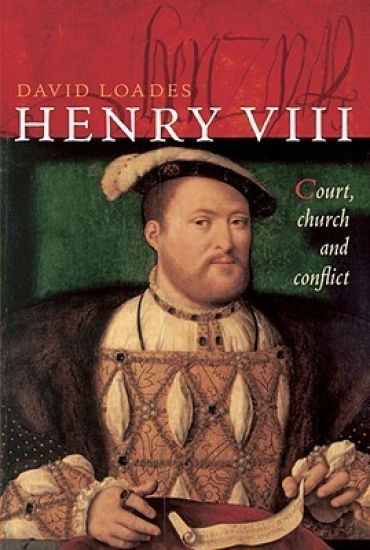
Henry VIII

Henry VIII

David Loades

The National Archives
2009
nidottu
"Henry VIII" focuses on the fluctuating, often fraught relationship between the king and his court, his Church and his people - and with the other powers of continental Europe. It shows how Henry manipulated key players such as Wolsey, Cromwell, Fisher and More, and how his royal image was shaped over decades of change. It also probes the intriguing nature of the man behind the monarch - his passions, pleasure and complex religious beliefs. Leading Tudor historian David Loades explores the expectations that contemporaries had of the Renaissance prince who ascended the throne and the England that the young king inherited. He considers Henry's rich and varied reign in detail, revealing his role in court, in wars, law enforcement, rebellions and the problem of Ireland.