

Kirjahaku
Etsi kirjoja tekijän nimen, kirjan nimen tai ISBN:n perusteella.
16 kirjaa tekijältä David Lowenthal

The West Indies Federation Perspectives on a New Nation
David Lowenthal
Columbia University Press
2022
sidottu
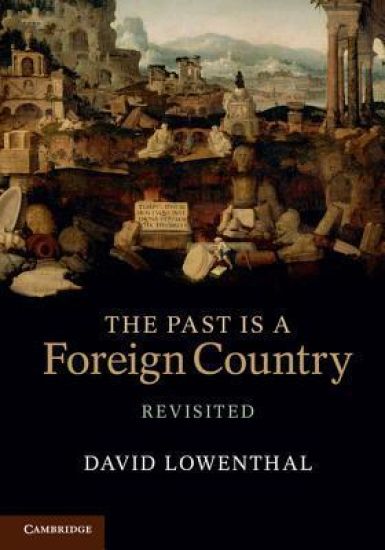
The past remains essential - and inescapable. A quarter-century after the publication of his classic account of man's attitudes to his past, David Lowenthal revisits how we celebrate, expunge, contest and domesticate the past to serve present needs. He shows how nostalgia and heritage now pervade every facet of public and popular culture. History embraces nature and the cosmos as well as humanity. The past is seen and touched and tasted and smelt as well as heard and read about. Empathy, re-enactment, memory and commemoration overwhelm traditional history. A unified past once certified by experts and reliant on written texts has become a fragmented, contested history forged by us all. New insights into history and memory, bias and objectivity, artefacts and monuments, identity and authenticity, and remorse and contrition, make this book once again the essential guide to the past that we inherit, reshape and bequeath to the future.
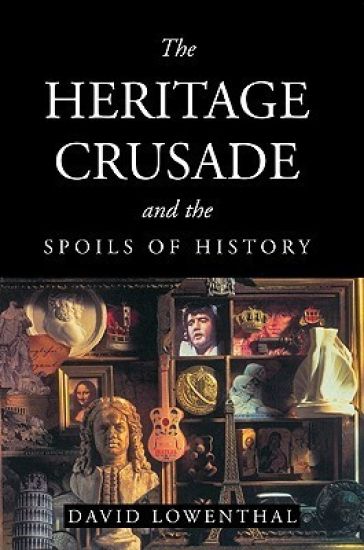
The Heritage Crusade and the Spoils of History
David Lowenthal
Cambridge University Press
1998
pokkari
Heritage has burgeoned over the past quarter of a century from a small élite preoccupation into a major popular crusade. Everything from Disneyland to the Holocaust Museum, from the Balkan wars to the Northern Irish troubles, from Elvis memorabilia to the Elgin Marbles bears the marks of the cult of heritage. In this acclaimed book David Lowenthal explains the rise of this new obsession with the past and examines its power for both good and evil.
The past remains essential - and inescapable. A quarter-century after the publication of his classic account of man's attitudes to his past, David Lowenthal revisits how we celebrate, expunge, contest and domesticate the past to serve present needs. He shows how nostalgia and heritage now pervade every facet of public and popular culture. History embraces nature and the cosmos as well as humanity. The past is seen and touched and tasted and smelt as well as heard and read about. Empathy, re-enactment, memory and commemoration overwhelm traditional history. A unified past once certified by experts and reliant on written texts has become a fragmented, contested history forged by us all. New insights into history and memory, bias and objectivity, artefacts and monuments, identity and authenticity, and remorse and contrition, make this book once again the essential guide to the past that we inherit, reshape and bequeath to the future.
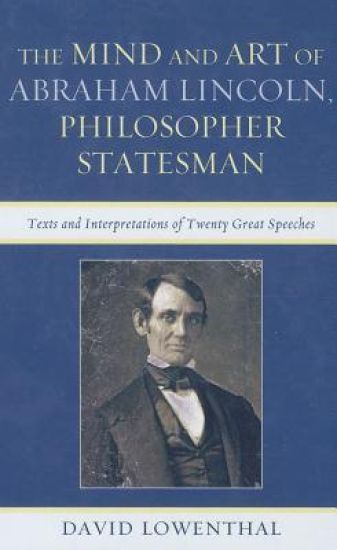
The Mind and Art of Abraham Lincoln, Philosopher Statesman
David Lowenthal
Lexington Books
2012
sidottu
By analyzing many of Lincoln's most important speeches, The Mind and Art of Abraham Lincoln, Philosopher Statesman shows him to be a profound and systematic thinker who tries to get at the root of issues, not all of them strictly political. Lowenthal emphasizes Lincoln's manner of writing, which enables him to conceal his most radical thoughts, and pays special attention to the reasoning and artfulness with which he treats a wide variety of subjects. The book follows Lincoln from his Perpetuation or Lyceum address in 1838 to his last speech just after Lee's surrender, as he confronts the great issues of the day and lays out the fundamentals of American politics. Along the way, Lowenthal's careful analysis frees Lincoln of the charge of racial prejudice with which he has been saddled in recent years.
The Mind and Art of Abraham Lincoln, Philosopher Statesman
David Lowenthal
Lexington Books
2012
nidottu
By analyzing many of Lincoln's most important speeches, The Mind and Art of Abraham Lincoln, Philosopher Statesman shows him to be a profound and systematic thinker who tries to get at the root of issues, not all of them strictly political. Lowenthal emphasizes Lincoln's manner of writing, which enables him to conceal his most radical thoughts, and pays special attention to the reasoning and artfulness with which he treats a wide variety of subjects. The book follows Lincoln from his Perpetuation or Lyceum address in 1838 to his last speech just after Lee's surrender, as he confronts the great issues of the day and lays out the fundamentals of American politics. Along the way, Lowenthal's careful analysis frees Lincoln of the charge of racial prejudice with which he has been saddled in recent years.

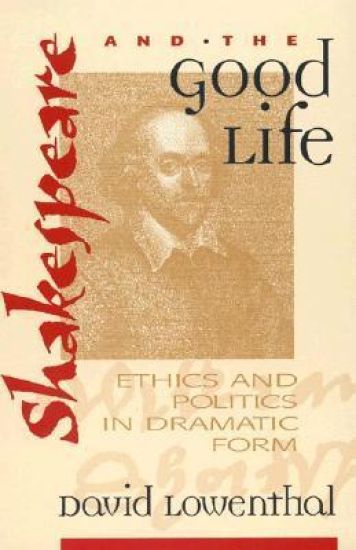

In this engaging and accessible book, distinguished scholar David Lowenthal demonstrates that each of Shakespeare's plays examines certain fundamental issues of moral and political life. Lowenthal discusses some of the Bard's best-known plays, and elicits the problem (and solution) occupying each one. Every component of a Shakespearean drama, argues Lowenthal, including plot, characters, and speeches, can be understood and explained as deriving from the particular issue that play examines. However, Shakespeare wanted to be known as a poet, not a philosopher. Lowenthal shows how and why Shakespeare achieved his goal, and in so doing he illuminates Shakespeare's artistry in a unique and compelling way. Anyone who has marveled at the beauty and complexity of the plays of Shakespeare will be grateful for Lowenthal's insightful exploration of their deeper meaning.
Is unity of knowledge possible? Is it desirable? Two rival visions clash. One seeks a single way of explaining everything known and knowable about ourselves and the universe. The other champions diverse modes of understanding served by disparate kinds of evidence. Contrary views pit science against the arts and humanities. Scientists generally laud and seek convergence. Artists and humanists deplore amalgamation as a threat to humane values. These opposing perspectives flamed into hostility in the 1950s "Two Cultures" clash. They culminate today in new efforts to conjoin insights into physical nature and human culture, and new fears lest such syntheses submerge what the arts and humanities most value. This book, stemming from David Lowenthal’s inaugural Stockholm Archipelago Lectures, explores the Two Cultures quarrel’s underlying ideologies. Lowenthal shows how ingrained bias toward unity or diversity shapes major issues in education, religion, genetics, race relations, heritage governance, and environmental policy. Aimed at a general academic audience, Quest for the Unity of Knowledge especially targets those in conservation, ecology, history of ideas, museology, and heritage studies.

Is unity of knowledge possible? Is it desirable? Two rival visions clash. One seeks a single way of explaining everything known and knowable about ourselves and the universe. The other champions diverse modes of understanding served by disparate kinds of evidence. Contrary views pit science against the arts and humanities. Scientists generally laud and seek convergence. Artists and humanists deplore amalgamation as a threat to humane values. These opposing perspectives flamed into hostility in the 1950s "Two Cultures" clash. They culminate today in new efforts to conjoin insights into physical nature and human culture, and new fears lest such syntheses submerge what the arts and humanities most value. This book, stemming from David Lowenthal’s inaugural Stockholm Archipelago Lectures, explores the Two Cultures quarrel’s underlying ideologies. Lowenthal shows how ingrained bias toward unity or diversity shapes major issues in education, religion, genetics, race relations, heritage governance, and environmental policy. Aimed at a general academic audience, Quest for the Unity of Knowledge especially targets those in conservation, ecology, history of ideas, museology, and heritage studies.

Shakespeare’s Thought: Unobserved Details and Unsuspected Depths in Eleven Plays demonstrates that Shakespeare’s plays were conceived and executed as studies of great moral and political issues. After examining the divergent views of critics across the years, this book goes on to analyze eleven of Shakespeare’s most famous plays, observing details and supplying interpretations that indicate the depth of his mind and the full extent of his artistic spirit. This book offers an in-depth exploration of the ways in which each play demonstrates Shakespeare’s political thought and his poetic genius.
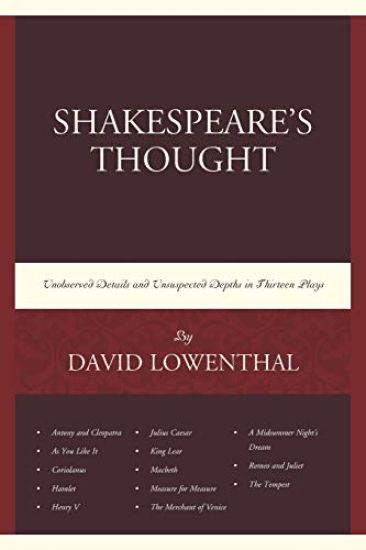
Shakespeare’s Thought: Unobserved Details and Unsuspected Depths in Eleven Plays demonstrates that Shakespeare’s plays were conceived and executed as studies of great moral and political issues. After examining the divergent views of critics across the years, this book goes on to analyze eleven of Shakespeare’s most famous plays, observing details and supplying interpretations that indicate the depth of his mind and the full extent of his artistic spirit. This book offers an in-depth exploration of the ways in which each play demonstrates Shakespeare’s political thought and his poetic genius.
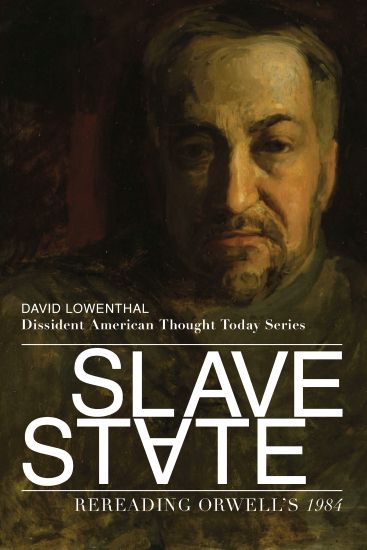
David Lowenthal transposes present society onto that in the novel, 1984, and illustrates “how the quest for a perfect society led instead to the worst––in the course of revolting against which the true ends of life are established.” It is more than suspicion: the year 2021 is 1984. What many understand by instinct, Lowenthal here articulates in clear terms using the political prophesy of this no longer futuristic literature. To be one without truthful unity? This is the picture of human brotherhood ushering in the only thing worse than inequality––enslavement. There is no positive political message in 1984, argues Lowenthal, but there is positive moral message that is nearly always overlooked by commentators. “Through the movement of the novel, Orwell tries to impress on the passions, hearts and minds of his readers the most valuable lessons concerning the right and wrong way to live. With the decline of Christianity’s influence in forming the moral sense of the West and the concomitant increase in power hunger, wielding instruments born of modern enlightenment, what mankind most needed was moral guidance, conveyed not abstractly, through philosophy, but in such a way as to grip the whole soul.” But can Orwell be trusted as a guide to the goodness in human nature? Lowenthal says he can be, and more. He gives us a sketch of the intellectual process that compels Orwell to ultimately outgrow Marxism, his detection and rejection of totalitarian regimes (above all in Communism), and in what way the principles of liberalism of his day were given warning labels by a writer who was not a formally educated political philosopher. Laced with relativism, any current of thought that does not acknowledge the proper ends of man will be effaced by the next master of the masses. Lowenthal echoes Orwell when he says, “we have abandoned inculcating good citizenship, higher ideals and a sense of personal worth in the schools, encouraging instead an aimless low-level conformist ‘individuality’ just waiting to be harnessed together and directed. Given these conditions, can we be sure we have left the conditions to the horrors of 1984 far behind as mere fiction?” Orwell and Lowenthal are unlikely co-collaborators, unless one perceives how much alike in their exhortations to fellow man they are. The steady tenor of their hard warning is made possible by a hope-soaked confidence that, in utter sobriety, is repulsed by anything that threatens human freedom and dignity. This book is required reading for anyone who believes in the return of socialism. Indeed, any recent university graduate should be debriefed by Lowenthal before entering the real world.