Kirjojen hintavertailu. Mukana 11 717 486 kirjaa ja 12 kauppaa.

Kirjahaku

Etsi kirjoja tekijän nimen, kirjan nimen tai ISBN:n perusteella.

4 kirjaa tekijältä David M. DiValerio

The Holy Madmen of Tibet

The Holy Madmen of Tibet

David M. DiValerio

Oxford University Press Inc
2015
sidottu
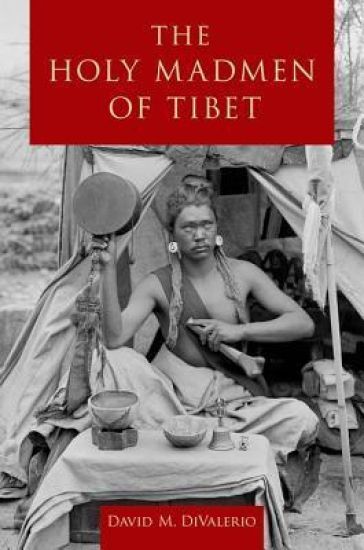
Over the course of the last millennium in Tibet, some tantric yogins have taken on norm-overturning modes of behavior, including provoking others to violence, publicly consuming filth, having sex, and dressing in human remains. While these individuals were called "mad," their apparent mental unwellness was not seen as resulting from any unfortunate circumstance, but symptomatic of having achieved a higher state of existence through religious practice. This book is the first comprehensive study of these "holy madmen," who have captured the imaginations of Tibetans and Westerners alike. Focusing on the lives and works of three "holy madmen" from the fifteenth century - the Madman of Tsang (Tsangnyon Heruka, or Sangye Gyeltsen, 1452-1507, and author of The Life of Milarepa), the Madman of U (Unyon Kungpa Sangpo, 1458-1532), and the Madman of the Drukpa Kagyu (Drukpa Kunle, 1455-1529). DiValerio shows how literary representations of these madmen came to play a role in the formation of sectarian identities and the historical mythologies of various sects. DiValerio also conveys a well-rounded understanding of the human beings behind these colorful personas by looking at the trajectories of their lives, their religious practices and their literary works, all in their due historical context. In the process he ranges from lesser-known tantric practices to central Tibetan politics to the nature of sainthood, and the "holy madmen" emerge as self-aware and purposeful individuals who were anything but crazy.
The Holy Madmen of Tibet

The Holy Madmen of Tibet

David M. DiValerio

Oxford University Press Inc
2015
nidottu
Over the course of the last millennium in Tibet, some tantric yogins have taken on norm-overturning modes of behavior, including provoking others to violence, publicly consuming filth, having sex, and dressing in human remains. While these individuals were called "mad," their apparent mental unwellness was not seen as resulting from any unfortunate circumstance, but symptomatic of having achieved a higher state of existence through religious practice. This book is the first comprehensive study of these "holy madmen," who have captured the imaginations of Tibetans and Westerners alike. Focusing on the lives and works of three "holy madmen" from the fifteenth century - the Madman of Tsang (Tsangnyon Heruka, or Sangye Gyeltsen, 1452-1507, and author of The Life of Milarepa), the Madman of U (Unyon Kungpa Sangpo, 1458-1532), and the Madman of the Drukpa Kagyu (Drukpa Kunle, 1455-1529). DiValerio shows how literary representations of these madmen came to play a role in the formation of sectarian identities and the historical mythologies of various sects. DiValerio also conveys a well-rounded understanding of the human beings behind these colorful personas by looking at the trajectories of their lives, their religious practices and their literary works, all in their due historical context. In the process he ranges from lesser-known tantric practices to central Tibetan politics to the nature of sainthood, and the "holy madmen" emerge as self-aware and purposeful individuals who were anything but crazy.
Mountain Dharma

Mountain Dharma

David M. DiValerio

Columbia University Press
2025
sidottu
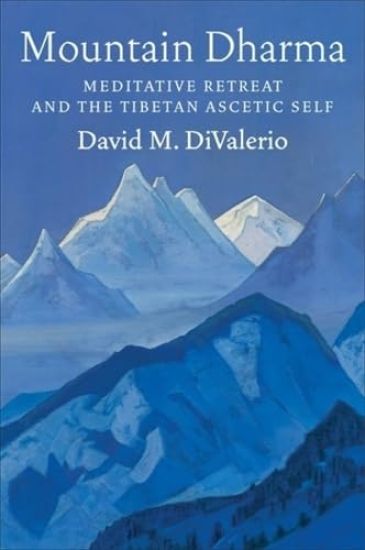
An emphasis on practicing meditation in yearslong retreats—whether in a cave or a cloister, alone or with a small number of peers—has been a defining feature of Tibetan Buddhism throughout its entire history. Although the life stories and writings of the Himalaya’s most famous hermits are well known, the history of this tradition and the details of its practice have largely remained a mystery.A groundbreaking exploration of individual long-term meditative retreat in Tibetan Buddhism, Mountain Dharma tracks developments in ascetic discourse and practice from the twelfth century to the twentieth. David M. DiValerio provides a comprehensive reading of texts that offer instruction on the eremitic endeavor, comparing how dozens of authors have treated six key orienting concerns: place, people, food, sources of danger, the spiritual lineage, and time. The book traces a genealogy of the Tibetan ascetic self, demonstrating an increasing tendency to adopt practices that contrast the meditator with earlier generations of enlightened masters, defining the latter-day retreatant as a being in time. By viewing instructions for how to live in retreat as technologies of self, this book sheds new light on how the history of this tradition has been driven by evolving notions of personhood.Methodologically innovative and richly sourced, Mountain Dharma sets a new standard for the historical study of asceticism.
Mountain Dharma

Mountain Dharma

David M. DiValerio

Columbia University Press
2025
pokkari
An emphasis on practicing meditation in yearslong retreats—whether in a cave or a cloister, alone or with a small number of peers—has been a defining feature of Tibetan Buddhism throughout its entire history. Although the life stories and writings of the Himalaya’s most famous hermits are well known, the history of this tradition and the details of its practice have largely remained a mystery.A groundbreaking exploration of individual long-term meditative retreat in Tibetan Buddhism, Mountain Dharma tracks developments in ascetic discourse and practice from the twelfth century to the twentieth. David M. DiValerio provides a comprehensive reading of texts that offer instruction on the eremitic endeavor, comparing how dozens of authors have treated six key orienting concerns: place, people, food, sources of danger, the spiritual lineage, and time. The book traces a genealogy of the Tibetan ascetic self, demonstrating an increasing tendency to adopt practices that contrast the meditator with earlier generations of enlightened masters, defining the latter-day retreatant as a being in time. By viewing instructions for how to live in retreat as technologies of self, this book sheds new light on how the history of this tradition has been driven by evolving notions of personhood.Methodologically innovative and richly sourced, Mountain Dharma sets a new standard for the historical study of asceticism.