Kirjojen hintavertailu. Mukana 11 717 486 kirjaa ja 12 kauppaa.

Kirjahaku

Etsi kirjoja tekijän nimen, kirjan nimen tai ISBN:n perusteella.

5 kirjaa tekijältä David M. Emmons

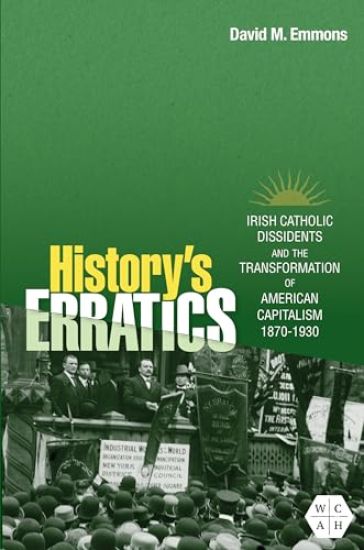
History's Erratics

History's Erratics

David M. Emmons

UNIVERSITY OF ILLINOIS PRESS
2024
sidottu
As Ice Age glaciers left behind erratics, so the external forces of history tumbled the Irish into America. Existing both out of time and out of space, a diverse range of these Roman-Catholic immigrants saw their new country in a much different way than did the Protestants who settled and claimed it. These erratics chose backward looking tradition and independence over assimilation and embraced a quintessentially Irish form of subversiveness that arose from their culture, faith, and working-class outlook. David M. Emmons draws on decades of research and thought to plumb the mismatch of values between Protestant Americans hostile to Roman Catholicism and the Catholic Irish strangers among them. Joining ethnicity and faith to social class, Emmons explores the unique form of dissidence that arose when Catholic Irish workers and their sympathizers rejected the beliefs and symbols of American capitalism. A vibrant and original tour de force, History’s Erratics explores the ancestral roots of Irish nonconformity and defiance in America.
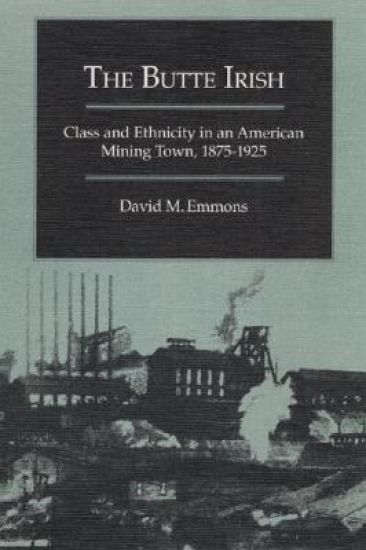
The Butte Irish

The Butte Irish

David M. Emmons

University of Illinois Press
1989
nidottu
In this pioneering study, David Emmons tells the story of Butte's large and assertive population of Irish immigrants. He traces their backgrounds in Ireland, the building of an ethnic community in Butte, the nature and hazards of their work in the copper mines, and the complex interplay between Irish nationalism and worker consciousness. From a treasure trove of "Irish stuff," the reports, minutes, and correspondence of the major Irish-American organizations in Butte, Emmons shows how the stalwart supporters of the RELA and the Ancient Order of Hiberians marched and drilled for Irish freedom---and how, as they ran the town, the miners' union, and the largest mining companies, they used this tradition of ethnic cooperation to ensure safe and steady work, Irish mines taking care of Irish miners. Butte was new, overwhelmingly Irish, and extraordinarily dangerous---the ideal place to test the seam between class and ethnicity.
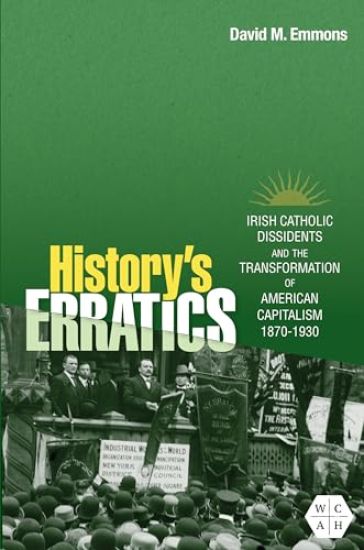
History's Erratics

History's Erratics

David M. Emmons

UNIVERSITY OF ILLINOIS PRESS
2024
nidottu
As Ice Age glaciers left behind erratics, so the external forces of history tumbled the Irish into America. Existing both out of time and out of space, a diverse range of these Roman-Catholic immigrants saw their new country in a much different way than did the Protestants who settled and claimed it. These erratics chose backward looking tradition and independence over assimilation and embraced a quintessentially Irish form of subversiveness that arose from their culture, faith, and working-class outlook. David M. Emmons draws on decades of research and thought to plumb the mismatch of values between Protestant Americans hostile to Roman Catholicism and the Catholic Irish strangers among them. Joining ethnicity and faith to social class, Emmons explores the unique form of dissidence that arose when Catholic Irish workers and their sympathizers rejected the beliefs and symbols of American capitalism. A vibrant and original tour de force, History’s Erratics explores the ancestral roots of Irish nonconformity and defiance in America.
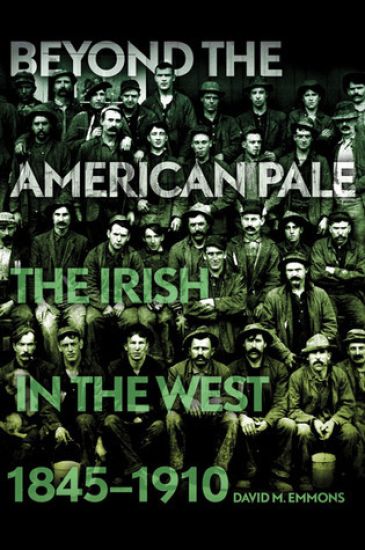
Beyond the American Pale

Beyond the American Pale

David M. Emmons

University of Oklahoma Press
2010
sidottu
Convention has it that Irish immigrants in the nineteenth century confined themselves mainly to industrial cities of the East and Midwest. The truth is that Irish Catholics went everywhere in America and often had as much of a presence in the West as in the East. In Beyond the American Pale, David M. Emmons examines this multifaceted experience of westering Irish and, in doing so, offers a fresh and discerning account of America's westward expansion.""Irish in the West"" is not a historical contradiction, but it is - and was - a historical problem. Irish Catholics were not supposed to be in the West - that was where Protestant Americans went to reinvent themselves. For many of the same reasons that the spread of southern slavery was thought to profane the West, a Catholic presence there was thought to contradict it - to contradict America's Protestant individualism and freedom. The Catholic Irish were condemned as the clannish, backward remnants of an old cultural world that Americans self-consciously sought to leave behind. The sons and daughters of Erin were not assimilated, and because they were not assimilable, they should be kept beyond the American pale.As Emmons amply demonstrates, however, western reality was far more complicated. Irish Catholicism may have outraged Protestant-inspired American republicanism, but Irish Catholics were a necessary component of America's equally Protestant-inspired foray into industrial capitalism. They were also necessary to the successive conquests of the ""frontier,"" wherever it might be found. It was the Irish who helped build the railroads, dig the hard rocks, man the army posts, and do the other arduous, dangerous, and unattractive toiling required by an industrializing society.With vigor and panache, Emmons describes how the West was not so much won as continually contested and reshaped. He probes the self-fulfilling mythology of the American West, along with the far different mythology of the Irish pioneers. The product of three decades of research and thought, Beyond the American Pale is a masterful yet accessible recasting of American history, the culminating work of a singular thinker willing to take a wholly new perspective on the past.
Beyond the American Pale

Beyond the American Pale

David M. Emmons

University of Oklahoma Press
2020
nidottu
Convention has it that Irish immigrants in the nineteenth century confined themselves mainly to industrial cities of the East and Midwest. The truth is that Irish Catholics went everywhere in America and often had as much of a presence in the West as in the East. In Beyond the American Pale, David M. Emmons examines this multifaceted experience of westering Irish and, in doing so, offers a fresh and discerning account of America's westward expansion.""Irish in the West"" is not a historical contradiction, but it is - and was - a historical problem. Irish Catholics were not supposed to be in the West - that was where Protestant Americans went to reinvent themselves. For many of the same reasons that the spread of southern slavery was thought to profane the West, a Catholic presence there was thought to contradict it - to contradict America's Protestant individualism and freedom. The Catholic Irish were condemned as the clannish, backward remnants of an old cultural world that Americans self-consciously sought to leave behind. The sons and daughters of Erin were not assimilated, and because they were not assimilable, they should be kept beyond the American pale.As Emmons amply demonstrates, however, western reality was far more complicated. Irish Catholicism may have outraged Protestant-inspired American republicanism, but Irish Catholics were a necessary component of America's equally Protestant-inspired foray into industrial capitalism. They were also necessary to the successive conquests of the ""frontier,"" wherever it might be found. It was the Irish who helped build the railroads, dig the hard rocks, man the army posts, and do the other arduous, dangerous, and unattractive toiling required by an industrializing society.With vigor and panache, Emmons describes how the West was not so much won as continually contested and reshaped. He probes the self-fulfilling mythology of the American West, along with the far different mythology of the Irish pioneers. The product of three decades of research and thought, Beyond the American Pale is a masterful yet accessible recasting of American history, the culminating work of a singular thinker willing to take a wholly new perspective on the past.