Kirjojen hintavertailu. Mukana 11 244 527 kirjaa ja 12 kauppaa.

Kirjahaku

Etsi kirjoja tekijän nimen, kirjan nimen tai ISBN:n perusteella.

4 kirjaa tekijältä David M. Frohlich

Audiophotography

Audiophotography

David M. Frohlich

Springer-Verlag New York Inc.
2004
sidottu
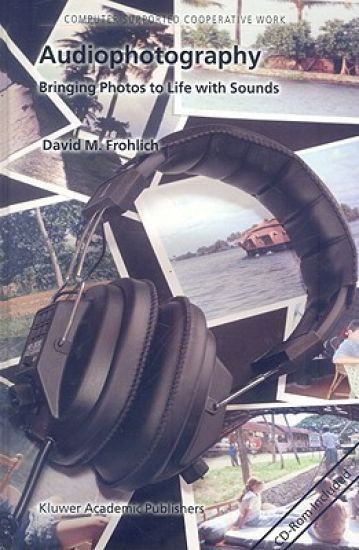
If you read the history of any new communication medium such as the cinema, television or radio, it always happens to be bound up with advances in some underlying technology. For example, cinema was born out of the rapid projection of a series of still images on a celluloid film strip. The difficulty of synchronizing sound recordings with the resulting moving images led to about 30 years of silent films - until such time as the technical problems were solved. In between the inventions, media seem to grow and develop at a slower pace, as content producers and consumers experiment with the most satisfactory and stimulating ways of communicating with each other. In the same example, silent film-makers eventually found ways of adding dialogue through scene titles and having music played during the projection of their films. This book is about the next chapter in the history of photography, which is emerging from a relatively stable period into a chaos of new inventions. Photography as we know it is at the same point as the silent films of 1926. The transition from analog to digital photography is spawning many new ways of taking, manipulating and sharing photographs. It is also bringing photography and videography closer together by unifying sound, still and moving images in the same digital medium.
Audiophotography

Audiophotography

David M. Frohlich

Springer-Verlag New York Inc.
2004
nidottu
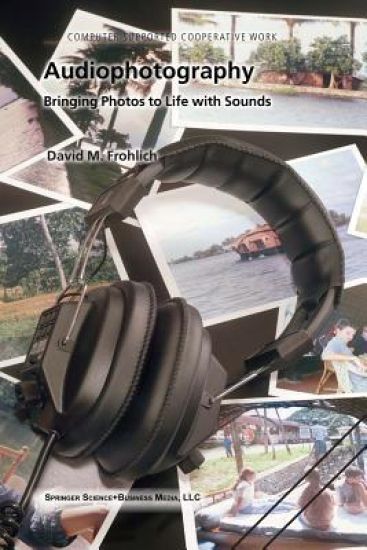
If you read the history of any new communication medium such as the cinema, television or radio, it always happens to be bound up with advances in some underlying technology. For example, cinema was born out of the rapid projection of a series of still images on a celluloid film strip. The difficulty of synchronizing sound recordings with the resulting moving images led to about 30 years of silent films - until such time as the technical problems were solved. In between the inventions, media seem to grow and develop at a slower pace, as content producers and consumers experiment with the most satisfactory and stimulating ways of communicating with each other. In the same example, silent film-makers eventually found ways of adding dialogue through scene titles and having music played during the projection of their films. This book is about the next chapter in the history of photography, which is emerging from a relatively stable period into a chaos of new inventions. Photography as we know it is at the same point as the silent films of 1926. The transition from analog to digital photography is spawning many new ways of taking, manipulating and sharing photographs. It is also bringing photography and videography closer together by unifying sound, still and moving images in the same digital medium.

Fast Design, Slow Innovation

Fast Design, Slow Innovation

David M. Frohlich

Springer International Publishing AG
2016
sidottu
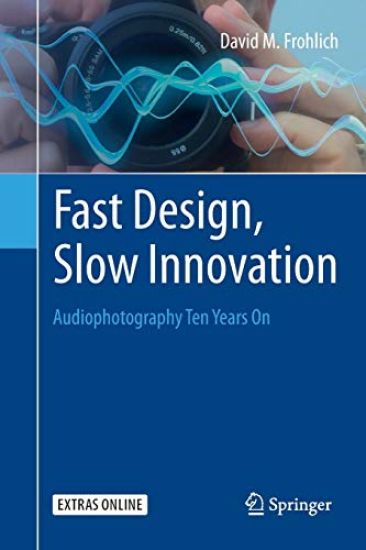
As well as updating the manifesto for an audio photography technology and practice, this book addresses issues in design history, the social shaping of technology and the management of innovation. In particular, it reveals the very different timescales over which design and innovation operate, and the way in which design ideas evolve across different research groups, companies and application areas. The capture of photographs with sound is a simple idea, proposed 10 years ago, that has still not become widespread. In this new edition of the seminal 2004 book on Audio photography, the author asks “Why?” A journey through the book’s citations and related commercial products shows considerable progress in understanding the role of sound in photography, and myriad design experiments to support audio visual storytelling as a new media form. The book is a story in itself about the “long nose of innovation”, and a lesson about the need for patience and persistence in the computer industry. To reinforce this point five of the 2004 chapters are re-published in their original form. These describe invariant properties of ambient musical, talking and conversational photographs, and the possibility of playback from paper as well as screen. Fast Design, Slow Innovation will be of interest to researchers and designers of new media systems and experiences, and to innovation scholars or managers looking for a ten year case study of innovation in action.
Fast Design, Slow Innovation

Fast Design, Slow Innovation

David M. Frohlich

Springer International Publishing AG
2018
nidottu
As well as updating the manifesto for an audio photography technology and practice, this book addresses issues in design history, the social shaping of technology and the management of innovation. In particular, it reveals the very different timescales over which design and innovation operate, and the way in which design ideas evolve across different research groups, companies and application areas. The capture of photographs with sound is a simple idea, proposed 10 years ago, that has still not become widespread. In this new edition of the seminal 2004 book on Audio photography, the author asks “Why?” A journey through the book’s citations and related commercial products shows considerable progress in understanding the role of sound in photography, and myriad design experiments to support audio visual storytelling as a new media form. The book is a story in itself about the “long nose of innovation”, and a lesson about the need for patience and persistence in the computer industry. To reinforce this point five of the 2004 chapters are re-published in their original form. These describe invariant properties of ambient musical, talking and conversational photographs, and the possibility of playback from paper as well as screen. Fast Design, Slow Innovation will be of interest to researchers and designers of new media systems and experiences, and to innovation scholars or managers looking for a ten year case study of innovation in action.