Kirjojen hintavertailu. Mukana 11 717 486 kirjaa ja 12 kauppaa.

Kirjahaku

Etsi kirjoja tekijän nimen, kirjan nimen tai ISBN:n perusteella.

3 kirjaa tekijältä David M. Kaplan

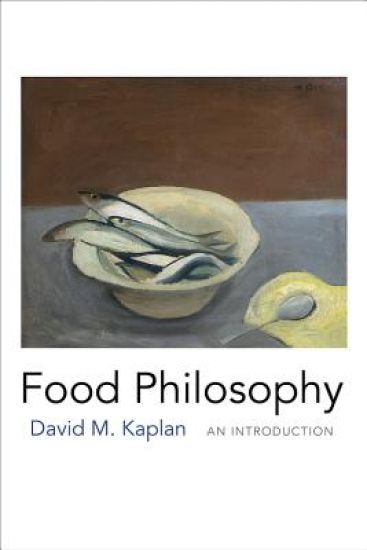
Food Philosophy

Food Philosophy

David M. Kaplan

Columbia University Press
2019
sidottu
Food is a challenging subject. There is little consensus about how and what we should produce and consume. It is not even clear what food is or whether people have similar experiences of it. On one hand, food is recognized as a basic need, if not a basic right. On the other hand, it is hard to generalize about it given the wide range of practices and cuisines, and the even wider range of tastes.This book is an introduction to the philosophical dimensions of food. David M. Kaplan examines the nature and meaning of food, how we experience it, the social role it plays, its moral and political dimensions, and how we judge it to be delicious or awful. He shows how the different branches of philosophy contribute to a broader understanding of food: what food is (metaphysics), how we experience food (epistemology), what taste in food is (aesthetics), how we should make and eat food (ethics), how governments should regulate food (political philosophy), and why food matters to us (existentialism). Kaplan embarks on a series of philosophical investigations, considering topics such as culinary identity and authenticity, tasting and food criticism, appetite and disgust, meat eating and techno-foods, and consumerism and conformity. He emphasizes how different narratives help us navigate the complex world of food and reminds us we all have responsibilities to ourselves, to others, and to animals. An original treatment of a timely subject, Food Philosophy is suitable for undergraduates while making a significant contribution to scholarly debates.
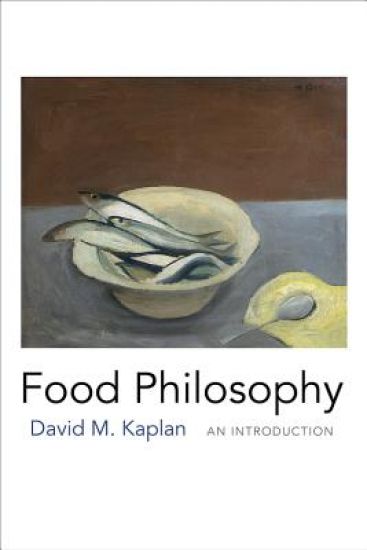
Food Philosophy

Food Philosophy

David M. Kaplan

Columbia University Press
2019
pokkari
Food is a challenging subject. There is little consensus about how and what we should produce and consume. It is not even clear what food is or whether people have similar experiences of it. On one hand, food is recognized as a basic need, if not a basic right. On the other hand, it is hard to generalize about it given the wide range of practices and cuisines, and the even wider range of tastes.This book is an introduction to the philosophical dimensions of food. David M. Kaplan examines the nature and meaning of food, how we experience it, the social role it plays, its moral and political dimensions, and how we judge it to be delicious or awful. He shows how the different branches of philosophy contribute to a broader understanding of food: what food is (metaphysics), how we experience food (epistemology), what taste in food is (aesthetics), how we should make and eat food (ethics), how governments should regulate food (political philosophy), and why food matters to us (existentialism). Kaplan embarks on a series of philosophical investigations, considering topics such as culinary identity and authenticity, tasting and food criticism, appetite and disgust, meat eating and techno-foods, and consumerism and conformity. He emphasizes how different narratives help us navigate the complex world of food and reminds us we all have responsibilities to ourselves, to others, and to animals. An original treatment of a timely subject, Food Philosophy is suitable for undergraduates while making a significant contribution to scholarly debates.
Ricoeur's Critical Theory

Ricoeur's Critical Theory

David M. Kaplan

State University of New York Press
2003
pokkari
The first book-length treatment of Paul Ricoeur's conception of philosophy as critical theory.In Ricoeur's Critical Theory, David M. Kaplan revisits the Habermas-Gadamer debates to show how Paul Ricoeur's narrative-hermeneutics and moral-political philosophy provide a superior interpretive, normative, and critical framework. Arguing that Ricoeur's unique version of critical theory surpasses the hermeneutic philosophy of Gadamer, Kaplan adds a theory of argumentation necessary to criticize false consciousness and distorted communication. He also argues that Ricoeur develops Habermas's critical theory, adding an imaginative, creative dimension and a concern for community values and ideas of the Good Life. He then shows how Ricoeur's political philosophy steers a delicate path between liberalism, communitarianism, and socialism. Ricoeur's version of critical theory not only identifies and criticizes social pathologies, posits Kaplan, but also projects utopian alternatives for personal and social transformation that would counter and heal the effects of unjust societies. The author concludes by applying Ricoeur's critical theory to three related problems-the politics of identity and recognition, technology, and globalization and democracy-to show how his works add depth, complexity, and practical solutions to these problems.