Kirjojen hintavertailu. Mukana 12 016 292 kirjaa ja 12 kauppaa.

Kirjahaku

Etsi kirjoja tekijän nimen, kirjan nimen tai ISBN:n perusteella.

3 kirjaa tekijältä David M. Luebke

Hometown Religion

Hometown Religion

David M. Luebke

University of Virginia Press
2016
sidottu
The pluralization of Christian religion was the defining fact of cultural life in sixteenth-century Europe. Everywhere they took root, ideas of evangelical reform disturbed the unity of religious observance on which political community was founded. By the third quarter of the sixteenth century, one or another form of Christianity had emerged as dominant in most territories of the Holy Roman Empire. In Hometown Religion: Regimes of Coexistence in Early Modern Westphalia, David Luebke examines a territory that managed to escape that fate—the prince-bishopric of Münster, a sprawling ecclesiastical principality and the heart of an entire region in which no single form of Christianity dominated. In this confessional ""no-man’s-land,"" a largely peaceable order took shape and survived well into the mid-seventeenth century, a unique situation, which raises several intriguing questions: How did Catholics and Protestants manage to share parishes for so long without religious violence? How did they hold together their communities in the face of religious pluralization? Luebke responds by examining the birth, maturation, old age, and death of a biconfessional ""regime""—a system of laws, territorial agreements, customs, and tacit understandings that enabled Roman Catholics and Protestants, Lutherans as well as Calvinists, to cohabit the territory’s parishes for the better part of a century.In revealing how these towns were able to preserve peace and unity—in the Age of Religious Wars— Hometown Religion attests to the power of toleration in the conduct of everyday life.
The Empire's Reformations

The Empire's Reformations

David M. Luebke

BLOOMSBURY PUBLISHING PLC
2024
nidottu
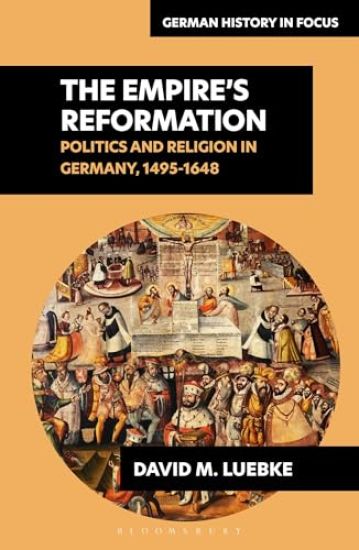
The Empire's Reformations provides a concise overview of reform movements in 16th-century Germany that gave birth to the modern division of western Christianity into multiple denominations – Roman Catholic, Lutheran, Calvinist, and more. It exposes the origins of modern religious pluralism, both in battle for souls among these emerging camps and in the struggles of political leaders at every level to manage the threat that religious diversity posed to tranquillity and order in a rigidly hierarchical society. As such, it offers a prehistory of religious toleration, not as a positive value – few regarded toleration as inherently good – but as a strategy for keeping the peace.David M. Luebke considers the reformations of religion in the context of concurrent transformations in the political and judicial structures of the Holy Roman Empire, that sprawling confederation of principalities and city-states that embraced most regions where German was spoken. This allows Luebke to view the religious reforms through the lens of imperial politics, showing how the Empire differed from the Atlantic monarchies, Eastern Europe, Scandinavia, and the Mediterranean. On a different and equally significant level, he examines how ordinary people of all backgrounds experienced the controversy over religion and responded to reforms of doctrine and observance. The inclusion of both the imperial and local perspectives moves the Reformation beyond the familiar story of theological combat and reimagines it as something that had resonance throughout the world, impacting people’s lives in the process.
The Empire's Reformations

The Empire's Reformations

David M. Luebke

BLOOMSBURY PUBLISHING PLC
2024
sidottu
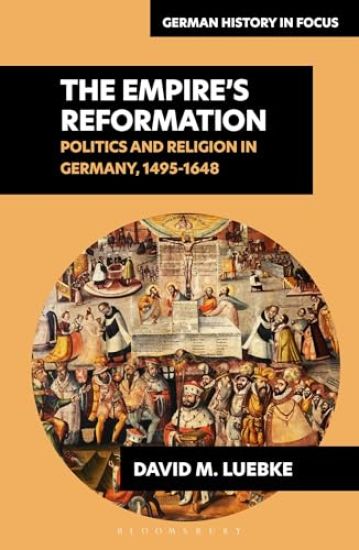
The Empire's Reformations provides a concise overview of reform movements in 16th-century Germany that gave birth to the modern division of western Christianity into multiple denominations – Roman Catholic, Lutheran, Calvinist, and more. It exposes the origins of modern religious pluralism, both in battle for souls among these emerging camps and in the struggles of political leaders at every level to manage the threat that religious diversity posed to tranquillity and order in a rigidly hierarchical society. As such, it offers a prehistory of religious toleration, not as a positive value – few regarded toleration as inherently good – but as a strategy for keeping the peace.David M. Luebke considers the reformations of religion in the context of concurrent transformations in the political and judicial structures of the Holy Roman Empire, that sprawling confederation of principalities and city-states that embraced most regions where German was spoken. This allows Luebke to view the religious reforms through the lens of imperial politics, showing how the Empire differed from the Atlantic monarchies, Eastern Europe, Scandinavia, and the Mediterranean. On a different and equally significant level, he examines how ordinary people of all backgrounds experienced the controversy over religion and responded to reforms of doctrine and observance. The inclusion of both the imperial and local perspectives moves the Reformation beyond the familiar story of theological combat and reimagines it as something that had resonance throughout the world, impacting people’s lives in the process.